

How to Source Soft Enamel Pins That Succeed at Events
Ordering thousands of promotional items for a major event carries significant risk. A common sourcing mistake with Soft Enamel Pins is focusing solely on the unit price, only to receive pins that are too small to be noticed, have backings that fall off jackets, or feature inaccurate brand colors. This oversight can undermine your entire promotional effort. Known for their distinctive textured surface with recessed enamel and raised metal lines, these pins are a popular choice for giveaways and merchandise due to their high perceived value and tactile appeal. Getting the specifications right from the start is the difference between a memorable brand asset and a box of wasted budget.
As a manufacturing consultant, I've seen how easily things can go wrong without a clear sourcing plan. This guide provides a detailed framework for defining your production specifications, ensuring the pins you order are perfectly suited for your audience, budget, and event goals. We will cover the critical choices—from size and backing to plating and packaging—that prevent costly errors and guarantee a successful final product.
The Event Sourcing Checklist: Matching Pin Specs to Your Distribution Goals
Before you request a quote, you need to define exactly what you're asking for. The right specifications depend entirely on how the pins will be used. A pin for a high-value client gift has different requirements than one given to every attendee at a trade show. Use this checklist to align your pin's features with its purpose, avoiding common sourcing regrets.
| Specification | Why It Matters (The Sourcing Risk) | Recommendation for Mass Giveaways | Recommendation for VIP & Sponsor Gifts |
|---|---|---|---|
| Pin Size | Pins that are too small (under 0.75") get lost on clothing and lack impact. Pins that are too large (over 2") can be heavy, awkward to wear, and more expensive to produce and ship in bulk. | 0.75" to 1.25". This range offers good visibility without being obtrusive or costly. It's the sweet spot for large-scale distribution at conferences and trade shows. | 1.25" to 1.75". A larger size conveys premium quality and allows for more design detail. Ideal for awards, sponsor recognition, or limited-edition merchandise. |
| Attachment Backing | A weak or unsuitable backing is the most common point of failure. A pin that falls off and is lost provides zero value. The risk is a poor user experience that reflects badly on your brand. | Butterfly Clutch. This is the cost-effective industry standard. It provides adequate security for short-term event wear and keeps unit costs down for high-volume orders. | Deluxe Clutch or Rubber Clutch. These provide a much more secure grip and a higher-quality feel. They are essential for pins intended for long-term wear on backpacks, jackets, or lanyards. |
| Plating Finish | The metal finish frames your design. A poor choice can make colors look dull or clash with your brand aesthetic. Mismatched plating can make a pin look cheap, regardless of design quality. | Polished Nickel or Dye Black. Both are versatile, modern, and pair well with a wide range of colors. Dye black is excellent for making bright enamel colors pop. | Polished Gold or Antique Bronze. Polished gold offers a classic, high-value appearance perfect for anniversaries or awards. Antique finishes, like those on the custom souvenir lapel pins we made for a Tokyo museum, add depth and a vintage feel. |
| Packaging | Shipping thousands of pins without individual protection can lead to scratches and damage. For retail or gift-giving, simple poly bags lack the professional presentation needed to make an impression. | Individual Poly Bags. This is a must for any bulk order. It protects each pin's surface from scratches during transit and distribution, ensuring every piece is pristine. | Custom Backer Cards. A printed card adds significant brand value. It provides space for a message, social media handles, or sponsor logos, transforming the pin into a complete retail-ready product. |
Key Material and Production Choices That Define Pin Quality
Beyond the basics, the core materials and manufacturing processes determine the final look, feel, and durability of your pins. Understanding these options allows you to make informed decisions that balance cost, appearance, and quality.
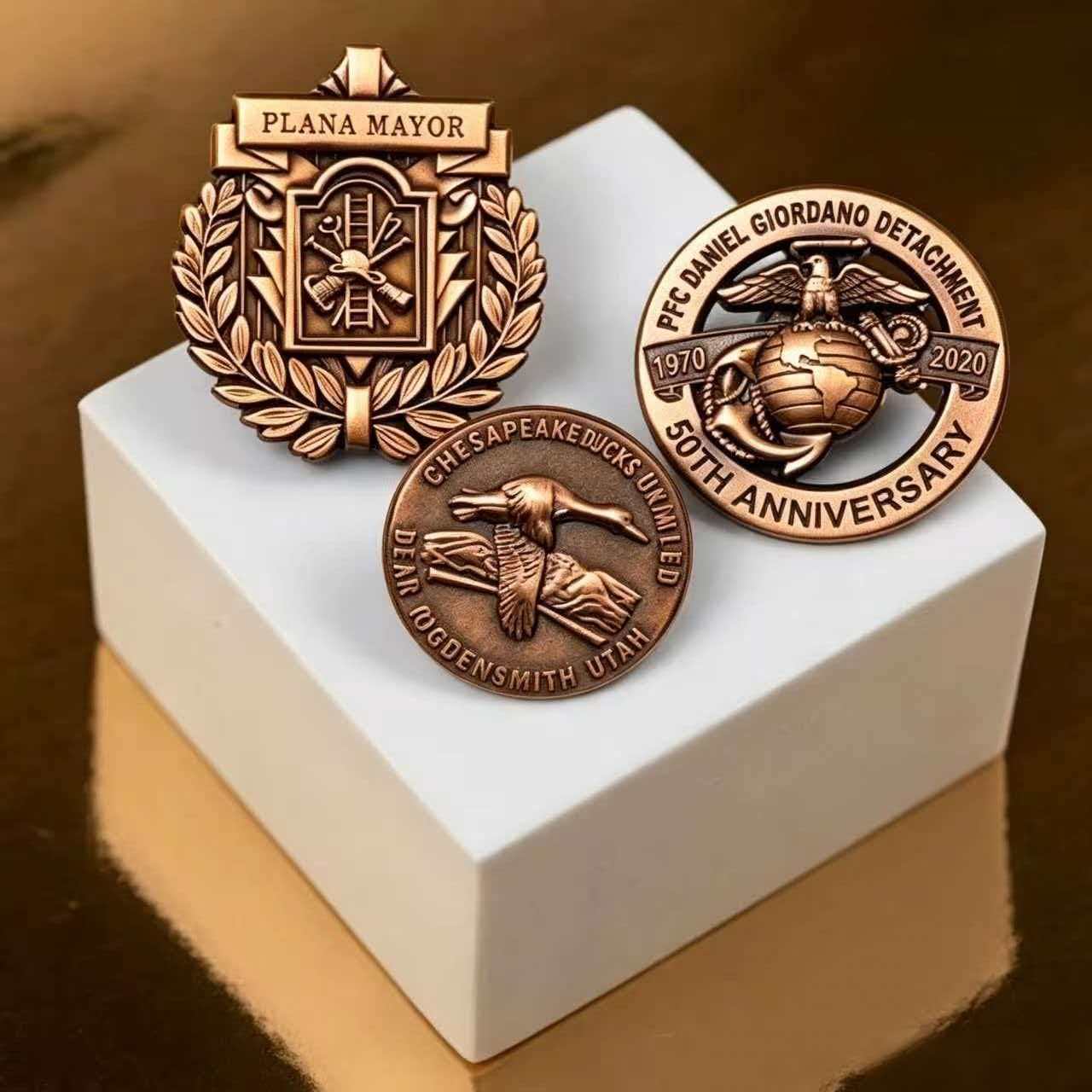
Choosing the Right Base Metal
The metal alloy used for your pin impacts its weight, detail capability, and cost. We primarily work with three materials at our 8,000 m² facility, each suited for different applications.
- Zinc Alloy: This is the most versatile option, especially for designs with complex shapes, sharp inner corners, or cut-outs. It's a die-cast metal, meaning it's injected into a mold as a liquid, allowing for greater design freedom. It was the perfect choice for the interactive spinning enamel pins we created for a German coffee brand, which required a complex, multi-part assembly.
- Iron: Stamped iron is the most economical choice for simpler shapes without intricate cut-outs. If your primary goal is creating a large volume of custom promotional pins on a tight budget, iron is an excellent material.
- Brass: Die-struck brass offers a premium, heavier feel. It's denser than zinc or iron, giving the final product a satisfying weight. This makes it a great option for corporate awards, membership pins, or high-end custom brand enamel pins.
Ensuring Enamel Color Integrity
The defining feature of a soft enamel pin is its recessed color fields. The process involves stamping your design into the base metal, creating raised outlines. We then carefully fill these recessed areas with enamel color by hand before baking the pin to harden the enamel. A common industry problem is enamel "bleeding," where colors overflow their designated areas, resulting in a messy final product.
At our ISO 9001:2015 certified facility, we use precise dispensing tools and strict quality control to prevent this. We also offer a color mismatch free reprint policy. This ensures the final product's colors perfectly match the approved digital proof, protecting your brand's visual identity. This was critical for the custom hard enamel pins we produced for a Canadian esports tournament, where exact team colors were non-negotiable.
Avoiding Common Pitfalls in High-Volume Pin Orders
Large-scale orders leave little room for error. A mistake caught after production can be disastrous for your timeline and budget. Here are the most frequent missteps I've seen buyers make and how to prevent them.
Mistakes to Avoid When Ordering Pins in Bulk
- Ignoring the Digital Proof: The digital proof is your last chance to catch typos, incorrect colors, or design flaws before production begins. Rushing this step is a recipe for disappointment. Our process requires every client to approve a detailed digital sample before we proceed, giving you full control and peace of mind.
- Overly Complex Designs for Small Pins: Soft enamel requires thin metal lines to separate colors. On a small pin (e.g., 0.75"), tiny text can become illegible and fine details can merge. It's better to simplify your artwork to ensure a clean, impactful result. Our free design assistance service includes feedback from experts who can help optimize your art for production.
- Miscalculating Timelines: Don't forget to account for every stage of the process. For our pins, this typically includes a 3-day sample lead time, 8-9 days for bulk production, and 5-6 business days for U.S. shipping. Always build a few extra days into your event schedule to account for potential shipping delays.
- Forgetting an Epoxy Coating: An optional but highly recommended feature for soft enamel is a clear epoxy dome. This coating is applied over the top of the pin, creating a smooth, glossy surface that protects the enamel from scratches and damage. It gives the pin a more finished look and enhances its longevity, especially for pins that will see heavy use.
Streamlining Your Order From Design to Delivery
A well-managed production process ensures your pins arrive on time and exactly as you envisioned. With a daily capacity for over 1,000,000 labels and similarly high-capacity facilities for metal and embroidery, we are equipped for large-scale orders. Here is a step-by-step look at how we turn your concept into a finished product.
- Finalize Your Design and Specifications: Use the checklist above to decide on size, plating, backing, and packaging. If you're unsure, our team is available via live human support to provide guidance based on your project goals.
- Request a Quote and Digital Proof: Submit your artwork. We will return a detailed quote and a digital mock-up showing exactly how your pin will look. This is a complimentary service to ensure you are confident before committing.
- Approve the Pre-Production Sample: Once the digital proof is approved, we create a physical or photo sample in just 3 days. This allows you to see and feel the quality firsthand, confirming every detail meets your expectations before the full run.
- Bulk Production and Quality Control: After sample approval, your order moves to our main production lines. Our quality team inspects the pins at each stage to prevent defects like loose backs or enamel bleeds.
- Shipping and Delivery: Your order is carefully packed and shipped for free. As a thank you, we include 100 bonus pieces with every bulk order, ensuring you have more than enough for your event.
By following a structured sourcing process and paying close attention to key specifications, you can confidently order custom company lapel pins that serve as effective, high-quality promotional tools for any event.
Ready to create high-quality pins for your next event? Submit your design for a free quote and digital proof today.