

Sourcing Durable Custom Hat Patches That Last
Choosing the wrong custom hat patches for your work caps is a costly mistake. A patch that frays, fades, or peels off after a few weeks of wear doesn't just look unprofessional—it undermines your brand's image of quality and durability. For procurement managers and uniform suppliers, the real risk lies in selecting a material or backing that can't withstand the daily demands of the job site. A patch designed for a promotional giveaway will fail quickly on a construction crew's headwear. This guide cuts through the options to help you specify patches that are built to last, matching the material, design, and backing to the cap and the work environment.
As a manufacturing consultant, I've seen brands waste entire budgets on patches that weren't fit for purpose. The key is to think beyond the logo and consider the application first. Before you request a quote, understanding how different materials perform under stress, sun, and repeated washing is the most important step in the sourcing process.
Matching Patch Material to Cap Fabric and Jobsite Demands
The first decision in creating effective custom hat patches is selecting the right material. Each option offers a distinct look, level of detail, and durability profile. Mismatching the patch material to the cap's fabric or the intended use is a frequent point of failure. A stiff leather patch may not conform well to a lightweight polyester cap, while a finely detailed woven patch might be lost on a heavy-duty canvas hat. Use this matrix to align your choice with your specific requirements.
| Patch Material | Best For Cap Fabric | Logo Detail Level | Ideal Jobsite Wear | Durability Notes |
|---|---|---|---|---|
| Embroidered | Cotton twill, canvas, denim, classic trucker hats | Medium (Bold text, simple shapes, blocky logos) | General construction, landscaping, team uniforms, event staff | Classic, textured 3D feel. Threads can snag on sharp objects. Best for logos without fine gradients or tiny text. |
| Woven | Fine-gauge fabrics, polyester, Flexfit® caps, beanies | High (Intricate text, complex logos, fine lines) | Corporate apparel, tech services, retail uniforms, premium brands | Flat, smooth surface captures photographic detail. Tighter weave is more snag-resistant than standard embroidery. |
| PVC / Rubber | Synthetics (polyester, nylon), mesh-back trucker hats, waterproof gear | High (Sharp 2D or 3D layers, crisp lines, vivid colors) | Heavy industrial, marine, plumbing, auto repair, outdoor trades | 100% waterproof, easy to clean oil and grime from, and extremely resistant to abrasion and chemicals. |
| Leather / Faux-Leather | Canvas, denim, wool blends, high-end promotional caps | Low to Medium (Debossed/embossed logos, simple branding) | Breweries, artisan trades, premium workwear, fashion brands | Offers a premium, rugged aesthetic. It develops a unique patina over time. Real leather may require care and can be sensitive to harsh chemicals. |
Key Durability Factors Buyers Often Overlook
Beyond the base material, several technical specifications determine whether a patch will endure. Overlooking these details during the sourcing process often leads to premature failure and brand inconsistency. Here are the most common mistakes we see and how to avoid them.
- Ignoring Thread Quality and Stitch Density: For custom embroidered patches, the quality is in the details you can't always see. Low-density stitching with inferior thread will lead to frayed borders and designs that lose their integrity after a few washes. This was a critical factor for a U.S. outdoor gear brand we worked with. They required heavy-duty embroidered Velcro patches for hiking backpacks, so we used weather-resistant threads and a high stitch count to ensure the patches could handle abrasion and exposure to the elements without falling apart.
- Choosing the Wrong Backing Method: The best patch in the world is useless if it falls off. Heat-seal (iron-on) backing is convenient but can be the weakest link, especially on workwear that is washed frequently at high temperatures.
- Sew-On: The most secure and permanent application method. It's the best choice for workwear subjected to industrial laundering.
- Iron-On (Heat Seal): Good for promotional items and light-wear apparel. For work caps, ensure your supplier uses a high-grade industrial adhesive, and always apply it with a commercial heat press, not a home iron.
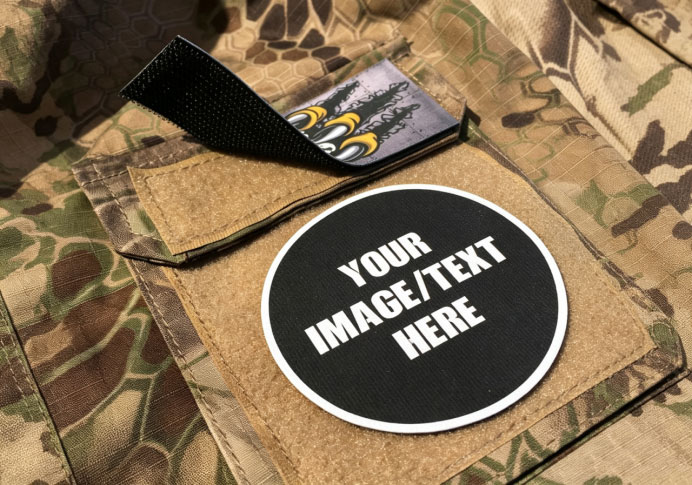
- Velcro (Hook-and-Loop): Offers great versatility, allowing patches to be swapped out. It's ideal for tactical gear, uniforms with changing roles, or brands that want to offer collectible patches.
- Underestimating Environmental Exposure: A standard embroidered patch will not perform well in a wet or oily environment. For mechanics, marine workers, or anyone in heavy industry, 3d tactical pvc patches are a far better investment. They are impervious to water, grease, and most chemicals, and can be wiped clean instantly. Their durability makes them a top choice for any demanding job site.
A Step-by-Step Guide to Specifying Your Order
To ensure you get exactly what you need without back-and-forth communication delays, follow this process when preparing your RFQ. A clear specification sheet prevents manufacturing errors and helps you get an accurate quote upfront.
- Finalize Your Artwork and Dimensions: Provide your logo in a vector format (AI, EPS, or PDF). This ensures clean lines and prevents blurriness. Specify the exact height and width of the patch. If you're unsure, our team offers Free Design Assistance to help optimize your artwork for production.
- Select Your Material and Style: Using the comparison matrix above, clearly state your chosen material (e.g., "Embroidered," "Debossed Faux-Leather," "3D PVC").
- Choose Your Border Type: The edge of your patch is a key detail.
- Merrowed Border: A classic, raised, overlocked edge best for simple shapes like circles, squares, and shields.
- Hot-Cut Border: A flat, laser-cut edge that is sealed to prevent fraying. This is necessary for complex, custom shapes with sharp angles or intricate outlines.
- Specify Your Backing: Clearly state your required application method: "sew-on," "heat-seal/iron-on," or "Velcro hook-and-loop backing." If choosing Velcro, specify if you need both the hook and loop sides.
- Request and Approve a Digital Sample: Never proceed to bulk production without seeing a proof. We provide a photo or digital sample for confirmation on every order. This step allows you to catch any color mismatches or detail errors before our 1,000,000+ unit daily capacity facility begins the full run.
Why Sourcing from a Certified Manufacturer Matters
The quality of your custom hat patches directly reflects on your brand, and consistency across a bulk order is essential. Working with a verified and experienced manufacturer mitigates risk and ensures a reliable supply chain. Our 8,000 m² facility is ISO 9001:2015 certified, which means our processes are standardized for quality control from material intake to final inspection.
This commitment to quality is proven in our work. For an Italian premium denim line, we supplied embossed engraved leather patches for hats & jeans designed to withstand industrial stonewashing. The debossed logos had to remain sharp and the material intact through harsh chemical and physical stress, a standard that uncertified workshops often fail to meet. This level of durability is not an accident; it's the result of rigorous material testing and process control.
Furthermore, we understand the demands of B2B sourcing. With bulk production lead times of just 8-9 days and guarantees like proportional replacement for any defects and 100 bonus pieces with every bulk order, we provide the reliability and peace of mind that uniform suppliers and promotional product distributors need. Fast sample turnarounds of 3 days allow you to get physical products in hand quickly for stakeholder approval before committing to a large order.
Ready to create durable patches for your work caps? Submit your design for a free quote and digital proof today.