

How to Avoid Overpaying for Custom Glossy Labels
Choosing a finish for your product labels seems straightforward, but selecting the wrong one can lead to significant hidden costs. Many businesses focus solely on the per-unit price, only to face expensive reprints when their labels scuff, peel, or fade during shipping and retail handling. The initial quote for Custom Glossy Labels often overlooks the total cost of ownership, where a seemingly minor choice between a gloss varnish and a gloss laminate can determine your project's true expense and success.
Understanding this distinction is not just about aesthetics; it is a critical sourcing decision that impacts your budget, production timelines, and brand reputation. A label that fails on the shelf costs far more than the few cents saved on a less durable finish. This guide breaks down the cost factors, technical considerations, and common mistakes to help you source labels that perform correctly the first time, protecting both your product and your bottom line.
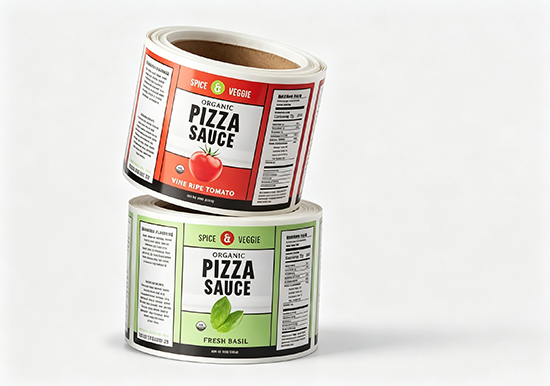
Varnish vs. Laminate: A Total Cost of Ownership Analysis
The most significant cost driver after the substrate material is the protective finish. Both gloss varnish and gloss laminate provide a shine, but their performance, durability, and associated costs are vastly different. Evaluating them based on unit price alone is a frequent and costly error. A complete analysis considers setup, waste, reprint risk, and even shipping.
Here is a direct comparison to help you determine the most economical choice for your specific application.
| Factor | Gloss Varnish | Gloss Laminate |
|---|---|---|
| Unit Cost | Lower. Varnish is a liquid coating applied during printing, making it a faster and less material-intensive process. | Higher. Laminate is a separate film (e.g., BOPP) applied to the label, adding material and process costs. |
| Setup & MOQ | Minimal setup fees. Ideal for digital printing with no minimum order quantity, suitable for short runs or startups. | May require higher setup costs and MOQs (often 1,000+ units for offset), as it's a separate mechanical process. |
| Durability & Protection | Light protection. Offers minimal resistance to scuffs, moisture, and chemicals. Best for dry, short-life products. | High protection. Provides excellent resistance to scratches, water, oil, and tearing. Essential for products that are handled frequently or exposed to harsh conditions. |
| Reprint Risk | Higher. If labels are damaged in transit or on shelves, the entire batch may need reprinting, negating initial savings. | Lower. The protective film significantly reduces the chance of damage, minimizing the risk of costly reprints and product recalls. |
| Freight & Logistics | Adds negligible weight and thickness to label rolls, keeping shipping costs low. | Adds a tangible layer of film, increasing the weight and diameter of label rolls. This can raise freight costs, especially for large international shipments. |
| Best-Fit Scenario | Promotional items, dry food packaging, short-term shipping labels, or products in secondary packaging. | Cosmetics, beverages, supplements, outdoor equipment, and any product requiring a long shelf life and premium appearance. |
Decision Summary
Choose Gloss Varnish if: Your primary concern is the lowest possible upfront cost, your product has a short lifecycle, and it will not be exposed to moisture, abrasion, or chemicals. It is an excellent choice for digitally printed short runs.
Choose Gloss Laminate if: Your product must withstand handling, moisture, or condensation (like in cold storage). The higher initial investment acts as insurance against the much greater cost of reprinting and brand damage from failed labels. For example, our work with an Australian health supplement brand involved scratch-proof lamination on clear custom bopp labels to ensure a pristine look on retail shelves.
Selecting the Right Substrate and Adhesive for Glossy Finishes
Even the best finish will fail if the underlying material and adhesive are wrong for the job. A glossy label is a system of components—face stock, adhesive, and topcoat—that must work together. Common failures, like labels peeling in cold storage or adhesive bleeding in high heat, are almost always due to a mismatch between this system and the product's environment.
Before you specify materials, use this checklist to define your performance requirements.
Buyer's Decision Checklist for Label Materials
Application Surface: Is the container glass, plastic (HDPE, PET), metal, or textured paper? Is it curved, like a bottle, or flat? A flexible film substrate like BOPP is better for squeezable tubes than a rigid paper.
Environmental Exposure: Will the product be refrigerated or frozen? Condensation is a primary cause of label failure on custom beverage bottle labels. Will it be exposed to high heat during shipping or storage? This can cause some adhesives to soften and bleed.
Chemical & Oil Contact: Will the product itself (e.g., essential oils, lotions, automotive fluids) or its environment involve contact with chemicals? For these applications, a waterproof custom synthetic labels substrate like polyester (PET) or vinyl (PVC) is necessary.
Hand-Written Information: Does the label need to be written on? A gloss laminate or UV varnish is not suitable for this. A semi-gloss paper or a matte varnish overcoat in a specific area would be required.
Desired Aesthetic: Are you aiming for a "no-label" look? A clear BOPP substrate is the standard choice. For an earthy, organic feel, you might consider a gloss finish on custom kraft labels.
Our ISO 9001:2015 certified facility is equipped to handle these complexities. With a wide selection of substrates and adhesives, our team can recommend a construction that prevents common failures and aligns with your budget and brand goals.
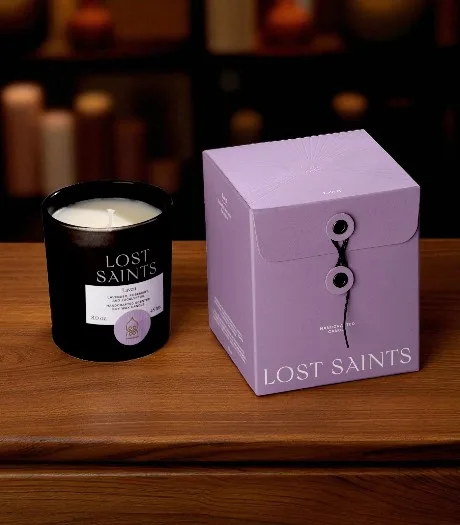
Common Sourcing Mistakes That Inflate Label Costs
Experienced procurement managers know that the sticker price is only one part of the equation. Several process-related mistakes can dramatically increase the total cost of a label project. Avoiding these pitfalls is key to achieving a low landed cost without compromising quality.
Here are four common mistakes we help our clients avoid:
Skipping Digital and Photo Proofs: The single most expensive error is a color mismatch against brand guidelines that is only discovered after 100,000 labels have been printed. Insisting on a digital proof for layout and a photo proof for color confirmation is a non-negotiable step. At custom panda, we provide photo or digital sample confirmation before any bulk production begins and back our work with a free reprint guarantee for color mismatches.
Underestimating Durability Requirements: A brand might choose a gloss-varnished paper label for a premium hand soap to save money. After a few uses in a wet environment, the paper warps, the ink runs, and the label peels off. The brand's image is damaged, and the product looks cheap. Investing in a waterproof BOPP label with gloss laminate would have prevented this failure and protected the brand's value.
Using a One-Size-Fits-All Adhesive: Specifying a "permanent adhesive" is not enough. A permanent adhesive designed for cardboard boxes will fail on a cosmetic jar exposed to oils. A standard adhesive will lose its bond in freezing temperatures. We help clients select the right adhesive for their specific surface and temperature range, preventing widespread application failure.
Ignoring Production and Shipping Timelines: A cheap quote from a supplier with long lead times can result in missed retail deadlines, costing far more in lost sales than was saved on the labels. Our standard bulk production lead time is 8-9 days, with U.S. shipping taking 5-6 business days. This reliable timeline ensures you can get your product to market on schedule.
How We Ensure Quality and Performance in Every Order
Our entire process is designed to deliver reliable, high-quality labels while managing costs effectively. As a Disney FAMA and ISO 9001:2015 certified manufacturer, our quality management systems are built to meet the standards of global brands. Our 8,000 m² facility houses six HP digital label presses, enabling us to offer flexible solutions, including options with no minimum order quantity.
We solve common industry problems by controlling every variable:
Color Accuracy: Our digital presses are calibrated to ensure colors match your brand guidelines, backed by our free reprint policy.
Durability: We use UV-resistant inks to prevent fading and offer a range of laminates and durable substrates like BOPP, PET, and PVC to eliminate scuffing, tearing, and water damage.
Adhesion: We provide specialized adhesives for cold storage, high temperatures, and oil resistance, ensuring your labels stay put.
Risk Reduction: Every bulk order includes 100 bonus pieces at no extra charge, and we offer proportional replacement for any defects, giving you a buffer and peace of mind.
With a daily capacity of over one million labels, we can scale with your business, from initial product launch to full-scale production. Our commitment to quality ensures your packaging represents your brand perfectly from the production line to the customer's hands.
Contact our technical team to discuss your project. We can provide material samples and a detailed quote based on your specific performance needs.