

Calculate Custom Candle Tin Labels Costs by Finish
A label quote can look low until premium finish requirements, custom shapes, and setup items appear after artwork approval. Procurement teams should separate each cost driver before comparing suppliers. This is especially relevant for custom candle tin labels, where the label must suit the tin surface, brand presentation, production quantity, and intended retail position.
Custom Panda supplies printed label solutions for growing candle makers, private-label buyers, and procurement teams that need transparent commercial terms. Our ISO 9001:2015-certified and Disney FAMA-certified facility has operated since 2012, with an 8,000 m² production site, six production lines, and six HP digital label presses. That production scope matters when a buyer needs to compare a short-run launch label against a larger repeat order without treating both jobs as the same quote.
Choose the finish only after defining the candle tin use case
Conclusion: Start with the product environment and brand objective, then select the finish. A finish should not be chosen only because it looks premium in a digital mockup. The right choice depends on whether the candle is sold as a seasonal gift, a core retail item, a small-batch test, or a high-volume private-label line.
Custom Panda offers a wide substrate selection, BOPP lamination, UV-resistant inks, and custom foil stamping colors. These are useful quote variables, but buyers should state the expected handling and storage conditions in the RFQ. A candle tin may be exposed to warehouse heat, shipping friction, consumer handling, or oil residue from product use. Material and adhesive selection should be evaluated against those conditions rather than assumed from appearance alone.
| Finish or construction option | Best fit | Why it affects cost | When it may not be the right choice |
|---|---|---|---|
| Standard printed label stock | Entry-level launches, simple branding, and high-rotation stock keeping units | The quote centers on printed label stock, print coverage, quantity, and shape rather than added finishing steps. | It may not match a gift-oriented or luxury positioning that requires a more distinct shelf appearance. |
| Matte BOPP with lamination | Premium candle ranges where a softer, non-gloss visual is part of the brand direction | BOPP material and lamination are separate material and finishing considerations. | Do not select it solely for appearance if the buyer has not confirmed the required adhesive and tin-surface conditions. |
| Custom foil stamping colors | Limited editions, seasonal collections, gift sets, and premium retail lines | Foil adds a finishing operation and can introduce setup considerations depending on the job specification. | It is less suitable when cost control is the only priority or artwork changes often between small campaigns. |
| Clear BOPP construction | Designs intended to show the metal tin surface around selected graphics | Clear material, white-ink requirements, and print coverage need to be specified separately in the quote. | It is not appropriate when the artwork needs a fully opaque background but no white-ink layer is planned. |
| Custom die-cut shape | Branded silhouettes, lid seals, front-panel emblems, or design-led gift tins | A non-standard outline changes the conversion requirement and may require a setup line item. | A standard circle, rectangle, or oval is usually the better commercial choice for a basic restock order. |
For example, a premium winter collection may justify a matte surface and a foil accent because the label is part of the gift presentation. A year-round candle line with frequent fragrance updates may be better served by a simpler construction, especially when each fragrance has separate artwork. The limit is clear: no finish automatically guarantees adhesion, scratch resistance, or color appearance on every tin. Buyers should provide the tin type, label location, and handling conditions for qualification.
If the product family includes glass vessels as well as tins, review waterproof custom jar labels for food & candles separately. A tin label quote should not be copied to a jar program without confirming the packaging surface and application requirements.
Cost: a quote formula separating label stock, finish, die-cut shape, quantity, and setup charges
Conclusion: Compare total cost only after every supplier has quoted the same construction. A transparent calculation prevents a low initial unit price from masking omitted finish, die-cut, or setup elements.
Use the following planning formula for every candle tin label RFQ:
Total quoted label cost = label stock + printing + finish + die-cut shape + quantity effect + setup charges + shipping or other stated charges.
For unit-cost planning, divide the full quoted order total by the order quantity. Do not compare one supplier’s unit price with another supplier’s total order amount. Also confirm whether the supplier has included delivery, packing, proofing, and applicable taxes or duties in the stated total.
| Quote component | What the buyer should specify | Commercial effect | Question to ask the supplier |
|---|---|---|---|
| Label stock | Requested face material, color, opacity requirement, and intended tin application | Different stocks have different material costs and may need different adhesive options. | “Please identify the label stock and adhesive basis used in this quote.” |
| Printing | Artwork count, color coverage, clear areas, white-ink need, and version count | Multiple designs or print requirements can change the production approach. | “Is each fragrance artwork priced as a separate version?” |
| Finish | Matte or gloss direction, BOPP lamination, foil color, and any special visual treatment | Finishing is an added quote component, not a free upgrade. | “List each finish separately and state whether it applies to all labels.” |
| Die-cut shape | Standard rectangle, circle, oval, or custom outline | Custom outlines can add converting complexity and setup requirements. | “Is the die-cut charge included, recurring, or charged separately?” |
| Quantity | Total labels, number of SKUs, and labels per artwork version | Quantity affects the production method and spreads fixed charges across more pieces. | “What quantity applies to this unit price, and what changes at the next volume tier?” |
| Setup charges | Artwork preparation, die creation, foil setup, or other stated pre-production items | Setup may be a one-time cost or may apply again when artwork or specifications change. | “Please separate one-time charges from repeat-order charges.” |
Here is a practical normalization method. Assume two suppliers quote the same front label and lid label program. Supplier A shows a lower per-label amount but does not list foil setup or custom die-cut charges. Supplier B lists stock, printing, foil, die-cut, and setup as separate lines. The procurement team should add every disclosed charge to each supplier’s order total, divide by the same label quantity, then compare the resulting unit cost. If Supplier A cannot confirm the omitted items in writing, the quotes are not comparable.
This method also helps when the supplier recommends digital or offset production. Custom Panda supports digital printing with no MOQ for select custom items, while offset printing and standard bulk items have a 1,000-piece minimum and can offer better pricing at higher volumes. The practical conclusion is simple: digital may fit a new fragrance test or a short promotional run, while a stable high-volume program may justify a bulk-oriented quote. The limit is that quantity alone does not decide the method; artwork, finish, and construction must also be confirmed.
Build an RFQ that suppliers can price on the same basis
Conclusion: A complete RFQ is the fastest way to obtain usable quotes. Send one controlled specification to all suppliers rather than asking each supplier to “quote a premium label.” That phrase can produce several different constructions and no valid cost comparison.
- Identify the tin and label position. State whether the label goes on the lid, sidewall, base, or more than one location. Include the tin dimensions or a packaging drawing where available.
- Define the artwork structure. List every fragrance, collection, language version, and variable detail. Confirm whether each SKU shares the same shape and finish.
- State the visual target. Specify matte, gloss, foil stamping color, clear areas, metallic appearance, or other requested treatment. Avoid descriptions such as “high end” without a defined finish.
- Describe handling conditions. Note expected heat exposure, warehouse conditions, shipping route, consumer handling, or any need for hand-written markings. This gives the supplier a basis for discussing stock and adhesive suitability.
- Set quantity by version. Provide total order quantity and quantity per artwork. A total of 5,000 labels spread across ten designs is not commercially identical to 5,000 labels from one design.
- Request a separated cost table. Ask for stock, print, finish, die-cut shape, quantity effect, setup charges, and shipping to be shown separately.
- Define the approval point. Request a photo or digital sample confirmation before production and identify who has authority to approve it.
For candle makers using roll-fed application, the supplier should also be asked to confirm roll format, label orientation, and application direction. These details are not provided automatically by a logo file. They must be agreed before production, particularly if labels will be applied by equipment rather than by hand. Buyers looking for a broader roll format reference can review custom printed roll labels when preparing their specification.
Avoid quote mistakes that hide the real unit cost
Conclusion: The common error is not choosing an expensive finish. It is approving a quote before verifying whether the quoted construction matches the intended product. Use this list during supplier comparison.
- Mistake: Comparing only headline unit prices. This fails when setup, foil, die-cut, or shipping appears elsewhere in the quote. Compare total order value and normalized unit cost instead.
- Mistake: Treating “waterproof” as a complete specification. The material, adhesive, tin surface, and handling conditions still need definition. Ask what construction is being quoted and what application conditions have been considered.
- Mistake: Sending only a logo. A logo does not state finished size, shape, artwork versions, finish, or roll direction. Send an RFQ brief with these decisions.
- Mistake: Ordering a custom shape without confirming the commercial impact. A shaped label may support brand recognition, but it should be priced separately from a standard outline.
- Mistake: Assuming clear film needs no white ink. On clear material, white opacity is a defined production requirement. State which artwork areas need opacity and which areas should remain transparent.
- Mistake: Using one approval for many changing SKUs. If fragrance names, warnings, batch details, or colors differ, review each version before release.
- Mistake: Choosing paper stock for a condition that needs a synthetic alternative. Discuss the actual product environment first. Consider waterproof custom synthetic labels when the requirement calls for a synthetic label option rather than a paper-based construction.
A useful internal procurement rule is to reject any quote that does not identify its assumptions. The buyer does not need every manufacturing detail at the earliest stage, but the supplier should clearly state what is included, what is excluded, and what remains to be confirmed. That protects both sides from approving a specification based only on a visual rendering.
Assess supplier fit, approval terms, and production boundaries
Conclusion: Select a supplier based on its documented capabilities, proof process, quantity fit, and correction terms, not only on an online price calculator.
Custom Panda’s label capacity exceeds 1,000,000 labels per day. For labels, pins, and patches, the stated sample lead time is 3 days, while bulk production is stated as 8–9 days. U.S. shipping is stated as 5–6 business days, and same-day dispatch is available for select ready-stock or digital items. These timeframes are planning references, not a substitute for a confirmed production schedule for a specific finish, quantity, and destination.
For quality control, we provide photo or digital sample confirmation before production. The stated service terms also include a color-mismatch free reprint, proportional replacement for defects, 5-day fast re-stocking or repair, and 100 bonus pieces with every bulk order. Buyers should still agree the artwork approval record, acceptance standard, defect reporting evidence, shipping address, and any market-specific regulatory label content before placing the order.
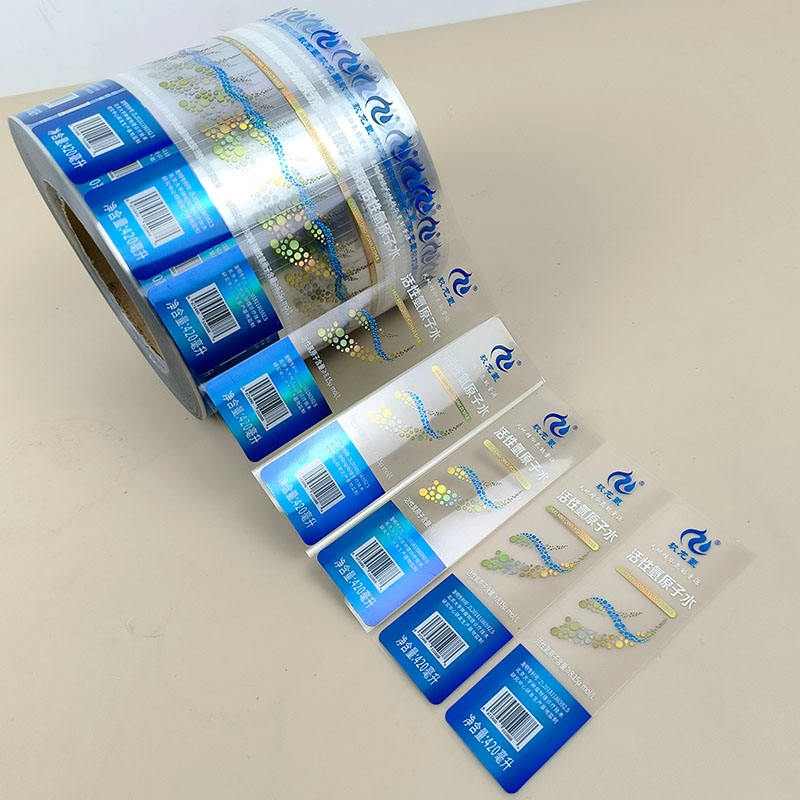
A relevant label example comes from Australia, where Custom Panda delivered metallic foil-stamped roll labels for a natural health supplement brand using matte BOPP film with scratch-proof lamination. This demonstrates experience with a premium foil-and-matte label construction. It does not mean every candle tin program should use that construction or that it will have the same commercial outcome. The candle tin, artwork, finish area, and order quantity still determine the right quotation.
Our free design assistance and live human support can help clarify artwork and specification questions before production. For early-stage product testing, ask whether a select digital option fits the quantity. For established programs, request a bulk quote that clearly identifies the commercial effect of larger quantities.
Send your tin dimensions, artwork count, target finish, quantity by SKU, and delivery destination to request a separated quote for your candle label program.