

Control Custom Brand Label Pins Costs at Low MOQs
Small batch pin sourcing can become expensive quickly when a quote includes more than the design itself. Buyers often focus on the unit price, then discover that metal finish choices, enamel colors, backing hardware, packaging, and setup requirements carry equal weight at low quantities. Before placing an RFQ, procurement teams should identify which details support the brand objective and which details simply add cost without improving the outcome.
Custom Brand Label Pins should be specified as a controlled product package, not as a logo sent for pricing. The right brief lets suppliers quote accurately, compare options fairly, and prepare a sample without repeated revisions. This matters most for launch kits, employee recognition, retail merchandise tests, limited events, and small distributor programs where every unit must justify its spend.
At Custom Panda, pin production is supported by an ISO 9001:2015 certified facility with complete metal die casting capabilities. Buyers can request photo or digital sample confirmation before production, which helps catch color placement, plating selection, and backing placement before a small run becomes a costly issue. Sample lead time for pins is listed as 3 days, while bulk production is listed as 8–9 days.
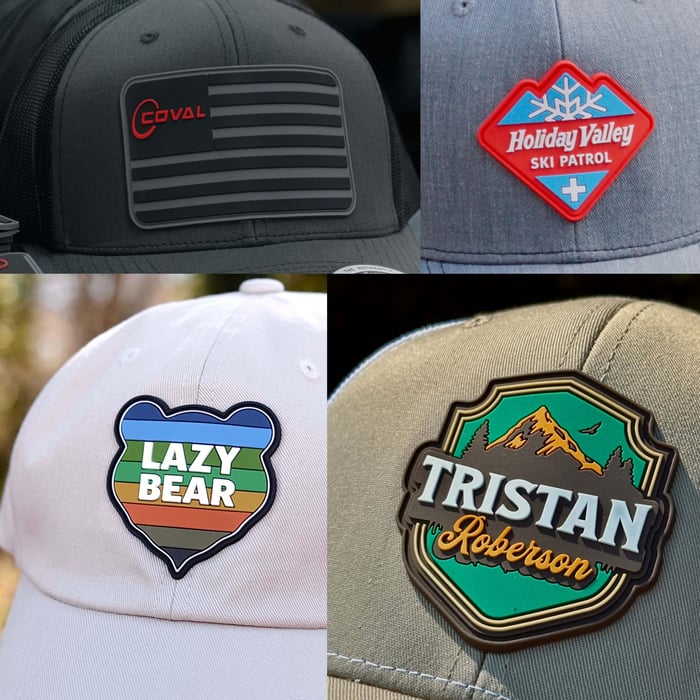
Start With the Buying Decision That Actually Drives Cost
The first decision is not whether the pin should look premium. It is whether it will be worn, traded, sold, presented, or packed with another product. Each use case points to a different spending priority.
- Employee uniforms: Choose a clear logo shape, dependable attachment, and a finish that fits the company identity. This fits service teams, hospitality staff, and corporate recognition. It does not fit collector merchandise where special effects may influence demand.
- Retail merchandise: Put more budget into the visual detail buyers will notice in photos and in hand, such as enamel type, custom shape, and finish. This fits branded collections and museum stores. It may not fit free event giveaways with a short usage life.
- Event distribution: Prioritize a design that remains recognizable at a practical size and choose packing that supports fast handout. This fits conferences, tournaments, and launches. It does not suit presentation gifts that require separate display cards or protective cases.
- Collector editions: Consider higher-detail processes, distinctive plating, or a moving component only when the feature is part of the product story. This fits limited releases. It does not fit a basic corporate identity pin with a controlled procurement budget.
A real project shows why this distinction matters. For an esports tournament championship in Canada, Custom Panda created hard enamel pins with polished gold plating and dual-tone colors. The selected materials supported a championship item intended for fans and players to wear on jackets and lanyards. That specification would be sensible for a commemorative program, but it may be more than a procurement team needs for a standard staff identification pin.
For standard logo programs, review custom company lapel pins alongside the event’s wear conditions, distribution method, and approval path. A short use-case statement in the RFQ prevents unnecessary upgrades from entering the quote.
Compare Pin Processes Before You Compare Prices
Two visually similar quotes may use different production processes. A lower price is not automatically a better purchase if it omits the visual or physical feature the program requires. Ask every supplier to state the process in writing and identify what is included in the quoted finish.
| Process option | Best fit | Cost direction at low quantity | Limits to consider |
|---|---|---|---|
| Soft enamel pins | Logo artwork with defined color areas and visible metal lines | Often a cost-conscious choice when the design suits enamel-filled sections | Not the best choice when the artwork depends on photo-like detail or smooth color transitions |
| Hard enamel pins | Premium branded gifts, recognition items, and collectible programs | Can cost more because the final surface and finishing expectations are higher | Not necessary for every giveaway or basic uniform application |
| Offset printed pins | Artwork containing gradients, fine illustrations, or detailed visual content | Quote impact depends on artwork and finishing requirements | Does not create the same raised metal-line appearance as enamel styles |
| Three dimensional cast pins | Relief-based logos, sculptural icons, or souvenir concepts | May add cost because the design requires cast detail and finishing choices | Not suited to artwork that relies mainly on multiple flat printed colors |
| Laser engraved pins | Text-forward or metal-focused branding | Quote impact depends on material, engraving coverage, and finish | Not appropriate when bright filled colors are the central brand requirement |
Recommendation: select soft enamel when visible metal borders support the logo and the project needs a practical branded pin. Select hard enamel when the tactile finish is part of the perceived value. Select offset printing when preserving detailed art is more important than creating recessed enamel areas. Do not select a process solely because another brand used it; it has to match the submitted artwork.
For designs that contain fine artwork rather than simple color blocks, compare offset printed pins with enamel alternatives before approving tooling. The decision should be made from a digital proof, not from a thumbnail image in an email thread.
Cost Breakdown for MOQ Metal Finish Colors Backing and Packaging
Per-unit cost at a low MOQ is shaped by fixed preparation work spread across fewer pieces, plus the selected materials and handling steps. The table below separates confirmed Custom Panda terms from cost directions that must be quoted for the actual design. It does not present estimated price changes as confirmed facts.
| Cost driver | Confirmed information | Estimated cost effect | What remains unknown until quotation |
|---|---|---|---|
| MOQ and order quantity | Select custom items may have no MOQ. Standard bulk items using offset printing have a 1,000-piece minimum, with better bulk pricing. | Low quantity generally carries a higher per-unit share of setup and handling than a larger repeatable order. | Applicable process, order quantity, artwork, and whether the selected pin specification qualifies for a no-MOQ option. |
| Metal finish | Custom Panda offers zinc alloy, brass, and iron materials, plus dual-plated finishes. | Specialized or multiple finish requirements may increase the quoted unit cost compared with a simpler finish. | Chosen base metal, plating selection, coverage, design shape, and the supplier’s current quotation. |
| Color count | Soft enamel, hard enamel, offset printed, and laser engraved options are available. | More enamel color areas can add production handling and inspection needs. Printed art may follow a different cost structure. | Exact artwork, color layout, process choice, and whether colors require adjustments after proof review. |
| Backing choice | Pin backs are available as part of the custom pin specification. | Alternative attachment hardware or added security features can affect material and assembly costs. | Backing type, placement, number of attachment points, and the intended garment or product surface. |
| Individual packaging | No universal packaging price is stated in the company brief. | Individual bagging, cards, or presentation packaging can increase labor and materials per piece. | Packaging format, printed inserts, pack-out requirements, and shipping carton configuration. |
The conclusion is straightforward: at low quantities, buyers should first control the variables that do not change the pin’s core purpose. If a logo needs one finish, do not request several finish combinations for the same run. If the pin will be handed out at an event, individual retail-ready presentation packaging may not be needed. If the pin is intended for sale, packaging may be worth the added cost because it protects the item and supports shelf presentation.
Use this order of review: quantity first, then process, then finish, then color treatment, then backing, then packaging. This order works because earlier decisions often define what later options are possible. It does not replace a supplier quote, since final costs remain dependent on the approved artwork and production specification.
Build a Low Quantity RFQ That Suppliers Can Price Correctly
A vague request such as “price 100 logo pins” produces vague comparisons. Ask suppliers to quote the same specification line by line. That is the only reliable way to determine whether one price includes plating, backing, proofing, packaging, and delivery while another quote does not.
- State the program use. Identify whether the pins are for resale, staff uniforms, a launch, recognition, or an event. This gives the supplier context for process and packing recommendations.
- Provide final artwork. Submit the logo in the best available source format and identify required brand colors. Mark elements that cannot change, such as trademark spacing or a signature color.
- Specify the preferred process. If uncertain, request separate options for soft enamel, hard enamel, and offset printing rather than assuming they are comparable.
- List the metal finish. State whether the finish is fixed or whether alternatives may be quoted. Avoid asking for an “assorted metal look” unless that is a true design requirement.
- Define color handling. State the number of filled color areas or ask the supplier to recommend the most practical method based on the art.
- Choose the backing based on use. Tell the supplier whether the pin will attach to thin apparel, jackets, lanyards, cards, or another surface.
- Describe packaging. Request bulk packed units for basic distribution, or define the required individual packaging format if the pin will be sold or gifted.
- Request proof approval before production. Confirm artwork, color placement, plating, backing location, and text. Custom Panda offers photo or digital sample confirmation before production.
For limited programs, add a line asking whether a physical sample or a digital confirmation is most appropriate for the decision. A sample can be useful when the finish or dimensional effect is central to the purchase. A digital proof may be enough when the project uses a familiar process and the key risk is logo placement. Neither method removes the need for written approval from the buyer’s brand owner.
Prevent the Small Batch Mistakes That Raise Total Spend
Low-volume projects are sensitive to rework. A design revision, changed backing, or late packaging request can have a greater budget impact than it would in a planned repeat order. The following issues should be checked before a purchase order is released.
- Approving a finish from a screen image alone: A digital rendering helps, but plated metal can appear differently under physical light. Use a stated finish name and approve the supplier’s proof. This is especially relevant for premium gifts; it is less critical for a simple printed event pin.
- Using too many tiny enamel sections: Fine color compartments can make a logo harder to produce consistently. Simplify small visual elements when the pin itself will be compact. Do not simplify protected brand marks without brand approval.
- Ignoring backing placement: A pin can rotate or sit poorly when its backing position does not match the shape and intended wear. Provide the use case and ask for placement guidance. This is less of an issue for designs made to mount on display cards only.
- Adding retail packaging after quote approval: Individual packaging is a separate handling decision. Confirm it before requesting final pricing. Bulk packing is often more suitable for controlled internal distribution.
- Comparing quotes with different specifications: A soft enamel quote cannot be compared directly with a hard enamel quote simply because both use the same logo. Match every line item before selecting a supplier.
- Skipping a defect policy review: Confirm how color issues, loose backs, or visible production defects will be handled before the order begins. Custom Panda offers color mismatch free reprints, proportional replacement for defects, and a 5-day fast re-stocking or repair service.
For projects where the pin is part of a larger merchandise set, consider whether a printed element can carry information that does not need to be on metal. A product insert, package seal, or display card may be more economical for detailed copy than adding it to the pin face. For example, teams planning retail bundles can pair pins with custom labels printed in bulk for outer packaging or product identification. This approach fits branding systems with multiple components. It does not fit a pin that must function as a standalone commemorative item with all details visible on the metal piece.
Use Samples and Proofs to Protect Brand Approval
For small batch pins, the most useful sample question is not “does it look good?” It is “does this approved sample prove the features that affect the final purchase?” Build the review around the actual risks in the order.
| Review item | What to confirm | When it matters most |
|---|---|---|
| Logo proportions | Text spacing, icon shape, border thickness, and protected brand elements | Corporate marks and licensed artwork |
| Color placement | Filled areas, contrast between adjacent colors, and print detail where applicable | Multi-color logos and collector designs |
| Metal appearance | Chosen finish, visible metal lines, and any dual-plated areas | Premium gifts and retail merchandise |
| Backing function | Position, attachment type, and stability on the intended use surface | Uniforms, jackets, lanyards, and frequent wear |
| Packaging format | Bulk packing or individual presentation requirements | Retail, gifting, or fulfillment programs |
Recommendation: appoint one buyer to consolidate feedback from procurement, brand, and operations before final approval. This fits any organization with multiple stakeholders. It may be unnecessary for a single-owner brand, but even then, a written approval record is useful if a reorder is needed later.
Custom Panda’s facility has six production lines and offers 100 bonus pieces with every bulk order. For a low-MOQ buyer, the immediate priority is still specification control rather than volume incentives. Once the pin becomes a repeat program, a larger production plan can be reviewed for better bulk pricing and a more stable replenishment approach.
Choose the Right Low MOQ Cost Strategy
The best low-cost option is not always the lowest quoted unit price. It is the specification that delivers the intended brand impression without paying for unnecessary treatments. For many Custom Brand Label Pins programs, that means choosing one suitable pin process, one intentional metal finish, a controlled color plan, a backing matched to actual wear, and packaging appropriate to the distribution channel.
Use hard enamel and enhanced presentation when the pin is a premium item, recognition award, or retail product where finish quality affects perceived value. Use soft enamel when the design benefits from clear metal boundaries and the program needs a practical branded item. Use offset printing when preserving detailed visual artwork is the priority. In every case, ask for pricing based on the same written brief and approve the proof before production begins.
Request a quote with your artwork, quantity, finish, backing, and packaging requirements to compare the most suitable small-batch pin options.
===