

Control Die Struck Pins Costs With Plating Choices
The most expensive surprise in a metal pin order is rarely the base price. It is the line item you never compared. One supplier includes a finish or backing, and another prices it separately. If you are collecting quotes for die struck pins, fix those inputs first. Otherwise the lowest number on the page tells you nothing.
I have spent 12 years in custom merchandising and manufacturing, and the pattern repeats. Buyers compare totals, not specifications. This article shows which choices move unit pricing, which amounts are confirmed, and which only a quote can settle.
Define What You Are Pricing Before You Compare Quotes
Start with a narrow boundary. In this article, “cost” means the unit price of a finished, branded metal pin for one design in one production run. Samples, shipping, packaging and reorders are separate items. Do not fold them into the unit price unless the quote states they are included.
Why the narrow scope? A unit price, a project total and a lifetime cost answer different questions. A quote that mixes them cannot be compared with one that does not. If one supplier quotes pins plus shipping and another quotes pins only, the gap tells you about scope, not value.
For reference, our premium die struck lapel pins are made from zinc alloy, brass or iron. Finish options include dual-plated and laser engraved. The material and finish you name in the request are the foundation of every number that follows.
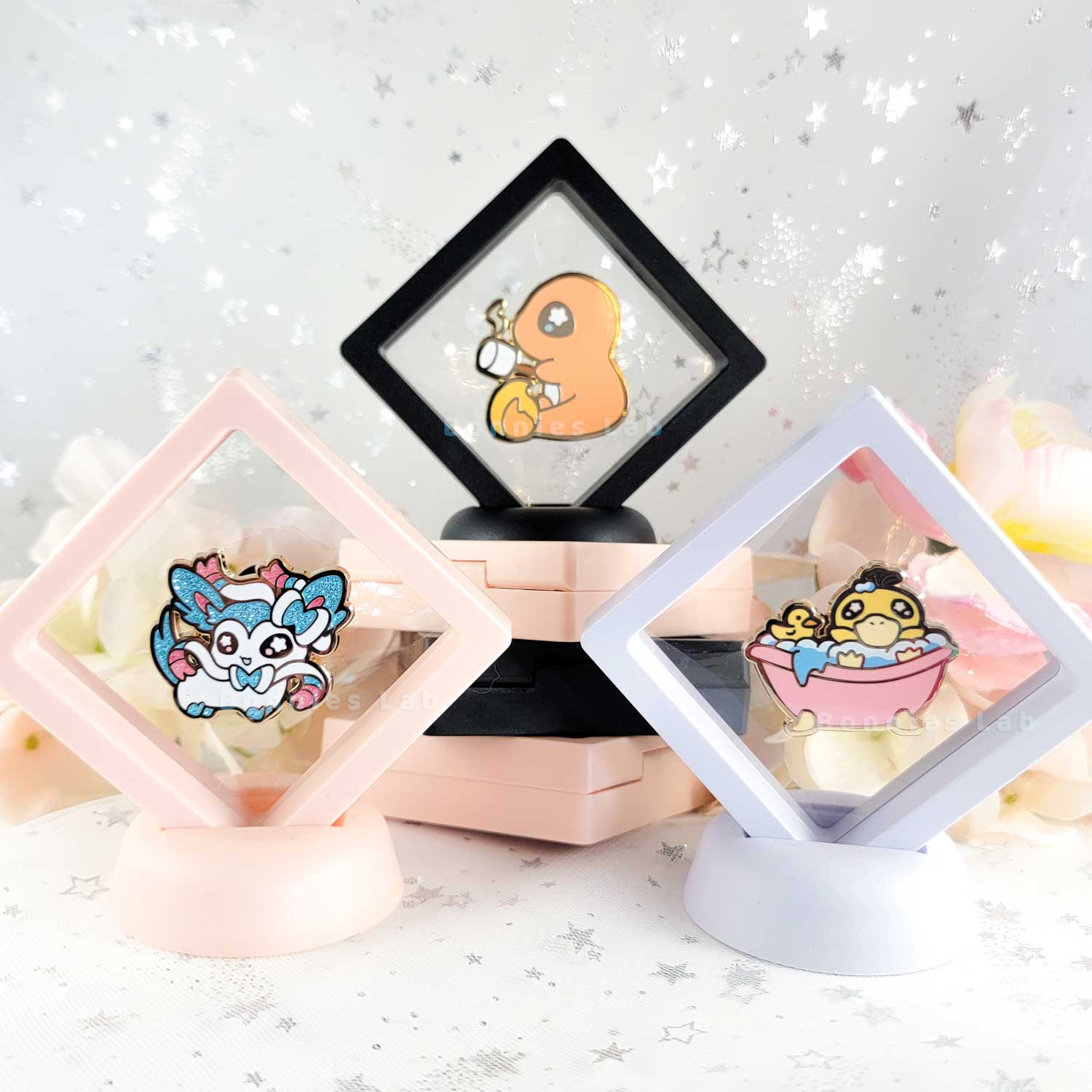
Cost Breakdown: How Plating, Size, Quantity, Relief Depth and Backing Change Unit Pricing
This is the section to bring into your next RFQ. We have not been given price figures for this topic, so the table shows the direction and reason for each driver, not dollar amounts. Treat every row as a question for the quote, not an answer.
| Cost driver | Why it moves unit price | Typical direction | What to specify |
|---|---|---|---|
| Plating | Each finish adds process steps and metal-finishing work. A dual-plated design uses two finishes on one pin. | More finishes usually raise price | Finish names, which areas get which finish, polished or antique look |
| Size | A larger pin uses more metal and has more surface to finish. | Larger usually raises price | Exact width and height in mm or inches, thickness if it matters |
| Quantity | Setup work is spread over more pieces. Our brief states 1,000 units minimum for offset printing and standard bulk items, with better pricing at bulk quantities. Digital printing and select custom items have no MOQ. | Higher quantity usually lowers unit price | Target quantity plus one or two alternative tiers |
| Relief depth | Deeper raised and recessed detail calls for more detailed die work and more careful finishing. | Deeper relief usually raises price | Flat, medium or deep relief, and any cut-out areas |
| Backing | Backing type and attachment quality affect parts cost and assembly. Loose or unstable pin backs are a known failure point. | Upgrades raise price; the lowest option can raise failure risk | Backing type, whether it is included, and the cost of any upgrade |
Two limits apply. First, “usually” is not a guarantee. A small pin with deep relief can cost more than a larger flat one, because the drivers interact. Second, the MOQ that applies to your pin depends on the process chosen. Ask the supplier to state it in writing rather than assuming it from the table.
Plating Choices That Change the Quote Most
Plating is the easiest variable to change after the design is drawn, and it is the one buyers most often leave vague. “Gold” on a request can mean a polished surface, an antique surface, or a two-tone treatment. Each reads differently on the finished pin and may be priced differently.
Two of our customer cases show how finish drives the design brief:
- Canada: hard enamel pins for an esports tournament championship, with polished gold plating and bright dual-tone colors. Fans and players wear them on jackets and lanyards. Here the finish is the visual identity. Cutting it would change what the pin is.
- Japan: 3D cast metal souvenir lapel pins for a Tokyo museum exhibition, with deep antique bronze relief and cut-out details to reflect traditional architecture. This is a cast pin, not a stamped one, but it shows the same trade-off. Deep relief and an antique finish work together, and both carry cost.
These cases show design intent. They do not show prices, and you should not read them as price benchmarks.
When simplifying plating makes sense
Consider fewer finishes when the pin is a high-volume giveaway, the logo is bold, and the budget is fixed. One finish with clear relief often reads well on a lapel.
When it does not
Keep dual plating when the contrast between raised and recessed areas carries the logo. Flattening it can blur fine lettering. If your artwork needs color fill, compare premium hard enamel pins for brands against metal-only pins, because enamel adds a separate cost layer. Enamel colors that bleed or overflow are a known risk, so confirm color references before production.
Known, Estimated and Unresolved Amounts
A confirmed driver is not a confirmed price. Here is what we can state from the supplied facts, and what only a quote can settle.
| Category | Item | Status |
|---|---|---|
| Confirmed terms | Sample lead time of 3 days for pins, patches and labels | Stated by us; confirm for your specification |
| Confirmed terms | Bulk production in 8 to 9 days; U.S. shipping in 5 to 6 business days | Stated by us; confirm against your quantity and date |
| Confirmed terms | MOQ: none for digital printing and select custom items; 1,000 units for offset printing and standard bulk items | Process dependent |
| Confirmed terms | 100 bonus pieces with every bulk order; photo or digital sample confirmation before production | Stated by us |
| Confirmed terms | Free reprint on color mismatch; proportional replacement for defects | Stated by us; ask for the written terms |
| Estimates | Unit price by plating, size or relief | No figures supplied here; do not budget from this article |
| Unresolved | Setup or tooling charges, backing upgrades, packaging, shipping terms, currency, quote validity date | Quote dependent |
Do not add figures from different quotes into one total unless they share currency, quantity and terms. A quote for 500 pieces in one currency and a quote for 2,000 pieces in another cannot be averaged into a budget.
Budget Choices and Sensitivity
Which single change would flip your decision? For most orders it is one of three: finish count, relief depth, or quantity tier.
A hypothetical RFQ test
This is an illustration with no prices. Suppose you send the same artwork, size, quantity and backing to three suppliers, and change only the plating:
- Request A: one finish across the whole pin.
- Request B: two finishes, with raised areas in one and recessed areas in another.
- Request C: the same two finishes plus deeper relief.
The gap between A and B isolates the plating cost. The gap between B and C isolates relief. Without this structure you cannot tell which choice caused the difference. Run it with 3d cast lapel pins as a fourth option if your design wants more sculpted depth than a stamped pin offers. Compare that quote on the same inputs.
Legitimate ways to lower cost
- Reduce overall size by a small step, and check the logo still reads at that size.
- Use one finish where contrast is not essential.
- Order one larger run instead of several small ones, within the MOQ that applies to your process.
- Keep the backing you have already tested rather than switching to save a small amount.
Lower price does not mean lower quality. A simpler design can be made well. The risk comes from removing features the design depends on.
Common mistakes
- Requesting “gold plated” without naming polished or antique.
- Comparing quotes with different backing types or different quantities.
- Leaving setup or tooling charges out of the comparison.
- Skipping the sample stage to save days, then finding detail blurred or lettering lost.
- Treating a single case’s results as a promise for every order.
Checklist for a Comparable Quotation
Use this list when you send your request. If a supplier cannot answer an item, record it as unresolved and do not guess.
- Product: pin type, material (zinc alloy, brass or iron) and finish names.
- Dimensions: width, height, and thickness if relevant.
- Relief: flat, medium or deep, with cut-outs marked on the artwork.
- Backing: type and whether it is included in the unit price.
- Quantity tiers: your target and one or two alternatives, plus the MOQ for the process.
- Charges: setup or tooling, packaging, shipping and currency, itemized separately.
- Proof stage: photo or digital sample confirmation before production.
- Quality terms: color mismatch reprint and defect replacement, in writing.
- Dates: sample lead time, bulk production time and shipping time to your location.
If you also need to compare against other formats, see our bulk custom lapel pins range, or look at order soft enamel pins if color fill matters more than metal finish. Our facility is ISO 9001:2015 certified and Disney FAMA certified. It runs 6 production lines with metal die-casting and embroidery capability. That tells you about process control. It does not tell you the price, so keep the quote as the deciding document.
Send us your artwork, target size, quantity tiers and preferred finishes, and we will return a quote that itemizes each variable above. If you want a physical check first, ask for a sample of your design before committing to a bulk run of die struck pins.