

Custom Beverage Labels Proof MOQ and Lead Time FAQs for Buyers
A beverage label order can look simple until production is waiting on an unclear bottle measurement, missing artwork approval, or a quantity that does not match the chosen print method. Buyers often regret treating the label as a final packaging detail rather than an item that needs its own specification.
Custom Beverage Labels should be quoted with the container, storage condition, artwork status, quantity, and target delivery date already defined. That gives the supplier enough information to recommend a material and production route without making assumptions that can delay approval.
At Custom Panda, labels are produced in an ISO 9001:2015 certified facility with Disney FAMA certification. Our production site includes 6 production lines, 6 HP digital label presses, and daily label capacity exceeding 1,000,000 pieces. These resources support volume programs, but they do not remove the need for a confirmed proof before production begins.
Start the RFQ with the Details That Affect Production
The best first action is to send one usable quote brief, not just a logo file and a product name. A label supplier needs to know what will happen to the label after application. Refrigeration, condensation, hand-applied bottles, automated application, clear containers, and dark liquids can all change the recommended material, adhesive, or print treatment.
For standard beverage bottle programs, include the bottle or can material, the label application area, the intended quantity, and a target delivery date. If your pack will enter chilled storage, say so in the first message. A label that performs adequately in a dry retail setting may not be suitable for cold storage where condensation is present.
| RFQ detail | Why it affects the quote | What to provide | When it may not be enough |
|---|---|---|---|
| Container type | Label materials and adhesive selection depend on the application surface. | State whether the pack is glass, plastic, metal, or another substrate. | Provide a sample or clear photos if the surface has texture, curves, seams, or unusual coatings. |
| Label size and shape | Size, shape, and finishing requirements affect the production setup. | Send dimensions and a dieline when available. | A rough measurement is not enough for wraparound placement or close clearance around caps and seams. |
| Storage conditions | Cold, moisture, heat, and handling risks should be addressed before material selection. | Specify chilled storage, condensation exposure, or heat exposure. | Do not assume a standard label is appropriate if the product faces repeated moisture or temperature changes. |
| Artwork status | Production cannot proceed until the proof is approved. | Send final artwork or identify what still needs design support. | A visual mockup alone may not show all required product text, barcode areas, or finishing instructions. |
| Order quantity | Quantity determines whether digital or offset production is the appropriate route. | Give the first order quantity and likely reorder volume. | Do not use a future annual estimate as the current order quantity unless you are prepared to release that volume. |
Choose custom beverage bottle labels when the project is centered on bottles and needs a specification based on the package itself. If your program uses multiple product lines, list every size separately. One artwork file does not automatically mean one production specification.
Choose Materials and Finishes from Actual Handling Conditions
The practical decision is simple: choose the label construction according to the use environment, not only the shelf appearance. For chilled bottled drinks, condensation is the first risk to discuss. For clear containers, white ink opacity is often the first print concern. For premium retail packs, foil or lamination may be part of the visual requirement.
| Requirement | Potential option to discuss | Best fit | Limit to confirm before ordering |
|---|---|---|---|
| Moisture exposure | Waterproof synthetic labels or BOPP lamination | Drinks exposed to condensation, wet handling, or refrigerated storage. | Confirm the bottle surface and the actual storage process rather than assuming all waterproof constructions suit every application. |
| Clear container appearance | Clear BOPP labels with white ink | Products where the beverage or bottle should remain visible through unprinted areas. | Ask for proof confirmation of white ink areas. Insufficient opacity can reduce legibility on clear substrates. |
| Premium shelf presentation | Matte BOPP, foil stamping, or lamination | Gift packs, premium beverages, and retail products where tactile and visual finish matters. | Foil color and placement must be identified in the artwork before approval. |
| Handwritten batch information | Writable label surface | Small batch programs that need batch, date, or flavor information added later. | Do not select a finish before confirming that it can hold the intended handwritten marking. |
Use clear custom bopp labels when transparency is part of the pack design and you need a clear discussion about white ink coverage. The conclusion is not that clear film is right for every beverage. It fits products that benefit from a no label appearance; it does not fit artwork that depends on an opaque white background across the full label.
Likewise, oil and waterproof labels are worth discussing when wet handling or condensation is expected. The reason is direct: weak adhesion and unsuitable surface protection are known causes of label failure. This is not a substitute for telling the supplier about your filling, storage, and application conditions.
Custom Panda offers wide substrate selection, UV resistant inks, BOPP lamination, and custom foil stamping colors. One relevant production example comes from Australia, where we delivered metallic foil stamped roll labels for a natural health supplement brand using matte BOPP film and scratch proof lamination for a premium retail presentation. That case demonstrates a finish combination used for one product; it is not a universal specification for every beverage package.
Answers Quote Stage Questions About Artwork Proofs Minimum Order Quantities Production Windows and Reorder Timing
These are the questions a purchasing team should settle before issuing a purchase order. The direct answers below reflect our stated production conditions and the limits that buyers should account for in their launch plans.
| Buyer question | Direct answer | What to do before approval | Boundary to understand |
|---|---|---|---|
| Will I receive an artwork proof? | Yes. Photo or digital sample confirmation is completed before production. | Review text, logo placement, colors, label dimensions, finish callouts, and white ink areas before approving. | A proof is only useful when the buyer checks all commercial and product information. Approval should not be treated as a quick formality. |
| Is there a minimum order quantity? | Digital printing and select custom items have no MOQ. Offset printing and standard bulk items require a minimum of 1,000 units. | State the desired quantity at the quote stage and ask which production route applies. | No MOQ does not mean every material, size, or finish is available under the same terms. The selected item and production method still control the quote. |
| How long does a sample take? | Sample lead time for labels is 3 days. | Send complete artwork and specifications early enough to allow proof review before the sample window begins. | The sample lead time should not be counted from an incomplete brief or from an unapproved proof. |
| How long is bulk production? | Bulk production is generally 8 to 9 days. | Build the production window into your packaging schedule after final proof approval. | Production timing is separate from shipping time and starts after required approvals are complete. |
| When should I reorder? | Reorder timing should allow for artwork confirmation, 8 to 9 days of bulk production, and shipping. | Place the reorder before current inventory reaches the point where a proof change would create risk. | Same day dispatch is available only for select ready stock or digital items, not as a standard promise for every label order. |
For United States shipments, the stated shipping time is 5 to 6 business days. Buyers with fixed retail launch dates should count backward from the required arrival date, then reserve time for proof review and bulk production. If the order is for another market, ask for shipping planning during quotation instead of applying the United States timing to all destinations.
Our digital printing and select custom items can be ordered without an MOQ. This suits a trial flavor, event release, or a short packaging test. Offset printing or standard bulk work begins at 1,000 units and is better suited to established programs where larger quantities can improve pricing. The important limit is that a small test quantity should not be quoted as though it receives the same unit economics as a bulk run.
Approve Artwork with a Production Checklist
The correct conclusion is to approve only a proof that can be printed as supplied. The reasoning is straightforward: labels can fail commercially even when the material is correct if the brand color, wording, size, or finish instruction is wrong. This applies to every launch, especially when several departments approve product packaging.
- Confirm the product version. Match the proof to the exact beverage flavor, pack size, and market version. Do not approve a shared master file if required text differs between SKUs.
- Check label dimensions. Compare the stated label size with the usable bottle or can panel. This is most important for narrow containers, tapered bottles, and wraparound designs.
- Review colors and logo treatment. Compare colors against approved brand references and identify any metallic foil, white ink, or lamination areas clearly.
- Read every printed word. Check ingredients, flavor names, claims, codes, contact information, and any buyer supplied regulatory content. The supplier can print approved content but should not be assumed to validate market compliance.
- Confirm the finish and material. Make sure the approved proof identifies the requested substrate, adhesive needs, lamination, and foil treatment where applicable.
- Record final approval. Keep the approved file version and quote reference with the purchase order. This makes later reorders less likely to use an obsolete design.
Free design assistance is available when artwork needs preparation or clarification. Use it when the supplied file is incomplete, when a foil area needs to be defined, or when a label needs adjustment to fit the available package panel. It does not remove the buyer’s responsibility to verify all final product information on the proof.
Avoid Delays Caused by Common Label Buying Mistakes
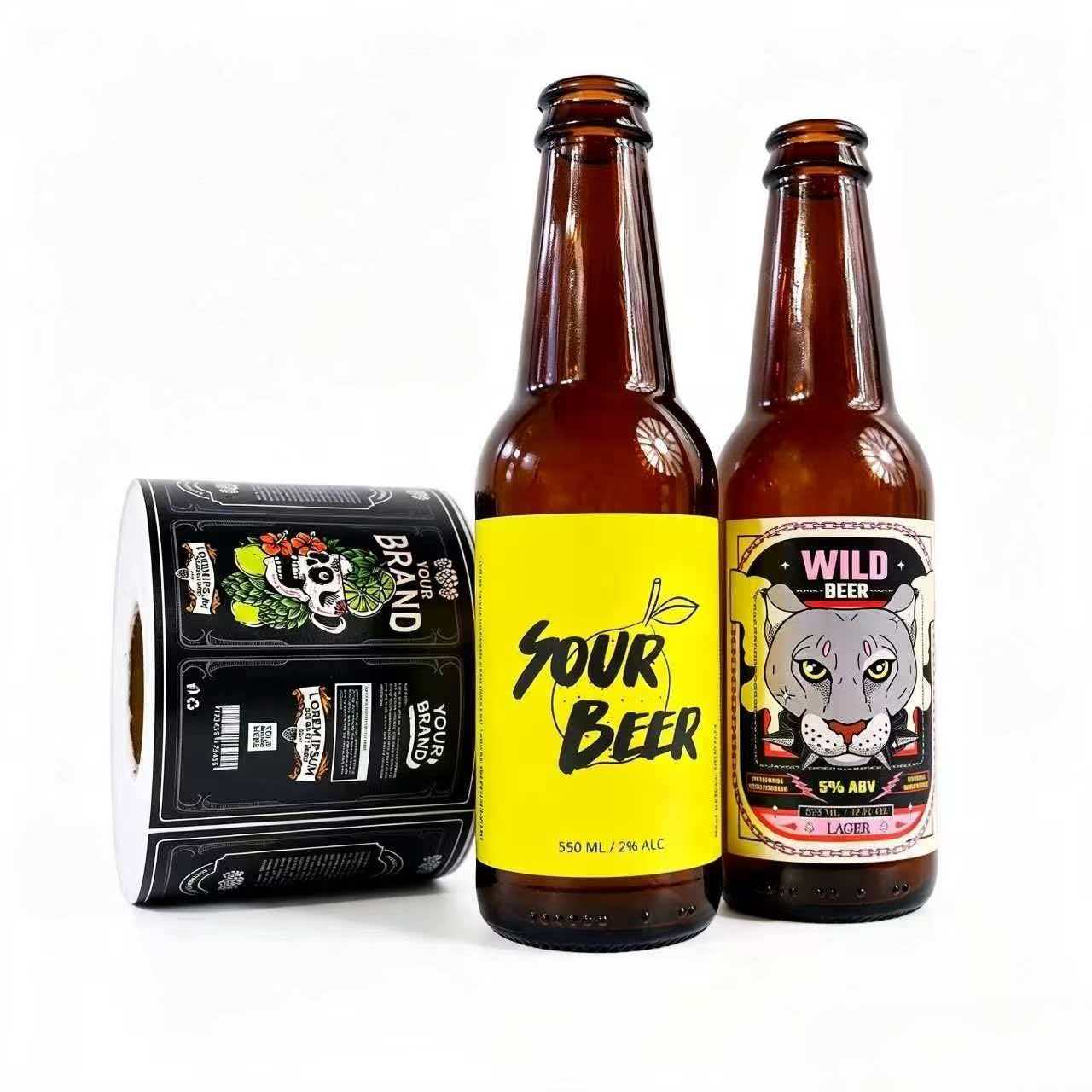
- Ordering before measuring the container. The result can be a label that does not fit the intended panel. Measure the application area or provide the bottle specification before requesting final artwork.
- Calling a chilled product standard storage. Condensation can affect adhesion. State refrigeration and moisture exposure in the RFQ, even if the product only enters cold storage after distribution.
- Using clear film without defining white ink. Clear materials can change how colors and text appear against the beverage and container. Identify white ink areas directly in the artwork or request proof guidance.
- Leaving finishes out of the purchase order. Matte film, gloss treatment, foil stamping, and lamination should be written into the specification, not left as a verbal expectation.
- Assuming an old file is ready to reorder. Check version dates, formula changes, barcode updates, and contact details before repeating a prior job.
- Waiting until stock is nearly exhausted. A reorder still needs confirmation. Plan around proof review, bulk production, and shipping rather than relying on emergency dispatch.
These checks are especially useful for buyers managing several SKUs. A practical approach is to keep one approval record for each product version containing the final artwork, label dimensions, finish notes, quantity, and date of approval. That record becomes the reference point for future roll label printing orders.
Use Reorder Planning to Protect Packaging Continuity
For a stable product line, the recommended approach is to treat the first approved label as a controlled reference, then review only what has changed before the next release. This fits recurring beverage programs with predictable packaging. It does not apply when the formula, bottle, market text, design, or storage conditions have changed, because each change may affect the label specification.
Before placing a reorder, confirm the following:
- The bottle, can, or container surface has not changed.
- The label size and shape remain the same.
- The approved artwork version is still current.
- The selected material and finish remain suitable for actual storage conditions.
- The reorder quantity matches the printing method and your inventory plan.
- The requested delivery date includes the stated production and shipping windows.
Custom Panda provides color mismatch free reprint, proportional replacement for defects, 5 day fast restocking or repair, and 100 bonus pieces with every bulk order. These measures provide added support when a confirmed production issue occurs. They should not be used as a reason to skip proof review, packaging testing, or reorder planning.
Send your bottle details, artwork, target quantity, and required delivery date to request a quote and proof review for your next label order.