

Custom Bottle Labels Cost With Roll Format Specs
Before placing a label order, procurement teams can regret focusing on the printed unit price while missing the roll specifications that affect application waste, line interruptions, and the number of usable labels that reach finished bottles. A quote may look lower on paper but create a higher applied label cost when the roll does not suit the applicator, bottle shape, or production schedule.
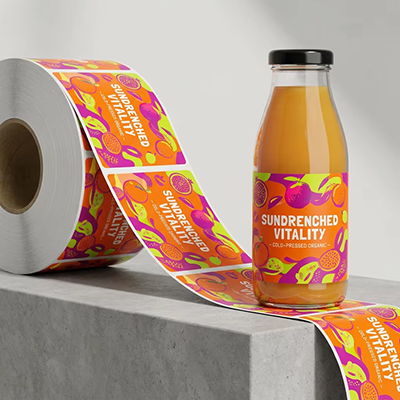
For Custom Bottle Labels, the buying decision should cover more than artwork, material, and print quantity. Roll diameter, label size, repeat length, unwind direction, core requirement, and anticipated setup loss can change the usable output from the same purchased quantity. The correct comparison is not simply “cost per printed label.” It is cost per correctly applied label on a saleable bottle.
This guide sets a practical cost boundary for beverage, cosmetic, supplement, food, and household bottle programs. It separates confirmed supplier facts from quote dependent amounts, then shows how to request comparable offers. For products facing moisture, refrigeration, or frequent handling, review oil & waterproof labels for bottles & cosmetics alongside the roll specification rather than treating material selection as a separate decision.
Define the Cost Boundary Before Comparing Label Quotes
Conclusion: Compare the cost of accepted labels applied to bottles during one defined production run, not the price of labels alone. This fits procurement teams preparing a production run with a known bottle, applicator, artwork version, and order volume. It does not apply when a buyer is only ordering hand applied labels for a small trial, because roll compatibility may have little effect on labor or waste.
A useful quote comparison starts with a common boundary. Specify whether the cost review includes only the printed rolls, or whether it also considers expected setup loss, rejected applications, freight, and reorders. Do not combine these costs casually. A unit print price is measured per supplied label, while application waste is measured per label not converted into a finished product.
| Cost category | Include in an applied label comparison | Why it matters | Status before quotation |
|---|---|---|---|
| Printed label rolls | Yes | This is the direct purchased product. | Quote dependent |
| Material and finish | Yes | Substrate, lamination, ink coverage, and foil change manufacturing requirements. | Quote dependent |
| Roll diameter and core | Yes | These must fit the label applicator and influence roll changes. | Buyer supplied input |
| Repeat length and label pitch | Yes | These affect sensor registration and machine handling. | Buyer supplied input |
| Application line waste | Yes, as an estimate | Waste determines how many purchased labels become accepted applications. | Line specific estimate |
| Artwork revisions | Include when applicable | A design change can make remaining inventory unusable. | Project specific |
| Freight and destination charges | Separate unless terms match | Two label quotes are not comparable if delivery terms differ. | Quote dependent |
Custom Panda provides free shipping as a stated selling point, but a procurement file should still record the delivery destination, shipment method, and commercial terms in the final quotation. Free shipping should not be converted into an assumed freight amount or compared against a competitor’s unlabeled freight allowance.
Keep project scope stable. If one quote is for matte paper labels and another is for BOPP with lamination, the buyer is not comparing like for like. Matte paper can fit dry, short use packaging. It is not the default choice for bottles exposed to condensation or water. Where appearance and product exposure allow, premium custom matte labels can be assessed as a separate material option, with its limitations stated clearly.
Identify the Roll Specifications That Change Applied Label Cost
Conclusion: Lock the applicator requirements before selecting the lowest print quote. This approach fits automated or semi automated bottle lines where roll handling affects throughput and waste. It is less relevant for manual applications, where a sheet, individual label, or small roll format may be more practical.
Each of the following inputs influences the number of usable labels, the frequency of roll changes, or the chance that labels cannot be processed as intended. They should appear on the RFQ and proof approval record.
- Label width and height: These determine the face area, material consumption, die shape, and fit on the bottle panel. Use the actual applied label dimensions, not an approximate artwork canvas. A larger label may improve shelf presence but can increase material use and may require a different roll arrangement.
- Repeat length: The repeat length is the distance from one label position to the next on the liner. It must match the applicator’s sensing and dispensing needs. A compact layout can reduce unused liner between labels, but it may not be suitable if the machine needs a particular gap for accurate dispensing.
- Roll diameter: A larger roll can carry more labels and reduce changeovers, provided the unwind station accepts that diameter and roll weight. A larger diameter is not automatically better if it exceeds equipment limits or becomes difficult for operators to handle.
- Core size and roll width: These physical dimensions must fit the machine spindle, guides, and unwind assembly. Confirm them with the line operator rather than relying on a previous supplier’s assumptions.
- Unwind direction: The label must leave the roll in the orientation required by the applicator. Incorrect orientation can make an otherwise acceptable roll unusable without rework.
- Label material and adhesive: Condensation, heat exposure, bottle texture, oil contact, and product handling must be disclosed. A lower initial material cost is not a saving if adhesion failures create rejected finished goods.
- Finish and ink requirements: BOPP lamination, UV resistant inks, and foil stamping colors are available options from Custom Panda. They should be specified only when the product environment or brand presentation justifies them.
For a clear bottle program, opacity deserves direct attention. White ink may need to provide coverage on a clear substrate, and that requirement should be confirmed during sampling. For high end retail products, foil can be appropriate, but it is a separate cost driver from the bottle label roll itself. An Australian natural health supplement project used matte BOPP film with scratch proof lamination and metallic foil stamped roll labels. That case supports the use of these features for a premium retail presentation; it does not establish a universal cost or performance result for every supplement bottle.
Cost: A Total Cost Model Linking Roll Diameter, Label Size, Repeat Length, and Application Line Waste
Conclusion: Use a usable label model that converts purchased labels into accepted bottle applications. This model fits buyers who can obtain line data or a reasoned waste allowance from operations. It does not replace a line trial when a new material, bottle geometry, adhesive, or applicator setup is being introduced.
The model should not create false precision. If the line has not run the chosen format before, waste remains an estimate. Still, recording the assumption makes competing quotations easier to evaluate.
Core formula:
Applied label cost per accepted bottle = Total label program cost ÷ Accepted applied labels
Accepted applied labels = Labels supplied − Setup loss − Application rejects − Unused labels from an obsolete artwork version
The connection between roll format and this formula is direct:
| Specification | Cost relationship | Information needed | Limit of the comparison |
|---|---|---|---|
| Label size | Changes material area, die layout, and labels carried per roll. | Finished width, height, corner shape, and bottle panel drawing. | Do not reduce size if mandatory copy or barcode readability is affected. |
| Repeat length | Changes liner use and determines spacing between labels during dispensing. | Machine sensor requirement and preferred label gap. | A shorter repeat is not suitable if it creates registration issues on the line. |
| Roll diameter | Influences labels per roll and the number of planned roll changes. | Maximum accepted diameter and handling preference. | A larger roll is unsuitable if the applicator cannot accept it. |
| Application line waste | Reduces the usable yield from purchased rolls. | Historical line records or trial assumptions. | Do not present an estimate as a confirmed manufacturing defect rate. |
| Artwork lifecycle | Can turn remaining inventory into unusable stock after a compliance or packaging change. | Expected product run length and artwork approval status. | Smaller orders may cost more per label but can reduce obsolete inventory risk. |
A Worked Procurement Method Without Invented Pricing
Assume a buyer has two suppliers offering the same material, adhesive, label artwork, quantity, and delivery basis. Supplier A proposes a roll format with a smaller outside diameter. Supplier B proposes the maximum diameter accepted by the bottling line. The buyer should not declare Supplier B cheaper only because the roll contains more labels. Instead, operations should confirm whether the larger roll can be loaded safely and consistently.
- Record the purchased label quantity from each quote.
- Record labels per roll, roll diameter, core size, roll width, and unwind direction.
- Ask the production team to estimate the number of labels lost during initial setup and each roll change based on its own operating records.
- Calculate the expected number of roll changes for each offer.
- Add estimated setup and changeover waste to any anticipated application rejects.
- Subtract estimated waste from supplied labels to calculate expected accepted applications.
- Divide each supplier’s total quoted program price by expected accepted applications.
This approach creates a valid comparison only if the materials, print coverage, finishing, quantities, delivery terms, and quote validity period are aligned. If one supplier offers clear BOPP and another offers white film, or one quote includes foil while the other does not, the results answer different buying questions.
Use a small production trial where uncertainty is high. Custom Panda offers photo or digital sample confirmation before production, and samples for pins, patches, and labels have a stated lead time of 3 days. A digital or photo confirmation verifies artwork expectations, but it does not replace an application test on a buyer’s own bottle line. The buyer should retain responsibility for confirming equipment compatibility and product exposure conditions.
Separate Confirmed Costs, Estimates, and Unknown Costs
Conclusion: Treat a label quotation as a controlled set of commercial assumptions. This fits any team comparing multiple suppliers. It does not mean every unknown must be priced before ordering; it means unknowns must be visible instead of being hidden inside an apparently low unit rate.
| Cost status | What can be stated from available facts | What must be requested or validated |
|---|---|---|
| Confirmed facts | Custom Panda has digital printing options with no MOQ and standard offset bulk items with a 1,000 unit minimum. The company has an ISO 9001:2015 quality management system certification and Disney FAMA certification. | Specific price, currency, tax treatment, and quote validity are not supplied facts. |
| Confirmed operational support | Bulk production is stated as 8 to 9 days, while label samples have a stated lead time of 3 days. A color mismatch free reprint, proportional replacement for defects, 5 day fast restocking or repair, and 100 bonus pieces with every bulk order are listed terms. | Determine whether the proposed order qualifies as bulk and confirm all remedy terms in the order documentation. |
| Estimated amounts | Application waste, operator time for roll changes, and obsolete inventory exposure are buyer specific estimates. | Use actual production records, pilot data, or an operations approved assumption. |
| Unknown until quote | Material price, adhesive selection, die requirements, finish cost, freight basis, and final roll count depend on the exact RFQ. | Submit label dimensions, quantity, material request, roll format, destination, and artwork. |
There is a legitimate lower cost choice in many projects: reduce optional finishing, use a simpler label shape, avoid unnecessary color layers, or select a material designed for the actual bottle environment rather than the harshest imaginable condition. That choice is sensible when the product will remain dry, the label is not exposed to refrigeration, and the brand does not require premium effects. It is not sensible when the label must tolerate condensation, oil, or frequent handling and the lower specification creates adhesion or surface damage risk.
Buyers choosing film based options can request clear custom bopp labels for appropriate applications. BOPP selection alone is not enough. The RFQ must still identify whether the bottle is glass or plastic, whether it will enter cold storage, and whether the label receives direct water or oil contact.
Prevent Quote Errors That Raise the Final Applied Cost
Conclusion: Most avoidable cost problems begin with missing operating details, not with a supplier’s printed label rate. This checklist fits new bottle launches, supplier changes, and repeat orders with revised artwork. It is less relevant only when the exact label format has already been approved and the same machine, bottle, and application conditions remain unchanged.
- Comparing different label constructions: Require the same face stock, adhesive intent, finish, and print coverage before comparing pricing.
- Omitting applicator data: Provide maximum roll diameter, core size, unwind direction, and roll width. Never assume a supplier can infer them from the label artwork.
- Ignoring bottle geometry: Send bottle photographs or a technical drawing. Tapered, textured, curved, or squeeze bottle surfaces can affect label placement.
- Ignoring condensation: State cold storage, refrigeration, or wet handling conditions. This matters because labels can peel when moisture affects the adhesive bond.
- Using an unapproved color reference: Submit brand color requirements before production. Custom Panda’s photo or digital confirmation provides a defined approval point.
- Ordering excessive inventory before regulatory copy is final: Use an order quantity aligned with approved artwork and forecast confidence. Lower unit rates can be offset by obsolete stock.
- Assuming a proof validates machine performance: A design proof checks art. It does not confirm that every roll specification works on the buyer’s application line.
Build a Comparable RFQ for the Next Bottle Production Run
Conclusion: A short but complete RFQ produces a more useful budget than a request for “best price per label.” It fits procurement teams seeking an auditable supplier comparison and is especially useful when application equipment is involved. It will not remove every unknown, but it will expose which assumptions require a trial or internal approval.
Custom Panda operates an 8,000 m² facility with 6 production lines and 6 HP digital label presses, along with complete metal die casting and embroidery facilities. For labels, the relevant buying value is capacity and the available printing options, not a presumed fixed price. Standard bulk items have a 1,000 unit minimum for better bulk pricing, while digital printing and select custom items have no MOQ. State the required order quantity and whether the project is a pilot, launch, or repeat production run.
- Provide the bottle material, bottle circumference or drawing, and label placement area.
- State finished label width, height, shape, and corner treatment.
- Identify the required material, adhesive condition, lamination, white ink, foil, and finish.
- Specify quantity, number of artwork versions, and whether the order is digital printing or standard bulk production.
- Provide roll diameter limit, core requirement, maximum roll width, repeat length or required gap, and unwind direction.
- State whether labels are hand applied, semi automated, or applied on a production line.
- Share expected cold storage, condensation, oil contact, water exposure, and handling conditions.
- Request that freight, delivery basis, sample approval process, and quote validity are stated separately.
- Ask operations to add a documented waste assumption before selecting the supplier.
A quote comparison should end with one decision table: quoted program price, supplied quantity, expected accepted labels, applied cost per accepted bottle, material specification, roll specification, delivery terms, and open risks. That creates a purchasing record that finance, quality, operations, and marketing can review without confusing estimates for confirmed costs.
Submit your bottle drawing, applicator roll requirements, and expected order quantity for a comparable roll format quote.