

Custom Business Labels for Product Launches
A label sourcing mistake can delay a product launch after cartons, bottles, pouches, and retail displays are already ready. A buyer may approve attractive artwork, then discover that the adhesive fails on a chilled bottle, white ink looks weak on a clear film, or the label shape does not fit the final package. These issues cost more than a reprint because they can interrupt packing schedules and retailer delivery dates.
Custom Business Labels should be sourced as a packaging component, not as a final design task. Procurement teams need to confirm the application surface, storage conditions, label material, print process, proof approval method, order quantity, and delivery plan before issuing a purchase order. The right decision depends on where the label will be applied and what happens to the product after labeling.
For example, a supplement bottle that sits in a dry retail environment has different needs from a food container entering cold storage. A paper label may suit a short campaign on dry cartons, while a synthetic film may be a better fit for moisture exposure. The objective is simple: specify the label for its real working conditions, not only its shelf appearance.
Start with the product application instead of the label finish
The first sourcing decision is the package environment. Buyers often begin by comparing matte, gloss, foil, or clear materials. Those choices matter, but the surface and handling conditions should come first. A label that looks premium can still peel, wrinkle, tear, or lose readability when the package environment was not disclosed to the supplier.
Choose the substrate based on exposure risk. This is the best approach for launch teams with several packaging formats because it prevents one material from being used across products with conflicting needs. It does not apply when every SKU uses the same package surface and storage condition; in that case, one tested construction may be suitable across the range.
| Launch condition | Recommended sourcing direction | Why it fits | Limit or question to resolve |
|---|---|---|---|
| Dry cartons, inserts, or retail sleeves | Paper or kraft stock | Useful when a natural or uncoated presentation supports the brand. | Do not select it for repeated moisture exposure without confirming protection. |
| Bottles, jars, or cosmetic containers | Film based packaging label materials | Film options can be considered when water resistance and stronger handling performance are required. | Confirm the container material, curvature, oil exposure, and application method. |
| Cold storage or condensation | Cold resistant adhesive construction | Addresses the risk of labels lifting when condensation appears on the package. | Do not assume ordinary adhesive will hold after refrigeration. |
| Outdoor or high light handling | UV resistant inks and suitable film | Helps buyers plan for labels exposed to light and weather. | Provide the expected use environment before material approval. |
| Clear packaging with light artwork | Clear BOPP with white ink review | Supports a label free visual effect while allowing opaque areas where needed. | White ink opacity must be checked on an actual clear sample. |
For bottle and jar programs, review custom beverage & cosmetic bottle labels only after sharing the container material and whether the surface is straight, tapered, textured, or flexible. For chilled or wet products, oil & waterproof labels for bottles & cosmetics are a more relevant starting point than untreated paper stock.
At Custom Panda, labels can be produced with a wide substrate selection, BOPP lamination, UV resistant inks, and custom foil stamping colors. These options are useful only when tied to a defined application. Foil can improve shelf presentation, for instance, but it does not replace selecting the right adhesive for a refrigerated package.
Build a launch specification that suppliers can quote accurately
A quote request should give each supplier the same technical inputs. Without a consistent request, procurement teams receive prices based on different assumptions, making comparison unreliable. One quote may include lamination while another may not. One may assume roll supply while another assumes individual pieces. The lowest number then becomes hard to evaluate.
Use one written specification for every supplier. This fits product launches with more than one stakeholder, such as brand, operations, packaging, and purchasing. It is less necessary for a repeat order where the approved material, die line, and packing method are already recorded.
Information to include in the RFQ
- Product and package: State the product type, container material, package shape, and the exact label placement area.
- Storage and use: Identify cold storage, humidity, water contact, oil contact, outdoor exposure, or industrial handling before application.
- Artwork files: Provide the latest approved logo, copy, barcode, and dieline. Flag variable data if individual codes, names, or batch fields are needed.
- Print and finish: Specify clear, white, matte, gloss, foil, lamination, or writable areas. Ask whether handwriting must remain legible after lamination.
- Format: Confirm rolls, sheets, or individual pieces, plus any packing preference needed for your labeling process.
- Quantity by SKU: List each variant separately. A total quantity without an SKU split can produce an unusable quote.
- Launch date and ship to location: Work backward from the date your production line or fulfillment partner needs the labels, not the public launch date.
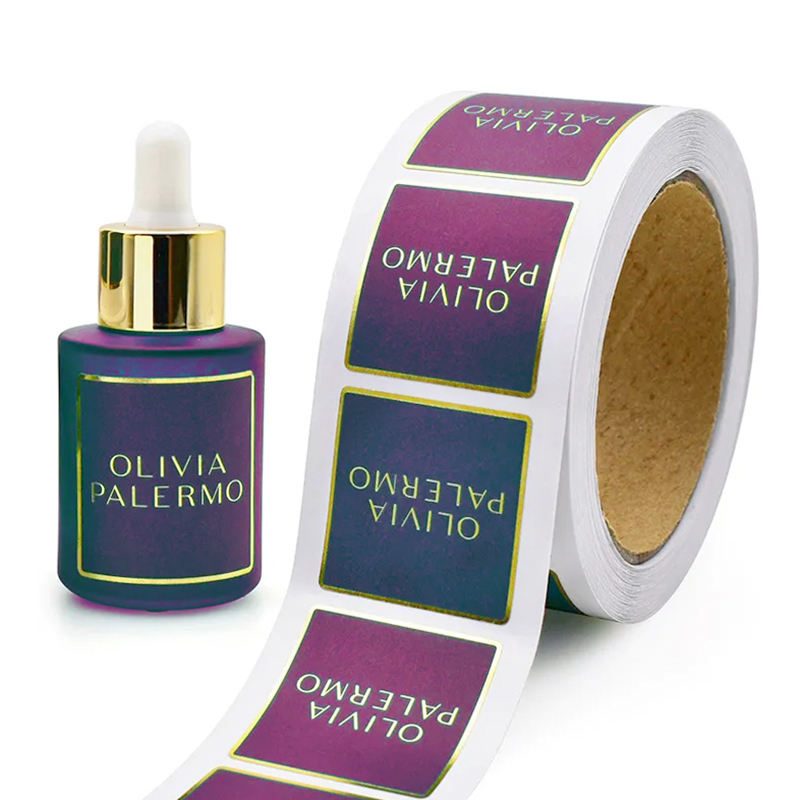
Use premium product labels on rolls when the labels will feed through a dispensing process or when product teams need organized SKU separation. Rolls may not be the right format for hand applied limited runs, so confirm how the labels will actually be applied before finalizing the format.

Compare material, print, and finishing choices against launch risk
Material selection influences appearance, application reliability, and quote structure. Buyers should compare options by the failure they are trying to avoid. A premium finish selected without a functional reason can add cost without helping the launch. Conversely, choosing a low cost stock for a wet package can create relabeling work after products are packed.
| Option | Best fit | Buyer benefit | When not to choose it |
|---|---|---|---|
| Kraft paper label | Dry packaging and natural brand presentation | Supports a paper based visual style for selected packaging. | Avoid for products likely to encounter moisture or condensation. |
| Matte BOPP with lamination | Retail products needing a refined non gloss appearance | Combines a matte appearance with added surface protection. | Do not approve without checking color and adhesive on the final package. |
| Clear BOPP label | Transparent packaging and minimal label coverage | Allows the product or container to remain visible. | Not suitable if artwork depends on white ink but opacity has not been approved. |
| Foil stamped label | Premium retail packaging or special launch editions | Adds a metallic detail to key branding areas. | Do not use foil as a substitute for readable mandatory information. |
| Writable label surface | Operations requiring lot, date, or staff notes | Allows a planned area for handwriting. | Do not assume every coated or laminated finish accepts handwriting. |
A real reference point is an Australia project for a natural health supplement brand. Custom Panda supplied metallic foil stamped roll labels using matte BOPP film with scratch proof lamination for a high end retail presentation. This shows how finish, film, and protection can be combined for a particular retail use. It is not a blanket recommendation for all supplement or bottle labels; the container and handling conditions still need review.
Color should be treated as a production approval item, particularly for regulated packaging, established brand palettes, and clear films. Custom Panda offers photo or digital sample confirmation before production, color mismatch free reprints, and proportional replacement for defects. These measures support launch risk control, but they do not remove the buyer’s responsibility to approve the correct artwork, copy, and material before bulk production.
Use an approval to delivery sourcing checklist before releasing the order
This approval to delivery checklist covers the points most likely to cause late changes. Each item matters because a product launch has several dependencies: packaging arrival, filling or assembly, warehouse intake, retail allocation, and shipment. Skipping one check can turn a minor production question into a missed packing window.
| Check item | What to confirm | Risk if skipped | Decision guidance |
|---|---|---|---|
| Artwork files | Final copy, brand colors, barcode, dieline, SKU names, and revision number. | Incorrect claims, outdated branding, missing codes, or label dimensions that do not fit the package. | Release only one controlled artwork version to every approver and supplier. |
| Material samples | Actual label stock and adhesive applied to the final container or package. | Peeling, tearing, weak adhesion, poor white ink coverage, or a finish that conflicts with brand expectations. | Test the sample under the product’s real handling and storage conditions before bulk approval. |
| MOQ | Whether the order uses digital printing or standard bulk production. | A launch team may budget for a small run that does not meet the process requirement. | Digital printing and select custom items have no MOQ; offset printing and standard bulk items have a 1,000 unit minimum. |
| Proof sign off | Approval of copy, color, die line, finish, material, and roll direction where relevant. | Disputes after printing because a stakeholder approved design but not production details. | Name one accountable approver and retain the signed or documented proof. |
| Production lead times | Sample, bulk production, dispatch, shipping, and warehouse receiving time. | Labels may arrive after the packaging line or retail delivery appointment. | Plan from the required receipt date. Samples for pins, patches, and labels take 3 days; bulk production is 8 to 9 days; U.S. shipping is 5 to 6 business days. |
For select ready stock or digital items, same day dispatch may be available. Treat that as an option to confirm, not as a default launch plan. Likewise, the listed fast production offer for certain products should not override the stated 8 to 9 day bulk production timing for standard label orders. A procurement schedule should include proof review time and a buffer for receiving inspection.
Control launch cost by comparing total sourcing inputs
Unit price matters, but it is not the full cost of a label program. A quote can appear lower because it excludes a finishing step, uses a different stock, or assumes a different quantity split. Compare like for like before selecting a supplier.
Choose the supplier that can meet the approved specification and schedule, not simply the lowest quoted unit figure. This is especially relevant where relabeling would delay filling, fulfillment, or retailer delivery. It may not apply to an internal office label with no product or customer facing consequence, where basic cost control can take priority.
| Cost area | What changes the cost | How to control it |
|---|---|---|
| Material and adhesive | Paper versus film, package surface, moisture resistance, and temperature needs. | Approve a material sample early instead of changing stock after printing begins. |
| Print method | Digital or offset process, order volume, number of versions, and artwork complexity. | Group stable SKUs where possible, but avoid ordering excess quantities for changing product information. |
| Finish | Lamination, foil stamping, matte or gloss surface, and custom shapes. | Use enhancements only where they support shelf presentation or handling needs. |
| Quantity and SKU split | Total units, number of versions, and whether each variant has a different design. | Provide a clear SKU forecast so the supplier can quote the correct production method. |
| Freight and timing | Shipping destination, dispatch timing, and whether urgent arrangements are needed. | Request the delivery plan during quoting, not after final production approval. |
Custom Panda operates an 8,000 m² facility with 6 production lines and 6 HP digital label presses. The stated daily label capacity exceeds 1,000,000 pieces. For buyers managing multi SKU launches, this capacity information is relevant when discussing volume and timing, but it should still be matched to your approved artwork, material availability, production queue, and required ship date.
Avoid the label sourcing errors that disrupt product launches
- Approving artwork before seeing the package: A flat proof cannot show how a label wraps around a tapered bottle or crosses a seam. Apply a sample to the final packaging first.
- Using one material for every SKU: A dry box label and a refrigerated bottle label may need different constructions. Split specifications when conditions differ.
- Leaving mandatory copy until the last review: Late changes to ingredients, instructions, barcodes, warnings, or addresses can restart approval. Freeze required copy before proof sign off.
- Ignoring white ink on clear film: Clear labels need a specific review of any areas that must remain opaque. Do not rely on screen artwork alone.
- Ordering only to the public launch date: Labels are needed before assembly, filling, or warehouse intake. Build launch inventory planning around the internal receipt date.
- Comparing unmatched quotes: Confirm material, adhesive, finish, quantity, format, shipping, and proof process before declaring one supplier less expensive.
- Skipping receiving inspection: Check outer packaging, SKU separation, visual appearance, and a small application test before labels enter the production line.
For a controlled buying process, request a quote with the package details, target quantity by SKU, artwork status, preferred material direction, and required delivery date. Ask for adhesive label samples before you approve the production proof.