

Custom Business Labels Sheets vs Rolls FAQ
Before placing a label order, buyers often focus on artwork, material, and finish but miss the format decision. That can create avoidable handling costs after delivery. A sheet label that looks economical may slow a packaging line, while a roll label ordered for hand application may add unnecessary setup requirements.
Custom Business Labels should be specified around how your team applies them, how often you reorder, and whether your operation may add a dispenser or labeling machine later. The right format is not simply a print preference. It affects packing speed, storage, waste control, and how easily staff can keep the correct label facing outward on each product.
This FAQ is designed for small businesses, packaging managers, warehouse teams, and procurement staff who need to choose between sheets and rolls before sending an RFQ. At Custom Panda, label production is supported by an ISO 9001:2015 certified quality management system, six production lines, and six HP digital label presses. We also confirm photo or digital samples before production, which helps buyers identify format or artwork concerns before a full run begins.
What is the main difference between sheets and rolls?
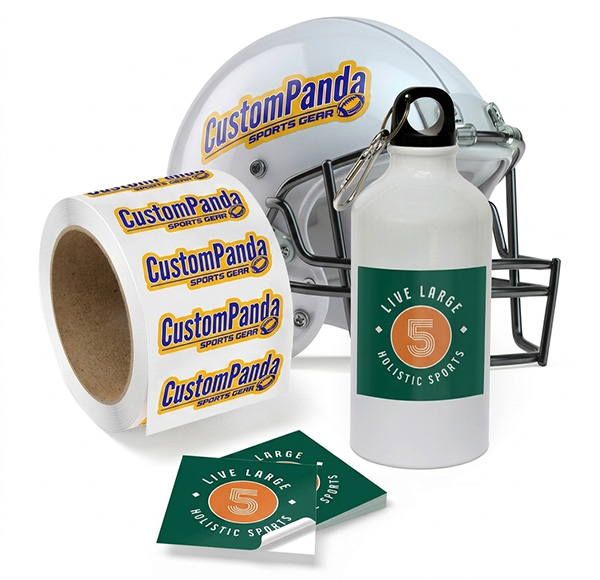
Choose sheets when people apply labels by hand in smaller or variable batches. Choose rolls when labeling is repetitive, frequent, or machine assisted. Sheets hold multiple labels on a flat backing. An operator peels one label at a time and applies it to a product, envelope, carton, or folder. Rolls hold labels in a continuous wound format, allowing faster peeling by hand, use with a dispenser, or feeding through compatible automated equipment.
The reasoning is practical. A flat sheet is easy to sort, write on when the chosen surface permits it, and keep near a desk or packing station. A roll keeps a repeating label design organized in one supply unit. It is generally the better option when an operator applies the same label across a long run of cartons, bottles, bags, or jars.
Sheets do not suit every job. They are less convenient for a high repetition packing table because staff must handle and reposition individual sheets. Rolls also have limits. If your team applies only occasional labels, stores many short runs, or needs several designs accessible at once, individual rolls can be harder to organize than labeled sheets.
When are sheet labels the better buying choice?
Use sheets for office identification, short packing runs, product trials, event kits, seasonal stock, and businesses where one person labels several different products during a shift. They also fit orders where artwork or variable information changes often enough that holding large repeat inventory is not sensible.
- Best fit: Manual application at desks, benches, or small packing areas.
- Reason: Flat sheets are easy to separate by design, SKU, department, or campaign.
- Practical example: A retailer may keep separate sheet sets for return boxes, thank-you seals, price tags, and file identifiers.
- Limit: Sheets are not the first choice for automated label applicators or long repetitive production runs.
For paper based packaging and short-run branded applications, review affordable custom paper labels for packaging & branding. Paper can be appropriate for dry indoor use, but it should not be selected where moisture, condensation, oils, or rough handling are expected.
When are roll labels the better buying choice?
Use rolls for a repeating label design on products that move through a packing process every day or every week. They are commonly selected for bottles, food packaging, cosmetic containers, mailers, and cartons. A roll supports a consistent peel-and-apply rhythm and can work with a manual dispenser or a compatible automated labeling system.
- Best fit: Repeated application of one design or SKU.
- Reason: The backing advances continuously and reduces repeated sheet handling.
- Practical example: A packing team labeling a recurring product line can stage one roll at each workstation.
- Limit: Roll direction, core requirements, label spacing, and machine compatibility must be agreed before production if equipment will be used.
For recurring production applications, explore custom printed roll labels, premium quality & fast shipping. Do not assume every roll will fit every dispenser or machine. The printer needs the equipment details before confirming the construction.
How do sheets and rolls fit manual application, dispensers, automated labeling, and reorder volumes?
Select the format around the application method first, then set quantity around realistic replenishment needs. The table below maps the two formats to the work conditions buyers should state in an RFQ.
| Operating condition | Sheet labels | Roll labels | Buyer decision and limitation |
|---|---|---|---|
| Manual application | Strong fit for small mixed jobs, desk use, and intermittent labeling. | Good fit for repetitive hand application from a packing bench. | Choose sheets when staff switch between designs often. Choose rolls when one design is applied repeatedly. Neither format corrects poor surface cleaning or unsuitable adhesive selection. |
| Manual dispenser use | Usually not suitable because dispensers are designed for roll-fed labels. | Strong fit when the roll dimensions and label presentation match the dispenser. | Choose rolls, but provide dispenser model information or its roll requirements. A roll that does not match the dispenser may not feed correctly. |
| Automated labeling | Not suitable for standard roll-fed automated applicators. | Required for typical automated labeling systems, subject to machine requirements. | Choose rolls only after confirming core size, unwind direction, outside roll diameter, label gap, and application orientation. A printer cannot safely guess these specifications. |
| Small or uncertain reorder volume | Useful when designs change, demand is unproven, or several SKUs need small quantities. | Useful for repeat work, but excess inventory can become obsolete if branding changes. | Digital printing and select custom items have no MOQ. Standard bulk or offset printing begins at 1,000 units. Ask which production method fits your artwork and volume. |
| Frequent repeat reorders | Can work, although staff handling may become inefficient as usage rises. | Usually the better operational choice for stable, recurring SKUs. | Use rolls when the same label is consumed regularly. This does not mean every high-volume order needs automation; hand application can still be appropriate. |
Reorder volume should be measured against label consumption, not only unit price. A larger order may reduce per-unit purchasing cost, but that saving disappears if a regulation, ingredient list, barcode, address, or logo changes before the labels are used. For uncertain product launches, a smaller digital run can be a safer starting point. For stable packaging with predictable demand, standard bulk production can offer better pricing from 1,000 units.
Which label material should a business select for the product environment?
Choose the material and adhesive based on exposure, not appearance alone. A label can look correct at packing but fail later in refrigeration, during transport, under heat, or after contact with moisture and oils. The buyer should identify the container material, the application temperature, and the conditions after application.
| Product condition | Recommended direction | Why it fits | When it does not apply |
|---|---|---|---|
| Dry indoor cartons, folders, and office supplies | Paper or kraft options | These can support branding and ordinary indoor identification. | Do not use ordinary paper where water, oil, freezer exposure, or heavy abrasion is expected. |
| Bottles, jars, or packaging exposed to moisture | Synthetic films with a matched adhesive | They are better suited to moisture-prone packaging than basic paper constructions. | Material alone is not enough; adhesive must suit the bottle, jar, and application environment. |
| Clear packaging with white artwork | Clear film with verified white ink coverage | White ink helps preserve artwork visibility on transparent substrates. | Do not approve based only on a screen preview. Ask for a sample confirmation because opacity and visual effect depend on artwork and substrate. |
| Outdoor or long handling exposure | Weather-oriented synthetic options | These are better candidates where water and handling are expected. | State UV exposure, surface type, and any chemical contact. No generic label should be assumed suitable for every outdoor condition. |
| Premium retail presentation | Matte BOPP, lamination, or foil details | These options can create a refined shelf appearance while adding surface protection. | Decorative finishing does not replace a suitable adhesive or container test. |
Custom Panda offers wide substrate selection, BOPP lamination, UV-resistant inks, and custom foil stamping colors. These options should be chosen for a stated business need, not added automatically. For example, an Australia natural health supplement brand used metallic foil-stamped roll labels with matte BOPP film and scratch-proof lamination for a high-end retail shelf presentation. That is a specific retail case, not a guarantee that the same construction suits every supplement container.
For wet-use packaging, consider oil & waterproof labels for bottles & cosmetics. For a clear package, clear custom bopp labels may be relevant. In both cases, share the actual container and usage conditions rather than selecting by product category alone.

What details should be included in a label RFQ?
A usable RFQ describes the application process, not just the artwork. This gives the printer enough information to recommend a format, material, finish, and adhesive direction. It also reduces the risk of receiving labels that look correct but do not work at the packing station.
- State the end use. Specify whether the label identifies a product, seals a package, carries a barcode, marks a carton, supports a promotion, or organizes office stock.
- Describe the surface. Name the material being labeled, such as glass, plastic, paperboard, metal, pouch film, or corrugated carton. If possible, provide a photo of the container.
- Explain application conditions. State whether labels are applied by hand, dispenser, or machine, and whether the surface is cold, dry, dusty, curved, textured, or already condensed.
- Choose sheet or roll format. For rolls, provide core, unwind direction, maximum outer diameter, label gap, and machine details where applicable.
- List size and shape. Include label width and height, corner style, die-cut shape, and whether there is a front and back label.
- Identify artwork requirements. Send print-ready files where available and specify brand colors, white ink on clear stock, foil areas, barcode content, and variable data requirements.
- Set the expected quantity. State the first order quantity and anticipated reorder volume. This helps identify whether digital or standard bulk production is a better fit.
- Request approval before production. Ask for photo or digital sample confirmation, especially when using clear materials, foil, special finishes, or a new container.
For stable artwork, Custom Panda lists a sample lead time of 3 days for labels, bulk production of 8 to 9 days, and U.S. shipping of 5 to 6 business days. These are planning references, not a substitute for confirming the schedule for a specific order, material, quantity, and shipping destination. Same-day dispatch is available only for select ready-stock or digital items.
What mistakes cause the most expensive label ordering problems?
The costliest errors happen when buyers approve artwork without testing the application process. The following mistakes are preventable when purchasing, production, and packing teams review the RFQ together.
- Ordering sheets for a repetitive packing line: This may appear simple at first, but it can increase hand movements and slow staff. Use sheets for mixed, intermittent work; move to rolls when the same label is applied repeatedly.
- Ordering rolls without machine specifications: Roll direction and core details influence how labels feed. A roll suited to hand application may not work on an automated applicator.
- Choosing paper for a wet environment: Paper labels can tear or lose appearance where condensation, water, or oil is present. Consider synthetic materials when the product environment requires them.
- Ignoring cold storage conditions: Labels can peel when condensation forms in cold storage. Tell the supplier whether the label is applied before chilling, after chilling, or onto a damp surface.
- Using a standard adhesive around heat: Adhesive can bleed under high temperatures. Specify heat exposure and product conditions early rather than trying to correct the problem after a production run.
- Assuming clear stock makes white artwork visible: White ink may need additional attention on transparent substrates. Request confirmation of white areas before production.
- Buying too many labels before a launch is proven: Bulk purchasing can improve pricing, but unused labels become a loss when a package changes. Start closer to demand when details are still moving.
- Approving colors from a monitor only: Screen colors vary. Provide brand references and use the available sample confirmation process before bulk printing.
Our defect support includes a color mismatch free reprint, proportional replacement for defects, 5-day fast restocking or repair, and 100 bonus pieces with every bulk order. These measures support quality management, but they do not remove the need to specify the right material and format before manufacturing.
Frequently asked questions before ordering
Can I use roll labels without a dispenser?
Yes. Roll labels can be applied by hand and often suit repetitive manual work. Choose them when one person applies the same design across a consistent run. They may not be the best option when staff need to switch among many label designs throughout the day, because separate rolls require more organization.
Can sheet labels be used in an automated labeling machine?
Usually no. Standard automated applicators are generally designed for roll-fed labels. If automation is planned, confirm the machine requirements before ordering. Do not convert an existing sheet design to rolls without reviewing direction, gaps, and machine limits.
Do rolls always cost less than sheets?
No. Total cost depends on material, size, artwork, finishing, quantity, print method, and production setup. Rolls can reduce handling time in recurring applications, while sheets can reduce excess inventory for small, mixed, or changing designs. Compare the purchase cost and the labor cost of application.
Should a new business buy a bulk quantity immediately?
Not automatically. If the packaging, claims, branding, or SKU range may change, a smaller digital order can reduce obsolete inventory. When the design and demand are stable, standard bulk production from 1,000 units may offer better pricing. The right decision depends on expected reorder volume and how fixed the artwork is.
How can I confirm that a label will stick to my container?
Provide the container material, a photo, application conditions, and exposure conditions. Ask for a photo or digital sample confirmation before production. For demanding uses such as cold storage, high heat, water exposure, or clear substrates with white artwork, discuss the requirements before approving the final order.
Request a quote with your container details, application method, and expected reorder volume for format advice tailored to your label project.