Custom Club Label Pins Can Cut Reorder Costs With One Shared Design
Here's what buyers usually miss before sending an RFQ for member recognition pins: ordering a fully unique design for every name, graduation year, or officer role quietly multiplies setup fees and shrinks margins on every reorder. If your club, alumni network, or association needs dozens of near-identical Custom Club Label Pins with small text or role changes, treating each one as a brand-new design is the single most expensive mistake in the sourcing process. The fix isn't complicated — it's a shared base design with variable fields — but very few purchasing teams ask about it before quoting.
The Hidden Cost of Treating Every Member Pin as a New Order
Most factories charge a one-time mold or plating setup fee per unique design. For die-struck or hard enamel pins, that typically means new tooling, new color separation, and a new proof cycle each time the artwork changes — even if the only change is a member's name or a graduation year. Order 15 separate designs for 15 chapter presidents, and you pay 15 setup fees, run 15 proof rounds, and wait through 15 separate production queues.
The alternative is simpler: build one base design (your club crest, colors, and layout) and treat the name, year, or title as a variable text field. The tooling stays the same. Only the engraving plate or print film for the text changes between batches. This is standard practice for custom alumni club pins issued yearly, and for sports fan clubs reissuing pins each season.
Cost Analysis: Shared Base Design vs. Fully Unique Pins
Below is a breakdown separating what we can confirm from our production process, what is a reasonable estimate based on typical batching, and what remains genuinely unknown until your artwork and quantities are reviewed.
| Cost Factor | Fully Unique Design (per batch) | Shared Base Design (per batch) | Status |
|---|---|---|---|
| Mold/tooling setup | Charged every time art changes | Charged once, reused across all variants | Confirmed — standard die-casting practice |
| Minimum order quantity | 1,000 units per design (offset/bulk) | 1,000 units can be split across multiple name variants in most cases | Confirmed MOQ baseline; split arrangement should be confirmed per order |
| Sample lead time | 3 days per unique sample | 3 days for the base design; variant text proofs are usually faster | Confirmed for base sample; variant proof speed is an estimate |
| Bulk production time | 8-9 days per design, run separately | 8-9 days total, variants run in the same production cycle | Confirmed production window; variant scheduling savings are estimated |
| Reorder cost for a new member name | Full new setup + proof cycle | Text-only film or plate change, no new tooling | Confirmed as lower cost; exact dollar savings depend on pin style and quantity |
| Color matching risk | Re-approval needed per design | One approved color standard applies to all variants | Confirmed reduction in reprint risk |
The honest caveat: exact dollar savings vary by pin style, plating finish, and how many name variants you batch together. A shield-shaped hard enamel pin with gold plating will save more on tooling reuse than a flat offset-printed pin, where setup costs are already lower. Ask your supplier to quote both scenarios side by side before committing to a production method.
Choosing the Right Pin Style for Variable Member Data
Not every finish handles small text changes equally well. Here's how the common options compare when your design needs to swap names, years, or ranks across a batch.
| Pin Style | Best for Variable Text | Limitation |
|---|---|---|
| Soft enamel pins | Good for short names or two-digit years in recessed fields | Enamel color fill can bleed if text is very small — keep characters above 1.5mm |
| Hard enamel pins | Best for polished, premium-feel officer or lifetime-member pins | Higher per-unit cost; most cost-effective when base design is shared |
| Laser engraved pins | Ideal for names, badge numbers, or sequential IDs | Limited color options compared to enamel fill |
| Offset printed pins | Handles detailed graphics and gradient text well | Not as durable outdoors as enamel or die-struck metal |
| Custom coins | Works well for year-dated anniversary editions | Heavier and pricier per unit than flat pins |
For most club and alumni programs, laser engraving or offset printing for the variable text field — layered onto a shared die-struck or enamel base — gives the cleanest result without raising per-unit cost much above a single-design order.
A Real Scenario: Batching 40 Officer Pins Across One Design
Picture a regional professional association ordering pins for 40 chapter officers across 8 chapters, each needing their own name and title. Ordering 40 separate full-custom designs would mean 40 setup charges and 40 proof rounds — unrealistic for a program this size.
Instead, the association submits one base crest design, confirms plating and color once, then supplies a spreadsheet of 40 name/title pairs. Production runs as a single batch: one tooling setup, one color approval, 40 individual engraving or print passes for the variable fields. This is the same batching logic used in our case producing dual-tone hard enamel pins for a Canadian esports tournament, where consistent base artwork with variant-ready detailing kept output uniform across a large order.
Step-by-Step: How to Set Up a Shared Base Design Order
- Finalize your crest, logo, or emblem artwork first — this becomes the permanent, non-changing part of the mold or print film.
- List every variable field you need: member name, year, chapter, or rank. Keep character limits consistent across the list.
- Submit a spreadsheet (name, year, role) alongside your artwork file — this replaces dozens of separate design submissions.
- Request one photo or digital sample confirmation covering the base design, plus one or two representative name variants, before bulk production begins.
- Approve colors once. This single approval locks in consistency across every variant in the batch, reducing the risk of mismatched reprints later.
- Confirm production and shipping windows upfront — bulk runs typically move through production in 8-9 days with U.S. shipping taking another 5-6 business days.
Common Mistakes That Inflate Variable-Data Pin Costs
- Submitting inconsistent name lengths — a design sized for "Alex" won't fit "Alexandria" without resizing the whole layout.
- Changing the base artwork mid-batch — any crest or color change after approval restarts the setup cost.
- Skipping the single sample confirmation step — approving only one variant without checking how longer names render can cause blurry or crowded text on others.
- Ordering below offset MOQ per variant — splitting 1,000 units across 40 names works only if the factory batches them in one production run; check this before quoting.
- Ignoring backing hardware consistency — mixed butterfly clutches and magnetic backs across the same batch create an inconsistent feel across the member group.
Buyer's Decision Checklist
- Do you have more than 10 members needing individualized text? If yes, shared base design is almost always cheaper than separate orders.
- Is your member list stable, or does it change yearly? Stable rosters favor a locked base design with yearly reorders of the variable plate only.
- Can your supplier confirm ISO 9001:2015 process controls for consistent color matching across batches? Our facility operates under ISO 9001:2015 certification, which supports repeatable quality across large variant runs.
- Does your order qualify for proportional replacement coverage if a batch of variant pins arrives with a defect? Confirm this before production, not after.
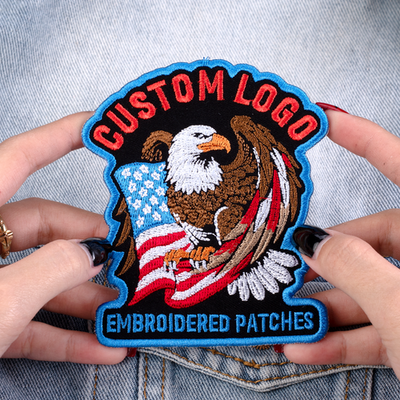
- Will you need matching recognition items beyond pins — such as woven patches or printed labels for packaging? Bundling these with custom labels printed in bulk under one supplier can simplify invoicing.
When Shared Base Design Does Not Apply
This approach has limits. If every member's pin needs a genuinely different graphic — not just different text — you're back to full custom pricing, since each design needs its own tooling regardless of batching. Shared base design also works poorly for very small orders under roughly 50 pieces total, where the cost of coordinating multiple variants can outweigh the setup savings. In those cases, a single small-batch run of 50-100 identical pins, or digital printing with no MOQ, may be the more practical and lower-risk option.
If you're weighing Custom Club Label Pins against patches or printed membership labels for a recognition program, our team can walk through options, review your member list format, and quote shared-design versus full-custom pricing side by side. Send over your crest artwork and a sample name list, and we'll confirm turnaround and cost before you commit to a production method.