

How to Source Custom Club Label Pins for Members
A member pin order can go wrong long before production starts. The usual regrets are not limited to color or plating. Club administrators often discover too late that the member count changed, the attachment does not suit the intended clothing, the proof was approved without checking small lettering, or the delivery date left no time for sorting and distribution.
Custom Club Label Pins should be sourced as a membership program item, not as a simple promotional giveaway. The pin may identify paid members, recognize committee roles, mark years of service, or create a collectible benefit for supporters. That means the design, quantity plan, finish, and packaging need to work for the club’s actual use case.
For a bulk member-pin order, begin with the membership list and event calendar, then build the supplier request around those facts. A clear request reduces quoting delays and gives the factory enough information to recommend the right process. For clubs seeking a standard lapel format, our custom club pins page can help compare member-focused pin options before requesting a quote.
Define the pin’s member purpose before choosing a manufacturing process
The right production method follows the pin’s role. A formal association badge, a limited anniversary item, and a youth sports fan collectible may all carry the same logo, yet they require different visual results. Decide what members should notice first: polished metal, colored logo areas, fine illustration, depth, or a special interactive feature.
| Pin option | Best fit | Why it works | When it does not fit |
|---|---|---|---|
| Hard enamel pins | Formal associations, alumni groups, executive member recognition | The filled color areas are polished for a smooth, refined surface. This suits simple logos, shields, initials, and membership emblems. | Choose another option when the artwork depends on photographic shading, small gradients, or many tiny color transitions. |
| Soft enamel pins | Sports clubs, member drives, collector programs, event recognition | Raised metal lines remain visible around recessed color fills, creating clear separation between logo elements. | It is less suitable when the club specifically wants a completely level enamel face. |
| Offset printed pins | Artwork with gradients, portraits, or detailed illustrations | Printed artwork can reproduce visual detail that may not translate well into separated enamel color areas. | Standard bulk offset items require a 1,000 unit minimum, so this is not the first choice for a small committee order. |
| 3D cast pins | Heritage societies, museum groups, destination clubs | Cast relief gives dimension to architectural forms, mascots, or symbols where depth is part of the story. | It is not the most efficient route for a flat logo that needs several distinct enamel colors. |
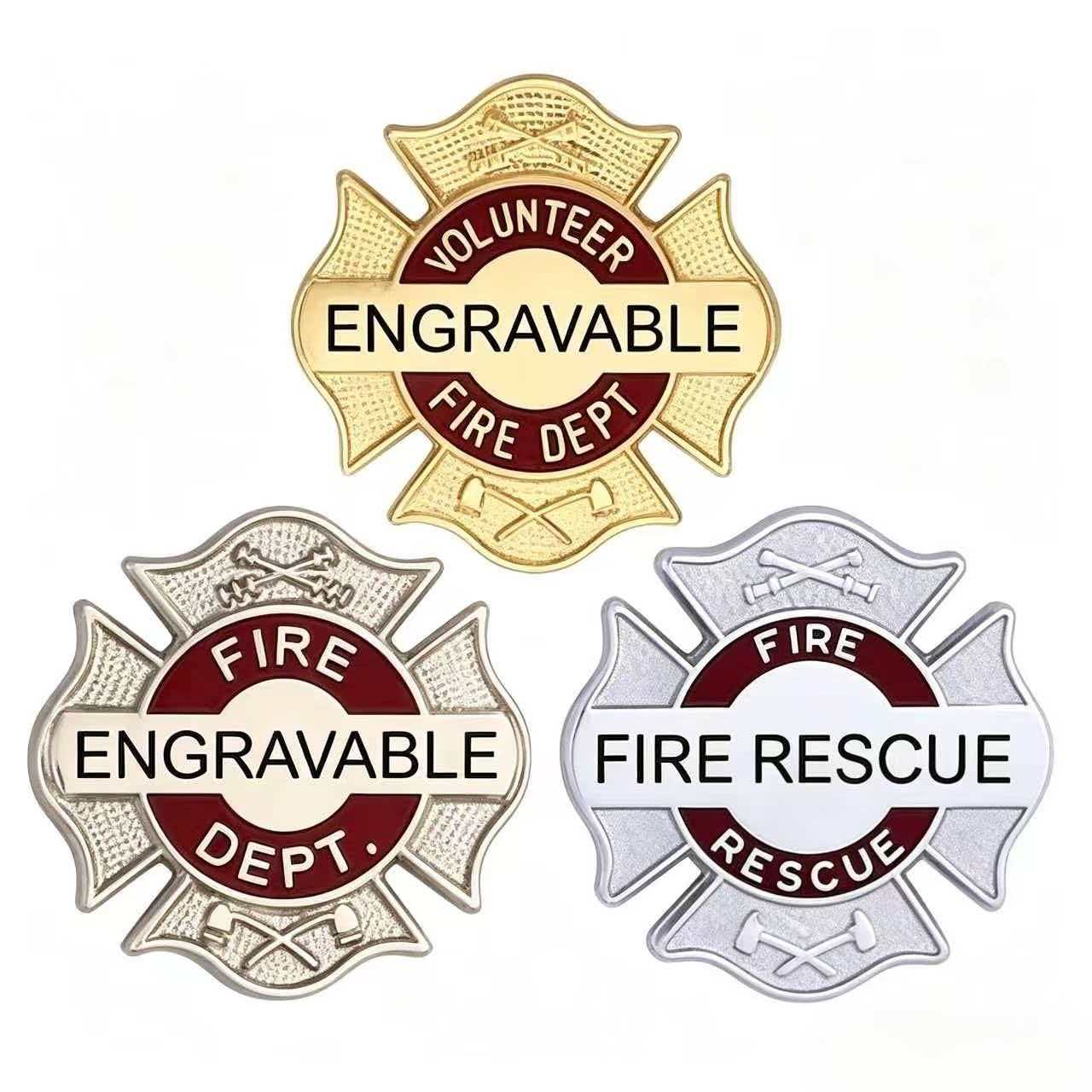
| Laser engraved pins | Name recognition, numbered editions, membership milestones | Engraved text can add identity information without changing the main front design. | Do not rely on engraving alone if the club needs large, highly visible color branding from a distance. |
Recommendation: use hard enamel for a durable formal identity item with clean logo geometry, and use soft enamel for a more textured club collectible. This recommendation applies when the artwork is built from clear color blocks and metal outlines. It does not apply to detailed illustrations, where offset printing may be the more practical option.
Material also affects the request. Available pin materials include zinc alloy, brass, and iron, with finishes such as dual plating, antique effects, and polished metal. Rather than asking a supplier for the “best” metal, state the intended result: a polished professional membership badge, an antique heritage piece, or a bold tournament collectible.
A useful reference is the Japan museum project in which 3D cast souvenir lapel pins used deep antique bronze relief and cut-out details to express traditional architecture. That solution fits a design built around relief and metal detail. It should not be copied automatically for a club logo that relies on several brand colors.
Build artwork that remains clear at pin scale
A club crest can look excellent on a website header and fail on a small metal item. The common problem is overloading the artwork with mottoes, dates, tiny stars, multiple outlines, or detailed illustrations that become hard to distinguish after manufacturing. The answer is not simply to make the pin larger. It is to create a pin-ready version of the identity mark.
Conclusion: submit the original logo and a simplified pin version when the artwork contains fine text or layered visual elements. The supplier can then check whether the design is better suited to enamel, printing, casting, or engraving. This approach fits clubs with established brand standards. It is less necessary for a simple monogram or bold mascot already made from clean shapes.
Artwork preparation steps for association buyers
- Provide the original logo file, not only a screenshot taken from a website or social media page.
- List the exact text that must appear, including punctuation, dates, chapter names, or member level titles.
- Identify non-negotiable brand colors and explain whether a close production match is acceptable for secondary colors.
- Mark elements that may be removed if they cannot remain readable at the intended pin scale.
- State the desired metal finish separately from the color areas. Gold, silver, antique bronze, and dual plated finishes create different visual emphasis.
- Request a digital or photo sample confirmation before production, then check spelling, outline visibility, plating selection, and pin back placement.
Do not approve a proof based only on whether the front logo looks attractive. Review the back as well. Confirm the pin back position, any text, and whether the attachment will sit behind a thick metal area or an open cut-out. A back attachment that is poorly positioned can make a pin twist when worn.
At Custom Panda, color mismatch is covered by a free reprint, while qualifying defects can receive proportional replacement. We also provide photo or digital sample confirmation before production. These measures help manage production risk, but they do not replace careful buyer proof approval. Once the wording and layout are approved, the supplier has a production instruction to follow.
Use a sourcing checklist before requesting quotes
A quote request is more accurate when it answers the production questions that change cost, timing, and usability. The five checks below are especially important for club administrators because membership figures and event dates tend to move late in the process.
| Check item | What to provide | Why it matters | Risk if missed |
|---|---|---|---|
| Artwork files | Original logo file, required text, color references, and any alternate club marks | The factory needs a reliable source for linework, color placement, and readable text. | A low-quality image can lead to unclear details, unintended redraws, or proof revisions that delay approval. |
| Member quantity tiers | Current paid member count, expected new members, committee needs, and reserve quantity | Quantity affects the production method, unit economics, and how many pins need sorting after delivery. | Ordering only for today’s list may leave no stock for new members; ordering without a tier plan can create unnecessary leftover inventory. |
| Attachment choice | How members will wear the pin, such as on suits, blazers, uniforms, lanyards, or bags | The pin back must match the garment weight and the level of daily movement. | An unsuitable attachment can feel unstable, rotate during wear, or disappoint members even when the front design is correct. |
| Proof approval | Named approver, approval deadline, and required internal sign-off steps | A single accountable approver prevents conflicting feedback from multiple committee members. | Late changes after proof approval may affect the delivery plan and can create avoidable version confusion. |
| Delivery dates | In-hand deadline, event date, shipping destination, and receiving contact | The supplier needs the true required date, not only the ceremony date. | Pins may arrive too close to the event for inspection, sorting, replacement handling, or distribution. |
Best practice: request pricing for a working quantity and a higher contingency quantity at the same time. Use the member count plus anticipated recruitment, staff requirements, and a controlled reserve. This fits recurring clubs, professional associations, and alumni groups. It may not be necessary for a one-time closed event where attendance is fixed and no future distribution is planned.
Our production planning supports a 3-day sample lead time for pins, patches, and labels, followed by bulk production in 8 to 9 days. Shipping to the United States is listed at 5 to 6 business days. Treat these as planning inputs, not a reason to delay approval. Artwork revisions, proof feedback, order details, and destination handling should be included in the buyer’s schedule.
Choose attachments based on how members will actually wear the pin
Attachment selection is often handled as an afterthought. That is a mistake for member recognition pins, especially if the club expects recipients to wear them repeatedly. The attachment should be selected from the wearing context, not from the lowest quote alone.
- Formal jacket wear: select a secure attachment suitable for lapels and structured garments. This is the best fit for chambers of commerce, professional bodies, and formal dinners. It may not be ideal if members will attach pins to thick backpacks or outdoor equipment.
- Uniform programs: specify that the pin will be worn during regular shifts or active movement. Ask the supplier to position the attachment for stability. This fits staff recognition and service clubs. It may not suit a pin designed only for display cards.
- Lanyards and event use: confirm the lanyard material and whether the pin is a temporary credential marker or a collectible take-home item. A decorative solution can work here, but it may be less appropriate for a long-term membership badge.
- Outdoor member gear: explain exposure to movement and weather. When the club needs a textile identity solution instead, consider custom hook and loop patches for removable use on compatible gear.
The United States outdoor gear case shows why use conditions matter. Heavy-duty embroidered Velcro patches were supplied with weather-resistant threads and rugged hook-and-loop backings for hiking backpacks and tactical vests. That is a sound route for removable fabric gear identification, not a substitute for a polished metal member pin on a blazer.
Compare quote variables instead of focusing on unit price alone
A low unit figure is not enough to make two pin quotes comparable. Each quotation should identify the process, material, finish, colors, attachment, quantity, proof handling, production schedule, and shipping scope. If one supplier omits these details, ask for them in writing before selecting a vendor.
| Quote variable | Cost effect | Buyer decision | Limit to consider |
|---|---|---|---|
| Quantity | Bulk quantities can improve pricing per piece | Compare the immediate member requirement with a planned reserve quantity. | Do not buy excess purely for a lower unit figure if the design or membership structure may change soon. |
| Manufacturing process | Enamel, printing, casting, and engraving require different production steps | Select based on artwork and purpose first, then assess cost. | The cheapest method may not reproduce the intended design faithfully. |
| Metal finish | Plating and antique effects change production requirements | Choose a finish that supports the club’s identity and artwork contrast. | Multiple finish effects should be used only when they serve the design, not as decoration without a purpose. |
| Attachment | Back hardware selection affects the final configuration | Match it to garment type and frequency of wear. | A lower-cost attachment can be a poor value if members find it unstable. |
| Packaging and distribution | Individual presentation needs may add handling requirements | Decide whether pins will be handed out at one event or mailed to members. | Do not assume the club can easily sort mixed variants after delivery without a distribution plan. |
For club orders that also need envelopes, membership cards, or campaign seals, coordinate the visual system rather than sourcing every item in isolation. For example, custom labels printed in bulk can support member packs, storage envelopes, or club merchandise packaging. A waterproof application calls for a different material choice, so use waterproof label materials only when the package or product will face moisture, handling, or outdoor exposure.
Custom Panda operates from an 8,000 m² facility with 6 production lines and complete metal die-casting facilities, supported by ISO 9001:2015 certification and Disney FAMA certification. For bulk orders, we include 100 bonus pieces with every order. That can help a club maintain a controlled reserve for late joiners or replacements, though it should not replace a deliberate quantity forecast.
Prevent the mistakes that delay member distribution
- Using only the event date: set an in-hand date that allows time to receive, inspect, sort, and distribute the pins. The event date is the final deadline, not the only deadline.
- Letting every committee member edit the proof: nominate one final approver and consolidate feedback. This keeps the approved version clear.
- Ignoring future member demand: build quantity tiers before ordering. A member program usually continues after the launch event.
- Choosing by photo alone: ask which process is proposed and why it suits the artwork. A polished hard enamel look and a textured soft enamel look are not interchangeable.
- Leaving the attachment unspecified: tell the supplier how and where members will wear the item. Front design quality cannot compensate for poor wearability.
- Approving small text without checking it: review all wording at proof stage, including reverse-side text, years, chapter names, and membership titles.
A practical example is a professional association preparing pins for an annual induction dinner. The administrator should first confirm the number of current members, expected inductees, board requirements, and reserve quantity. Next, submit the association mark and specify whether the pin will be worn on formal jackets. The supplier can then recommend a hard enamel or soft enamel format, prepare a proof, and schedule production only after the named approver confirms every visual and attachment detail.
For an order with a more ceremonial or collector focus, a commemorative alternative may also be appropriate. die struck custom challenge coins can suit milestone recognition where a larger format and two-sided presentation are more useful than lapel wear.
Request a quote with your artwork, membership quantity tiers, preferred attachment, proof approver, and required in-hand date.