

Get Your Custom Cosmetic Labels Right the First Time
Ordering a run of ten thousand labels only to discover a typo in the INCI list or a barcode that won't scan is a nightmare for any product manager. It’s a costly error that halts production, delays your launch, and damages your budget. The difference between a successful product rollout and a logistical failure often comes down to the small details on your packaging. Before you approve that final artwork, it’s essential to have a process that protects you from these preventable mistakes. Sourcing high-quality Custom Cosmetic Labels is not just about aesthetics; it’s about technical precision and durability under real-world conditions.
As a manufacturing consultant, I've seen brands absorb the full cost of reprints because of a single misplaced comma or an incorrect ingredient name. This guide outlines the material specifications and proofing workflows necessary to ensure your labels are perfect from the first unit to the last, leveraging our experience producing over a million labels daily in our ISO 9001:2015 certified facility.
Choosing the Right Material and Finish for Cosmetic Packaging
Cosmetic products live in demanding environments—steamy bathrooms, cluttered makeup bags, and under bright retail lighting. Your label is the first point of contact with the customer, and it must resist moisture, oils, and abrasion to maintain a premium appearance. Selecting the wrong material can lead to peeling, smudging, and fading, making your product look old and cheap on the shelf.
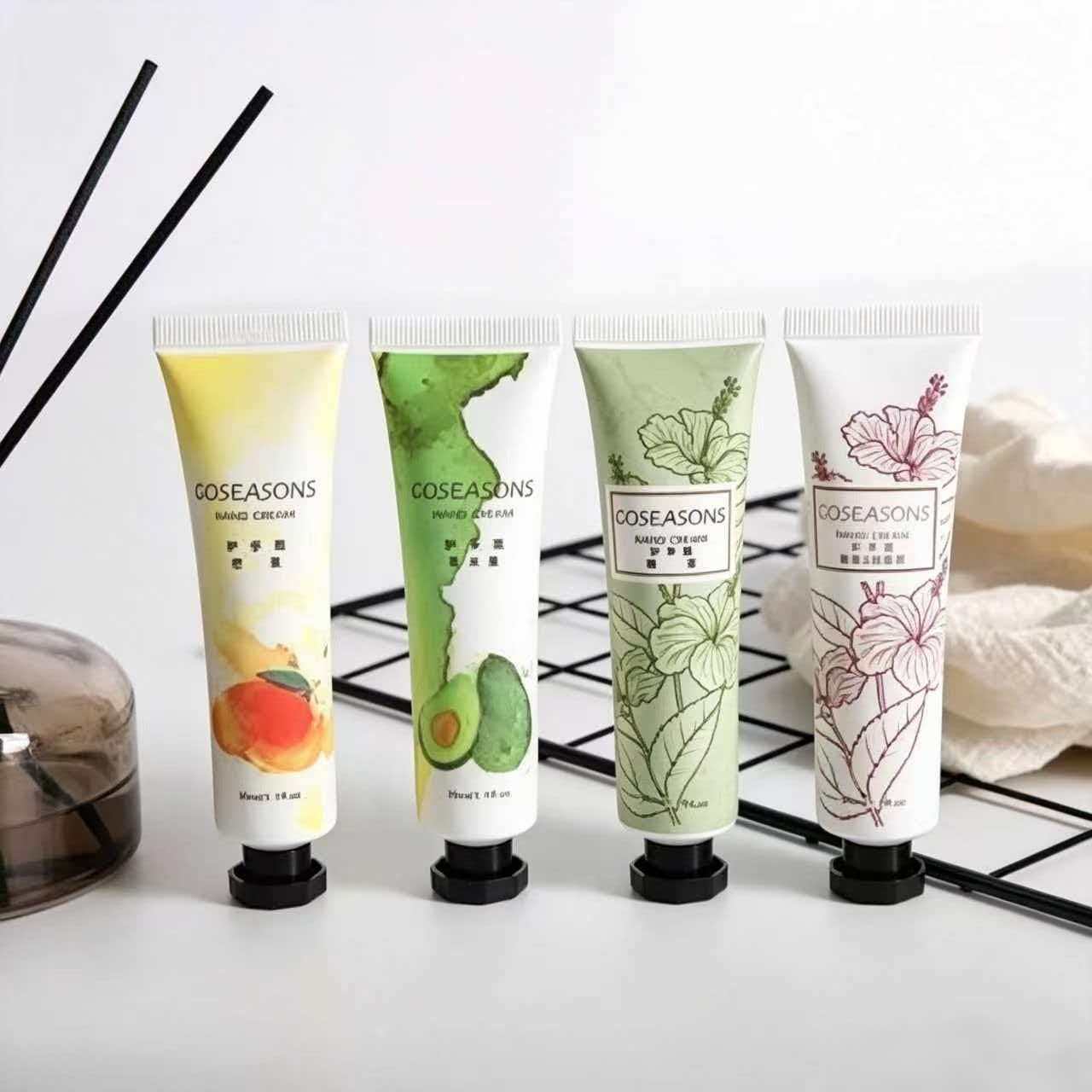
The key is to match the substrate, adhesive, and laminate to your specific container and product formulation. For example, a squeezy tube for lotion requires a flexible film label that won't wrinkle, while a luxury face oil in a glass bottle needs a label that repels oil and looks pristine. For a natural health supplement brand in Australia, we used a matte BOPP film with scratch-proof lamination to create waterproof custom supplement labels that delivered a high-end retail presence.
Here’s a breakdown of common material choices for cosmetic applications:
| Material Option | Primary Benefit | Ideal For | Key Considerations |
|---|---|---|---|
| BOPP (Biaxially Oriented Polypropylene) | Waterproof & Oil-Resistant | Skincare jars, shampoo bottles, lotion tubes, lip balm. Excellent for products used in wet conditions. | Available in white, clear, and metallic finishes. BOPP lamination adds a durable, scratch-proof layer. |
| Vinyl (PVC) | Extreme Durability & Flexibility | Squeezable tubes, outdoor products (e.g., sunscreen), and containers with curved surfaces. | Conforms well to container shapes. UV-resistant inks are critical for products exposed to sunlight. |
| Polyester (PET) | Heat & Chemical Resistance | Products requiring high-temperature stability or exposure to harsh chemicals. Often used for warning or information labels. | Less flexible than vinyl but offers superior tear resistance and dimensional stability. |
| Paper (Kraft, Textured, Glossy) | Eco-Friendly & Premium Texture | Dry goods, secondary packaging like boxes, or brands with an organic, artisanal aesthetic. | Not inherently waterproof. Requires a protective laminate for any moisture or oil exposure. |

The Critical Pre-Production Proofing Workflow
A simple "looks good to me" on a digital proof is the single biggest cause of printing errors. A proper proofing process separates design approval from technical verification. You must scrutinize the details that design software doesn't check: regulatory text, barcode scannability, and fine-print legibility. A single mistake can render your entire inventory unsellable.
We implement a photo and digital sample confirmation step before any bulk production begins, but your internal review is the most important defense. Here is the checklist your team should use to catch errors before they become expensive problems.
Your Actionable Proofing Checklist
- Print the Proof at 100% Scale: Do not approve fine print by zooming in on a screen. A printed copy reveals how legible 4pt text truly is. Is the weight/volume information clear? Can you read the "period after opening" symbol?
- Verify INCI List Character by Character: Read the ingredient list backward—from the last ingredient to the first. This forces your brain to see each word individually rather than skimming, making it much easier to spot spelling mistakes. Cross-reference it against your official formulation document.
- Scan the Barcode: Use a barcode scanner app on your smartphone to test the UPC or EAN on the printed proof. Does it scan instantly? Does it pull up the correct product information? A barcode with insufficient "quiet zones" (blank space) on either side will fail at checkout.
- Check Color Separations (Especially for Clear Labels): If you are printing on a clear substrate, confirm the white ink layer. Is it being printed as a base layer behind your colors to ensure they are not translucent? We often recommend a double hit of white for maximum opacity, a capability of our HP digital label presses.
- Confirm Dieline and Orientation: Check that the cut line (dieline) is correctly shaped and positioned. Verify the unwind direction if the labels are for machine application. An incorrect unwind direction can shut down your entire packaging line.
- Measure Twice, Approve Once: Use calipers or a precise ruler to measure the dimensions on the printed proof. Ensure it fits perfectly within the designated space on your container, leaving enough clearance from edges or curves.
Troubleshooting Common Cosmetic Label Failures
Even with the right material, execution matters. Over the years, I've helped countless brands solve label issues that their previous suppliers couldn't. Most problems stem from a mismatch between the label's specifications and the product's lifecycle. We stand by our quality with a color mismatch free reprint policy and proportional replacement for defects.
Here are the most common failures and how to prevent them:
| Common Problem | Root Cause | Manufacturing Solution |
|---|---|---|
| Labels peeling off in cold storage or a steamy bathroom. | Adhesive failure due to condensation or temperature shock. | Select a oil & waterproof labels for bottles & cosmetics solution using a permanent, high-tack acrylic adhesive on a BOPP or vinyl substrate. |
| Ink smudging or colors bleeding on oily serums or creams. | The ink and substrate are not oil-resistant. Adhesive is seeping from the edges. | Use UV-cured inks combined with a protective over-laminate (like matte or gloss BOPP) to create a barrier against oils and solvents. |
| Colors on the label don't match the brand's official Pantone color. | Artwork was supplied in RGB, or the supplier did not color-match correctly for the specific substrate. | Always provide Pantone (PMS) color codes. Our digital presses are calibrated to match PMS colors closely on various materials. |
| White text on a clear label looks transparent or "greyish." | A single, thin layer of white ink was applied, which is insufficient for full opacity. | Specify a "double-hit" or multi-layer white ink application. This builds a thicker, more opaque white base for crisp text and graphics. |
| Tiny ingredient text is blurry and illegible. | The printing resolution is too low for fine details, or the ink is spreading ("dot gain") on an absorbent substrate. | Use high-resolution digital printing (like our HP presses) on a smooth, non-porous synthetic stock. This ensures sharp, crisp edges on even the smallest fonts. |
From Design to Delivery: What to Expect
Understanding the production timeline helps you plan your launch schedule effectively. With our high-capacity facility, we've streamlined the process to be as efficient as possible without compromising on quality checks. While we offer a no-MOQ option for digital printing, bulk orders of 1,000+ units receive better pricing and are our specialty.
Here’s a typical production path for a bulk order of custom cosmetic roll labels:
- Quote & Artwork Submission (Day 0): You send us your design files and specifications. Our team reviews them for any potential printing issues and provides a quote. Our free design assistance can help optimize your files.
- Digital Proofing (Day 1): We create and send a digital proof for your approval. This is your chance to use the proofing checklist above to verify every detail.
- Sample Production (Days 1-3): Once the digital proof is approved, we produce a physical sample or detailed photo sample. This is the final confirmation gate before mass production.
- Bulk Production (Days 4-12): With a daily capacity exceeding one million labels, our six production lines begin your full order. The standard lead time is 8-9 days.
- Quality Control & Shipping (Days 12-13): Every order is inspected. We include 100 bonus pieces with every bulk order to cover any potential application line spoilage. Your order is then dispatched.
- Delivery (Days 13-18): Shipping to the U.S. typically takes 5-6 business days. We offer free shipping for a reliable and cost-effective delivery.
By partnering with a manufacturer who understands the technical demands of the cosmetics industry, you protect your brand's reputation and your bottom line. The right label is an investment in your product's success.
Ready to eliminate printing risks for your next product launch? Submit your design for a free quote and a professional artwork review from our experts.