

Custom Iron On Patches for Durable Workwear
Workwear buyers often regret approving a patch based only on artwork and price. The bigger risk is a backing that looks acceptable on a sample board but lifts after laundering, fails on a coated jacket, or bonds unevenly across different garment batches. Before requesting a quote for Custom Iron On Patches, procurement teams should define the garment fabric, expected care process, patch location, and approval test method.
Heat-seal backing can be a practical choice for uniforms, promotional apparel, warehouse clothing, and branded workwear when the garment and bonding process are compatible. It is not automatically the right answer for every fabric. A patch supplier should be able to review the intended fabric, provide a physical or digital sample confirmation before production, and manufacture the patch construction specified in the purchase order.
At Custom Panda, patches are produced alongside labels and pins in an 8,000 m² facility with six production lines. Our ISO 9001:2015 quality management system and Disney FAMA certification provide defined production controls, while photo or digital sample confirmation helps buyers catch artwork, border, and backing concerns before bulk manufacturing starts. For patches, samples can be ready in 3 days, followed by bulk production in 8 to 9 days.
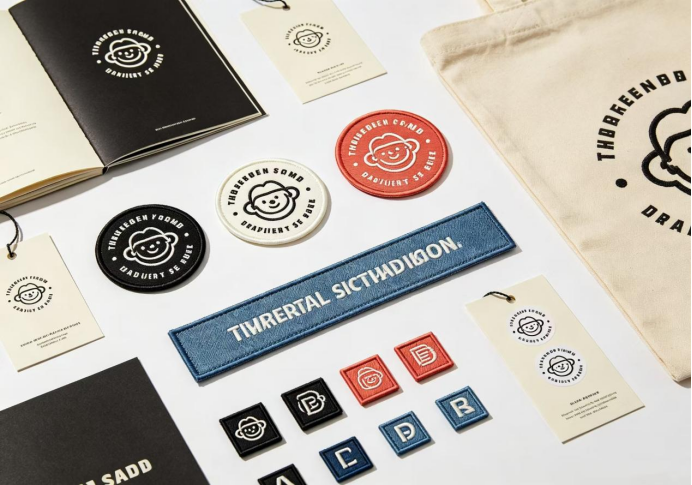
Set the workwear requirement before comparing suppliers
Conclusion: Start with the garment specification rather than the patch design. The backing must be selected around the base fabric and use environment, because a well-made embroidered patch can still fail if its adhesive layer is unsuitable for the garment finish or care routine.
Why this matters: Cotton canvas, polyester shell fabric, and blended workwear respond differently to heat and pressure. Surface finishes, water-repellent treatments, stretch panels, seams, and pocket edges can also affect how evenly a patch bonds. A supplier cannot make a useful recommendation from logo artwork alone.
Best fit: This approach suits procurement teams sourcing uniforms for construction crews, service staff, warehouse teams, outdoor workers, and trade promotions where garments may come from more than one apparel vendor.
Limit: Heat-seal backing should not be treated as a replacement for sewing when garments face unusually demanding washing, heavy abrasion, highly textured surfaces, or fabric finishes that resist bonding. In those cases, request a sew-on option or use heat sealing as positioning support before stitching.
| Information to give the supplier | Why it affects sourcing | What to request in the quote |
|---|---|---|
| Garment fiber content | Fiber type affects heat response and adhesive compatibility. | Recommended backing and approval sample for that fabric. |
| Garment surface finish | Coatings, water resistance, and textured surfaces can reduce bonding consistency. | Confirmation that a fabric swatch is needed before approval. |
| Patch location | Seams, elbows, chest pockets, and curved panels may prevent even pressure. | Placement guidance and an alternate attachment method if needed. |
| Laundering process | Commercial washing places different demands on a patch than occasional home washing. | Sample testing against the intended care process. |
| Artwork detail | Fine text, small icons, and tight borders may need a different patch construction. | Artwork proof showing border, thread areas, and final shape. |
| Order quantity | Quantity affects production planning and minimum order options. | Sample and bulk pricing shown separately. |
For employee names, department identifiers, or role badges, buyers may also compare custom name patches with a heat-seal backing specification. This works well when uniforms require frequent individual replacement. However, confirm whether the name patch will be applied to the same fabric and washed under the same conditions as the main logo patch.
Choose patch construction around function rather than appearance
Conclusion: Use embroidered patches for bold logos and dimensional thread texture, woven patches when small type and fine lines need better definition, and PVC soft rubber where a flexible, weather-resistant surface is more suitable. The right face material is separate from the right backing decision, but both must work together.
Why this matters: A dense embroidery layout can make a patch feel firmer than a woven design. Larger or heavier patches may need more attention at corners and edges during application. A patch with a detailed logo may look better in woven construction, but the heat-seal backing still needs validation on the garment itself.
Best fit: Embroidery fits recognizable symbols, uniforms, and designs where thread texture supports the brand. Woven construction fits small lettering and detailed artwork. PVC can suit outdoor-oriented gear where thread embroidery may not match the use case.
Limit: Do not choose a construction solely because it is the lowest quoted option. A low-detail design may not justify woven construction, while a design with fine internal elements may become unclear when converted to embroidery. Request a proof that shows what will be simplified before approving the order.
| Patch option | Recommended use | Why buyers choose it | When it may not apply |
|---|---|---|---|
| Embroidered patch | Uniform logos and simple emblems | Thread texture gives clear visual separation for broader shapes. | Very small lettering or tightly packed artwork may lose clarity. |
| Woven patch | Detailed logos and small text | High-density yarn weaving can present fine details more cleanly. | It may not suit buyers who specifically want raised embroidery texture. |
| PVC soft rubber patch | Outdoor gear and weather-exposed items | Flexible rubber construction can suit uses where fabric texture is not desired. | It is not the preferred choice for every corporate uniform aesthetic. |
| Chenille patch | Varsity and recognition apparel | Plush felt and high-density stitching create a bold visual effect. | It is generally less suitable for compact workwear branding. |
For standard employee apparel, buyers who need a classic stitched look can review custom embroidery patches. For garments that need removable identification, use a hook-and-loop solution instead of heat sealing. Custom Panda produced heavy-duty embroidered Velcro patches for a United States outdoor gear brand, using weather-resistant threads and rugged hook-and-loop backings for hiking backpacks and tactical vests. That use case shows why removable gear identification should not be specified as a permanent heat-seal application.
A fabric by fabric sourcing checklist for adhesion approval
Conclusion: Approve the backing only after adhesion tests are completed on the actual cotton, polyester, and blended workwear fabrics in the order. A generic supplier sample is useful for visual review, but it does not prove performance on every garment construction.
Why this matters: Fabric content is only one factor. Weight, coatings, seams, fabric texture, dyeing, and the intended care routine can change the result. The buyer should provide garment swatches or representative finished garments and document the application method used during testing.
Best fit: This checklist is designed for procurement teams managing uniform programs, contract decorators, apparel distributors, and brands placing a repeat workwear order.
Limit: Passing a sample test on one garment source does not automatically approve a new garment supplier or revised fabric finish. Repeat the test whenever the fabric source, garment construction, patch size, or application equipment changes.
| Workwear fabric | Adhesion test before approval | Risk the test is intended to expose | Approval action |
|---|---|---|---|
| Cotton workwear | Apply the patch to a representative cotton garment panel using the planned production process. Inspect edges after cooling, then wash the sample using the intended garment care process and inspect again. | Edge lift, incomplete bonding, or movement caused by uneven pressure near seams and pockets. | Approve only if the patch remains flat and the edges stay attached. Use sewing if the garment use or wash process produces lifting. |
| Polyester workwear | Apply to the exact polyester fabric, including any finished or coated panel. Inspect the fabric surface and patch edge after cooling, then repeat the planned laundering assessment. | Fabric surface change, uneven bond, or adhesive incompatibility with coatings and finishes. | Approve only after the actual garment material passes. Do not substitute a different polyester swatch without retesting. |
| Blended workwear | Test on the production blend, not on cotton or polyester alone. Include the garment areas where the patch will actually be placed. | Different bonding behavior caused by the fiber blend, fabric construction, or panel treatment. | Approve the blend as its own material. If uniform suppliers provide different blends, test each version separately. |
Document each test so production can repeat it
- Identify the exact garment: Record supplier, style reference, fiber content, color, and intended patch location. This prevents approvals from being transferred to a similar but different garment.
- Submit a representative fabric swatch: Include coated panels, stretch sections, pocket areas, or other surfaces that may affect bonding. A flat cotton swatch does not validate a coated shoulder panel.
- Apply the sample using the intended production equipment: Record the application settings used by the garment decorator. The objective is repeatable manufacturing, not an unrecorded one-off sample.
- Inspect after cooling: Check all edges, corners, and the fabric face around the patch. Look for lifting, distortion, surface marking, or an uneven outline.
- Run the planned care assessment: Wash and dry the test garment using the care process expected after distribution. Assess the patch again only after that process is complete.
- Approve in writing: Attach photos, the patch proof, garment details, backing selection, and application instructions to the purchase order.
The result should be a production specification, not a verbal assumption. It protects the buyer, garment decorator, and patch factory from conflicting expectations after delivery.
Control the sample, artwork, and order handoff
Conclusion: Separate visual approval from functional approval. The artwork proof verifies logo accuracy, while the garment application sample verifies whether the selected backing is suitable for the actual workwear.
Why this matters: Buyers sometimes approve a digital proof and assume this covers adhesion. It does not. A proof can confirm text, color placement, border shape, and patch dimensions, but it cannot show how a backing performs after application and care testing.
Best fit: This two-stage approval method is especially useful for multi-location uniform programs, new product launches, and orders where the garment supplier and patch supplier are separate companies.
Limit: A physical garment test adds an approval step. It may not suit a buyer who requires immediate dispatch without any test stage, but skipping it shifts more risk into the bulk order.
- Artwork proof approval: Confirm logo spelling, colors, border style, patch shape, thread detail, and backing type.
- Physical patch approval: Check stitch quality, border finish, backing coverage, and visual appearance on the actual garment.
- Applied garment approval: Confirm placement and adhesion after the planned application and care assessment.
- Bulk order release: Reference the approved proof and sample in the purchase order so the factory has one controlled standard.
Custom Panda provides photo or digital sample confirmation before production and includes 100 bonus pieces with every bulk order. We also offer a color mismatch free reprint, proportional replacement for defects, and 5-day fast re-stocking or repair under the stated terms. These protections are useful, but they do not remove the buyer’s need to approve the correct garment and backing combination before bulk production.
Compare quote details that affect total sourcing cost
Conclusion: Compare quotes by scope, not just unit price. A cheaper patch can become more expensive if it creates reapplication labor, garment spoilage, or inconsistent branding across locations.
Why this matters: Patch pricing can vary based on construction, artwork complexity, backing choice, size, order quantity, packaging, sample needs, and shipping. If one quote includes a sample and another does not, they are not directly comparable.
Best fit: This quote review works for buyers sourcing a pilot run, a large uniform rollout, or recurring replenishment orders.
Limit: Custom Panda offers no MOQ for digital printing and select custom items, while offset printing and standard bulk items have a 1,000-piece minimum for better bulk pricing. Confirm which production route applies to the requested patch before using a unit cost as a budget benchmark.
| Quote item | What to compare | Why it matters |
|---|---|---|
| Patch construction | Embroidery, woven, PVC, or chenille | Construction changes visual detail, feel, and production requirements. |
| Backing specification | Heat-seal backing, sew-on option, or hook-and-loop backing | The attachment method must fit the garment and use case. |
| Sample charge and timing | Whether a preproduction sample is included and how it is approved | The sample is the buyer’s chance to validate design and backing before bulk release. |
| Bulk quantity | Price breaks, minimums, and spare pieces | Extra patches can support repairs and staff turnover without a new setup. |
| Packaging and shipment | Pack count, labeling, and shipping terms | Clear packing instructions reduce sorting work at distribution sites. |
| Defect process | Replacement terms and evidence required | Procurement teams need a defined route if approved specifications are not met. |
For a workwear program with related packaging or garment identification needs, custom woven clothing labels can be sourced alongside patches. Keep the two specifications separate: a woven neck label serves a different function from an external heat-seal emblem, even when both carry the same logo.
Avoid approval mistakes that cause patch failure
- Approving from a digital file alone: A digital proof confirms artwork, not adhesion. Use it for design approval, then test a physical patch on the intended garment.
- Testing only a flat fabric swatch: Flat panels may not show problems around seams, pockets, curved sleeves, or textured garment sections. Test the final placement area whenever possible.
- Assuming all polyester is the same: Polyester garments can differ in weave, finish, coating, and weight. Treat each garment source as a separate approval material.
- Using heat seal for removable identification: If staff names, job roles, or unit identifiers must change, hook-and-loop backing is usually more suitable than a permanent bond.
- Ignoring the care process: A patch intended for lightly used event apparel may not suit commercial workwear laundering. Test against the real care routine.
- Leaving backing details off the purchase order: State the backing, patch construction, approved garment, location, and sample reference. A quote description is not enough for repeat ordering.
Request a workwear patch sample and quote with your garment fabric details, logo artwork, required quantity, and planned care process.