

What Buyers Regret Not Asking Before Ordering Custom Iron On Patches
Here's the scenario nobody wants: 5,000 patches arrive, half of them lift at the corners after the first wash, and the factory that made them is six time zones away and unreachable. This happens more often than suppliers admit, and it almost always traces back to one missing step — nobody asked for press-test data before production started. Custom Iron On Patches live or die on adhesive chemistry and cure conditions, not just on embroidery quality. If you skip the technical questions at the quoting stage, you're gambling on a variable you never actually verified.
This guide walks through what a press test actually proves, which cure and wash-cycle documents are worth requesting, and how to build those questions into your RFQ before you commit to a bulk run.
Why Heat-Seal Adhesive Fails After Washing
Most heat-seal patch complaints fall into a short list of repeatable causes. Knowing them lets you ask pointed questions instead of generic ones.
- Wrong press temperature for the fabric: Polyester blends and nylon shells need lower heat than cotton twill. A supplier using one fixed setting for every order is a warning sign.
- Insufficient dwell time: Adhesive film needs full contact time under pressure — rushing this step to hit daily output targets leaves the bond partially cured.
- Skipping a cooling period: Patches handled or flexed before the adhesive sets lose a meaningful share of bond strength.
- Backing mismatched to end use: Iron-on backing alone isn't built for heavy-wash workwear or tactical gear — those applications usually need a Velcro or sew-reinforced option instead.
- No wash-cycle testing before shipment: If a supplier can't show you a wash log, they likely haven't run one.
Embroidery border fraying and soft-enamel pin color bleeding show up on our own defect-reduction checklist too — they're different materials, but the root cause is the same: nobody verified process conditions before scaling to full volume.
The Buyer's Decision Checklist Before You Approve Bulk Production
Run through this before signing off on any quote, whether you're ordering iron-on logo patches for a uniform program or shape patches for a retail giveaway.
- Request a physical pre-production sample — not just a digital mockup. Reputable manufacturers can turn around pin, patch, and label samples in as little as 3 days.
- Ask for the press temperature and dwell time range used for your specific backing material.
- Confirm whether the backing is rated for machine wash, dry clean only, or spot clean only.
- Request a wash-cycle test result — ideally 20+ home-laundry cycles — showing adhesive retention.
- Clarify what happens on defects: does the supplier offer proportional replacement, or do you eat the loss?
- Confirm minimum order quantity. Offset or standard bulk patch runs typically carry a 1,000-unit minimum, while some digital or ready-stock items carry no MOQ at all.
- Check turnaround for the full order, not just the sample — bulk production commonly runs 8-9 days before shipping.
If a supplier can't answer items 2 through 5 with specifics, that's a sourcing risk worth flagging before you commit a PO.
Buyer FAQs: Press-Test Evidence, Cure Conditions, and Wash-Cycle Documentation
These are the direct questions to put in writing to any patch supplier. Honest answers include boundaries — be cautious of any supplier who claims zero limitations.
What is a "press test" and why does it matter?
A press test confirms the adhesive has bonded correctly under the actual heat, pressure, and time settings used for your fabric. Ask for the temperature (°F/°C), pressure (PSI or seconds of dwell), and the fabric type tested. If a supplier only gives you one generic number regardless of your garment material, push back — different textiles need different settings.
Should I request cure condition documentation?
Yes, especially for heat-transfer and iron-on backings. Cure documentation should state cooling time before handling and any recommended re-press step for the end customer. This matters most for bulk orders going to uniform programs or retail, where the garment will be laundered repeatedly under conditions outside your control.
What does wash-cycle documentation actually prove — and what doesn't it prove?
A wash-cycle log shows how many laundry cycles the adhesive survived under controlled conditions (water temperature, detergent type, dryer heat). It does NOT guarantee performance in every laundering environment — commercial laundries, industrial degreasers, or high-heat dryers can still exceed tested conditions. Treat wash documentation as a benchmark, not a universal warranty.
Can embroidery borders be press-tested the same way?
Not exactly. Embroidery itself isn't adhesive-dependent, but the backing underneath it is. Fraying at the border usually points to stitch density or edge-merrowing issues, which is a separate quality check from adhesive cure — ask both questions separately.
What should I do if a supplier has no wash-cycle data at all?
Request a small pre-production sample batch and run your own informal test — 10-15 home wash cycles on the actual fabric you'll use. It's not a lab-grade substitute, but it surfaces obvious adhesive failures before a 5,000-unit order ships.
Does a Disney FAMA or ISO certification guarantee wash performance?
No — certifications like ISO 9001:2015 confirm a documented quality management process is in place, not that any specific patch batch passed a wash test. Always ask for the batch-specific test, not just the facility's certification status.
Iron-On vs. Velcro vs. Sew-On: Matching Backing to Use Case
Backing choice determines whether your patch survives daily wear or needs replacing within months. Here's a practical comparison:
| Backing Type | Best For | Wash Durability | Limitation |
|---|---|---|---|
| Iron-On (Heat Seal) | Apparel, retail giveaways, light uniforms | Good with correct cure; moderate on heavy-wash items | Not ideal for tactical gear or daily industrial wash |
| Velcro / Hook-and-Loop | Tactical vests, backpacks, swappable team patches | High — mechanical bond, not adhesive-dependent | Adds bulk; loop side needs a stitched backing |
| Sew-On | Letterman jackets, heavy wool, permanent placement | Highest — stitched directly into fabric | Requires labor to apply; not a quick fix |
A U.S. outdoor gear brand we supplied needed heavy-duty embroidered Velcro patches built for hiking backpacks and tactical vests — weather-resistant thread and a rugged hook-and-loop backing were non-negotiable there, since iron-on alone wouldn't hold under repeated outdoor abrasion. Compare that to a university sports team order for chenille letterman patches, where plush felt backing and heavy stitching on wool fabric made more sense than any heat-seal option.
If your program spans both use cases — say, retail giveaways plus field gear — you may need two backing types from the same supplier rather than forcing one solution to cover both.
Sample Approval: A Step-by-Step Procedure
Follow this sequence to reduce the chance of a bulk-order surprise:
- Submit artwork and request a photo or digital sample confirmation before any physical production starts.
- Approve colors against your brand guideline swatch — don't approve from a screen alone, since screen color and thread/enamel color often differ.
- Request the physical sample with backing attached, not just the embroidered face.
- Run your own wash or wear test on the sample if the supplier's documentation is incomplete.
- Confirm the re-stocking or repair terms in writing — ask specifically about fast re-stocking windows and whether defective units are replaced proportionally.
- Place the bulk order only after the sample passes your checks, and confirm shipping time (commonly 5-6 business days to the U.S. after production).
This same discipline applies whether you're ordering heat-seal patches, woven labels, or custom labels printed in bulk — the sample-first approach catches problems before they scale into a 10,000-unit liability.
Common Mistakes Buyers Make When Sourcing Patches
- Approving a digital mockup instead of a physical sample with the actual backing attached.
- Assuming one backing type fits every garment in a multi-SKU order.
- Never asking for wash-cycle numbers, only asking about color accuracy.
- Ordering bulk quantities before confirming MOQ breaks — standard bulk patch runs usually require 1,000 units minimum for better unit pricing.
- Failing to clarify defect policy until after a bad batch arrives.
These mistakes aren't unique to patches — the same gaps show up in sourcing custom enamel pins for promotional campaigns & branding, where enamel bleed and loose pin backs are the equivalent failure points. If you're also exploring metal goods alongside your patch order, it's worth vetting pin suppliers with the same press-test mindset — ask for a physical sample, not a rendering.
For apparel programs that also need woven garment tags, explore custom woven clothing labels & neck tags as a complementary line item — many buyers combine patches and labels in a single production run to consolidate shipping.
What a Good RFQ Looks Like
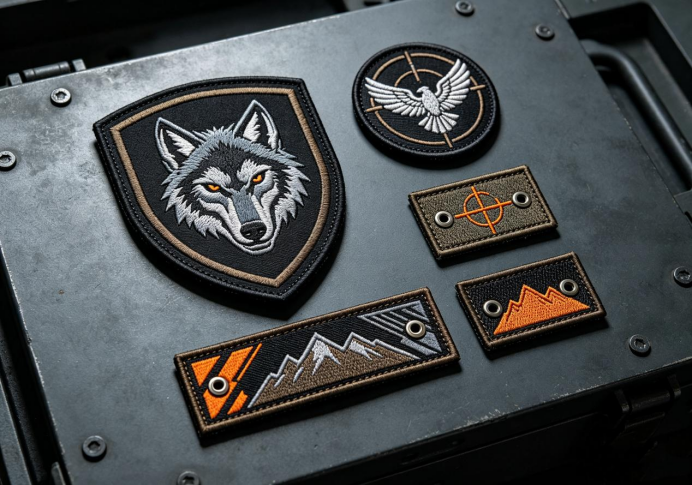
A strong RFQ for Custom Iron On Patches includes: garment fabric type, expected wash frequency, target backing type, quantity, and a request for sample turnaround time. Suppliers offering a 3-day sample lead time and 100 bonus pieces included with bulk orders are signaling they stand behind their process — but always verify with your own wash test before scaling past your pilot order.
Ready to confirm press-test specs for your own patch order? Send over your fabric type and quantity, and request a physical sample before committing to bulk production.