

How Custom Labels Are Priced Across Rolls, Sheets, and Die-Cut Runs
The quote with the lowest per-label price is often the most expensive one by the time it reaches your packing line. Buyers who compare only unit price tend to miss setup charges, startup waste, hand-application time and the cost of reordering when artwork changes. Before you send an RFQ for Custom Labels, you need a way to compare quotes on the same basis.
I have spent 12 years on the manufacturing side of custom merchandise, and the same pattern repeats. Two suppliers quote the same quantity, and the cheaper sheet is the more expensive project once someone has to peel and place every piece by hand. This article shows how to price rolls, sheets and die-cut runs on a landed basis, and what our terms look like so you can judge fit before requesting a quote.
Why advertised pricing rarely answers “how much do custom labels cost”
Most pricing pages quote a “starting from” figure. That number assumes a standard shape, a basic material, a large quantity and no finishing. Your project probably differs on at least two of those.
Custom label pricing is driven by five variables, and only the first appears in headlines:
- Material and finish: paper, BOPP film, vinyl, lamination, foil stamping.
- Size and shape: a standard rectangle versus a contour cut.
- Print method: digital for short runs, offset for standard bulk items.
- Format: roll, sheet or individually cut pieces.
- Quantity and reorder frequency: one large run versus several smaller ones.
The same artwork can produce quite different totals depending on how those five are combined. That is why the quote should be broken into components, not just a unit price.
Roll labels vs sheet labels: where each format fits
Choose the format by how the label gets applied, not by how it looks in the quote. A roll feeds a dispenser or applicator. A sheet is peeled and placed by a person.
| Format | Best fit | Application method | Watch-out |
|---|---|---|---|
| Roll | Repeating SKUs, bottles, jars, pouches, shipping | Hand dispenser or label applicator | Core size, unwind direction and roll diameter must match your equipment |
| Sheet | Low-volume, mixed-SKU, gift or sample packs | Hand peel-and-place | Labor grows linearly with volume |
| Die-cut (on roll or sheet) | Contour shapes, branded silhouettes, closures | Same as the carrier format | Shape complexity affects waste and the tooling conversation |
If your line is automated, custom printed roll labels are the default answer. For a small seasonal batch applied by hand, sticker sheets may cost less overall. Roll is not automatically better. If you apply fewer labels than a roll’s minimum practical length and no machine is involved, a sheet avoids buying surplus footage.
Landed-cost comparison by label format
This is the section to copy into your quote comparison sheet. Ask each supplier to fill in every cell, not just the unit price.
| Cost component | Roll | Sheet | Die-cut run |
|---|---|---|---|
| Unit price | Usually lowest per piece at volume | Often similar or slightly higher per piece | Varies with shape, material and finishing |
| Setup charges | Confirm plate or file preparation fees if offset is used | Typically minimal for digital | Ask whether a die or tooling charge applies and whether it carries over to reorders |
| Waste | Startup loss when threading an applicator | Misplacement and peel damage | Weeding loss on complex outlines |
| Application labor | Lowest when automated | Highest, since every piece is placed by hand | Same as the carrier format, with extra care on tight shapes |
| Reorder economics | Good for stable artwork on repeat runs | Flexible for frequent artwork changes | Best when the shape is locked and tooling is reusable |
A simple formula for comparing quotes
Landed cost per applied label = (order total + setup charges + freight, duties and taxes) ÷ labels actually applied + application labor per label.
The denominator is the part buyers forget. Take an offset order at the 1,000-unit minimum. Our bulk orders include 100 bonus pieces, so you receive 1,100. Suppose your line loses 5% to threading and misfeeds. That assumption is yours to replace with your own figure. You then apply about 1,045 labels, so you divide the total by 1,045, not 1,000. Run the same calculation on every quote and the ranking often changes.
Freight also belongs in the formula. We offer free shipping, but confirm what it covers for your destination, and whether import duties and taxes remain on your side.
Die cut label cost: what moves the number
The shape itself is rarely the main cost driver. Complexity is. A rounded rectangle and a detailed brand silhouette can sit on the same material, yet the second one wastes more matrix, slows weeding and needs closer registration.
- Choose a standard shape if the label sits on a flat panel and the shape adds no brand value.
- Choose a contour cut when the outline is part of the identity, for example a closure seal or shelf-facing logo shape.
- Avoid ultra-thin points and tight inside corners. They tear during weeding and lift at the edge. This is a physical limit of adhesive stock, not a supplier preference.
For shape-led projects, die cut stickers show the range available. When you request a quote, ask for the die cut label cost as its own line so you can see whether tooling is a one-time item or repeats with each order.
Label printing MOQ and our cooperation terms
The label printing MOQ depends on the print method. Digital printing and select custom items have no minimum. Offset printing and standard bulk items start at 1,000 units, with better pricing at higher quantities. We run six HP digital label presses, so short runs, test batches and artwork variants fit the digital route.
| Term | What we supply |
|---|---|
| MOQ | No minimum for digital printing and select items; 1,000 units for offset and standard bulk |
| Sample lead time | 3 days for pins, patches and labels |
| Bulk production | 8-9 days |
| U.S. shipping | 5-6 business days |
| Pre-production approval | Photo or digital sample confirmation before production |
| Color mismatch | Free reprint |
| Defects | Proportional replacement, with 5-day fast re-stocking or repair |
| Bulk bonus | 100 extra pieces with every bulk order |
These are the published conditions. Several matters still need agreement per project: the color reference you will approve against, how a defect is counted for replacement purposes, and who carries duties and taxes at destination. Settle them in writing before the order, not after a dispute.
Capability and evidence behind the quote
Price is only useful if the product performs on the pack. Our facility, established in 2012, covers 8,000 m² with six production lines and is ISO 9001:2015 certified, with label capacity above 1,000,000 pieces per day. That capacity matters when a promotion or seasonal launch pushes volume past the planned run. It does not by itself guarantee your lead time, which should be confirmed against your specification.
Two supplied cases show how format and material choices work in practice:
- Australia: metallic foil-stamped roll labels for a natural health supplement brand, using matte BOPP film with scratch-proof lamination for retail shelf presence. This is a roll format with finishing added, so the unit price reflects the film and foil, not just the print.
- Spain: organic cotton printed wash-care labels for an eco-friendly children’s clothing line, using skin-safe, fade-resistant inks that survive repeated industrial washing cycles. Here the cost question was durability, not footprint.
These cases show the range of work, not a price benchmark. A wash-care label and a foil-stamped roll label sit on entirely different cost curves.
Common quoting mistakes that inflate total cost
- Comparing quotes at different quantities. A 1,000-unit offset quote and a 500-unit digital quote are not comparable per piece.
- Ignoring the application method. Sheets that look cheap can double your labor cost on a production line.
- Specifying the wrong substrate to save money. Paper on a chilled or wet surface peels. If condensation or oil is involved, evaluate oil & waterproof labels for bottles & cosmetics before you commit. The reprint costs more than the upgrade.
- Leaving brand color unspecified. Without a reference, a color mismatch becomes a negotiation. Supply the reference and approve the sample.
- Skipping the reorder question. Ask whether artwork, tooling and color settings are kept for repeat runs, and what the lead time is on a reorder.
Pre-RFQ checklist for a clean comparison
- Define the format: roll, sheet or die-cut, and the application method.
- State the substrate conditions: cold, wet, oily, outdoor or dry.
- Give quantity tiers, for example your first order and expected annual volume.
- List finishes such as lamination, foil or matte.
- Provide artwork files and the color reference.
- Ask for setup charges, die or tooling fees and reorder terms as separate lines.
- Confirm freight, duties and taxes, and the destination.
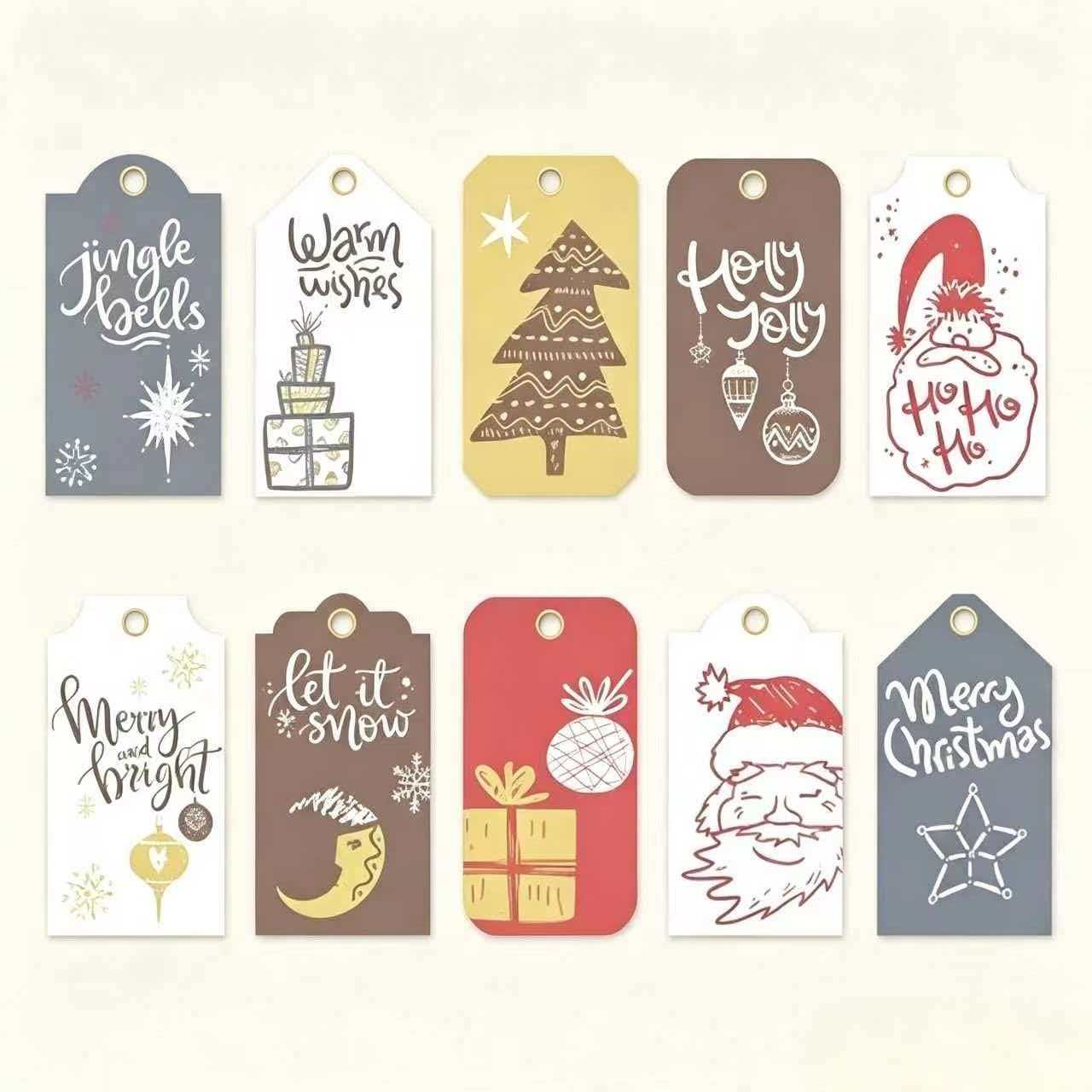
If you send your label size, substrate, quantity tiers and application method, we can return a line-itemized quote that matches the table above. You can also ask for a digital sample to confirm color and finish before you commit to a run. Share your specification through our custom labels printed in bulk page, and our team will respond with a comparison you can put straight into your approval sheet.