

Custom Logo Label Pins Landed Costs
A low quoted pin price can become an expensive procurement decision when tooling, attachment hardware, packaging, freight, and replacement exposure are left outside the comparison. Buyers sourcing Custom Logo Label Pins for employee recognition, retail merchandise, trade events, or membership programs should evaluate the delivered and usable unit cost, not only the factory unit price.
This matters most when two quotations appear similar but use different assumptions. One supplier may include a standard pin back while another separates it. One may show freight as a later charge. Another may quote a lower production quantity than the number your program needs after allowing for defects, samples, or distribution losses. A quote that cannot be mapped to the same cost structure is not ready for approval.
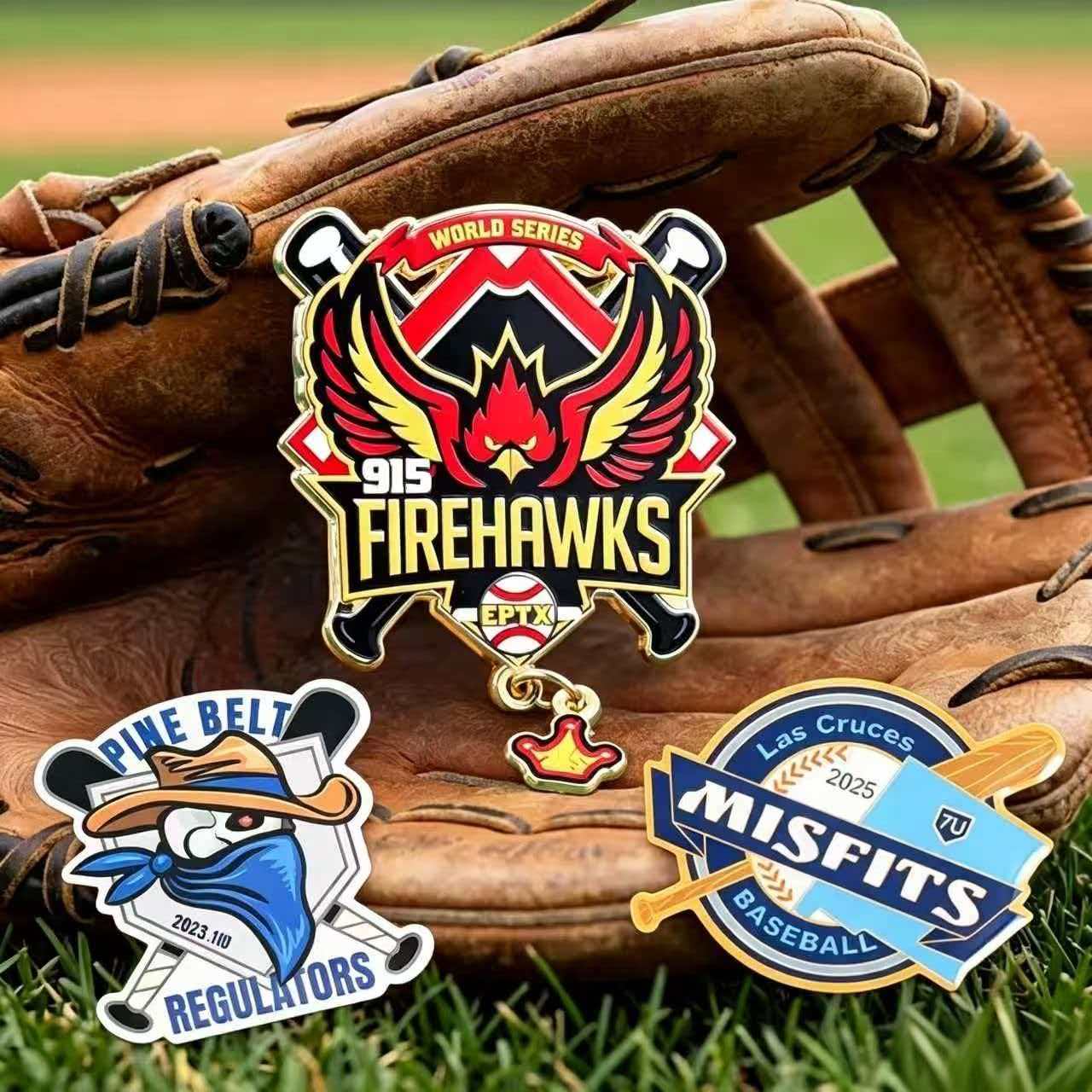
Custom Panda supports custom lapel pins alongside labels, patches, and coins. For branded pin projects, our scope includes zinc alloy, brass, and iron options; hard enamel, soft enamel, offset printed, 3D die cast, and laser engraved styles; and dual plated finishes. The practical decision is to select a pin construction that matches the artwork and use case, then compare supplier offers on one landed-cost basis.
Build a comparable landed cost before approving a supplier
Conclusion: Use one formula for every quotation, with every cost assigned to a separate line. The result is a defensible budget figure that purchasing, marketing, and finance can review together. This method fits buyers comparing branded pin programs from multiple suppliers. It does not replace an approved quotation, since artwork complexity, finish, packaging requirements, destination, and shipping method still need supplier confirmation.
The calculation should begin with the number of usable pins required at destination, rather than the number initially ordered. For example, a retail team may need stock for display, fulfillment, staff wear, and contingency. If the program needs 1,000 usable pieces, ask each supplier to state whether its quote covers any extra production allowance, replacement terms, and packaging count.
Landed cost formula for branded pins
Total landed program cost = tooling + unit price × order quantity + attachment cost + packaging cost + freight + defect allowance.
Landed usable unit cost = total landed program cost ÷ usable units expected for the program.
| Cost component | What to request in the quotation | Why buyers should separate it | When it may not apply |
|---|---|---|---|
| Tooling | State whether a mold, die, screen, or artwork setup charge applies and whether it is one time or repeated. | Tooling can distort the apparent price of a small order. Separating it shows how the cost is spread across quantity. | It may be absent for certain digital or ready stock items, but buyers should not assume this for custom metal pins. |
| Unit price | Specify material, pin style, size, plating, color method, and quoted quantity. | A unit price is comparable only when the construction is identical. A hard enamel pin is not automatically equal to a soft enamel pin. | It always applies, but its basis must be stated. |
| Attachment | List each back, clutch, magnet, safety pin, or other attachment separately if it changes the price. | Attachment affects wearability and failure risk. Loose or unstable pin backs are a known quality concern. | Do not add a separate line only when the quotation expressly identifies the attachment as included. |
| Packaging | Confirm whether pins are loose packed, on backing cards, bagged, or supplied in another agreed format. | Presentation and distribution labor can change the true delivered cost, especially for retail and event handouts. | Simple bulk distribution may require only basic packing, subject to agreement. |
| Freight | Request the destination, shipping method, shipping charge, and any excluded delivery-related costs in writing. | A factory price does not show the budget required to receive goods at the intended destination. | Free shipping may be offered, but confirm that it applies to the specific order and destination. |
| Defect allowance | State how replacement, reprint, bonus quantity, or contingency stock is handled. | Usable inventory matters more than shipped inventory. Budgeting for defects prevents shortfalls at launch. | Do not assign a fixed percentage unless your own organization has an approved allowance. |
Do not turn the defect allowance into an invented supplier charge. Instead, use your internal contingency policy and compare it with documented supplier remedies. Custom Panda provides proportional replacement for defects, a 5 day fast re-stocking or repair option, and 100 bonus pieces with every bulk order. Those terms can reduce program exposure, but they should be checked against the project’s delivery date and acceptance requirements.
Choose pin construction from the artwork and program use
Conclusion: Select the manufacturing method based on visual content, tactile intent, and attachment use before requesting final price comparisons. This avoids collecting quotes for unlike products. It is appropriate for a logo program with an approved or near-approved design. It is not sufficient if the buyer has not decided whether the item should be a metal pin, a patch, or a printed label.
| Option | Best fit | Buyer benefit | Limit or caution |
|---|---|---|---|
| Soft enamel pins | Logos that benefit from visible metal lines and filled color areas. | The recessed enamel presentation gives the metal outline a clear role in the design. | Confirm that small color areas and borders reproduce clearly; enamel overflow can compromise fine artwork. |
| Hard enamel pins | Corporate recognition, premium merchandise, and polished logo presentation. | Hard enamel is suited to programs seeking a smooth finished face. | It should not be selected solely because it sounds premium; compare the final sample against brand color expectations. |
| Offset printed pins | Detailed artwork, gradients, or image-based graphics. | Printed decoration gives buyers another route where enamel color partitions would simplify the design too much. | Confirm the artwork proof carefully because printed detail can appear different from an enlarged screen image. |
| 3D die cast pins | Relief-focused commemoratives, landmarks, and sculptural logos. | Raised and recessed metal features can give a design physical depth. | This is not the first choice when the design depends mainly on multiple flat color fields. |
| Laser engraved pins | Text, restrained branding, or identification-focused designs. | Engraving supports a metal-forward appearance. | It does not replace full color branding where color matching is a program requirement. |
A real use case shows why construction matters. For a Canadian esports tournament championship, Custom Panda created hard enamel pins with polished gold plating and dual-tone colors for fans and players to wear on jackets and lanyards. That example supports hard enamel and plated metal as an option for event merchandise. It does not establish that the same construction is right for every corporate logo, especially one with gradients, photographic elements, or tiny type.
For a more mechanical promotional concept, a German specialty coffee brand used interactive spinning enamel pins with a 360 degree rotating element for an anniversary project. A moving component should be quoted as a defined feature, not absorbed into a vague “custom pin” line. It affects tooling, assembly, unit price, inspection expectations, and potentially packaging.
Buyers who need a more conventional corporate format can also review custom logo pins for corporate branding. If the branding requirement is better solved with a product or carton label rather than a wearable item, compare that route with custom labels printed in bulk before commissioning metal tooling.
Verify the supplier capability behind each quote line
Conclusion: Favor quotations that connect stated capacity, quality controls, lead times, and remedies to the actual order specification. This is particularly useful when a launch date or branded color standard leaves little room for corrections. It does not mean that certifications or capacity alone guarantee an acceptable design; artwork approval and product-specific confirmation remain necessary.
Custom Panda was established in 2012 and operates an 8,000 m² facility with 6 production lines, including complete metal die-casting and embroidery production facilities. The company is ISO 9001:2015 Quality Management System Certified and Disney FAMA Certified. For a buyer, these facts give useful context when assessing a supplier for a repeat branded merchandise program, but they do not substitute for project-level agreement on finish, attachment, packaging, and acceptance criteria.
The stated sample lead time for pins, patches, and labels is 3 days. Bulk production is listed at 8 to 9 days, and U.S. shipping is listed at 5 to 6 business days. Use these as planning inputs, not as a universal delivery guarantee. The final schedule can only be assessed after the supplier has the approved specification, order quantity, production slot, and destination details.
Before production, photo or digital sample confirmation is available. This step is especially useful for confirming logo layout, plating appearance, color boundaries, back attachment placement, and packaging presentation. It has limits: a photo or digital confirmation should be evaluated against the approved artwork and requirements, and the buyer should identify any non-negotiable points before approval.
Compare quotation details that commonly create hidden cost exposure
Conclusion: Reject vague quote lines and resolve scope differences before issuing a purchase order. This is the best protection against budget drift. It applies to every custom order, but the exact questions depend on artwork, quantity, and destination.
- Unspecified metal material: Ask whether the quote uses zinc alloy, brass, or iron. The reason is simple: material is part of the construction being priced. Do not compare prices until each quotation identifies it.
- Unclear enamel method: Confirm hard enamel, soft enamel, or printed decoration. This matters because the visual finish and manufacturing route differ. It is less relevant only when the project is explicitly a non-enamel engraved item.
- Missing attachment description: Require the exact attachment to be stated. A pin that must stay secure on a uniform or lanyard should not be priced with an unnamed back.
- Freight shown as “included” without destination: Ask for the applicable delivery location and shipping scope. Free shipping is a stated selling point, but buyers should verify applicability to the specific order rather than treating it as an automatic global term.
- Packaging assumed rather than documented: Identify whether the item is intended for retail, staff issue, event distribution, or bulk storage. A backing card may support presentation but adds a cost component that needs approval.
- No remedy stated for color mismatch: Put the proof approval and remedy into the order record. Custom Panda offers a color mismatch free reprint, which is relevant where brand color accuracy is a stated requirement.
- MOQ confusion: Digital printing and select custom items have no MOQ, while offset printing and standard bulk items have a 1,000 unit minimum for better bulk pricing. Buyers should ask which category their pin project falls into; do not assume no MOQ applies to every metal pin specification.
Use a quote evaluation sequence that purchasing can audit
Conclusion: A short documented sequence prevents teams from comparing different products under one price heading. It suits buyer teams that need internal signoff before final order approval. It does not replace legal, tax, import, or destination-specific reviews that may be required by your organization.
- Define the program need. State the required usable quantity, event or launch date, destination, audience, and whether the pin is for retail, recognition, uniform use, or a giveaway.
- Freeze the comparison specification. Record the artwork version, chosen style, metal material, plating, colors, attachment, packaging, and any moving or special feature.
- Request line item pricing. Ask for tooling, unit price, attachment, packaging, freight, and any stated replacement or bonus terms as separate entries.
- Calculate landed usable unit cost. Apply the same internal defect allowance to all suppliers unless a documented remedy changes your approved calculation.
- Review proof and sample timing. Confirm whether photo or digital sample confirmation is needed and account for the listed 3 day sample lead time where applicable.
- Confirm production and shipping assumptions. For bulk pins, check the listed 8 to 9 day production window and, for U.S. delivery, the listed 5 to 6 business day shipping reference against the actual project schedule.
- Approve only documented scope. Place the order after internal stakeholders accept the same specification used for the landed-cost model.
For campaigns needing pins alongside apparel identification, it can be useful to coordinate related sourcing early. Custom Panda also supplies make your own custom patches, including embroidery, woven, PVC, chenille, Velcro, and heat-seal options. A pin and patch should remain separately quoted because their materials, attachments, production steps, and usable-unit assumptions are different.
Decide whether Custom Panda fits your branded pin program
Custom Panda is a practical fit for buyers who need custom pin formats supported by stated metal manufacturing capabilities, documented sample and bulk lead-time references, and explicit remedies for color mismatch and defects. The company’s daily label capacity exceeds 1,000,000 pieces, while its production setup also includes metal die-casting facilities for pins. Those capabilities can support broader brand merchandise sourcing, but each pin quotation still needs a defined material, finish, attachment, quantity, packaging scope, and shipping destination.
The strongest purchasing decision is not “which supplier quoted the lowest pin price?” It is “which supplier supplied the clearest total cost for the approved product, with terms that fit our timeline and risk tolerance?” That distinction protects the budget after the purchase order is released.
Send your artwork, required quantity, destination, attachment preference, and packaging requirement to request a line-item quote for your branded pin program.