

Custom Matte Labels That Cut Waste and Reprints
The sourcing risk with custom matte labels is rarely the quote. It shows up three weeks later, when scuffed rolls come back from the packing line, a brand color reads flat, or labels lift in a cold room. By then the reprint is on your budget. The finish you pick before the PO decides how many labels you throw away, so this guide compares the options by waste cost, not just unit price.
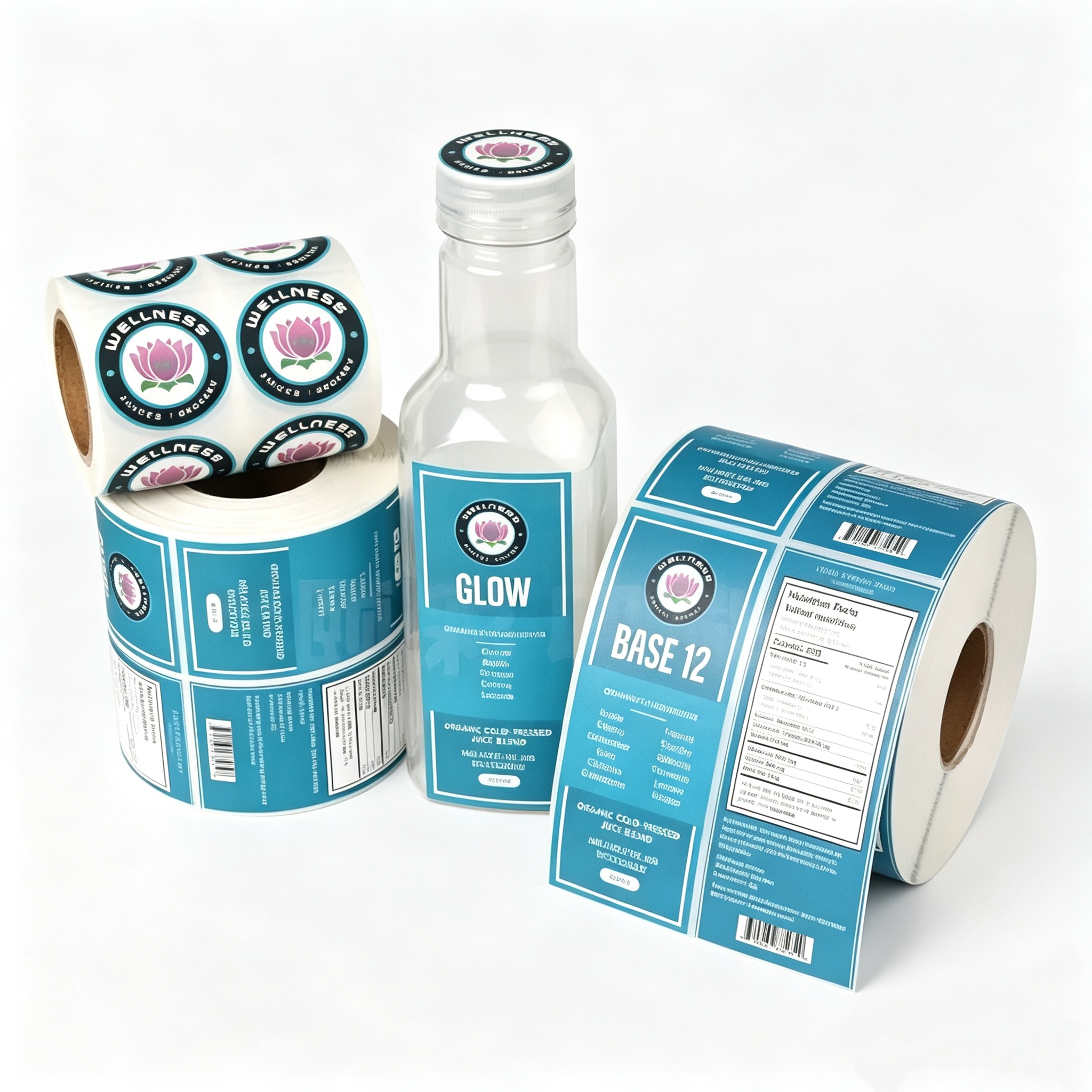
Where Matte Label Waste Actually Comes From
Most waste traces back to a mismatch between the finish and the conditions the label meets after printing. A matte surface hides fingerprints and glare, but it also holds ink differently from gloss and is often less forgiving of abrasion. These are the usual sources of loss:
- Makeready and setup waste: labels used to dial in color and registration. This is fixed per job, so it hurts small runs most.
- Handling scuffs: unprotected matte stock can burnish or mark in cartons, on conveyors and under shrink film.
- Moisture and condensation: paper-based matte labels can lift or wrinkle in cold storage or on chilled bottles.
- Color drift: dark solids and brand colors can look different on matte than on the gloss proof the design team approved.
- Opacity problems: white ink on clear film can look thin if the build is wrong, which drives rejects.
- Adhesive failure: weak adhesion, or adhesive bleeding in heat, turns a good print into scrap.
Only the first item is certain on every job. The others depend on your product, your line and your storage chain. That is why the finish comparison below is tied to use conditions.
Uncoated Paper, Matte Laminate and Matte BOPP Compared
There are three practical routes to a matte look. Each solves a different problem, and each has a limit.
| Option | Best fit | Main weakness | Does not suit |
|---|---|---|---|
| Uncoated matte paper | Dry shelf goods, boxes, hang tags, labels that need hand-written batch marks | Absorbs moisture and oil, and scuffs more easily | Chilled, wet or oily products |
| Paper with matte laminate | Cosmetics, candles and gift packaging that need a soft touch and some scratch protection | Edges can still wick moisture, and laminate adds a cost step | Constant water exposure, or surfaces that must take pen marks |
| Matte BOPP film | Supplements, beverages, bottles and anything wet, oily or handled heavily | Highest unit price of the three, and ink choice needs checking on film | Buyers who want a natural paper feel |
If your product sits dry on a retail shelf, uncoated paper is often the right call. Paying for film there is wasted spend. If the product meets condensation, oils or heavy handling, film is usually cheaper once failures are counted. You can review the film route at clear custom bopp labels, or look at waterproof matte labels if moisture is the main concern.
Cost: A Waste-Cost Calculation Across Production Runs
Procurement teams should keep three categories of cost apart. Mixing them is how an estimate gets treated as a fact in a budget review.
Confirmed, estimated and unknown costs
- Confirmed: offset printing and standard bulk items start at 1,000 units. Digital printing and select custom items have no MOQ. Bulk orders include 100 bonus pieces. Color mismatches are reprinted free, and defects are replaced in proportion.
- Estimated (illustrative only): the unit prices and waste rates in the tables below. They are assumptions I chose to show the method. They are not quotes and not measured yields.
- Unknown until you test: your real field failure rate, relabeling labor, line downtime and any freight on replacements. Only a sample run on your own containers will show these.
Method
Waste cost = labels needed × waste rate × unit price. Total spend = labels needed × (1 + waste rate) × unit price. Replace my assumptions with the figures from your own quote and sample test.
Assumptions for illustration: uncoated matte paper at $0.040 per label with 10% waste, matte laminate at $0.048 with 5% waste, and matte BOPP at $0.055 with 2% waste.
| Run size (usable labels) | Uncoated matte paper waste cost | Matte laminate waste cost | Matte BOPP waste cost |
|---|---|---|---|
| 10,000 | $40 | $24 | $11 |
| 50,000 | $200 | $120 | $55 |
| 200,000 | $800 | $480 | $220 |
Waste cost alone favors film. Total spend tells a different story. For a 50,000 label run on the same assumptions:
| Option | Labels ordered | Total spend |
|---|---|---|
| Uncoated matte paper | 55,000 | $2,200 |
| Matte laminate | 52,500 | $2,520 |
| Matte BOPP | 51,000 | $2,805 |
On these numbers, BOPP does not win on paper cost. It only wins when the cheaper stock fails more often than assumed. Setting BOPP total spend at $2,805 as the target, uncoated paper would need roughly 40% waste or field loss to match it. Matte laminate would need roughly 17%. That is the break-even logic to apply to your own quote.
Conclusion: choose uncoated or laminated stock for dry, low-handling products, and film when condensation, oil or abrasion is part of the product’s life. Limit: the fixed makeready share is larger on short runs, so at 10,000 labels the percentages above understate the real waste. Digital label printing with no MOQ can reduce that fixed share for small batches. Offset becomes the better value from the 1,000 unit minimum upward, since bulk quantities bring better pricing.
A Real Example: Matte BOPP With Scratch Proof Lamination
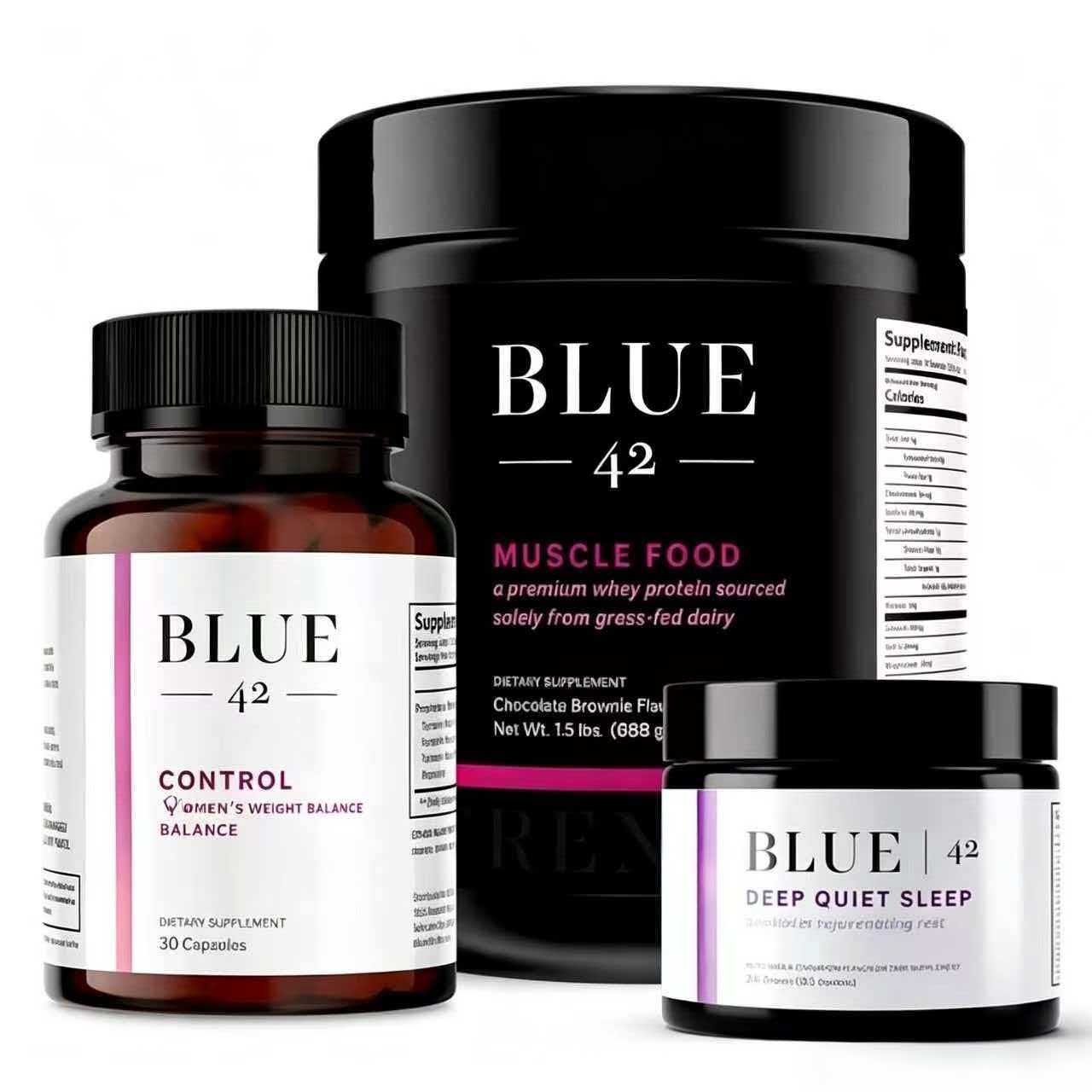
We delivered metallic foil stamped roll labels to an Australian natural health supplement brand. The build combined matte BOPP film with scratch proof lamination to hold a high end retail shelf presence. The logic matches the table above: supplement bottles get handled, packed and shelved, and the matte film plus lamination protects the foil detail. Foil on uncoated paper would be a weaker choice for that use.
Do not read this as a universal result. It shows what the film route suits, not what every order will cost or achieve. If your product is a dry paper carton, the same build may be more than you need. For roll formats, see custom printed roll labels.
Common Mistakes That Create Matte Label Reprints
- Approving color on a gloss proof. Matte reads flatter, especially in dark solids. Confirm on the actual matte stock.
- Choosing the finish before the container. Test on the real bottle, jar or carton surface, in the real temperature range.
- Ignoring hand-written marking. Uncoated paper usually takes pen and marker well, while laminate and film may smear. If operators write batch codes by hand, test your pen on the sample.
- Paying for film on a dry shelf product. It adds unit cost with no failure to prevent.
- Skipping a cold or wet test. Condensation lifting is a known cause of peeling in cold storage. Put a sample in the actual fridge or cooler overnight.
- Treating the first estimate as the budget. Reserve a contingency for relabeling labor until a real sample proves the failure rate.
Pre-Order Checklist for Bulk Matte Label Specs
- Define the use environment. Dry, chilled, wet, oily or outdoor? This picks the material family.
- Request a physical sample. Our sample lead time for labels is 3 days. Apply it to your own container.
- Test the three failure points. Run a scuff test, a moisture or cold test, and a hand-marking test if relevant.
- Check color against your brand guide. We offer photo or digital sample confirmation before production, so approve color at that stage.
- Pick the print method by quantity. Use digital for no MOQ and short runs, or offset from 1,000 units for better bulk pricing.
- Plan the schedule. Bulk production takes 8 to 9 days, and U.S. shipping takes 5 to 6 business days. Build those into your replenishment calendar.
- Compare totals, not unit prices. Use the formula above with your real quote figures.
What Backs the Order on Our Side
Our facility is ISO 9001:2015 certified, established in 2012 and runs 6 production lines in 8,000 m², including 6 HP digital label presses. For labels, we offer a wide substrate selection, BOPP lamination and UV resistant inks. If color does not match what you approved, we reprint it free, defects are replaced in proportion, and every bulk order includes 100 bonus pieces. These terms reduce the cost of a bad run, but they do not replace testing, because only a sample on your container shows how a finish behaves in your conditions.
For other paper-based and speciality stocks, browse matte recycled paper labels and custom kraft labels. For the full range, see custom labels printed in bulk. If you would like a finish recommendation, you can also review our premium custom matte labels range.
Send us your container type, storage conditions and target quantity, and we will quote the options side by side and ship a sample for you to test before you commit to a bulk order.