

Custom Metal Label Pins Inspect Die-Line Proofs
A first pin order can go wrong long before metal is cast. Once a die line, recessed section, color boundary, or pin-back position is approved, correcting it may require revised tooling, revised artwork, or a delayed launch. That is why brand managers and import buyers should inspect the production proof as a manufacturing document, not merely as a design preview.
Custom Metal Label Pins are often used as logo badges, retail add-ons, membership pieces, employee recognition items, and event merchandise. For each use, the proof must show how the artwork becomes metal edges, enamel-filled areas, plating, attachment points, and packaging. A polished presentation image alone is not enough.
Custom Panda supports custom lapel pins in zinc alloy, brass, and iron, including hard enamel, soft enamel, offset printed, 3D die-cast, laser engraved, and dual-plated options. Our ISO 9001:2015-certified and Disney FAMA-certified facility has metal die-casting and embroidery production equipment, while photo or digital samples are confirmed before production. For a buyer placing a first order, that confirmation point is where design risk should be reduced.
Choose the Pin Construction Before You Review the Die Line
Choose the manufacturing style first, then judge whether the artwork suits it. A proof can look acceptable on screen while still being poorly matched to its intended construction. The die line should answer a basic question: which parts are raised metal, which parts are recessed, and which details are printed rather than formed in metal?
For a logo with clear blocks of color and defined borders, soft or hard enamel may be a good fit. For artwork with tiny lettering, gradients, or photographic details, offset printing may be more suitable because the graphic is printed instead of divided into many metal cells. A relief-focused design, such as a building, mascot, or sculpture, may fit 3D die-casting better than enamel.
| Pin option | Best fit | What the proof must make clear | When it may not apply |
|---|---|---|---|
| Soft enamel | Bold logos, event pins, simple color-separated artwork | Raised metal borders and recessed enamel color areas | Not the first choice when fine artwork depends on gradients or extremely small visual detail |
| Hard enamel | Brand, recognition, and collector pieces seeking a smooth finish | Color fields, plating outlines, and any small text that must remain readable | Not suitable if the visual effect depends on clearly recessed enamel below the metal lines |
| Offset printed | Detailed logos, gradient art, portraits, and artwork with many color transitions | Printed image boundary, metal base shape, and protective finish requirements | Not the best fit when the main purpose is a raised metal-and-enamel texture |
| 3D die-cast | Relief-based souvenirs, architectural forms, mascots, and sculptural artwork | High and low relief areas, cut-outs, plating, and viewing direction | Not ideal when separate flat enamel colors are the main design feature |
| Laser engraved | Text-led pieces and designs where engraved information is required | Engraved content, placement, and contrast against the chosen finish | Not a replacement for full-color artwork |
The Tokyo museum project is a useful real-world reference for relief-driven artwork. Custom Panda produced 3D cast metal souvenir lapel pins for a museum exhibition, using antique bronze relief and cut-out details to represent traditional architecture. That approach fits a design where depth and metal form carry the message. It would not be the automatic choice for a corporate logo requiring several flat brand colors.
For color-led event artwork, the Canada esports championship case used custom hard enamel pins with polished gold plating and dual-tone colors. The contrast between polished metal and separated enamel fields made sense for a championship item worn on jackets and lanyards. Buyers should not copy that construction automatically; it works when the logo has clean color divisions that can be represented by metal boundaries.
If your design is still a complex illustration rather than a simplified pin layout, ask whether offset printed pins would retain more of the intended artwork. This is a design-to-process decision, not just a visual preference.
Use This Preproduction Proof Review Checklist Before Approving Artwork
Do not approve a proof until every feature below has an owner-approved answer. The aim is to catch elements that look clear in a vector file but become uncertain when converted into physical metal and enamel. This checklist is particularly useful for first orders, multi-stakeholder approvals, and designs that will be reordered later.
| Proof item | What to inspect | Why it matters | Limit or escalation point |
|---|---|---|---|
| Line width | Identify every thin outline, narrow letter stroke, and small divider. Confirm whether it is a raised metal line, a printed detail, or should be removed. | Metal lines that are too fine for the selected process may lose clarity or merge with nearby areas. | Do not assume a screen preview proves manufacturability. Request design assistance if small details are central to the logo. |
| Recessed areas | Mark each enamel-filled section and each recessed background. Check that no intended color area has accidentally become raised metal. | Soft enamel relies on visible recesses; incorrect recess mapping changes the intended texture and appearance. | This point is less relevant for a fully printed pin, but the printed boundary and base shape still need review. |
| Color boundaries | Check whether neighboring colors are separated by metal, printed boundaries, or open space. Compare the proof to approved brand artwork. | Unclear borders can cause color bleeding or overflow, a known quality risk for enamel pins. | Do not treat a digital approximation as a final color standard without confirming the selected finish and color specification. |
| Pin backs | Review the number, position, direction, and type of pin back shown on the proof. Consider how the item will sit on its intended garment, card, or lanyard. | Loose or unstable pin backs can affect wearability and perceived quality. | A proof alone cannot confirm every use condition. State the intended application and attachment expectations before production. |
| Packaging | Confirm whether pins are loose, mounted on a backing card, individually packed, or packed for bulk distribution. Review printed text and orientation where applicable. | Packaging affects retail presentation, event distribution, and receiving checks. | Do not leave packaging unspecified if retail display or kitting is part of the requirement. |
Approve the proof in a controlled sequence
- Freeze the approved artwork source. Send the current logo file and identify the version owner. Avoid reviewing a proof against an outdated brand asset.
- State the intended pin style. Specify soft enamel, hard enamel, offset printed, 3D die-cast, engraved, or another selected option before visual approval.
- Review metal versus color. Circle all raised outlines, plated areas, recessed fills, cut-outs, and printed zones. Ask what each visual element represents in production.
- Check attachment and presentation. Confirm pin-back placement and the packaging arrangement required for delivery, sales, or event handout.
- Compare against the order record. Ensure quantity, finish, artwork version, packaging requirement, and shipment destination are consistent across the quotation and proof.
- Approve only documented changes. If a line, letter, or color section is adjusted for production, record the final approved version rather than relying on verbal approval.
This review does not replace physical evaluation when your project includes special finishes, an unusual application, or an exact brand color requirement. It does, however, prevent the most expensive kind of error: approving a visual file without confirming how the factory will interpret it.
Match Materials, Finish, and Attachment to the Intended Use
Select the pin specification around the use case, not only the artwork. The same logo may need different construction for a collector release, a staff uniform, or a conference giveaway. Custom Panda offers zinc alloy, brass, and iron for pin production, along with hard enamel, soft enamel, offset printed, 3D die-cast, laser engraved, and dual-plated finishes.
- Corporate or uniform pins: Prioritize clear logo recognition, stable attachment, and a finish that suits repeated professional wear. Include pin-back placement in the proof review. This approach is less relevant for decorative collector pins where an unusual silhouette or interactive feature is the priority.
- Retail or collector releases: Consider whether a polished finish, dual plating, cut-outs, or a moving element supports the product story. The Germany specialty coffee anniversary project used a die-cast spinning enamel pin with a 360-degree rotating element to improve unboxing engagement. Such a feature needs an explicit motion and assembly review; it should not be assumed from artwork alone.
- Souvenir designs: Choose 3D relief or antique-style plating when the subject relies on structure and historical character. This is suitable for monuments, architecture, and sculptural imagery, but not always for a flat, color-heavy brand mark.
- Campaign and event pieces: Use enamel when the design has clear color blocks and recognizable outlines. For highly detailed campaign art, assess whether offset printing is more faithful to the source artwork.
Buyers considering a smooth, polished enamel presentation can review premium hard enamel pins for brands. If the desired effect is defined raised metal borders with recessed colored areas, a soft enamel specification may be the more direct fit. Neither option is automatically “better”; the proof must show the production logic behind the choice.
Qualify the Supplier by Evidence, Capacity, and Correction Terms
Use documented supplier terms to decide whether a proof review can lead to a dependable order. Buyers should ask about confirmation before production, sampling, production timing, quality handling, and the supplier’s ability to support the order quantity. Avoid deciding solely on a rendered proof or a low opening price.
Custom Panda was established in 2012 and operates an 8,000 m² facility with six production lines. The company states daily label capacity of more than 1,000,000 pieces and maintains complete metal die-casting and embroidery production facilities. While label capacity is not a pin-output figure and should not be used as one, the stated in-house product scope is relevant for buyers sourcing coordinated pins, patches, and labels from one supplier.
| Commercial point | Documented Custom Panda term | Buyer action before placing an order |
|---|---|---|
| Proof confirmation | Photo or digital sample confirmation before production | Make the die-line checklist part of the written proof approval record. |
| Sample timing | Sample lead time stated as 3 days for pins, patches, and labels | Confirm whether your artwork, finish, and project schedule fit this timing. |
| Bulk production | Bulk production stated as 8–9 days | Plan approval time separately. Production timing does not begin until the required details are settled. |
| Shipping | U.S. shipping stated as 5–6 business days; same-day dispatch is available for select ready-stock or digital items | Do not assume same-day dispatch applies to custom metal pins. Confirm destination, freight method, and dispatch scope. |
| Minimum order | No MOQ for digital printing or select custom items; offset printing and standard bulk items have a 1,000-piece minimum | Confirm the MOQ that applies to your selected pin construction rather than applying a general statement to all pin orders. |
| Quality handling | Color mismatch free reprint, proportional replacement for defects, 5-day fast re-stocking or repair, and 100 bonus pieces with every bulk order | Document the approved color reference, defect acceptance expectations, and packaging requirement before production. |
The stated quality terms matter because color mismatch, enamel overflow, weak pin backs, and low-detail blur are known risks for pin orders. A reprint or replacement policy is not a reason to approve unclear artwork. It is a backstop after proper artwork control, documented specifications, and proof confirmation.
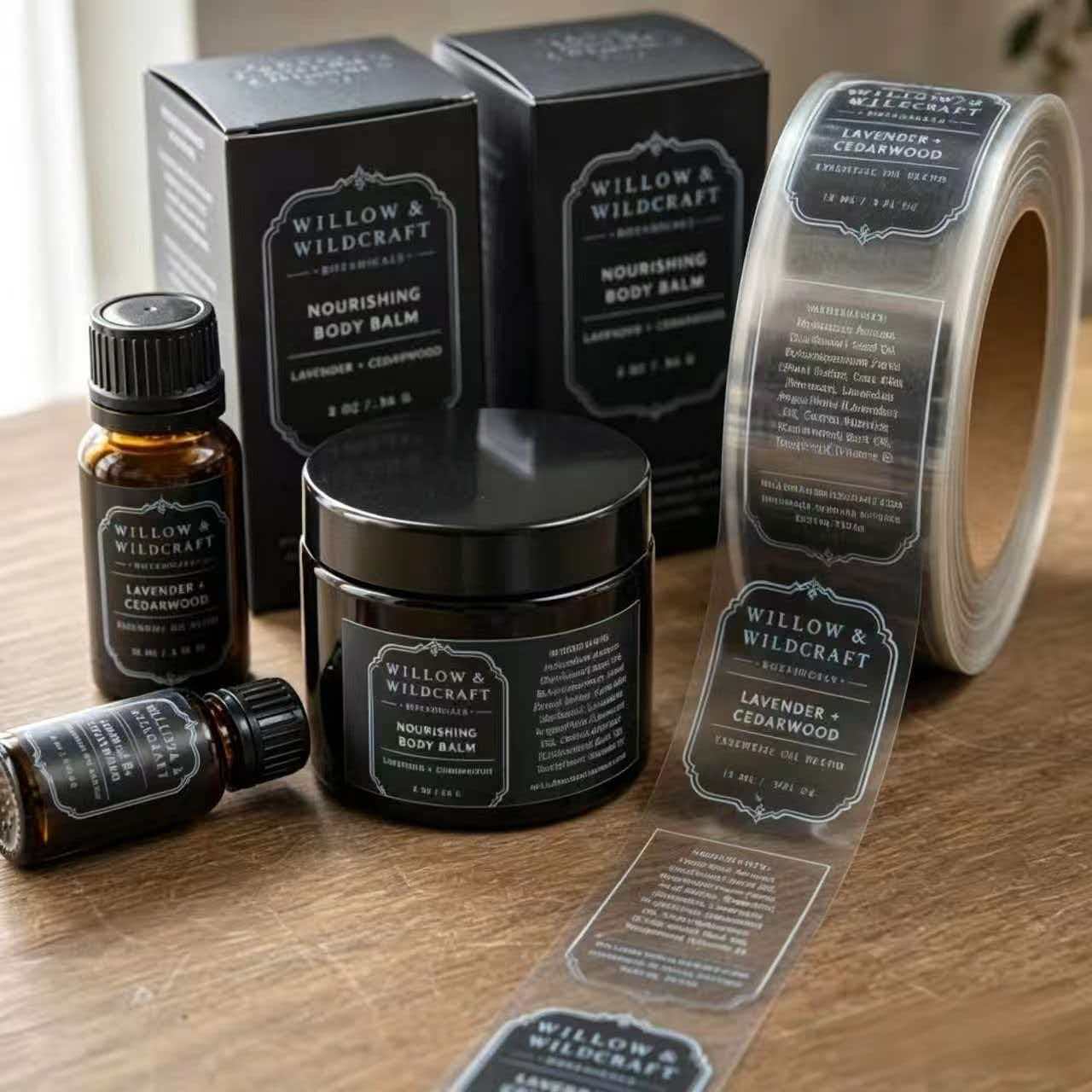
For a coordinated launch that also requires packaging identification, consider whether custom labels printed in bulk are needed alongside the pin order. Custom Panda offers wide label substrate options, BOPP lamination, UV-resistant inks, and custom foil stamping colors. That service may fit boxed merchandise or retail presentation, but it is a separate printed-label requirement and should be quoted with its own material, adhesive, and quantity details.
Prepare an RFQ That Produces a Reviewable Proof
A good RFQ gives the supplier enough information to produce a decision-ready proof, not just a decorative mockup. The following buyer checklist reduces follow-up cycles and makes it easier to compare quotations fairly.
- Attach the current artwork file and identify the approved version.
- State the intended product use: staff wear, event handout, resale, membership, souvenir, or promotional campaign.
- Specify the preferred pin style, or state that you need a recommendation between enamel, printed, engraved, or 3D cast construction.
- Identify required material if it is already known: zinc alloy, brass, or iron.
- List plating or finish preferences, including whether dual plating is required.
- Describe each color area and provide brand references where exact alignment matters.
- State the requested pin-back arrangement and any stability concern created by the shape or intended wear.
- Define packaging: loose bulk units, backing cards, individual packing, or another required format.
- Provide order quantity, target delivery date, and final shipping destination.
- Ask for the digital or photo sample confirmation point and identify who has authority to approve it.
This level of information is suited to import buyers, brand teams, and procurement staff who need a traceable approval record. It may be more than a simple giveaway order requires, but it is appropriate when artwork represents a protected brand, a launch deadline is fixed, or the pins will be sold at retail.
Send your artwork, intended pin style, quantity, pin-back requirement, and packaging brief to request a quote and a proof review.