

Custom Military Patches Backing Guide for Uniforms & Gear
The most expensive patch mistake is not a wrong color. It is a correct patch with the wrong backing, discovered after 500 pieces arrive and the vests have no loop panel. If you are finalizing an order for Custom Military Patches, settle the attachment method before you approve artwork, because it affects thickness, construction, and what the patch can survive.
This guide is built as a set of direct questions and answers for buyers confirming specifications with a supplier. It covers what each backing does well, where it fails, and what to confirm in writing before production starts.
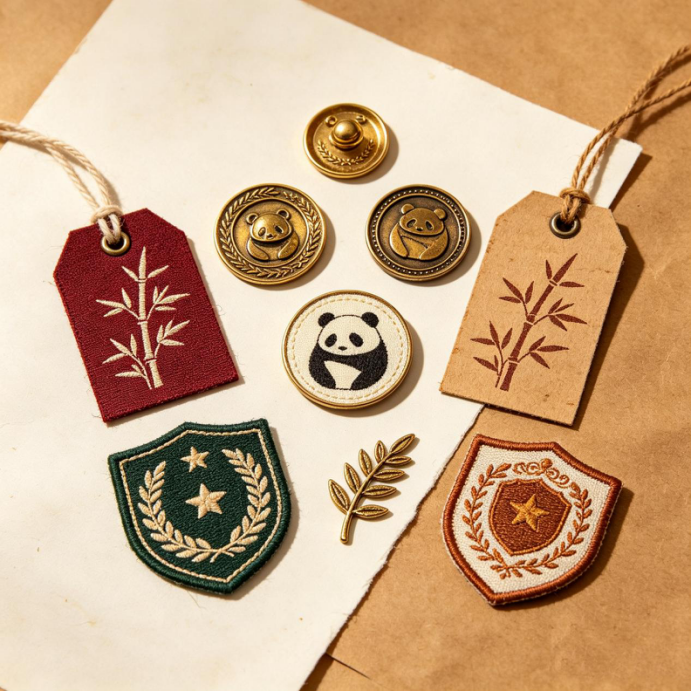
Why the Backing Decision Goes Wrong So Often
Buyers usually approve the front design first and treat the back as a checkbox. That order causes most of the rework we see in patch projects. A backing has to match three things: the garment fabric, the wash or wear cycle, and how often the patch will be removed.
Common mistakes to avoid:
- Choosing iron-on for coated or technical nylon. Heat-seal adhesive needs a fabric that tolerates heat and accepts bonding. Waterproof coatings often do not.
- Ordering hook and loop without checking the mating surface. The patch carries the hook side. The garment, bag, or plate carrier needs a loop panel, or you must order matching loop pieces.
- Assuming one backing works for every patch type. A thick PVC patch and a lightweight woven patch behave very differently under the same backing.
- Skipping the wash test. Weak adhesive backing that fails after washing is a known failure point in patch manufacturing. Ask how the backing is applied and sealed.
- Ignoring unit or employer rules. Official uniform regulations vary by organization. Confirm what your end user is allowed to wear before ordering.
Which Backing Fits Uniforms, Tactical Gear, and Morale Patches?
Here is the direct answer first, then the reasoning. Sew-on suits uniforms. Hook and loop suits tactical gear and swappable morale patches. Iron-on suits light, low-stress use. Adhesive suits short-term display only.
| Backing | Best fit | Why it works | Limits |
|---|---|---|---|
| Sew-on (plain or merrowed edge) | Uniforms, jackets, work wear, permanent placement | Stitched attachment holds through repeated washing and daily wear | Needs a sewing step. Removal leaves needle holes |
| Hook and loop | Vests, plate carriers, packs, caps, rotating morale patches | Fast swapping with no sewing on the patch itself | Needs a loop surface. Grit and lint can reduce grip over time |
| Heat-seal iron-on | Cotton and similar fabrics, club or team items, light-duty use | Quick application without a sewing machine | Poor match for heat-sensitive or coated fabrics. Stitching is safer for items washed often |
| Adhesive | Short events, displays, temporary placement | Instant, tool-free | Not for laundering. Confirm availability for your construction before you plan around it |
Which backing should a uniform patch use?
Sew-on. Stitching is the only option on this list that is meant to stay put through regular laundering. If you want a patch that looks clean on a uniform, choose a finished border and ask for a sample. Our custom sew on patches for uniforms & apparel range covers this use. The limit: if the uniform must accept patch changes between assignments, sew-on becomes a nuisance.
Is hook and loop the right call for tactical gear?
Usually yes, for vests, packs, and plate carriers. For an outdoor gear brand in the United States, we manufactured heavy-duty embroidered Velcro patches with weather-resistant threads and rugged hook-and-loop backings built for hiking backpacks and tactical vests. That combination suits gear that gets handled, rained on, and reconfigured. The limit: the hook side is stiffer, and a patch worn against bare skin or soft knitwear can feel rough. You can review options through custom hook & loop patches.
Can I use iron-on backing on nylon or ripstop?
Treat it with caution. Heat-seal backing depends on heat and pressure to bond, and many synthetic or coated fabrics either resist bonding or deform. If your garment is technical nylon, choose sew-on or hook and loop instead, or test a swatch first. Iron-on works best on stable, heat-tolerant fabrics. See custom iron on patches for the range.
Can iron-on and stitching be combined?
Yes, and it is a sensible approach for patches that will be washed often. The heat-seal holds position while you stitch around the border. It costs a little extra labor but reduces the risk of edge lift.
Are adhesive backings suitable for morale patches?
Only for short-term or display use. A morale patch that changes often is better served by hook and loop, which gives the same swap-ability with far more holding power. Do not plan an adhesive backing as a substitute for stitching on anything that will be washed.
Pairing Patch Construction With the Right Backing
The face of the patch shapes what the back can do. Our patch range includes fine embroidery, woven labels, heat transfer, PVC soft rubber, and chenille, with Velcro and heat-seal iron-on backings available. Use the pairings below as a starting point, then confirm on a sample.
| Construction | Typical backing choice | Watch for |
|---|---|---|
| Embroidered | Sew-on or hook and loop | Border fraying if the edge finish is wrong for the use |
| Woven | Sew-on, iron-on | Fine detail needs a high thread density to stay sharp |
| PVC soft rubber | Hook and loop, sew-on where a rim allows | Heat-seal is a poor match for rubber. Confirm with your supplier |
| Chenille | Sew-on, felt backing | Bulk and loft make hook and loop awkward on thin fabric |
| Heat transfer | Iron-on | Better for flat graphics than for raised texture |
For raised, rubberized designs, look at 3d tactical pvc patches. For standard unit-style designs, the tactical custom military patches for uniforms & gear page shows the construction options in one place.
Specification Checklist Before You Approve Production
Run through this list with your supplier. Each item should be answered in writing, not assumed.
- Garment fabric. State the material and any coating. This decides whether iron-on is even viable.
- Attachment method. Name one backing per patch. If you need both, ask whether one patch can be made two ways.
- Mating surface. For hook and loop, confirm who supplies the loop panels.
- Edge finish. Match the border to wear. Heavy-use patches need an edge built to resist fraying.
- Color references. Provide exact color references so the supplier can match them. A color mismatch is a known cause of rejected batches.
- Wash or exposure conditions. Tell the supplier about laundering, weather, and abrasion.
- Sample confirmation. Ask for a photo or digital sample before production and approve the back as well as the front.
- Minimum quantity. Digital and select custom items can run without a minimum, while standard bulk items start at 1,000 units with better pricing at volume. Confirm which applies to your construction.
A Purchasing Scenario: Mixed Uniform and Gear Order
This is an illustrative scenario, not a customer case. A security contractor needs one unit patch in two versions: a sewn version for duty shirts and a hook and loop version for vests. The buyer would normally split the order by backing and approve both samples before bulk.
Timeline for planning purposes, based on our published lead times:
- Sample: 3 days
- Bulk production: 8 to 9 days after sample approval
- U.S. shipping: 5 to 6 business days
That is a rough total of three to four weeks from sample request to delivery once you include approval time. If you need a date certain, share it at the quote stage so it can be planned against production lines.
What We Can Confirm Before Bulk Production
We have operated since 2012 from an 8,000 m² facility with six production lines, and our quality management system is ISO 9001:2015 certified. For patch orders, the practical protections are these:
- Photo or digital sample confirmation before production
- Free reprint if colors do not match what was approved
- Proportional replacement for defective pieces
- 5-day fast re-stocking or repair support
- 100 bonus pieces included with every bulk order
Free design assistance and live human support are also available, so questions about backing or edge finish can go to a person rather than a form. These terms cover our production quality. They do not replace your own check on uniform regulations or fabric compatibility.
Quick Answers for Late-Stage Buyers
Can I change the backing after sample approval?
Treat it as a new specification. A different backing can change thickness, cost, and lead time, so confirm before changing.
Should I order samples in more than one backing?
If you are torn between two, yes. A 3-day sample turnaround makes a side-by-side test inexpensive compared with a wrong bulk order.
What if I am unsure which backing my fabric accepts?
Send a swatch description or garment details. We would rather advise on a swatch test than have you commit to iron-on and find out after the order ships.
If you are ready to finalize a specification, send your artwork, garment fabric, and attachment preference, and request a sample or quote for your Custom Military Patches order.