

Verify Agency Artwork Before Ordering Custom Officer Label Pins
Before an agency sends an RFQ or approves a production proof, one missed rank letter, badge number, enamel color, or seal detail can turn an otherwise good order into unusable inventory. That risk matters more for department procurement teams because officer insignia is often issued, worn with uniforms, or presented at official events. Once metal molds are approved, late design changes can affect the ordering schedule and create avoidable replacement work.
Custom Officer Label Pins should therefore be treated as controlled identification items, not ordinary promotional merchandise. The buyer should confirm who owns the artwork, what version is current, which elements must match agency records, and what proof format the supplier will provide. This guide gives first-time buyers a direct review process that reduces proofing errors before production starts.
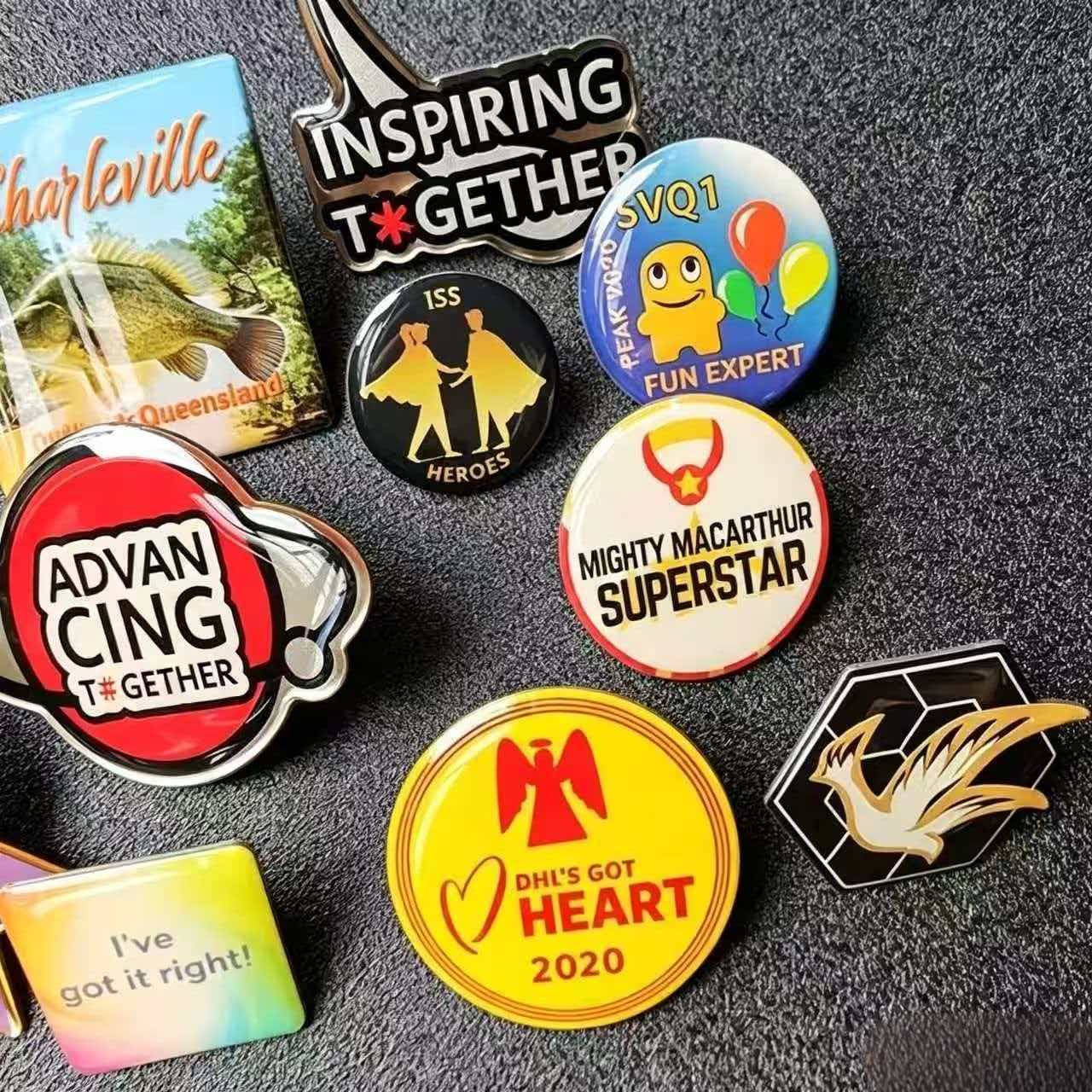
What should an agency confirm before requesting a pin proof?
Conclusion: Build one approved artwork package before discussing plating, enamel, quantity, or backing. This prevents a supplier from producing a proof from an outdated badge file or an unapproved online image.
The artwork package should identify the approved agency contact, the intended pin use, the order quantity, and the exact artwork source. Procurement teams often receive badge artwork from several departments: communications may hold a brand logo, operations may hold a current badge layout, and command staff may control rank symbols. These files should not be assumed to match.
This approach fits initial orders for uniform programs, officer recognition, training graduations, conferences, and agency fundraising. It is less necessary for a simple internal morale pin with no controlled marks, but the final spelling and version control still need a named approver.
- Use the original logo file when available. A clear source file helps the supplier create a more reliable art proof. A screenshot can be used only when no better source exists, but it may not show fine seal lines or small lettering clearly.
- State the official agency name exactly. Include capitalization, punctuation, abbreviations, and line breaks. Do not ask a supplier to infer missing text from a low-resolution image.
- Mark restricted elements. Identify seals, shields, rank insignia, badge numbers, and signatures that require agency approval before production.
- Define the use case. Explain whether the item is a uniform accessory, event giveaway, award, collector piece, or donor item. The use case affects whether hard enamel, soft enamel, printed art, or cast relief is appropriate.
- Name one final approver. Internal comments are useful, but production should only begin after one authorized contact gives clear approval.
For agencies that also need printed identification assets, custom office & warehouse labels can support organized storage and distribution. Labels are not a replacement for issued metal insignia, but they can help teams identify cartons, bins, or event materials.
How proof elements such as rank text, badge numbers, enamel colors, and seal details should be checked before production
Conclusion: Review every controlled proof element against a source document, not against memory. A proof can look polished and still contain an incorrect rank abbreviation or a changed seal feature.
Ask the supplier to provide a photo or digital sample confirmation before production. At Custom Panda, photo or digital sample confirmation is part of the stated production process, giving procurement teams a defined point to compare artwork before bulk manufacturing. The limitation is clear: a proof only confirms what the buyer reviews. It cannot correct details that were not supplied or noticed before approval.
| Proof element | What to compare | Best source for approval | When extra review is needed |
|---|---|---|---|
| Rank text | Spelling, abbreviation, letter order, line breaks, and spacing | Current agency rank list or approved uniform reference | When rank names differ by division or include formal abbreviations |
| Badge numbers | Each digit, leading zero, placement, and whether numbers are fixed or variable | Authorized assignment list | When individual pins are assigned to named officers |
| Enamel colors | Color areas, border colors, text contrast, and whether a color identifies rank | Approved brand artwork or official color reference | When similar blues, golds, or reds carry agency meaning |
| Seal details | Outer ring text, stars, dates, symbols, and central emblem orientation | Official seal artwork supplied by the agency | When the seal has small lettering or fine internal features |
| Plating details | Metal finish, raised borders, recessed areas, and contrast with enamel | Approved digital proof with finish notes | When the same design is issued in more than one rank level |
| Attachment choice | Pin back position and whether a single or multiple attachment points are required | Uniform sample or procurement requirement | When the pin will be worn on heavier fabric or an active uniform |
A practical review method is to print or enlarge the proof, then have the authorized reviewer read every text field aloud while another person checks it against the source file. This is especially useful for agency badge pins that contain circular seal text, short titles, and serial information. The method does not replace legal or command approval where an official emblem is controlled; it simply makes proofreading more disciplined.
Should the agency approve enamel colors from a screen proof alone?
Approve the color placement and color callouts from the digital proof, but do not assume every screen displays color in the same way. The right decision is to specify the approved color references in the artwork package and request confirmation that those references are used in the proof. This works well for standard enamel areas and clear agency brand colors. It does not remove the need for a physical sample when color matching is highly sensitive or when multiple finishes may affect the visual result.
Custom Panda offers color mismatch free reprint and proportional replacement for defects under its stated terms. That support is helpful if a confirmed color issue occurs, but it should not be used as a substitute for careful proof approval.
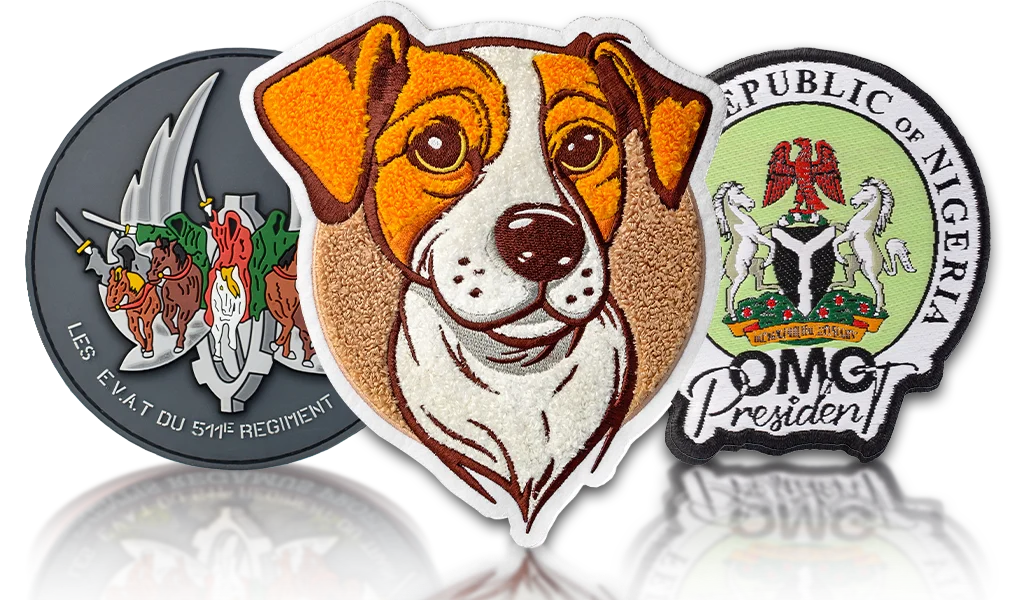
Which pin construction best fits agency artwork?
Conclusion: Choose construction based on the amount of fine art, the desired surface feel, and the role of the pin. Do not select a process only because it was used on a previous order.
Hard enamel pins suit designs where a smooth finished surface and clean color fields are wanted. Soft enamel pins retain recessed color areas beneath raised metal lines, which can help separate bold icon shapes and text. Offset printed pins are better candidates when artwork includes detailed printed imagery that would not translate well into separate enamel areas. A 3D die-cast approach may fit a seal, crest, or sculpted symbol that relies on raised relief rather than color fills.
| Construction option | Best fit | Reason to choose it | Limit to consider |
|---|---|---|---|
| Hard enamel | Formal recognition and polished agency designs | Provides a smooth finished surface with defined metal outlines | Not the first choice for artwork dependent on photo-like detail |
| Soft enamel | Bold rank symbols and clear color zones | Raised metal edges separate recessed enamel areas | May not suit buyers seeking a fully smooth enamel surface |
| Offset printed | Fine artwork, gradients, or detailed illustrations | Better suited to image-heavy layouts than divided enamel areas | Requires careful proof review for printed detail and color placement |
| Three dimensional die cast | Relief seals, monuments, or sculpted emblems | Uses dimensional metal form to show depth | Not necessary when a flat graphic is the primary requirement |
For example, Custom Panda produced 3D cast metal souvenir lapel pins for a Tokyo museum exhibition, using antique bronze relief and cut-out details for architectural subject matter. That case shows why cast relief can suit a design where physical depth carries the visual message. It does not mean every official seal should be made as a 3D cast pin. A seal with required color coding or very small rank lettering may be better served by another construction.
For more process options, review premium hard enamel pins for brands or offset printed pins before locking the proof. The supplier should confirm whether the selected process can carry the supplied details clearly.
What proofing mistakes cause the most avoidable rework?
Conclusion: Most rework comes from unclear authority, incomplete notes, and approval of a proof without checking the small details. These issues are preventable when procurement separates artwork approval from purchasing approval.
- Approving an old seal file. Use a current official source and record its revision date or approval owner. This is essential for agencies that have updated names, boundaries, mottos, or insignia. It may not matter for a purely decorative event design with no official seal.
- Leaving badge numbers in a shared text layer. Specify whether every pin carries one common number or whether each number changes. This matters for badge number pins intended for individual issue. It does not apply if no identifying number is required.
- Assuming colors are self-explanatory. Mark every enamel area and call out which color belongs in each zone. This fits designs with multiple adjacent colors. A single-color die-struck design has fewer color decisions, but the finish still needs approval.
- Skipping a backing review. Confirm the pin back layout with the uniform or intended garment in mind. This is relevant for active-use security officer pins and uniform items. A display-only commemorative pin may have different attachment priorities.
- Combining comments without a final version. Consolidate internal feedback into one marked proof. Multiple email chains can produce contradictory changes, especially when event coordinators, command staff, and procurement all participate.
- Approving only the front artwork. Check any back text, laser engraving, packaging note, or attachment instruction included in the proof. This applies whenever the order contains these features; it does not apply when they are not part of the order.
Color fill, back attachment stability, and fine detail resolution are all known quality risks in custom pin work. A practical supplier should flag artwork that may be difficult to reproduce rather than silently treating the proof as final. Custom Panda works with zinc alloy, brass, and iron, and offers hard enamel, soft enamel, offset printed, 3D die-cast, laser engraved, and dual-plated finishes. That range gives buyers choices, but it does not make every artwork feature suitable for every process.
What production controls should procurement request after proof approval?
Conclusion: A purchase order should restate the approved proof, production method, finish, quantity, delivery contact, and approval status. This creates a clear handoff from agency reviewers to the production team.
- Attach the approved proof. Use the exact file approved by the authorized contact, not an earlier draft saved in a shared folder.
- List the selected construction. State whether the order is for hard enamel, soft enamel, offset printed, or another confirmed process.
- Record finish and backing instructions. Put these details in writing so that the order record matches the proof discussion.
- Confirm quantity requirements. Digital printing and select custom items have no MOQ, while offset printing and standard bulk items have a 1,000-unit minimum. Ask which category applies before releasing a purchase order.
- Plan the schedule from the approved proof. Custom Panda states a 3-day sample lead time for pins, patches, and labels, followed by 8 to 9 days for bulk production. U.S. shipping is stated as 5 to 6 business days. These times support planning, but buyers should confirm current availability and shipping needs for their specific order.
- Keep approval evidence. Save the final proof approval, change requests, and supplier confirmation with the purchasing record.
Custom Panda operates an ISO 9001:2015 Quality Management System Certified and Disney FAMA Certified facility with complete metal die-casting production facilities. The company also states that 100 bonus pieces are included with every bulk order and offers a 5-day fast re-stocking or repair option for eligible issues. These measures can support a procurement plan, yet agencies should still inspect delivered goods against the approved proof before distribution.
Frequently asked questions about agency pin artwork approval
Can a supplier recreate an officer pin from a photograph?
Yes, a photograph can help communicate the intended appearance, but it should not be the sole approval source for official text, badge numbers, or seals. Use it as a reference and supply original artwork or a controlled agency file where possible. A photo may hide small details, distort colors, or omit back-side requirements.
Should rank versions be combined in one order?
They can be combined when all rank versions share the same base construction and the artwork differences are clearly separated in the proof package. This can simplify purchasing for a department program. Do not combine them if the ranks require different finishes, different attachments, or individual variable numbers that have not been fully checked.
What happens if a color mismatch is found after production?
Report the issue with photos, the approved proof, and the relevant order details so the supplier can compare the delivered items with the confirmed artwork. Custom Panda states a color mismatch free reprint policy and proportional replacement for defects. The applicable remedy depends on the order facts and confirmation record, so buyers should retain those documents.
Is a digital proof enough for a first agency order?
A digital proof is a useful approval tool for layout, wording, color placement, and finish notes. For a first order with controlled insignia, a sample can add confidence before bulk release, particularly when the seal has fine details or the pin will be worn as part of a uniform. A sample still requires agency review; it is not automatic approval.
How should event coordinators handle deadline pressure?
Send complete artwork, identify the final approver early, and avoid approving a proof simply to meet an event date. Custom Panda’s stated sample and bulk lead times can help with scheduling, but no buyer should treat a generic timeline as a guarantee for every artwork revision or shipment. A correct proof is more valuable than a rushed mistake.
Submit your approved artwork package for a quote and proof review before placing your officer pin order.