

Custom Oil Labels Price by Bottle Film and Run
A label quote can look attractive until the labels arrive too narrow for the bottle curve, the adhesive fails after contact with oil, or a premium finish makes a launch quantity uneconomical. Before placing an RFQ, brand owners need to compare more than label width and unit count. Bottle circumference, film choice, finishing, and run size can change both the quote and the suitability of the final label.
At Custom Panda, we help buyers source custom oil labels for essential oil, cosmetic oil, olive oil, and industrial lubricant packaging. The right fit depends on the package surface, storage conditions, artwork, application method, and production quantity. A label that works on a dry glass olive oil bottle is not automatically the right selection for a small essential oil bottle handled frequently or a lubricant container exposed to heat and residue.
Our label production capability includes wide substrate selection, BOPP lamination, UV-resistant inks, and custom foil stamping colors. We operate from an 8,000 m² facility with 6 production lines and 6 HP digital label presses. For buyers who need documented manufacturing controls, our facility is ISO 9001:2015 certified and Disney FAMA certified. These facts do not replace product-specific approval, but they give procurement teams a defined production base to assess during supplier comparison.
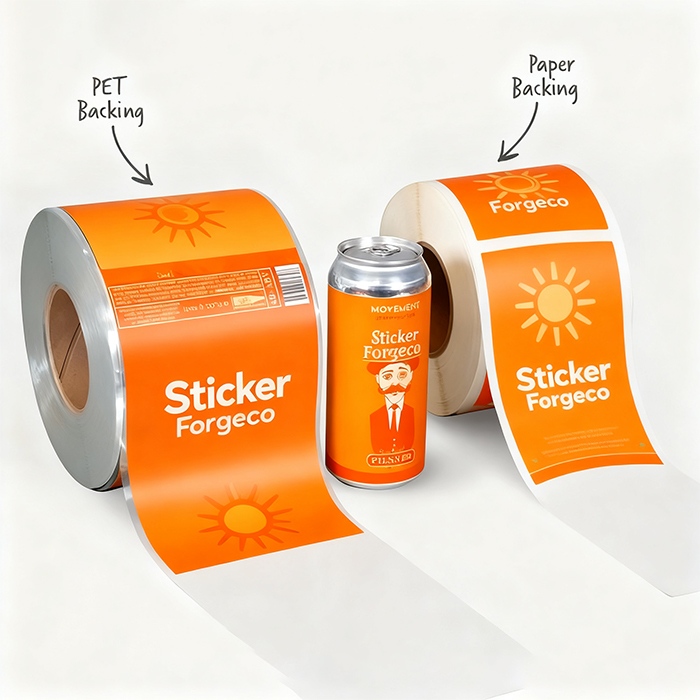
Match the Label Construction to the Oil Package and Handling Risk
Choose the material around the package environment first, then choose the visual finish. This approach reduces the risk of paying for a decorative effect on a construction that does not suit the bottle, or selecting a low-cost material that fails during distribution.
Oil packaging creates several practical risks. Oil residue can contaminate the application surface. Condensation can form during cold storage. Heat can affect adhesive behavior. Clear substrates may require opaque white ink beneath colored artwork. Each point should be stated in the RFQ instead of assumed from a product photograph.
| Packaging scenario | Suitable direction to discuss | Why it fits | Limit or question to resolve |
|---|---|---|---|
| Premium olive oil in glass bottles | BOPP film with a matte or gloss presentation and optional foil stamping | Film-based constructions are worth considering where resistance to moisture and handling matters, while foil can support a premium shelf appearance. | Confirm the bottle circumference, glass surface condition, label placement area, and whether the bottle may be chilled. |
| Small essential oil bottles | Film label with carefully planned white ink where the bottle is dark or clear | Small containers leave limited space for product name, directions, batch fields, and branding. White ink can be relevant where artwork needs opacity on clear material. | Do not approve artwork only at enlarged screen size. Confirm legibility at the actual label size. |
| Cosmetic body oil bottles | Waterproof film construction with finish selected around brand positioning | Bathroom and vanity environments can involve water contact and repeated handling, making waterproof properties a practical requirement. | State whether the container is glass, PET, HDPE, or another plastic because the surface affects adhesive selection. |
| Industrial lubricant containers | PET, PVC, or another synthetic construction subject to application conditions | Industrial packs may face rougher handling, outdoor exposure, heat, or contact with fluids, so substrate and adhesive suitability matter more than decorative effects. | Do not treat a standard retail label as automatically fit for chemical contact, high heat, or outdoor exposure. Provide the actual exposure details for review. |
For product lines that require a film-based construction, review waterproof custom synthetic labels alongside the bottle specification. Synthetic film is not a universal answer. It may be unnecessary for a short-run, dry-use gift product, while a paper label can be a poor choice when oil residue, condensation, or repeated wiping is expected.
Use a surface-risk brief before requesting material recommendations
Conclusion: send package and handling details with the artwork. Reason: a supplier cannot assess peeling, bleeding, tearing, or opacity risk from a logo file alone. Best fit: new products, packaging changes, and brands changing from one bottle supplier to another. Limit: a digital mockup can confirm layout and appearance, but it does not by itself prove performance on every bottle surface or in every storage environment.
- Identify the bottle material and finish, such as clear glass, painted glass, PET, HDPE, or metal.
- Provide the usable label panel width and height, not only the bottle volume.
- State whether labels will face refrigeration, condensation, heat, sunlight, oily hands, repeated wiping, or outdoor storage.
- Specify whether labels are hand-applied or applied by equipment.
- Mark any writable area needed for batch, fill date, or other hand-written information.
- List whether the design uses transparent film, white ink, metallic foil, or a matte versus gloss finish.
A Quote-Cost Model That Separates Bottle Circumference, Film Choice, Finishing, and Order-Volume Effects
A usable quote should separate the variables rather than bury them in one unit price. This is the clearest way to compare suppliers and decide where a specification can change without creating a packaging failure.
Cost cannot be responsibly reduced to a universal per-label figure because the supplied facts do not establish fixed prices for specific sizes, films, or finishes. Instead, buyers should ask each supplier to show how the following four inputs affect the quotation.
| Quote driver | What changes in the specification | Effect on the quote | Best buyer action |
|---|---|---|---|
| Bottle circumference and label size | A wider bottle panel may require a longer label; a small bottle may require a narrow label with tighter artwork placement. | Material usage and die-cut shape can change. A wrap label and a front label should be quoted as different formats. | Send the bottle circumference, label panel dimensions, and a photo showing seams, embossing, or curves. |
| Film choice | The request may shift between BOPP, PP, PET, PVC, vinyl, paper, or another substrate. | Substrate selection changes the material portion of the quote and may change the recommended adhesive or print treatment. | Ask for one recommended construction and one lower-cost alternative only if both suit the stated exposure conditions. |
| Finishing | Matte or gloss presentation, lamination, white ink on clear material, and foil stamping can be added or removed. | Each added print or finishing requirement can affect production steps and quoted cost. | Separate must-have functions from brand-preference finishes. Do not remove protective elements merely to retain foil. |
| Order volume | The same artwork may be ordered for an early launch, a regular refill run, or a large seasonal campaign. | Quantity affects how fixed production preparation is distributed across the order. Standard offset bulk items have a 1,000-unit minimum, while select digital printing and custom items have no MOQ. | Request prices at the immediate quantity and at the next realistic replenishment quantity, using the same specifications. |
The practical model is:
Quote scope = label size based on bottle geometry + selected film + print and finishing requirements + quantity tier + shipping and any applicable order terms.
Use the model as a comparison tool, not as a formula for self-calculating a final price. It tells the buyer what to ask, but final cost still requires the artwork, die line, material selection, and quantity confirmation.
Worked RFQ comparison for two oil product lines
Consider a brand launching two SKUs. The first is a premium extra virgin olive oil in a curved glass bottle. The second is a small essential oil bottle with a dark container. The brand wants one supplier to quote both without assuming that one label specification can serve both products.
- Olive oil SKU: The RFQ should state bottle circumference, front-label or wrap-label layout, glass condition, expected handling, whether refrigeration is possible, desired matte or gloss appearance, and whether foil is required. For category-specific ideas, see extra virgin olive oil labels.
- Essential oil SKU: The RFQ should state the small usable panel size, dark or clear bottle color, need for white ink, required text hierarchy, and any oily-hand contact. Brands can also review premium essential oil labels for glass bottles when building the specification.
- Quote comparison: Ask for each SKU to be shown with film, finish, label dimensions, quantity, and packaging method clearly identified. If foil appears only on the olive oil line, it should not be embedded in the essential oil pricing.
Conclusion: separate SKUs when bottle geometry, film, or finish differs. Reason: combining dissimilar products into a single generic quote hides the drivers that procurement needs to evaluate. Best fit: brands launching multiple oils under one identity. Limit: shared artwork elements may help design consistency, but they do not make the two label constructions identical.
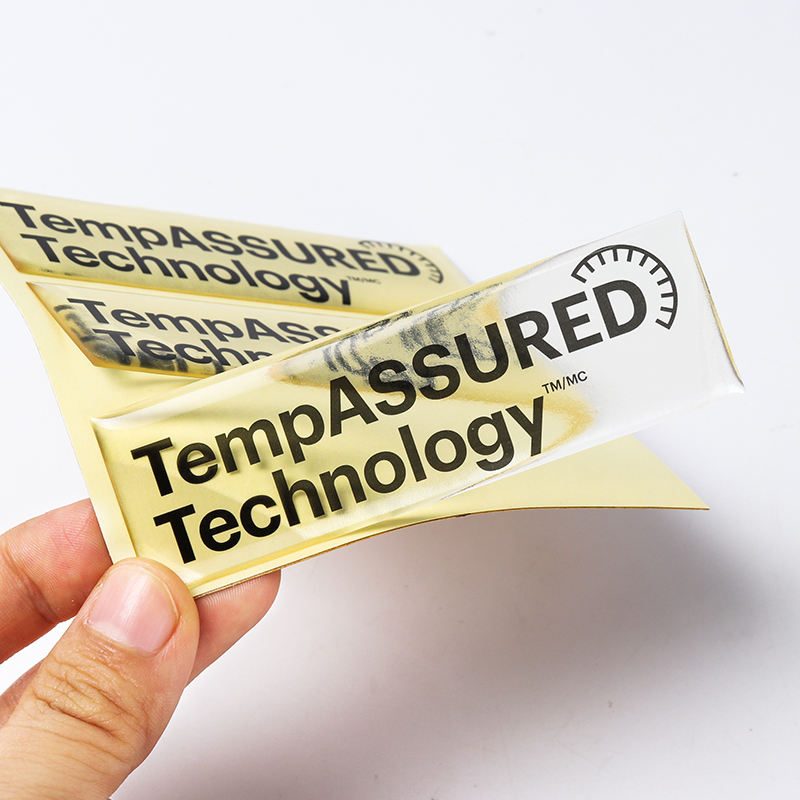
Choose Finishes for Brand Function Rather Than Decoration Alone
Select finishing only after the base film and required durability are clear. Foil stamping, matte presentation, gloss presentation, and clear-label effects can help product differentiation, but they should support the package rather than distract from legibility or reduce resistance where protection is needed.
Custom Panda offers BOPP lamination, UV-resistant inks, and custom foil stamping colors. These options are relevant when a brand needs a particular visual result or expects exposure that makes fade resistance part of the specification. The buyer should identify which feature is functional and which is aesthetic.
| Finish option | When to use it | Reasoning | When not to rely on it |
|---|---|---|---|
| Matte presentation | Premium, restrained packaging where reflection may make fine text harder to read. | A matte look can support a softer shelf presentation and can suit premium oil products. | Do not choose it only from a digital image; compare it with the actual bottle color and retail lighting. |
| Gloss presentation | High-color artwork or a polished consumer-packaged look. | Gloss can make colors appear more pronounced and can suit graphics-led packaging. | It may not match every premium positioning or every bottle color. |
| Foil stamping | Gift sets, premium editions, or a logo detail that needs visual contrast. | Foil gives a distinct metallic element without making every printed element metallic. | Foil is not a substitute for readable product information, suitable material, or adhesive performance. |
| Clear film with white ink | Clear packaging designs where selected artwork needs opacity. | White ink can help colors hold their intended appearance on clear substrates. | Without planning the white layer, colors may look weak or change against the bottle contents. |
A relevant production example comes from Australia, where Custom Panda supplied metallic foil-stamped roll labels for a natural health supplement brand using matte BOPP film with scratch-proof lamination. This shows how matte film, foil, and protective lamination can be combined for a retail-focused requirement. It should not be read as proof that the same construction suits every oil bottle; the container, oil contact risk, and storage conditions still require review.
Prevent Quote Errors Before Artwork Approval and Production
Most label cost surprises begin with incomplete specifications, not with the final purchase order. A disciplined RFQ makes supplier comparisons fairer and helps identify where a change in size, film, finish, or quantity has created the difference.
Common mistakes that distort an oil-label quote
- Quoting from bottle volume only. A 100 ml bottle does not state the circumference or usable label panel. Provide the actual container drawing or measurements. This matters for every curved bottle, but it is less significant for a flat panel with a defined label recess.
- Requesting “waterproof” without describing exposure. Water resistance does not explain oil contact, cold storage condensation, sunlight, heat, or abrasion. State the actual risk. A simple dry retail bottle may not need the same construction as a product stored in changing temperatures.
- Approving clear-film artwork without a white-ink plan. Colors on transparent substrates can change according to the bottle and product behind them. Use white ink where opacity is needed. This does not apply where a deliberate transparent effect is the design goal.
- Comparing a foil quote with a non-foil quote. A finish change is a specification change, not just a supplier price difference. Ask suppliers to quote the same finish stack before comparing totals.
- Ignoring the quantity threshold. A launch order and a standard bulk order may suit different print routes. Select digital items can have no MOQ, while standard offset bulk items start at 1,000 units. Do not assume the lowest unit rate is best if it creates excess inventory.
- Leaving handwritten fields undefined. If operators must write batch or date information, tell the supplier where this field sits and how it will be written. A glossy decorative area may not meet that operational need.
Assess Supplier Fit Through Evidence, Terms, and Approval Controls
A supplier is a stronger fit when its documented capability matches the buying requirement and the commercial terms are clear. For oil labels, that means looking beyond a gallery image and asking how material choice, proof approval, run quantity, timing, and defect handling will be managed.
Custom Panda has a daily label capacity of more than 1,000,000 pieces. Label samples have a stated lead time of 3 days, while bulk production is stated at 8–9 days. U.S. shipping is stated at 5–6 business days, with same-day dispatch available for select ready-stock or digital items. These are useful planning references, not a universal delivery guarantee; final timing depends on the confirmed order scope and shipping arrangement.
For production approval, photo or digital sample confirmation is available before production. The stated commercial protection includes color mismatch free reprint, proportional replacement for defects, 5-day fast re-stocking or repair, and 100 bonus pieces with every bulk order. Buyers should still agree on the approved artwork version, required label dimensions, material, finish, acceptance points, shipment destination, and the evidence needed if a defect claim arises.
RFQ checklist for a quote that procurement can compare
- Attach print-ready artwork or a clear design file and identify the version number.
- Provide a bottle drawing, circumference, usable label panel, and clear photos of the container.
- State the product type: essential oil, cosmetic oil, olive oil, or industrial lubricant.
- Describe handling and storage conditions, including any oil residue, water, condensation, heat, UV exposure, or repeated wiping.
- Specify the preferred substrate or ask for a recommended film plus a suitable alternative.
- List required finishing: matte, gloss, lamination, foil, clear film, white ink, or writable area.
- Request pricing by quantity tier and clearly separate shipping from product cost where applicable.
- Confirm whether the order is a digital short run or a standard bulk run, especially where the 1,000-unit offset minimum may apply.
- Ask for photo or digital sample confirmation before bulk production when the label is new or the packaging has changed.
For brands needing labels supplied for regular application, custom printed roll labels are a practical format to discuss in the RFQ. The suitability still depends on the application method, roll orientation, label size, and dispenser or equipment requirements, so those details should be agreed before production.
Send your bottle dimensions, artwork, required quantity, and storage conditions to request a specification-based quote.