

Custom Paper Labels When Coated Stock Pays Off
Choosing the wrong label face stock at the final specification stage can leave a retail product looking dull, difficult to mark, or unsuitable for its actual storage conditions. The error often starts when a buyer selects coated paper for visual impact without checking moisture, handling, or application requirements. Before requesting supplier samples, product teams should define where the label will be applied, how it will be handled, and what the customer needs to see or write on it.
Custom Paper Labels can be an effective and economical choice for dry retail packaging, cartons, jars, sleeves, and promotional applications. They are not the automatic answer for refrigerated goods, wet surfaces, oil exposure, or products that move through demanding logistics. The coating decision affects print appearance, handwriting, finishing options, and the label’s fit with the package environment.
At Custom Panda, our ISO 9001:2015 certified and Disney FAMA certified facility supports custom label production across a wide range of substrates. We provide photo or digital sample confirmation before production, which helps product teams compare coated, uncoated, and film options before approving a bulk order. Label samples can be ready in 3 days, while standard bulk production is typically 8 to 9 days.

Why does coated paper improve retail print appearance?
Coated paper is the better option when the label’s primary job is to present controlled color, dense graphics, fine details, or a polished retail finish. Its treated surface limits ink absorption compared with uncoated paper. As a result, printed artwork generally appears sharper and more even, particularly where a design includes small text, product photography, solid color areas, or detailed brand marks.
The clear conclusion is simple: choose coated paper when appearance at the shelf matters more than writeability. It suits dry products sold in gift shops, boutiques, pharmacies, specialty food stores, and other retail settings where the package remains protected from moisture. It does not suit every paper based application. A beautiful surface cannot compensate for condensation, poor adhesive selection, or a container that is wet at application.
Coated stock is available in gloss and matte styles. custom glossy labels are suited to designs that need reflected light and a high impact finish. Matte paper is the safer visual choice where glare could interfere with reading ingredients, instructions, barcodes, or small legal copy. Neither finish turns paper into a waterproof material.
| Finish option | Best fit | Reason to choose it | Limit to confirm |
|---|---|---|---|
| Gloss coated paper | Premium gifts, cosmetics cartons, dry jars | Supports strong color contrast and polished graphics | Reflections can reduce readability under bright retail lighting |
| Matte coated paper | Information rich packaging, understated brands | Supports clean detail with lower glare | Usually not ideal for handwritten updates |
| Uncoated paper | Batch coded products, handmade goods, kraft packaging | More receptive to handwriting and a natural paper feel | Printed color can appear less saturated than on coated stock |
| Film stock | Bottles, chilled products, wet or oily environments | Safer material direction where paper may absorb moisture or tear | Requires confirmation of adhesive, container surface, and application conditions |
When does coated paper improve print appearance and when is uncoated or film stock safer?
Coated paper improves appearance when the package is dry, clean, and handled under ordinary retail conditions. Uncoated paper is safer when the label needs handwritten information or a tactile paper finish. Film label stock is safer when moisture, refrigeration, oil, frequent handling, or surface flexing could damage paper.
Use the following boundary before approving a specification. It prevents a common sourcing problem: selecting a label by appearance alone, then discovering that the finished package cannot survive its real handling conditions.
| Product condition | Recommended material direction | Why it fits | When not to use it |
|---|---|---|---|
| Dry carton or rigid box stored indoors | Coated paper | Delivers a refined printed finish for logos, images, and retail copy | Do not use if the box will be exposed to repeated moisture or abrasion |
| Dry glass jar with gift presentation | Coated paper with suitable adhesive | Supports detailed branding and premium decoration | Do not specify paper if the jar will enter refrigeration or ice storage |
| Hand packed products needing batch notes | Uncoated paper | Better choice where staff must write lot details, dates, or names | Do not use where handwriting is unnecessary and dense photo artwork is the priority |
| Kraft pouch or rustic retail packaging | Uncoated or kraft paper | Matches a natural presentation and can support manual marking | Do not choose it for wet, greasy, or cold packaging conditions |
| Cold drink bottle or refrigerated food container | Film stock | Paper can fail when condensation reaches the label or adhesive | Do not pay for film solely for a dry, short life carton if paper meets the need |
| Cosmetic bottle exposed to water or oil | Film stock | Offers a safer basis for demanding product contact conditions | Do not assume every film adhesive performs the same on every bottle surface |
For example, a dry candle box carrying detailed artwork may justify coated paper because shelf appearance is a central part of the purchase decision. A candle jar that may be wiped, exposed to wax residue, or handled with oily hands deserves additional material review. Product teams can compare paper options with custom kraft labels when the brand direction calls for a more natural presentation.
For refrigerated or moisture exposed packaging, paper is the wrong place to force a cost saving. Condensation can contribute to labels peeling off in cold storage, and paper can tear more easily than a suitable film. In that setting, assess waterproof custom synthetic labels instead of asking a paper label to perform outside its intended boundary.
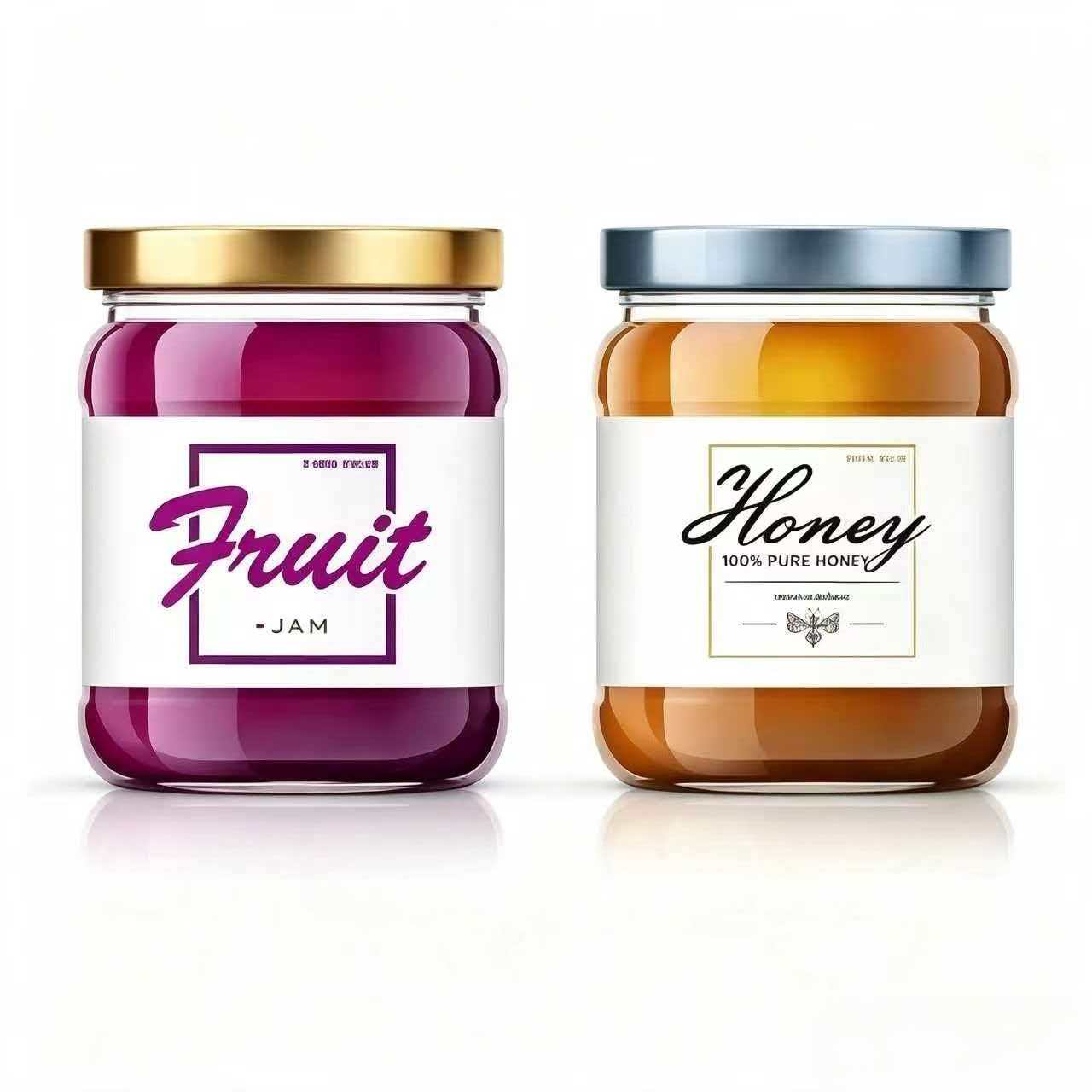
Which coating and finish should a product team specify?
Specify gloss coating when the artwork relies on rich visual contrast, polished product photography, or a display focused finish. Specify matte coating when the label contains dense copy, restrained brand colors, or important information that customers must read under store lighting. The decision should follow the package use case, not a generic preference for gloss or matte.
Choose gloss for display led packaging
Gloss paper is a sound choice for a dry retail carton, gift box, or promotional sleeve where large color blocks and image based design lead the presentation. The practical benefit is stronger visual pop. The limitation is glare. If a customer must read a long ingredient list, warning panel, or dense directions, inspect a physical proof under actual retail lighting before approving it.
Choose matte for copy led packaging
Matte paper works well for premium brands that want a quieter finish without reflected light. It is especially useful when a package carries detailed product information. Matte is not automatically writable; coating can still limit pen performance. If operations staff must add lot codes, flavor names, or expiry information by hand, request a writing test rather than assuming the surface will accept ink.
Choose uncoated paper for writing and natural texture
Uncoated paper is the better direction for artisan goods, short run package updates, and applications where handwritten marks are part of the process. It can also complement recycled or kraft packaging. Its tradeoff is print appearance: ink absorbs more readily, so fine images and large saturated color areas may not match the controlled look of coated paper. Review a production representative sample if color matching is strict.
Custom Panda offers wide substrate selection, BOPP lamination, UV resistant inks, and custom foil stamping colors. These options should be selected to solve a stated requirement, not added by default. Foil can support a premium retail presentation, while lamination can be useful where surface scuffing is a concern. Neither option removes the need to select the correct base material and adhesive.
What information should an RFQ include before product label sampling?
A supplier can only recommend the correct material when the RFQ describes the real application. Sending artwork alone is not enough. The product team should supply a clear use case, container details, desired visual result, and operational conditions. This reduces revisions and helps the supplier prepare an accurate sample recommendation.
- Identify the package surface. State whether the label applies to paperboard, glass, plastic, metal, a pouch, or another material. Adhesion behavior changes by surface.
- Describe storage conditions. Confirm whether the product stays dry, enters refrigeration, faces condensation, or encounters oil, water, heat, or outdoor handling.
- Define label function. State whether the label is brand decoration, legal information, barcode identification, batch marking, tamper indication, or a combination.
- Choose the preferred finish. Request gloss, matte, uncoated, or a material recommendation. Do not specify coated paper merely because the design looks premium on screen.
- Provide final artwork and color references. Include approved brand color values and identify any colors that require close control. Color should be reviewed on the intended stock, not only on a monitor.
- Request a sample test. Apply the sample to the actual package and check appearance, adhesion, scanning, readability, and handling before bulk approval.
- Confirm quantity and schedule. Digital printing and select custom items have no MOQ, while offset printing and standard bulk items start at 1,000 units. Higher quantities may offer better pricing.
This procedure is particularly useful for retail packaging labels with several versions, such as different flavors, sizes, or regional information panels. If each version has low volume, digital production may suit the program. If the project is a stable high volume run, standard bulk production can be the stronger commercial option. Ask the supplier to compare the routes using the final quantity per design, not just the total order quantity.
What mistakes cause paper label failures after approval?
Most failures are preventable at the specification stage. They happen when visual goals are documented but physical conditions are not. A good sample should answer more than “Does the label look right?” It should answer “Will this label remain acceptable through packing, shipment, storage, and customer use?”
- Choosing gloss for every design. Gloss can make colors appear more forceful, but it may create glare on copy heavy labels. Use matte when legibility is the larger concern.
- Assuming coated means waterproof. Coating improves print presentation; it does not make paper the safe default for condensation, immersion, or oily handling.
- Ignoring handwriting requirements. If warehouse or packing staff add information manually, test the actual pen, ink, and drying time on the selected stock.
- Approving color from a screen. Screens do not replicate the printed result on coated, uncoated, clear, or kraft materials. Approve a photo or digital sample and request a physical sample when the use case requires it.
- Using one material across incompatible packages. A dry folding carton and a refrigerated bottle can share graphics but should not automatically share label stock.
- Leaving adhesive details unspecified. Weak adhesion can cause label failure, especially where containers are cold, textured, curved, or exposed to moisture.
- Skipping the applied sample test. A loose label proof cannot reveal issues caused by container curves, label placement, or product handling.
How should buyers compare supplier support at the final specification stage?
Compare suppliers by their ability to turn a product brief into a testable specification. A low unit price has limited value if the wrong stock causes rework, replacement labels, or missed retail deadlines. Ask whether the supplier confirms artwork before production, explains material limits, and has a documented response if color or manufacturing defects occur.
Custom Panda operates from an 8,000 m² facility with 6 production lines and 6 HP digital label presses. The daily label capacity exceeds 1,000,000 pieces. For bulk label orders, we include 100 bonus pieces and provide a color mismatch free reprint, proportional replacement for defects, and 5 day fast restocking or repair under the stated terms. These measures do not replace proper sampling, but they give product teams clearer support after specification approval.
One relevant packaging example is a natural health supplement brand in Australia that used metallic foil stamped roll labels with matte BOPP film and scratch proof lamination for a high end retail presentation. That case demonstrates an appropriate reason to move beyond paper: the product needed a retail finish on a film based construction. It should not be treated as proof that every product needs BOPP. A dry carton with stable indoor handling may still be better served by paper.
Before issuing your next RFQ, request a material recommendation and sample set based on the actual package, storage conditions, artwork, and quantity.
===BODY===