

Custom Patches Near Me Pickup Versus Factory Delivery Explained
Typing "custom patches near me" into a search bar feels like the safe move — a local shop means you can touch a sample, fix a mistake in person, and skip shipping delays. But that assumption causes more reorder headaches than it solves. Local print shops rarely run embroidery machines or die-cast equipment in-house; most outsource production to the same regional factories anyone can order from directly. Before you commit to a supplier based purely on zip code, you need to know what proximity actually buys you — and what it doesn't.
This article breaks down the real tradeoffs between local pickup and factory-direct delivery, using the same questions procurement teams ask us before placing a bulk order.
Why "Custom Patches Near Me" Often Points to the Wrong Supplier
A local search ranks businesses by address, not by production capability. Many "local patch makers" are brokers — they take your art file, email it to an overseas factory, mark up the price, and hand you the finished box weeks later. You pay for a middleman's margin without gaining any speed advantage. If your goal is weather-resistant embroidery threads, dual-tone enamel fill, or a specific backing like Velcro versus heat-seal, the deciding factor is the factory's equipment and quality control — not its mailing address.
That said, local pickup genuinely helps in a few scenarios: rush orders under 50 pieces, in-person proof approval for a client meeting, or same-day pickup for a weekend event. Outside those cases, factory-direct ordering usually wins on price, consistency, and material options.
Local Pickup vs. Factory Delivery: A Direct Comparison
Here's how the two fulfillment paths compare across the four factors that matter most to repeat buyers.
| Factor | Local Pickup | Factory Delivery |
|---|---|---|
| Pickup timing | Same day to 3 days, but depends on the shop's current queue and whether work is outsourced | Sample lead time of 3 days; bulk production runs 8-9 days once art is approved |
| Shipping risk | None for pickup, but still exists if the shop outsources and ships the finished goods to you | Factory ships direct; U.S. delivery typically takes 5-6 business days after production |
| Proof revisions | In-person, but limited to what the shop's software can mock up — not always true to final material | Photo or digital sample confirmation before production starts, so revisions happen before tooling is cut |
| Reorder consistency | Depends on whether the same subcontractor is used each time — color and thread batches can shift | Same factory file and settings reused, keeping thread color and stitch density consistent across reorders |
The pattern here is simple: local pickup wins on immediacy for very small or urgent runs. Factory delivery wins on repeatability, which matters more once you're ordering for multiple teams, retail batches, or seasonal drops.
Does a local supplier ever make sense for bulk orders?
Yes — if that local supplier owns its own embroidery and die-casting lines, not just a storefront. Ask directly whether patches are produced on-site or subcontracted. If they can't answer in one sentence, assume it's outsourced.
What happens if a local pickup order has a defect?
This is where the gap shows. A factory-direct order backed by a proportional replacement policy and color-mismatch free reprint gives you a defined fix path. A local shop reselling someone else's production often has to relay the claim back to its own supplier first, adding days you didn't budget for.
Common Mistakes Buyers Make When Sourcing Locally
- Assuming "local" means faster. If the shop outsources, your order still travels the same distance — plus an extra handoff.
- Skipping a physical or digital sample check. Enamel bleed, loose pin backs, and frayed embroidery borders are easiest to catch before full production, not after.
- Not asking about minimums. Offset printing and standard bulk runs typically require 1,000-unit minimums for workable pricing; digital printing and select custom items can run without a minimum.
- Ignoring reorder matching. If a factory doesn't keep your art file and thread specs on record, your second order may not match your first — a real problem for uniforms or retail packaging.
- Choosing the wrong backing for the use case. Velcro backing suits removable gear patches; heat-seal iron-on backing suits garments that get washed often. Picking the wrong one is a frequent cause of post-wash failure.
A Worked Example: 500-Patch Order for a Regional Outdoor Brand
Consider a brand ordering 500 embroidered patches with Velcro backing for backpacks, similar to a project we completed for an outdoor gear brand in the United States that needed weather-resistant thread and rugged hook-and-loop backing built to survive hiking and tactical use. Here's how the timeline typically breaks down on the factory-direct path:
- Day 1-3: Art file submitted, digital sample produced and sent for approval.
- Day 4: Buyer approves colors, stitch density, and backing type.
- Day 4-12: Bulk production runs across the 8-9 day window.
- Day 13-18: Shipping to a U.S. address, typically 5-6 business days.
Total time from approved art to delivery: roughly 2.5 to 3 weeks. A local shop promising faster turnaround on the same spec is either holding stock patches with no custom detail, or quietly routing the job through a factory on the same timeline while adding a markup. Knowing this lets you negotiate from a position of fact, not guesswork.
Buyer's Decision Checklist
- Do you need under 50 pieces within 48 hours? Local pickup from a stocked shop may be your only realistic option.
- Do you need 100+ pieces with exact color and backing control? Factory-direct ordering with a digital proof step is the safer route.
- Will you reorder this design in 6-12 months? Confirm the factory retains your file and thread specs before placing the first order.
- Does your use case involve washing, weather exposure, or heavy wear? Match the backing and thread type to that stress — Velcro, heat-seal, or sew-on each behave differently over time.
- Is your supplier ISO 9001:2015 certified or similarly audited? Certification doesn't guarantee design taste, but it does indicate documented quality control steps you can ask to see.
Material and Backing Options Worth Specifying
Patch failure almost always traces back to a spec gap, not bad craftsmanship. Before you finalize an order, decide on:
- custom embroidery patches for apparel & uniforms — best for logos with moderate detail and a traditional stitched look
- custom hook & loop patches — best for gear that needs swappable patches, like tactical vests or backpacks
- fluffy chenille varsity patches — best for letterman jackets and heavy wool fabric, similar to a university sports team project that used plush felt backing and high-density stitching for visibility on wool
- custom iron on patches — best for lighter garments where sewing isn't practical
If your product line also needs packaging identification, the same production group handles custom labels printed in bulk and oil & waterproof labels for bottles & cosmetics, which is worth knowing if you're trying to consolidate vendors rather than juggling a patch maker, a label printer, and a pin supplier separately.
What to Confirm Before You Submit an RFQ
Regardless of whether you pick local pickup or factory delivery, lock down these points in writing before production starts:
- Backing type and whether it's rated for washing or outdoor exposure
- Thread color codes or Pantone references, not just a visual sample
- Minimum order quantity and price break at higher volumes
- Sample lead time versus bulk production lead time — these are not the same number
- Defect policy — ask specifically what happens with color mismatches or loose backing on arrival
A facility running daily capacity above 1,000,000 units and holding both ISO 9001:2015 and Disney FAMA certification has typically built these answers into a standard process rather than improvising per order — worth confirming directly with any supplier you're evaluating, local or not.
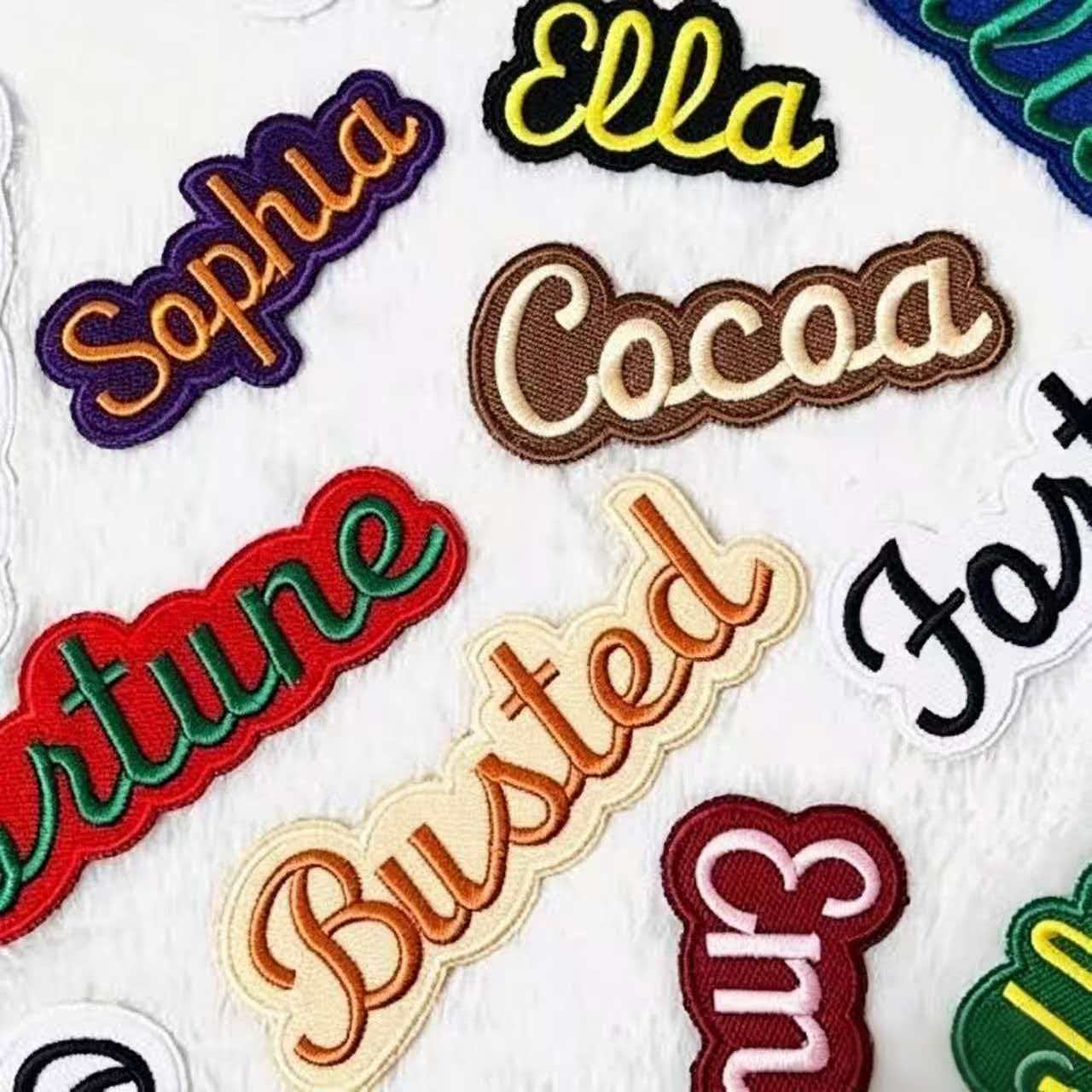
If you're still weighing custom patches near me options against a factory-direct quote, send over your artwork and target quantity — a digital sample confirmation before production is standard practice and costs you nothing to request.