

Custom Patches No Minimum for Clearer MOQ and Proof Decisions
Before submitting an RFQ, buyers often regret missing one detail: “no minimum” does not mean every patch material, artwork style, backing, or deadline is equally practical at every quantity. A low quantity order can be a sensible way to test a new logo, prepare an event sample, or validate a uniform design. But the patch still needs to be manufacturable.
Custom Patches No Minimum is most useful when you treat it as purchasing flexibility, not as a reason to skip artwork review, material selection, or delivery planning. The right question is not simply, “Can I order one?” Ask, “Which patch construction will reproduce my design properly at the quantity and date I need?”
Custom Panda produces custom patches alongside labels, lapel pins, and coins from an 8,000 m² facility with six production lines. Our production options include fine embroidery, woven labels, heat transfer, PVC soft rubber, chenille, Velcro backing, and heat-seal iron-on backing. We also provide photo or digital sample confirmation before production, so buyers can review the proposed result before bulk work begins.
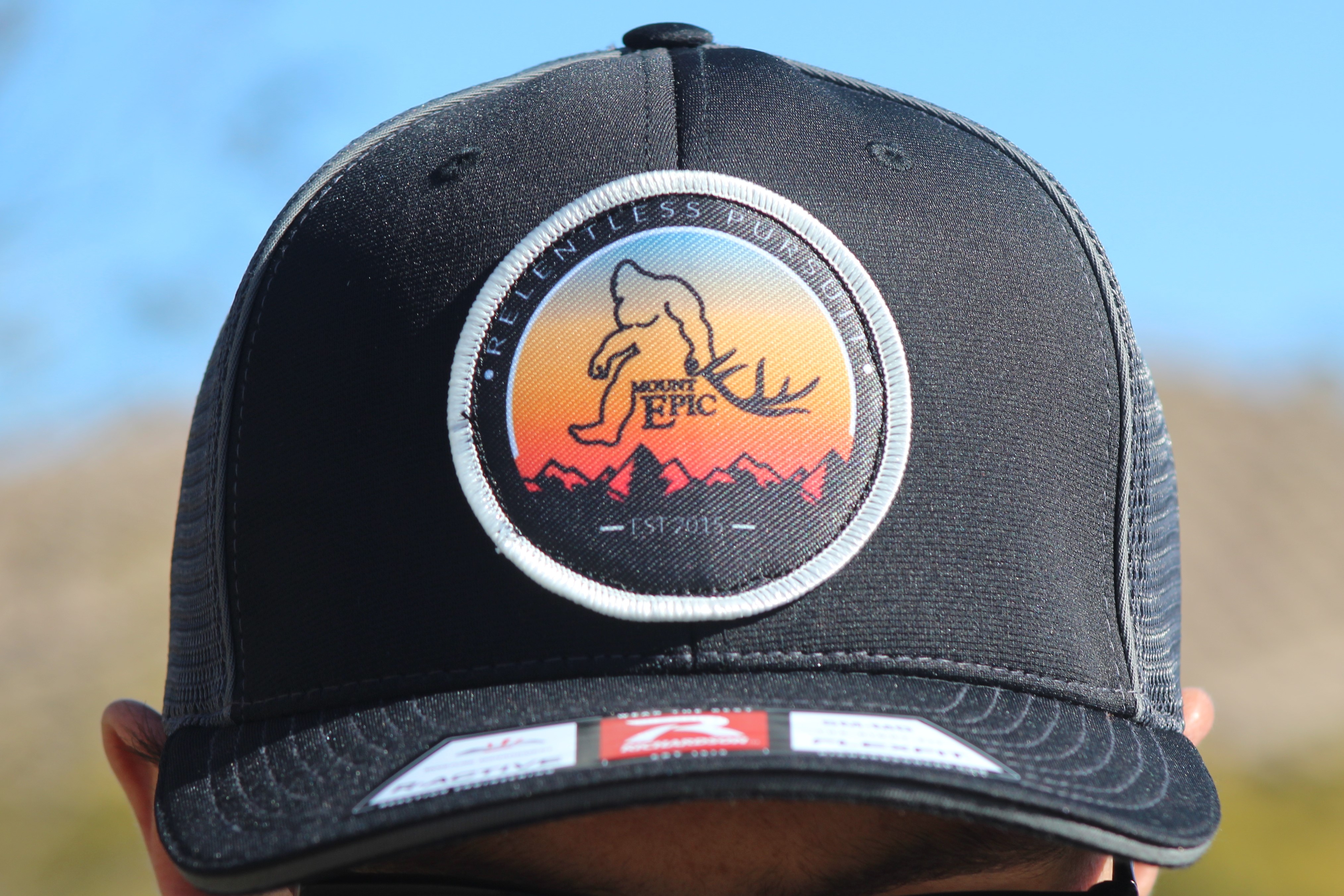
Choose the Patch Method Before You Compare Minimums
Conclusion: select the patch type based on artwork and end use first, then confirm whether the intended quantity is available. This prevents a low quantity order from becoming an unsuitable product choice.
Embroidery gives thread texture and works well for bolder logos, uniforms, club emblems, and designs with clear color areas. Woven construction is a better fit when the logo contains small lettering or fine linework that may become unclear in embroidery. PVC soft rubber suits gear exposed to outdoor conditions, while chenille is intended for a raised, plush appearance on varsity and fashion applications. Heat transfer can be appropriate when artwork relies on printed visual detail rather than stitched texture.
| Patch option | Best fit | Why it works | Practical limit to confirm |
|---|---|---|---|
| Embroidered patches | Uniforms, team emblems, bold logos | Fine embroidery creates a traditional stitched appearance. | Very small text, narrow gaps, and tightly packed elements may lose clarity. |
| Woven patches | Detailed logos, garment branding, small lettering | High-density yarn weaving supports a flatter, more detailed result. | It does not provide the raised thread texture expected from embroidery. |
| PVC patches | Outdoor gear, tactical applications, backpacks | Soft rubber construction suits designs that need a molded appearance. | Very fine printed-style artwork may require a different construction. |
| Chenille patches | Letterman jackets, sportswear, fashion pieces | Plush felt backing and dense stitching create visible dimension. | It is not the first choice for tiny text or crowded logos. |
| Heat transfer patches | Artwork with visual detail and color effects | The method can suit image-led designs that do not depend on thread texture. | Confirm the target fabric and application process before ordering. |
For apparel programs, compare your proposed construction with custom embroidery patches before sending final artwork. If the patch must be moved between garments, bags, or tactical gear, custom hook and loop patches may be the more functional route. These choices affect the visual result and use case more than the headline order quantity does.
A real application illustrates the distinction. For an outdoor gear brand in the United States, Custom Panda manufactured heavy-duty embroidered Velcro patches with weather-resistant threads and rugged hook-and-loop backings for hiking backpacks and tactical vests. The appropriate decision there was driven by attachment method and outdoor use, not by a desire for the lowest possible quantity.
Understand What No Minimum Means for Your Order
Conclusion: no minimum availability helps first-time buyers test a design or order selectively, but it does not remove setup, approval, or production realities. Ask the supplier to confirm the exact material and artwork route before treating a low quantity request as approved.
Custom Panda offers no MOQ for digital printing and select custom items. Standard bulk items using offset printing have a 1,000-unit minimum, with better pricing at higher volumes. Patch requirements are assessed according to the requested construction, shape, artwork, backing, and finishing requirements. This distinction matters because a buyer may be able to place a small order for one custom item while another production method is better suited to a larger run.
For low quantity patches, use the order as a controlled test when any of the following is uncertain:
- Logo readability: Test whether small lettering, borders, or internal lines remain clear in the selected patch method.
- Brand color approval: Review thread, woven yarn, PVC, or printed color appearance before committing to repeat orders.
- Backing selection: Confirm whether sew-on, heat-seal, or Velcro backing matches the garment or equipment application.
- Garment placement: Check whether the patch shape and size work on a sleeve, chest, cap, bag, or jacket panel.
- Customer response: Validate a retail, membership, event, or team design before placing a larger replenishment order.
A no-minimum route is not automatically the lowest cost per piece. Small orders generally spread preparation and handling across fewer patches, while larger production runs can offer better unit economics. If your design is already approved and will be used across multiple teams or retail seasons, ask for both a small validation quantity and a bulk quotation. That gives procurement a usable comparison rather than a single number without context.
For fashion programs that need a textured statement finish, review fluffy chenille varsity patches. For workwear and apparel that needs permanent attachment, consider custom sew on patches. Do not select a backing only because it appears convenient in a product photo; base it on the garment, washing process, and expected replacement cycle.
FAQ Boundaries for No Minimum Patch Orders
Custom Patches No Minimum does not mean there are no practical boundaries. The questions below explain where buyers should pause, adjust the specification, or allow more time before ordering.
Can I order any patch size with no minimum?
No. A low quantity request can still be limited by the relationship between patch size and artwork. A design needs enough physical area for its lettering, borders, color blocks, and backing to be produced clearly. If the patch is made smaller while the artwork remains crowded, the supplier may recommend simplifying the file, enlarging the patch, or selecting a different method. This applies especially to small logos with slogans, dates, or fine outlines.
Use a low quantity order when the patch size is already suitable for the application and the artwork is visually clean. Do not use it as a shortcut for forcing a detailed badge into an extremely small format.
Can every detailed logo be embroidered?
No. Embroidery has practical limits when artwork includes tiny text, thin separating lines, miniature symbols, or many close color changes. Thread-based construction needs visible areas to define the design. When the visual priority is fine lettering or dense logo detail, a woven patch or heat transfer option may be more suitable.
The best action is to send the original vector artwork where available, plus a clear image of the intended patch size. Ask for a proof that shows how text, outlines, and borders will be interpreted. Do not approve based only on a screen image of the original logo; approve the patch-specific proof.
Are all patch types available for very small orders?
Not necessarily. Material selection, construction, special effects, backing, and production route can affect what is practical for a small run. Digital printing and select custom items have no MOQ at Custom Panda, while standard bulk offset printing requires 1,000 units. The correct answer for patches must be confirmed from the exact specifications rather than assumed from a general “no minimum” statement.
For example, chenille, PVC, woven, embroidered, and heat transfer patches create different production requirements. Select the construction that fits the intended use first. Then request written confirmation that the requested quantity is available for that construction.
Does no minimum mean I can skip the proof process?
No. Proof approval remains necessary because low quantity does not eliminate the risk of color mismatch, unclear details, incorrect border shape, or an unsuitable backing. A proof is particularly valuable for first-time buyers because it converts a broad artwork concept into a production instruction.
Custom Panda provides photo or digital sample confirmation before production. Buyers should check spelling, logo version, color placement, edge treatment, attachment method, and quantity on that approval. If a correction is needed, make it before production begins. For bulk orders, we also provide 100 bonus pieces, and our stated quality support includes color mismatch free reprint, proportional replacement for defects, and 5-day fast re-stocking or repair.
Will a small patch order always ship faster?
No. Quantity is only one part of the schedule. Artwork readiness, proof approval speed, patch type, backing, finishing requirements, production queue, and destination all affect timing. For pins, patches, and labels, Custom Panda states a 3-day sample lead time and 8–9 days for bulk production. U.S. shipping is stated as 5–6 business days. Same-day dispatch is available only for select ready-stock or digital items.
If the event date cannot move, provide the deadline at the RFQ stage. Do not treat an unapproved design as production-ready. A buyer who sends final artwork and approves the proof quickly has a more dependable production plan than one who relies on a small order quantity alone.
Use a Proof Checklist Before You Approve Production
Conclusion: approve only the production-specific proof, not the original artwork file. The proof is where a buyer can catch errors that become costly after manufacturing begins.
- Confirm the logo version. Match the proof against the approved brand file, including symbols, dates, and registration marks where applicable.
- Check every text element. Read names, taglines, unit numbers, event dates, and abbreviations at the intended patch scale.
- Review color placement. Confirm each color area is assigned correctly and that closely related brand colors are distinguished.
- Verify edge treatment. Make sure the shown border and final shape match the intended appearance, especially for non-standard silhouettes.
- Confirm patch type. Ensure the proof identifies embroidery, woven, PVC, chenille, or heat transfer as requested.
- Confirm the backing. Check sew-on, heat-seal, or Velcro requirements against the actual garment or equipment application.
- Check quantity and delivery assumptions. The approval should align with the quoted quantity and required date.
One common mistake is approving a polished logo graphic without asking whether its smallest details will translate into thread or molded rubber. Another is selecting heat-seal backing for an item that will be repeatedly washed without first checking whether the target fabric and application process are appropriate. A third is assuming that an existing digital proof is equivalent to a finished physical sample. It is not. Ask what the proof confirms and whether a photo sample is available for your project.
For garment labels that must accompany a patch program, our custom woven clothing labels can be planned alongside the patch order. Keeping logo files, color references, and placement instructions consistent across these items reduces approval confusion.
Submit an RFQ That Produces a Usable Answer
Conclusion: a complete RFQ receives a more reliable response than a request that only says “no minimum patches.” Provide the details that determine feasibility from the start.
- Attach the highest-quality artwork available, preferably an editable source file when possible.
- State the intended patch type, or describe the look and end use if you need a recommendation.
- Provide the required patch size and shape.
- Specify the backing requirement and where the patch will be applied.
- State the requested quantity, including whether this is a test order or a repeat program.
- Give the in-hand deadline and delivery destination.
- Identify any details that cannot change, such as regulated text, team colors, or a launch date.
Our ISO 9001:2015 certified and Disney FAMA certified operation supports buyers who need documented process discipline alongside design assistance. Free design assistance and live human support are available for clarifying artwork and product choices before production. For a first order, that conversation is often more valuable than choosing a patch type based on price alone.
Request a quote with your artwork, preferred patch type, backing, quantity, and required delivery date for a practical feasibility review.