

Custom Patches No Minimum Quotes Need a Full Cost Check Before Ordering
A low headline price can become an expensive purchase once setup, backing, rush handling, and freight appear later in the quote. Procurement teams and small brands should compare the full landed cost before approving artwork or sending payment.
Custom Patches No Minimum orders can be useful for product testing, staff samples, event pilots, limited apparel drops, and replacement pieces. However, a supplier offering no minimum does not automatically mean every material, backing, or production process has the same commercial structure. The right decision comes from comparing what is included, what is estimated, and what remains unknown until artwork is reviewed.
At Custom Panda, select custom and digital items can be ordered without a minimum quantity, while standard bulk items may require 1,000 units for offset printing. For patches, the buyer should confirm the production method first, then request a written breakdown for every charge that affects the delivered order total.
Start With the Patch Type Instead of the Lowest Unit Price
The first buying decision is not quantity. It is construction. A quote for embroidered patches cannot be fairly compared with a quote for woven patches or PVC patches if the required appearance, wear conditions, and backing are different. A lower price for the wrong construction creates a product problem rather than a saving.
| Patch option | Best fit | Why buyers select it | Limits to confirm before ordering |
|---|---|---|---|
| Embroidered patches | Uniforms, jackets, sportswear, outdoor gear | Thread texture gives logos and lettering a traditional fabric appearance. | Very small lettering and fine artwork may lose clarity. Review a digital sample for border quality and small details. |
| Woven patches | Detailed logos, garment branding, smaller text | High density yarn weaving can reproduce finer artwork than a thread heavy embroidered design. | Woven construction does not provide the raised thread texture expected for classic uniform insignia. |
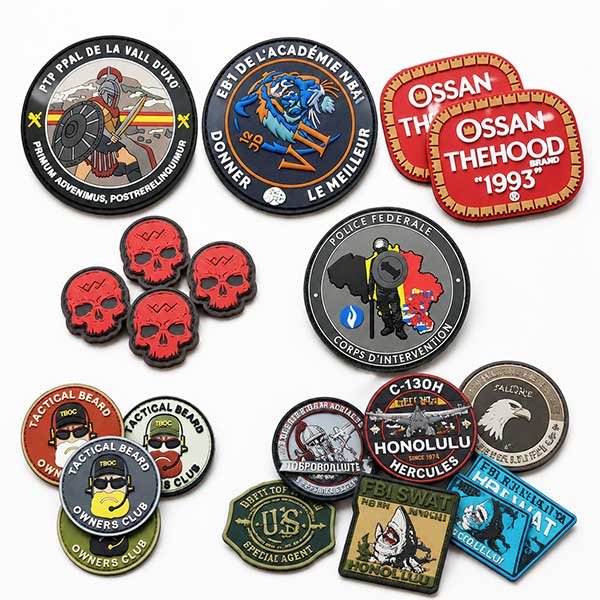
| PVC patches | Outdoor equipment, tactical gear, weather exposed applications | Soft rubber construction suits designs needing dimensional molded areas and a non textile finish. | Requires a mold based production approach, so setup cost and design revision rules must be checked. |
| Chenille patches | Letterman jackets, school teams, fashion collections | Plush yarn creates a bold, high profile look on heavier garments. | Not the first choice for fine logos or compact text. It needs enough design area for the pile to read clearly. |
| Faux leather patches | Denim, hats, premium apparel | Debossed or embossed branding can give a restrained, durable apparel finish. | Small linework and multi color artwork may not suit the process. Confirm wash exposure and attachment method. |
Choose embroidered patches when the buyer needs recognizable thread texture on uniforms or apparel. Choose woven patches when logo detail matters more than raised stitching. Choose PVC patches when weather exposure or a molded appearance is the priority. These recommendations do not apply if the brand has an existing approved patch specification; in that case, matching the approved material and backing takes priority over changing construction for a lower quote.
For apparel teams comparing thread based options, review custom embroidery patches for apparel alongside custom woven patches. Request the same artwork, finished size, border treatment, and backing on both quotations. That creates a meaningful comparison.
Compare Small Order Charges Beyond Unit Price
A proper patch quote comparison separates the recurring product cost from one time setup and delivery costs. Small orders are especially sensitive to fixed charges because digitizing, mold work, and freight are distributed across fewer pieces. Do not divide only the headline unit price by the number of patches. Add every payable line to identify the landed patch cost.
| Cost category | What it covers | How it should appear in a quote | Status to request |
|---|---|---|---|
| Unit price | Patch production per piece based on material, size, design, and quantity | Show the per piece amount and the extended product total separately. | Confirmed after artwork, patch type, and quantity are approved. |
| Digitizing | Converting embroidered artwork into stitch production instructions | List as a separate one time line, or state clearly that it is included. | Confirmed or included. Never assume it is free because the quote does not mention it. |
| Mold charge | Tooling required for molded patch formats such as PVC | State whether the charge applies, whether it is one time, and whether design revisions require new tooling. | Confirmed after the artwork and molded construction are selected. |
| Backing charge | Sew on, heat seal, iron on, adhesive, or Velcro backing | Identify the backing type and whether its cost is included in unit pricing. | Confirmed after the intended attachment method is selected. |
| Rush production | Expedited manufacturing or special scheduling | Show as a separate charge with the production timing it changes. | Estimated or confirmed only after capacity and artwork readiness are checked. |
| Freight | Shipping from the factory to the delivery destination | State the shipping service, destination, and whether freight is included. | Estimated until destination, carton count, and shipping method are fixed. |
The table below shows how the same cost categories should be reviewed across small order quantities. It does not use invented price figures. Actual pricing depends on the approved design, material, backing, delivery destination, and supplier quotation.
| Order quantity | Unit price effect | Setup cost effect | Backing and rush effect | Freight effect | Buyer action |
|---|---|---|---|---|---|
| 1 to 10 pieces | Usually the highest per piece exposure because production effort is spread across few items. | Patch digitizing fees or patch mold charges can materially affect each delivered piece. | Optional backing and rush production can outweigh apparent unit price savings. | Freight may be a major share of the total order value. | Request a delivered total, not only a per piece amount. |
| 11 to 49 pieces | Unit pricing may improve, but fixed setup remains relevant. | Check whether setup is charged once or absorbed into the product price. | Compare each backing option on the same quote. | Ask whether freight changes by carton, service, or destination. | Calculate total cost per usable patch. |
| 50 to 99 pieces | Quantity may begin to reduce the unit price meaningfully. | One time charges can be spread across more pieces. | Rush charges still require separate approval if delivery dates are tight. | Freight needs confirmation before purchase approval. | Ask for both the selected quantity and the next quantity break. |
| 100 pieces or more | Unit pricing may become a larger share of the decision. | Setup has less impact per piece, but must still be listed. | Backing costs can become material across the full quantity. | Freight can change with packing volume and shipping route. | Review defect replacement terms and packing requirements. |
The practical conclusion is simple: for low volume patch orders, compare the final delivered invoice value. The lowest unit price is useful only when all suppliers quote the same material, backing, setup treatment, production timing, and freight basis.
Use a Fixed Quote Request Format for Fair Supplier Comparison
Suppliers cannot provide comparable pricing from a logo file alone. A buyer who sends different instructions to each vendor will receive different assumptions, then spend time reconciling conflicting quotes. Use one RFQ sheet for every supplier.
- Specify the patch construction. State embroidered, woven, PVC, chenille, or faux leather. If undecided, request separate options rather than one blended estimate.
- Provide finished dimensions. Give the final width and height, not only the artwork canvas size. The physical patch size affects material use and production planning.
- State the quantity range. Request pricing for the immediate quantity and one higher quantity option. This shows whether an additional quantity creates better value.
- Define the border. Ask for merrowed border, laser cut edge, or another approved treatment. A border affects appearance and quote assumptions.
- Select the backing. Specify sew on, iron on, heat seal, adhesive, or Velcro backing. Do not accept “standard backing” without an explanation.
- State the end use. Mention washing, outdoor exposure, garment fabric, tactical gear, or promotional distribution. The intended use changes what attachment method is suitable.
- Request proof approval. Ask for a digital sample before production. Custom Panda provides photo or digital sample confirmation before production.
- Request delivery details. Include delivery country, postal code, required arrival date, and whether freight must be included in the quote.
This format fits procurement teams seeking quote consistency. It is less necessary for a repeat order with unchanged approved artwork, materials, and backing. Even then, confirm the freight basis and production timing because those can differ between orders.
For removable gear identification, custom hook and loop patches should be quoted with both hook and loop requirements clearly stated. A buyer who needs only the hook side should not receive pricing for a full paired backing without checking the application.
Check Backing Risk Before Approving Low Volume Orders
The backing is not a minor detail. It determines how the patch performs after delivery. A patch can look correct at approval but fail in use if the attachment method does not fit the fabric, washing routine, or gear surface.
- Sew on backing: Choose it for garments or uniforms where permanent stitching is acceptable. It suits repeat washing better than relying only on an adhesive layer. It does not fit buyers who need fast field replacement without sewing.
- Iron on backing: Choose it for controlled apparel application where heat can be applied consistently. It is not the right default for every fabric, nor for uses where washing conditions are uncertain. Confirm the garment material before selection.
- Heat seal backing: Choose it where a heat application process is available and the fabric can tolerate it. It should not be selected without confirming the intended textile and application conditions.
- Velcro backing: Choose it for interchangeable identification on backpacks, tactical vests, and equipment. It adds utility but requires the receiving surface or matching loop material. It is not suitable where a flat permanent garment finish is required.
- Adhesive backing: Choose it only when temporary positioning or a limited application is appropriate. It should not be treated as equal to sewing for repeated washing or heavy use.
Custom Panda has produced heavy duty embroidered Velcro patches for a United States outdoor gear brand, using weather resistant threads and hook and loop backings for hiking backpacks and tactical vests. That example supports Velcro for gear applications; it does not mean every logo, garment, or project should use the same solution.
For jacket or uniform programs, compare custom sew on patches for uniforms against heat applied options before the order is released. The right answer depends on who applies the patch and how the finished item will be used.
Flag Quote Gaps That Create Avoidable Reorders
Low volume ordering is often time sensitive, so buyers may approve a quote before resolving production details. That is risky. The following errors commonly create mismatched expectations, delayed approvals, or patches that do not suit the intended use.
- Comparing different patch types: An embroidered quote and a PVC quote are not direct substitutes. Set the construction before comparing cost.
- Ignoring setup charges: Ask whether patch digitizing fees, patch mold charges, and artwork revisions are included, separate, or still to be confirmed.
- Leaving the backing unspecified: “Standard” may not mean the attachment method required by the purchasing team.
- Approving from a screen only: Confirm thread colors, border style, text readability, and backing through the supplied digital or photo sample.
- Assuming all production is immediate: Custom Panda lists a three day sample lead time for pins, patches, and labels, with bulk production generally taking eight to nine days. Treat any rush schedule as a separate approval item.
- Calculating only product cost: Include freight, rush charges, and any setup line to calculate landed patch cost.
- Forgetting replacement terms: Ask what happens if the received quantity has confirmed defects. Custom Panda offers proportional replacement for defects, color mismatch free reprint, and five day fast restocking or repair.
For buyers who need a controlled supplier review, factory information can help with risk assessment. Custom Panda operates an 8,000 m² facility with six production lines and embroidery production facilities. The company is ISO 9001:2015 Quality Management System Certified and Disney FAMA Certified. These points do not replace artwork approval or incoming inspection, but they are relevant supplier credentials to document during sourcing.
Use a Landed Cost Worksheet Before Purchase Approval
A simple worksheet prevents a low unit price from masking a higher order total. Build one row for each supplier and use the same fields. Do not enter a blank as zero; mark it as unknown and return to the supplier for clarification.
| Worksheet field | What to enter | Decision use |
|---|---|---|
| Patch construction | Embroidered, woven, PVC, chenille, or faux leather | Confirms suppliers are quoting the same product. |
| Quantity | Immediate order quantity and alternative quantity | Shows whether a higher volume changes total value. |
| Unit price total | Quoted piece price multiplied by quantity | Captures recurring production cost. |
| One time charges | Digitizing, mold, artwork preparation, or other stated setup | Prevents omitted fixed costs. |
| Backing charges | Separate backing cost or confirmation that it is included | Checks application suitability and pricing accuracy. |
| Rush charges | Quoted fee or “not required” | Separates normal production from expedited work. |
| Freight charges | Quoted shipping amount and service basis | Completes the delivered cost calculation. |
| Defect support | Written replacement or repair terms | Supports purchasing risk review. |
| Final delivered total | Unit price total plus all confirmed charges | Provides the figure to compare across suppliers. |
Use this worksheet when pricing Custom Patches No Minimum orders, especially when the order is a pilot run. It is most useful when suppliers provide different quote formats. For a repeat program with fixed specifications and an approved freight agreement, the worksheet can be shortened, but the total should still be checked before each purchase order.
Match the Supplier Process to Your Approval Timeline
Production speed only helps when artwork, construction, and delivery information are complete. A supplier cannot responsibly move an order forward if the patch type, backing, or destination is still undecided.
Custom Panda can provide samples for patches within three days, followed by bulk production in eight to nine days. The company also includes 100 bonus pieces with every bulk order. For a procurement team, the useful action is to distinguish sample approval timing from bulk production timing and then add the quoted shipping schedule. Do not treat the sample lead time as the full order lead time.
For a limited fashion or university program, a chenille option may fit the visual requirement. Custom Panda supplied custom chenille letterman jacket patches to a Sweden university sports team, using plush felt backings and high density stitching for heavy wool fabric. That is a relevant reference for varsity apparel, but it does not establish chenille as the right material for lightweight uniforms, fine text, or outdoor packs.
Before you order, send one RFQ containing your artwork, patch type, finished size, quantity, backing, destination, deadline, and request for each charge to be shown separately. Ask Custom Panda for a detailed quote and digital sample confirmation for your patch specification.