

Custom PET Labels Give Pet Tags and Product Packaging the Durability Paper Can't Match
Here's the regret we hear most often from first-time buyers: they approved a digital proof, paid for 10,000 units, and only discovered at unboxing that the adhesive couldn't survive a walk-in freezer, or the white ink was too thin to read against a clear bottle. Material choice and proof approval decide whether a label order succeeds or gets scrapped. Custom PET Labels — polyester-film labels engineered for moisture, temperature swings, and repeated handling — solve most of those failures before they happen, but only if the ordering process is handled correctly from the first file upload.
This guide walks through what actually matters at the RFQ stage: material fit, proof approval, MOQ thresholds, and what repeat orders should look like once your artwork is locked.
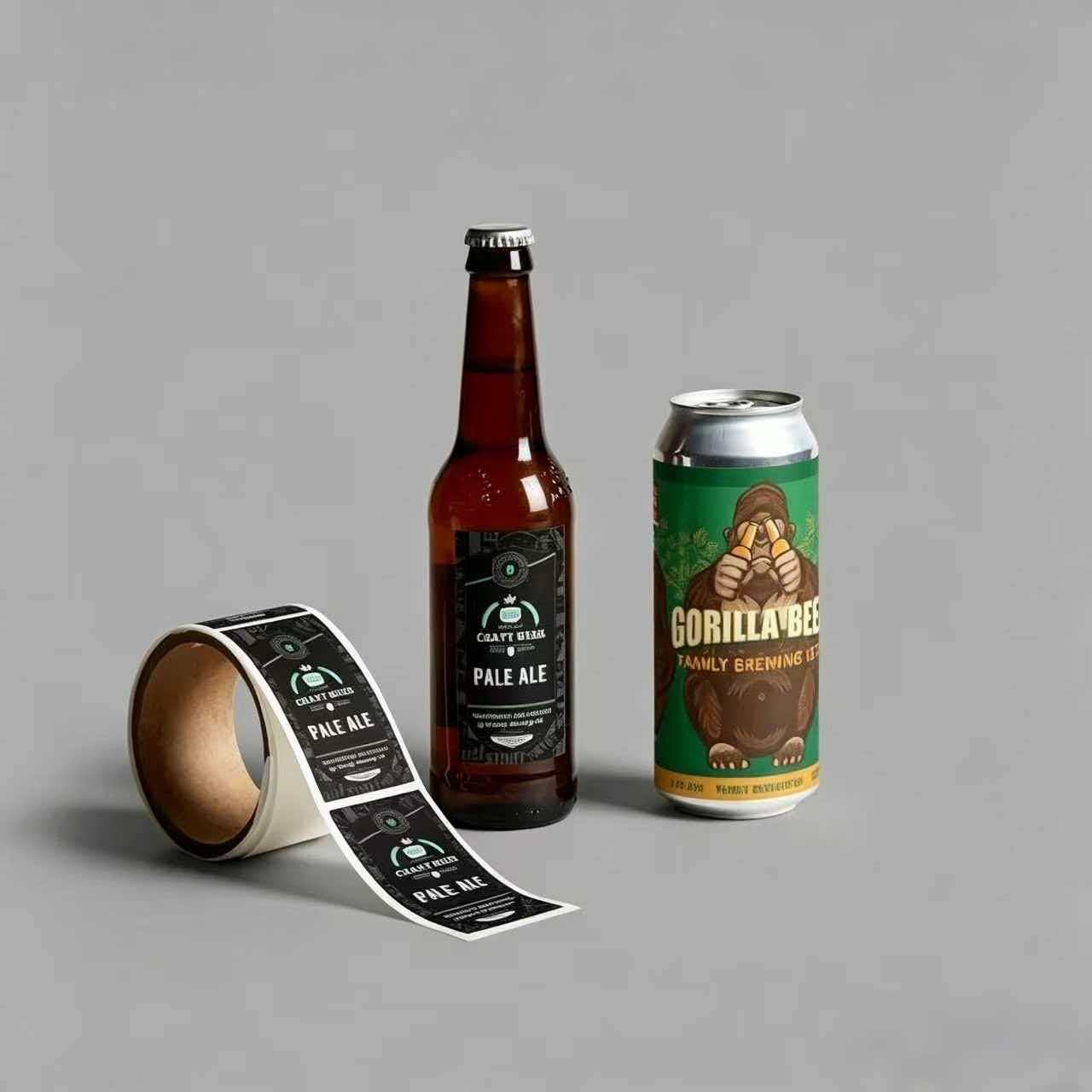
Why PET Material Outperforms Paper and BOPP for Pet Tags and Product Labels
PET (polyester) film resists tearing, holds up in cold storage, and doesn't bleed adhesive under heat the way paper stocks do. For pet product packaging — collars, ID tags, food pouches, supplement jars — that matters because these items get washed, frozen, or left in cars. Below is how the common substrates stack up for this use case.
| Material | Water Resistance | Temperature Range Fit | Best Use Case |
|---|---|---|---|
| PET (polyester) | High | Cold storage to high-heat | Pet tags, industrial labels, outdoor gear |
| BOPP film | Medium-High | Room temp to moderate heat | Retail bottles, cosmetic packaging |
| Paper (coated) | Low | Dry indoor use only | Short-shelf-life packaging |
| Vinyl | High | Outdoor, UV exposure | Equipment, signage, decals |
If a label will touch water, a freezer, or a pet's collar hardware, PET is the safer default. If it's a one-time promotional sticker for a dry indoor product, paper substrates are cheaper and perfectly adequate — don't overspend on polyester where it isn't needed. For wash-care or garment contexts, some buyers instead look at oil & waterproof labels for bottles & cosmetics depending on the surface the label needs to adhere to.
Ordering-Stage Questions Every Buyer Asks Before Placing an RFQ
Most hesitation at this stage isn't about design — it's about process. Here are the five questions that come up in nearly every quote request, answered directly.
- Do you accept variable-data files for sequential tag numbering? Yes, for digital label runs we accept CSV-linked variable data (sequence numbers, QR codes, barcodes) for pet ID tags or asset labels. Offset printing does not support variable data — that route is for static, single-design artwork only.
- How does proof approval work? You'll receive a photo or digital sample confirmation before production starts. Nothing enters the production line until you sign off on color, text placement, and die-line. This step exists specifically to catch the issues — wrong Pantone, misaligned foil, cropped logos — before 10,000 units are printed.
- What's the MOQ? Digital printing and select custom items carry no minimum order — useful for testing a new SKU or a small pet rescue batch. Offset printing and standard bulk runs require 1,000 units minimum, where per-unit pricing drops meaningfully compared to digital short runs.
- How long does production actually take? Sample lead time runs 3 days. Bulk production after proof approval runs 8-9 days. U.S.-bound shipments typically arrive 5-6 business days after dispatch. Same-day dispatch is available for select ready-stock or digital items, but that's the exception, not the rule for custom bulk orders.
- Will my repeat order match the first batch? Color consistency on reorders depends on keeping the same die-line, substrate batch code, and ink formulation on file. We retain approved proofs so repeat orders reference the original specification rather than a fresh color read — this is how reorder drift gets avoided.
Quick Reference: Timing and Minimums
| Stage | Typical Timing / Threshold |
|---|---|
| Sample lead time | 3 days |
| Bulk production | 8-9 days after proof approval |
| U.S. shipping | 5-6 business days |
| Digital printing MOQ | No minimum |
| Offset printing MOQ | 1,000 units |
Common Mistakes That Delay Custom PET Label Orders
Most production delays trace back to the same handful of avoidable errors:
- Submitting low-resolution logos. Anything under 300 DPI at full print size causes blurry text, especially on small pet tags under 1 inch wide.
- Skipping the physical sample stage. A digital proof on a monitor doesn't show you how white ink renders on a clear substrate — order a physical sample for any run over 1,000 units.
- Not specifying the end-use environment. Cold storage, car interiors, and washing machines each demand different adhesive and lamination choices. Tell your supplier where the label will actually live.
- Assuming offset pricing applies below 1,000 units. Small-batch buyers who expect bulk-tier pricing under the MOQ often get quotes that look confusing until the MOQ structure is explained upfront.
- Changing artwork mid-production without a new proof. Any file revision after approval should trigger a fresh digital sample confirmation — skipping this step is the single biggest cause of reprint disputes.
Step-by-Step Checklist for Your First Bulk PET Label Order
- Confirm the end-use environment (cold storage, outdoor, washable, chemical exposure).
- Choose substrate and finish — matte, glossy, or foil-stamped — based on that environment.
- Submit vector artwork (AI, EPS, or high-res PDF) plus any variable-data CSV file.
- Review the digital or photo proof and check color, die-line, and text against your brand guide.
- Approve a physical sample if the order exceeds 1,000 units or uses a new die-line.
- Confirm quantity against MOQ — under 1,000 units, expect digital pricing; at or above, offset pricing applies.
- Lock the approved file and batch specification for future reorders.
A quick scenario: a pet food brand ordering 5,000 freezer-stable ingredient labels would submit vector artwork, request a physical sample given the volume, confirm the freezer end-use so the adhesive spec is correct, and lock the approved proof for next quarter's reorder — avoiding a fresh color-matching cycle every time.
Cost Breakdown: What Drives Price Per Unit on PET Label Orders
- Quantity tier. Digital short runs cost more per unit but need no MOQ; crossing into 1,000+ unit offset runs lowers the per-piece cost substantially.
- Finish complexity. Foil stamping, UV-resistant inks, and BOPP lamination each add incremental cost versus a standard matte finish.
- Die-cut shape. Custom contour shapes for pet tags cost more in tooling than standard rectangular or round labels.
- Variable data. Sequential numbering or QR codes add a small per-unit fee for digital file processing, but eliminate manual sorting later.
- Reorder consistency fee. None — referencing an approved proof on file for repeat orders avoids extra design or color-matching charges entirely.
Buyers sourcing for broader packaging lines sometimes compare industrial grade custom polyester labels against custom kraft labels for different SKUs within the same product range — it's common to run PET for anything touching moisture and kraft for dry-goods packaging that benefits from a natural look. Pet-specific product lines, including tags and supplement jars, are increasingly handled through custom pet product labels built specifically around washable, chew-resistant requirements.
What a Finished PET Label Order Actually Looks Like
Production runs out of an ISO 9001:2015-certified facility, with daily label capacity above one million units — a figure that matters when you're placing a repeat order and need the batch to run on schedule rather than wait behind other customers' queues. Every bulk order also includes 100 bonus pieces, which covers minor handling loss during application testing without forcing a reorder. If a defect does slip through, the policy is a free reprint for color mismatches and proportional replacement for other defects, with a 5-day fast re-stocking turnaround rather than a full requoting cycle.

None of this replaces good upfront specification. A supplier's reprint policy fixes problems after the fact; a clear end-use brief and an approved physical sample prevent most of them from happening at all.
Ready to move from RFQ to production? Send your artwork file and target quantity, and request a physical sample before committing to the full bulk run.