

Ordering Custom Polyester Labels Without a Proper Proof Almost Always Costs You Time Later
Here's the sourcing mistake we see most often: a buyer sends artwork, gets a quote, pays a deposit, and assumes production starts immediately. Then the factory catches a barcode that won't scan, or an adhesive spec that doesn't match the container material, and the whole order sits waiting for a fix. By the time it's resolved, the "fast" lead time isn't fast anymore. If you're sourcing Custom Polyester Labels for the first time — or switching suppliers — the proof stage is where most delays actually start, not the printing press.
This guide walks through what to confirm before you submit a purchase order: minimum quantities, realistic production windows, and the specific checks that catch problems before they become reprints.
Why Polyester Substrate Changes the Sourcing Math
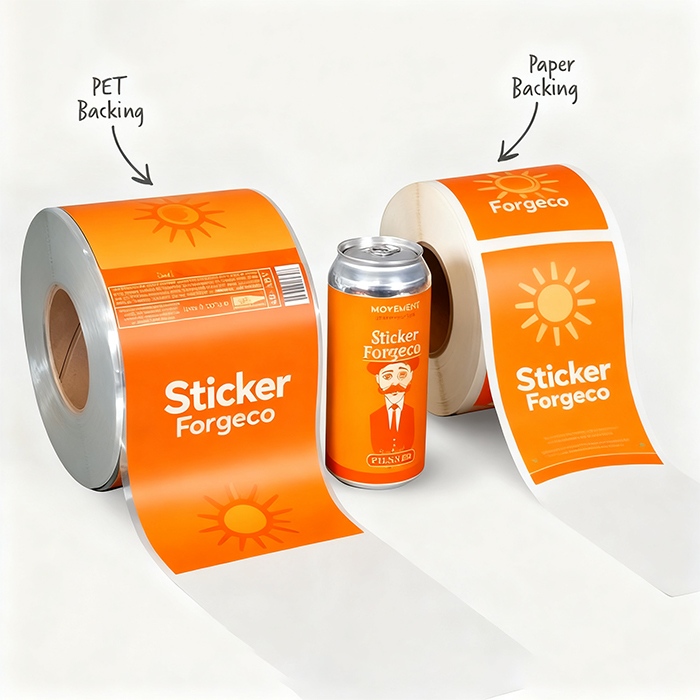
Polyester (PET) film labels aren't interchangeable with paper or BOPP stock, and pricing/MOQ structures often differ because of it. PET holds up in cold storage, resists moisture bleed, and survives outdoor UV exposure better than most paper substrates — which is exactly why it's specified for chemical drums, outdoor equipment tags, electronics, and industrial packaging. But that durability comes from a thicker film and specific adhesive formulations, which affects both minimum order quantity and setup time.
For buyers comparing substrates, it helps to look at related options like oil & waterproof labels for bottles & cosmetics or waterproof custom synthetic labels side by side before locking in polyester specifically. If your application doesn't need extreme temperature or chemical resistance, a lighter substrate may save cost without sacrificing performance.
Pre-Production Proof Checks That Prevent Delays
This is the step buyers skip most, and it's the one that causes the most rework. Below are the four checks we run before any bulk order goes to press, organized as questions we get asked directly.
Do you check artwork resolution before printing?
Yes — and you should insist on it. Low-resolution logos or gradient fills that look fine on screen often print with visible banding or fuzzy edges on film substrates. We confirm vector files or 300 DPI minimum artwork before scheduling a press slot. If a file falls short, we flag it and request a replacement rather than printing a rough version and hoping the client doesn't notice.
Will my barcode actually scan?
Not automatically. Barcode readability depends on contrast ratio, bar width, and quiet zone spacing — not just print quality. A barcode that looks fine to the eye can still fail a scanner if the bars are too thin relative to the label size, or if there's no white space margin around the code. We test barcode proofs against standard scan tolerances before bulk production, especially for retail and logistics labels.
How is adhesive selected, and can I choose wrong?
Adhesive choice depends on the surface, temperature range, and whether the label needs to be removable or permanent. Cold-storage packaging needs freeze-grade adhesive; outdoor equipment needs UV-stable adhesive that won't soften in heat. Buyers sometimes assume "strong adhesive" covers every use case — it doesn't. Weak adhesive selection is one of the most common causes of field failures we get called about, so we ask for the end-use environment upfront and match adhesive accordingly.
What does "finish approval" mean, and why does it matter?
Finish approval means confirming lamination (matte, gloss, or BOPP overlay), foil stamping color, and UV-resistant ink coverage on a physical or digital sample before the full run. A photo or digital sample confirmation happens before production starts on every order — this is standard, not an upsell — because color shifts between screen and printed film are common, and catching a mismatch on a proof costs minutes, catching it on 5,000 finished labels costs days.
| Proof Check | What It Catches | Skipped = Risk |
|---|---|---|
| Artwork resolution | Blurry logos, banding, font distortion | Reprint after bulk run |
| Barcode readability | Scan failures at checkout or warehouse | Rejected shipment at retailer |
| Adhesive selection | Peeling in cold storage, bleed in heat | Field complaints, product returns |
| Finish approval | Color mismatch, lamination defects | Brand guideline violations |
MOQ Structure: Digital Printing vs Offset Bulk Runs
Minimum order quantity is one of the first questions buyers ask, and the honest answer depends on printing method. This isn't a marketing choice — it's a physical setup constraint.
- Digital printing / select custom items: No MOQ. This works for small test batches, single-SKU runs, or brands still finalizing packaging design.
- Offset printing / standard bulk items: 1,000-unit minimum. Offset setup costs more upfront but pricing per unit drops significantly at volume, so it fits established SKUs with predictable reorder cycles.
If you're unsure which route fits your order size, the decision is usually simple: under roughly 1,000 pieces, or if you need multiple design variants, digital makes more sense. Above that volume, with one confirmed design, offset usually wins on cost per unit.
Realistic Lead Times From Proof to Delivery
Lead time is where vague promises cause the most frustration. Here's what actually happens on our production floor, step by step:
- Day 0: Artwork and adhesive spec submitted, proof checks run (resolution, barcode, adhesive, finish).
- Day 1-3: Physical or digital sample produced and sent for approval. Sample lead time for pins, patches, and labels runs 3 business days.
- Day 4-12: Once the sample is approved, bulk production runs 8-9 days across our 6 production lines and 6 HP digital label presses.
- Day 13-18: Shipping to U.S. addresses typically takes 5-6 business days after dispatch.
Same-day dispatch is available for select ready-stock or digital items, but that applies to specific SKUs — not custom bulk runs with new artwork. If a supplier quotes a flat "3-day turnaround" for a bulk custom order without mentioning sample approval time, ask what step they're skipping.
Common Mistakes Buyers Make When Ordering Polyester Labels
- Approving a screen proof instead of a physical sample. Screen colors and printed film colors don't always match, especially metallics and foil.
- Choosing adhesive based on price instead of environment. A cheaper adhesive that fails in cold storage costs more in returns than it saved.
- Assuming white ink opacity is automatic on clear substrates. Thin white ink layers let container color show through — this needs to be specified, not assumed.
- Ordering exact quantity with no buffer. Every bulk order here includes 100 bonus pieces, but not every supplier does this, so ask.
- Skipping barcode scan testing on the proof. This is caught far more cheaply before printing than after a retailer rejects a shipment.
Matching Adhesive and Finish to Your Application
A quick decision checklist before you finalize specs:
- Cold storage or refrigerated packaging → freeze-grade adhesive, BOPP lamination for condensation resistance.
- Outdoor equipment or vehicle labeling → UV-resistant inks plus permanent adhesive rated for temperature swings.
- Retail shelf products needing repositioning → removable adhesive, tested for residue-free peel.
- Clear bottle or jar labeling → confirm opaque white ink backing so colors don't wash out against the container.
These specs aren't universal — a freeze-grade adhesive that performs well in a walk-in cooler isn't the right choice for an outdoor tool label baking in direct sun. Match the adhesive to the actual environment the label will live in, not the one that seems safest on paper.
For buyers who need extra durability specs beyond standard PET film, our industrial grade custom polyester labels line covers UV-resistant, high-temperature, and matte finish variants depending on the application. If you're also sourcing packaging labels in bulk across multiple substrates, it's worth comparing against custom labels printed in bulk or custom kraft labels for lighter-duty SKUs.
What Happens If a Defect Slips Through
No proof process catches everything, so it matters what happens after the fact. Our policy: color mismatches get a free reprint, defective units get a proportional replacement rather than a full reorder, and re-stocking or repair on approved orders runs on a 5-day fast turnaround. This is built around the ISO 9001:2015 quality management system our facility operates under, alongside Disney FAMA certification — both of which require documented defect tracking, not just a verbal promise.
We've applied the same proof-and-adhesive discipline across other product lines too. A recent case for an Australian health supplement brand used matte BOPP film with scratch-proof lamination and metallic foil stamping for retail shelf presence — the same finish-approval process described above caught a foil color variance before the bulk run shipped. Another case for a UK knitwear brand needed a woven garment label soft enough for sensitive skin, which meant adhesive and material choices were tested against comfort, not just print quality.
Frequently Asked Questions
Can I get a sample before committing to a bulk order?
Yes. Photo or digital sample confirmation happens before production on every order, and physical samples for pins, patches, and labels ship within 3 business days.
Is there a minimum order for polyester labels specifically?
It depends on print method. Digital printing carries no MOQ; offset bulk printing requires 1,000 units minimum. Polyester substrate itself doesn't add a separate minimum beyond the standard MOQ structure.
What if my barcode fails the scan test on the proof?
We flag it before bulk production and adjust bar width or quiet zone spacing rather than proceeding — this is exactly why the proof stage exists.
Do you ship outside the U.S.?
Yes, we work with buyers across the United States, Australia, the United Kingdom, France, South Africa, and other markets. Domestic U.S. shipping after dispatch runs 5-6 business days; international timelines vary by destination.
Before you submit final artwork, request a physical proof and confirm adhesive spec against your actual storage or display environment — it's the fastest way to avoid a reprint. If you're ready to move forward, send over your file and container specs and we'll walk through sample timing and pricing together.