

Custom PP Labels: 6 Questions to Ask Before Ordering
Ordering a production run of labels only to find they peel off in cold storage, bubble on curved surfaces, or fade under UV exposure is a costly and entirely preventable mistake. The problem often isn’t the design but a technical specification gap between your product’s requirements and the label’s material properties. When sourcing Custom PP Labels, asking the right questions upfront is the single most effective way to guarantee performance and protect your brand’s image.
Polypropylene (PP) is a versatile synthetic material prized for its durability, but its success depends on matching the right adhesive, finish, and printing process to its final environment. Before you issue a purchase order, let’s walk through the critical technical questions that prevent these common failures, drawing on lessons I’ve learned from over a decade on the factory floor.
Why Polypropylene is a Top Choice for Product Labels
Unlike paper labels that can tear, stain, and disintegrate when exposed to moisture, polypropylene is a plastic film that offers superior resilience. This makes it an ideal choice for products that face challenging conditions during shipping, retail, and consumer use. At our 8,000 m² ISO 9001:2015 certified facility, we produce over a million labels daily, and PP is consistently the go-to material for brands needing performance they can trust.
Key advantages of PP labels include:
- Water and Oil Resistance: Essential for food, beverage, and cosmetic products that are refrigerated or used in humid environments like bathrooms. PP labels will not wrinkle, smudge, or peel when exposed to condensation or spills.
- Tear-Resistance: The material’s flexibility and strength prevent tearing during automated application and rough handling, ensuring your product reaches the customer with its branding intact.
- Chemical Resistance: PP holds up well against many common chemicals, making it suitable for household cleaners, industrial products, and supplements.
- Flexibility: It conforms well to curved and squeezable containers, such as lotion tubes and sauce bottles, without creasing or lifting at the edges.
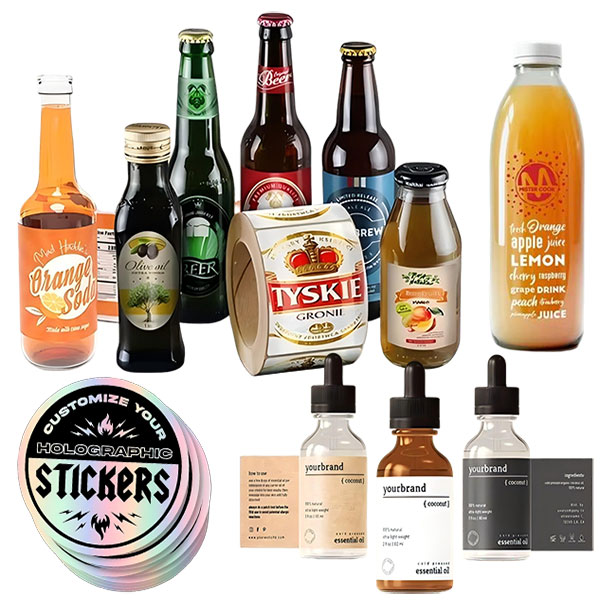
This durability is why brands across the globe depend on PP. For an Australian natural health supplement company, we produced metallic foil-stamped roll labels using a matte BOPP (Biaxially Oriented Polypropylene) film with scratch-proof lamination. The result was a high-end, durable label that elevated its retail shelf presence and resisted scuffs during shipping.
The Pre-Order Checklist: Answering 6 Critical Questions
To avoid miscommunication and production errors, a good supplier will guide you through a technical discovery process. Here are the six non-negotiable questions you must have answers for before producing custom PP labels.
-
What is the surface energy of the application surface?
Surface energy determines how well an adhesive can “wet out,” or spread across a surface to form a strong bond. High-energy surfaces like glass, aluminum, and PET plastic are easy to stick to. Low-surface energy (LSE) materials like HDPE (high-density polyethylene) and PP itself are slick and repel adhesives. Applying a standard adhesive to an LSE container will almost certainly lead to peeling. You must identify your container material so the manufacturer can select an appropriate high-tack or specially formulated LSE adhesive.
-
What is the application and service temperature range?
A label’s life involves two critical temperature phases. Application temperature is the temperature of the environment and container when the label is applied. Applying a standard label in a cold facility can prevent the adhesive from bonding correctly. Service temperature is the range the product will experience throughout its life. For products destined for cold storage, like beverages or frozen foods, a freezer-grade adhesive is mandatory to prevent failure from condensation.
-
What finish and lamination are required?
The finish protects the printed artwork and defines the label’s final look and feel. A glossy lamination makes colors appear more saturated and provides excellent scuff resistance. A matte lamination offers an elegant, non-reflective finish that is popular for premium and organic brands. For products exposed to sunlight, specifying UV-resistant inks and lamination is essential to prevent fading.
-
How will white ink be used on clear or metallic substrates?
When printing on custom clear labels or metallic PP, printing colors directly onto the film results in a translucent, washed-out look. To ensure colors are opaque and vibrant, a base layer of white ink must be printed first, underneath the colored artwork. It’s important to specify this and confirm the white ink’s opacity, as a thin or poorly applied white layer is a common point of failure for inexperienced printers.
-
What is your applicator’s required roll core size and unwind direction?
This is a purely mechanical but critical detail for automated or semi-automated labeling lines. Labels are supplied on rolls with a cardboard core, typically 3 inches in diameter. Your machine will also have a required unwind direction (how the labels peel off the roll). Providing the wrong specifications can bring your entire packaging line to a halt. Always confirm these details with your production team.
-
How do you handle proof approval?
Never proceed to bulk production without seeing a final proof. We provide a photo or digital sample for confirmation before any of our 6 HP digital label presses begin a full run. This step is your final chance to catch typos, confirm color accuracy against your brand guidelines, and verify die-cut shapes. A reliable partner will have a clear policy for reprints if the final product does not match the approved proof. Our color mismatch free reprint guarantee ensures you get exactly what you signed off on.
Common PP Label Failures and How to Prevent Them
Overlooking small details during the specification process is the root cause of most label failures. Here are some of the most common issues I’ve helped clients troubleshoot and the solutions to prevent them on your next order.
| Common Failure | Root Cause | Prevention Strategy |
|---|---|---|
| Edge Lifting / “Flagging” | Using a rigid label or standard adhesive on a tight-radius curve or squeezable tube. | Specify a highly flexible PP film and a high-performance adhesive designed for squeezable containers. Test samples on the actual container. |
| Peeling in Refrigeration | Standard adhesive failing due to moisture from condensation. | Request a specific freezer-grade or cold-temperature permanent adhesive designed to perform in damp, cold environments. |
| Ink Scratching or Fading | Lack of protective lamination or using inks not rated for UV exposure or chemical contact. | Always add a BOPP lamination (matte or gloss). For outdoor products, specify UV-resistant inks and lamination. |
| “Washed-Out” Colors on Clear Labels | Insufficient white ink underprinting, causing colors to appear transparent. | Confirm with your printer that a high-opacity white ink base layer is included in the print specifications for all artwork on clear or metallic film. |
Our Process and Quality Guarantees
Getting your labels right the first time is our priority. We combine a consultative approach with high-capacity, certified production to deliver reliable results. Our Disney FAMA and ISO 9001:2015 certifications reflect a deep commitment to quality management at every step.
Our process ensures your specifications are met:
- Free Design Assistance: Our experts review your artwork and application requirements to recommend the ideal materials and finishes, providing quick responses and professional help.
- Digital Proofing: You receive a detailed digital proof for approval before production, confirming colors, cut lines, and layout.
- Fast Turnaround: With a sample lead time of just 3 days and bulk production in 8-9 days, we help you get your product to market quickly.
- Quality Assurance: We back our work with a proportional replacement policy for defects and a color mismatch free reprint guarantee. For every bulk order, we also include 100 bonus pieces to give you extra inventory.
Whether you need oil & waterproof labels for bottles & cosmetics or durable custom printed roll labels for industrial use, a thorough specification process is key. By addressing these questions, you transition from simply buying a label to engineering a functional component of your product packaging.
Have a project in mind? Submit your design for a free quote and our team of experts will help you specify the perfect PP label for your application.