

Get Custom PP Labels Right the First Time to Avoid Costly Reprints
Selecting the wrong custom PP labels can lead to significant downstream costs. A label that peels off in cold storage, uses an adhesive that bleeds under heat, or features colors that mismatch your brand guidelines can damage product integrity and force expensive reprints and repackaging. These failures are not just inconvenient; they erode customer trust and disrupt your supply chain. This guide directly addresses the critical technical questions buyers must ask before placing an order, ensuring your labels perform correctly from the production line to the end consumer.
At custom panda, we manufacture high-performance PP (polypropylene) labels in our ISO 9001:2015 certified facility. Our process focuses on preventing common points of failure, from selecting the right substrate to verifying adhesive strength for your specific application. We understand that a label is a key component of your product's success.
Choosing the Right PP Material for Your Application
Polypropylene (PP) is a versatile polymer prized for its durability, moisture resistance, and chemical resilience, making it a superior choice for products facing environmental stressors. Unlike paper labels, PP labels will not tear, disintegrate, or absorb moisture, ensuring your branding remains intact. The most common form used is Biaxially Oriented Polypropylene (BOPP), which offers excellent clarity and printability. Understanding the differences between BOPP types is the first step in specifying a reliable label.
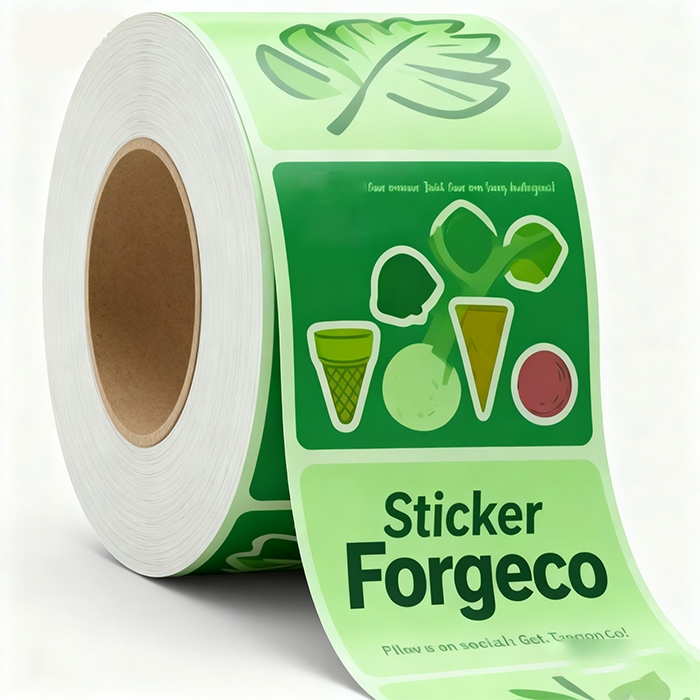
To help you decide, here is a comparison of the primary BOPP materials we offer for PP label printing.
| BOPP Material Type | Key Characteristics | Ideal Use Cases | Design & Finish Notes |
|---|---|---|---|
| White BOPP | Opaque, bright white surface that provides an excellent base for vibrant, full-color graphics. It is our most popular all-purpose material. | Food and beverage packaging, health and beauty products, household chemical containers, and any application requiring high-impact color. | Works equally well with gloss or matte lamination. The solid white background ensures color accuracy without needing an underlying white ink layer. |
| Clear BOPP | Optically clear film that creates a "no-label" look, allowing the product inside the container to show through. Fully waterproof. | Beverage bottles (beer, wine, water), clear cosmetic jars, candles, and any product where transparency is part of the brand aesthetic. | Requires a layer of white ink printed behind colors to ensure they are not translucent. We address opacity issues with our HP digital presses to deliver solid whites. |
| Metallic BOPP | A silver, reflective base material that gives graphics a built-in metallic sheen. Can be chrome-like or have a brushed metal appearance. | Premium cosmetics, nutritional supplements, high-end food products, and promotional labels designed to stand out on a crowded shelf. | Printing certain areas with a white ink undercoat allows you to create sections of both metallic and opaque color on the same label. Works well with techniques like foil stamping. |
Our experience with global brands, such as the Australian health supplement company for whom we produced metallic foil stamped labels, demonstrates how material choice impacts shelf presence. By combining a matte BOPP film with scratch-proof lamination, we delivered a label that conveyed premium quality while withstanding retail handling.
Adhesive Performance: A Buyer's Checklist for Durability
The most common and costly failure point for custom labels is the adhesive. A beautiful design is useless if the label falls off. Adhesive failure can be caused by condensation, extreme temperatures, or incompatibility with the container surface. We mitigate these risks by helping you select a strong label adhesive engineered for your product's entire lifecycle.
Before you finalize your order, use this checklist to verify that your adhesive specification is correct. Answering these questions will prevent issues like peeling, lifting, or "flagging" on curved surfaces.
Buyer's Decision Checklist for Label Adhesives
What is the application surface?
Adhesives perform differently on various materials. A label designed for a smooth glass bottle may fail on a textured, low-energy plastic like HDPE. Be sure to specify the exact container material (e.g., glass, PET plastic, metal, cardboard) so the correct adhesive can be selected.
What temperature range will the product experience?
This is a critical factor. Standard permanent adhesives can fail in refrigeration or deep-freeze conditions as condensation forms on the surface. For cold-chain products, a specialized cold-temp or all-temp adhesive is necessary. Likewise, products exposed to high heat (like engine components or hot-filled foods) require an adhesive that will not soften and bleed.
Will the label be exposed to moisture or chemicals?
PP material itself is waterproof, but the adhesive must also be rated for moisture exposure. If your product is used in a shower, stored outdoors, or may come into contact with oils or solvents, a high-resistance, permanent adhesive is required to maintain a secure bond. Our custom waterproof labels are designed for exactly these scenarios.
Is the surface curved or flat?
Applying a stiff label to a small-diameter, tightly curved container (like a lip balm tube) can cause the edges to lift over time. For these applications, a more flexible label material combined with an aggressive adhesive is often the best solution to prevent "flagging."
We solve these challenges daily for our clients. For an eco-friendly children's clothing line in Spain, we supplied wash-care labels with skin-safe inks and an adhesive system designed to survive dozens of industrial washing cycles without fading or peeling.
Decision FAQ for Sourcing Custom PP Labels
First-time B2B buyers often face the same set of questions when validating a new supplier. Here are direct answers to the most common queries we receive, helping you clarify technical requirements before committing to a production run.
Q1: What is your proofing process to ensure color accuracy?
A: We eliminate guesswork with a mandatory photo or digital sample confirmation before any bulk production begins. This allows you to see exactly how your design will print on the selected material. In the rare event of a discrepancy, we stand by our color mismatch free reprint policy.
Q2: What are your Minimum Order Quantities (MOQs)?
A: We offer flexibility. For digital printing, which is ideal for smaller runs or designs with many variations, we have no MOQ. For larger orders using offset printing, the minimum is 1,000 units. Opting for offset at higher volumes provides significant per-unit cost savings.
Q3: Should I choose a matte or gloss finish for my labels?
A: The choice depends on your brand aesthetic and functional needs. Gloss lamination creates a high-shine, reflective finish that makes colors appear more saturated and is great for grabbing attention. Matte finish labels offer a non-reflective, sophisticated look that feels soft to the touch, reduces glare, and is better for surfaces that need to be written on.
Q4: How do you ensure white ink is opaque on clear BOPP labels?
A: This is a common industry problem we have solved. Faint, translucent white ink compromises a design's integrity. Our six HP digital label presses can apply a high-density base layer of white ink beneath your colors, ensuring it is bright, solid, and completely opaque for maximum contrast and readability on clear BOPP labels.
Q5: What format are the labels delivered in?
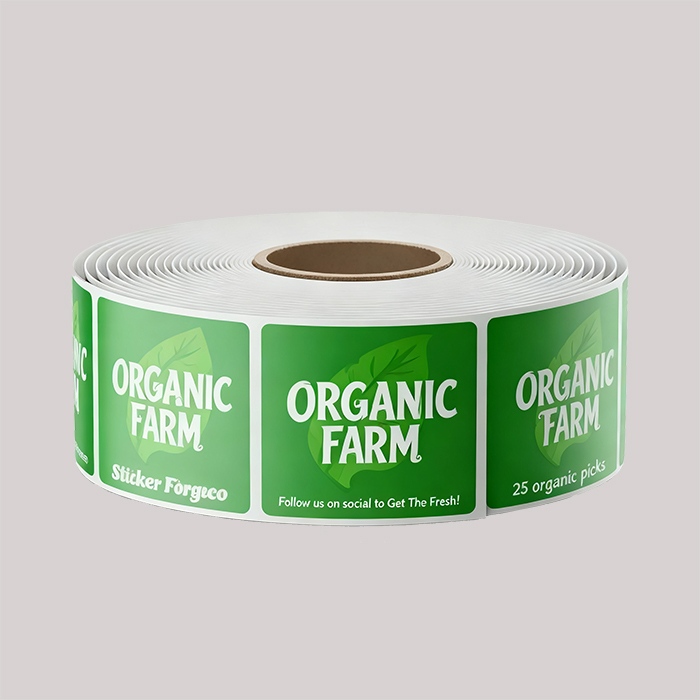
A: The majority of our clients require custom roll labels for compatibility with automatic or semi-automatic applicators. During the quoting process, we will confirm your required roll core size, maximum outer diameter, and winding direction (copy position) to ensure seamless integration with your production line.
Production Timelines and Quality Guarantees
Understanding the production timeline is essential for planning your product launch. Our process is structured for speed and reliability, backed by a robust quality management system and clear guarantees.
Here is a typical timeline for a new label order:
Design and Consultation (1 day): Our team provides Free Design Assistance to review your artwork, recommend materials, and prepare a digital proof. We offer live human support for quick responses.
Sample Production (3 days): Once the proof is approved, we produce a physical sample for final confirmation. This step ensures you are completely satisfied before we proceed to bulk manufacturing.
Bulk Production (8-9 days): Leveraging our 8,000 m² facility and six production lines, we can produce over 1,000,000 labels daily. This high capacity ensures your order is completed on schedule.
Shipping (5-6 business days to U.S.): We offer free shipping for reliable and timely delivery to global markets, including the United States, Australia, and the United Kingdom.
We are committed to quality beyond our ISO 9001:2015 certification. Every bulk order includes 100 bonus pieces at no extra charge. In the case of any defects, we provide proportional replacement and offer a 5-day fast re-stocking service to minimize any disruption to your business.
Submit your design files to our technical team for a detailed quote and a complimentary material recommendation.