

Custom PVC Patches Backing MOQ and Proof FAQs for B2B Buyers
A patch order can be delayed before production even starts. The usual causes are an unconfirmed backing, unclear artwork ownership, an assumed minimum quantity, or a proof approved without checking key details. For first-time buyers, these omissions can lead to a patch that does not suit the intended garment, bag, vest, or retail program.
Custom PVC Patches should be specified as a complete order package, not only as a logo file. Before requesting a quote, confirm the artwork version, desired relief style, attachment method, quantity, delivery destination, and approval contact. That gives the factory a usable brief and reduces back-and-forth after the quote is issued.
Custom Panda has produced pins, patches, and labels since 2012 from an 8,000 m² facility with six production lines. Our patch production includes PVC soft rubber, embroidery, woven labels, heat transfer, chenille, and backing options including Velcro and heat seal. For buyers who need several branded items for one launch, related custom patch options can also be reviewed alongside the PVC format.
Define the Application Before Choosing the Patch Format
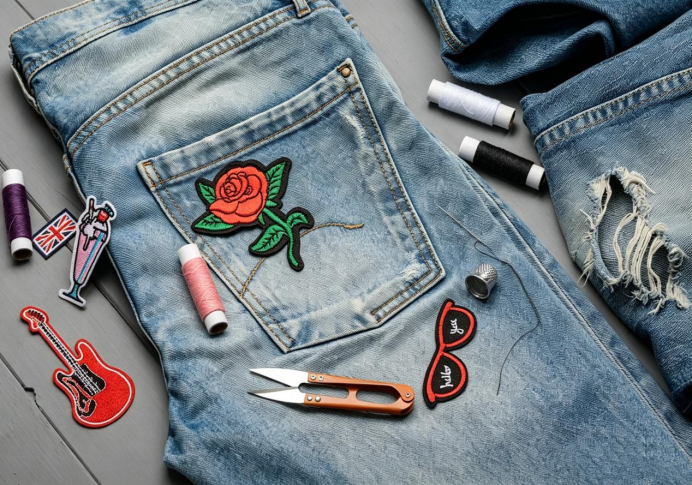
The first decision is not color. It is where the patch will be used. A PVC patch design should account for the surface it will attach to, how often the item will be handled, and whether the patch must be removable. A tactical vest program and a branded cap campaign may use the same logo but require different attachment choices.
| Order requirement | Recommended direction | Why it fits | Limit to confirm |
|---|---|---|---|
| Removable team identification | Velcro patch backing | It supports attachment and removal where the receiving item has a matching hook and loop surface. | Confirm which side of the hook and loop system is needed and whether the receiving garment already includes a compatible panel. |
| Permanent apparel placement | Heat seal backing | It may suit approved garments where an iron-on application is planned. | Confirm garment fabric, application method, and whether the buyer will test the attachment on the actual garment before a full rollout. |
| Fine visual detail | Artwork review before sampling | Small lettering, narrow gaps, and close color boundaries need review before a mold or production setup is finalized. | Do not assume every screen detail will remain readable at the final patch size. |
| Multi-location branding program | Separate patch specifications | A cap, backpack, uniform, and retail package may each need a different backing or format. | Do not reuse one specification for all uses without checking the attachment surface. |
The conclusion is straightforward: select backing based on the receiving product, not on the patch artwork alone. This fits buyers ordering for uniforms, outdoor gear, promotional kits, or retail merchandise. It does not replace a real application test. If a patch will be applied to a new fabric, coated material, or unusual surface, send that information with the RFQ and test the agreed attachment method before committing to a large deployment.
For removable gear applications, review our custom hook and loop patches page when preparing your requirement list. For apparel programs that need an iron-on option, compare it with custom iron on patches before selecting a final attachment approach.
Choose the Backing Based on the Receiving Surface
A backing is an operational decision. It affects how the end user installs, removes, stores, and replaces the patch. Buyers should provide an attachment instruction in the purchase request rather than simply writing “backing required.”
Velcro backing for removable identification
Choose Velcro backing when the patch must move between compatible garments, packs, or panels. This is a practical choice for team identifiers, event staff roles, and equipment programs where the patch may be changed. The buyer should specify whether the patch needs the hook or loop side and whether a matching component is required.
This option does not apply automatically to every textile item. A smooth jacket, cap, or retail garment without a matching panel cannot accept the patch without an additional attachment plan. Do not approve the proof until the backing is stated in writing.
One relevant production example comes from the United States, where Custom Panda manufactured heavy-duty embroidered Velcro patches for an outdoor gear brand. The order used weather-resistant threads and rugged hook-and-loop backings for hiking backpacks and tactical vests. That case supports Velcro as a useful choice for compatible outdoor gear; it is not a blanket durability promise for every material, application method, or patch type.
Heat seal backing for approved apparel applications
Select heat seal backing when the buyer plans to apply patches to suitable apparel under controlled conditions. It can simplify garment decoration workflows where the production team has tested the fabric and application process. Supply the garment type and intended use when requesting pricing.
The limit is important. A heat seal option should not be selected solely because it sounds permanent. Different fabrics, coatings, washing conditions, and user handling can affect results. For that reason, buyers should conduct an application trial using the final garment before full distribution. If frequent washing is expected, raise that requirement during the quote stage so the backing choice can be reviewed before production.
Use a written backing instruction
- State the patch application: uniform, bag, vest, cap, outerwear, or promotional item.
- State whether removal is required after installation.
- Identify the receiving surface and whether it already has a compatible panel.
- Specify the requested backing in the artwork proof and purchase order.
- Ask for a confirmation if the desired backing is not listed in the quote.
This short checklist prevents a common error: approving the logo appearance while leaving the attachment method undefined.
Buyer FAQs on Proof Approval, Minimum Order Quantities, Production Lead Times, and Attachment Options
The following answers address the questions that should be resolved before a purchase order is placed. They are intended for buyers who need clear boundaries, not assumptions.
| Buyer question | Direct answer | What to confirm before approval |
|---|---|---|
| Will I receive a proof before production? | Yes. Photo or digital sample confirmation is provided before production. | Check the logo version, spelling, color callouts, shape, requested backing, quantity, and any visible raised or recessed design areas. A digital proof confirms the shown specification; it should not be treated as an unstated guarantee for details that were not included in the artwork or notes. |
| Can the proof be changed? | Changes should be requested before written approval. | Consolidate feedback from brand, purchasing, and operations teams first. Repeated revisions can delay approval and therefore delay the production start. |
| Is there a patch minimum order? | Digital printing and select custom items have no MOQ. Offset printing and standard bulk items have a minimum order quantity of 1,000 pieces. | Do not assume the same rule applies to every construction. Ask the quote team whether the selected PVC project is treated as a select custom item or a standard bulk item, then obtain the minimum quantity in writing. |
| How long does patch production take? | Patch samples have a stated lead time of 3 days, while bulk production is stated at 8 to 9 days. | These timelines should be planned from approval and specification completion. They do not include time lost to unanswered proof questions, artwork revisions, payment processing, or shipping arrangements. |
| How long is shipping to the United States? | U.S. shipping is stated at 5 to 6 business days. | Confirm the shipping address, consignee details, and required arrival date during quotation. Same-day dispatch applies only to select ready-stock or digital items and should not be assumed for a made-to-order PVC patch project. |
| Which attachment options are confirmed? | Velcro backing and heat-seal iron-on backing are listed patch options. | Specify the required backing rather than asking for a generic attachment. For any other requested solution, obtain confirmation in the quote before approving production. |
Production proof approval is the final checkpoint for buyer-owned details. The best practice is to appoint one person who collects consolidated feedback and issues the final approval. This fits procurement teams, marketing departments, and agencies with several reviewers. It does not mean that a factory can correct a brand name, outdated logo, or backing request that was not provided in the approved material.
Build an RFQ That Can Be Quoted Without Delays
A complete request gives both buyer and supplier a usable production record. It also makes quotes easier to compare because each supplier is pricing the same requirements.
- Send the final artwork. Provide the current logo file and identify any elements that cannot change, such as registered marks, color references, or required wording.
- Describe the intended application. State where the patch will be attached and whether it needs to be removable, permanent, or tested before rollout.
- Choose the backing. Request Velcro backing or heat seal backing where appropriate, and ask for written confirmation of the selected option.
- State the quantity and destination. Include the desired order volume and shipping country so MOQ and shipping planning can be addressed early.
- Set the approval contact. Identify the person authorized to approve the digital or photo confirmation.
- Share the required delivery date. Work backward from the event, launch, or warehouse arrival date using the stated sample, bulk production, and applicable shipping timing.
- Approve only a complete proof. Review artwork, backing, order quantity, and all requested notes together before authorizing production.
This method suits a first order as well as a repeat program with revised artwork. It does not replace a physical test when the patch must be attached to a sensitive fabric or a new product surface. A buyer that needs a preproduction check should state that need at quotation stage and ask how it will affect the schedule.
For campaigns that also need package identification, buyers can coordinate patch artwork with custom labels printed in bulk. Keeping logo files, color references, and approval contacts aligned helps reduce brand mismatches across merchandise and packaging.
Prevent the Common Errors That Create Rework
Most ordering problems are avoidable. The following issues are especially relevant when ordering molded PVC patches for the first time.
- Approving artwork without a size discussion: A logo may look clear on a large screen but require simplification at the requested patch size. Ask the supplier to flag small text and closely spaced shapes during proof review.
- Leaving backing off the purchase order: The artwork can be correct while the finished patch is unsuitable for the receiving item. Name the backing in both the proof and order record.
- Assuming no MOQ applies to every method: No MOQ is available for digital printing and select custom items, while standard bulk and offset printing require 1,000 pieces. Confirm the rule for your order rather than basing a decision on a general statement.
- Counting production days before approval: Bulk production timing begins after the necessary production details are completed and approved. Allow time for internal reviews and artwork changes.
- Skipping an attachment trial: A heat seal application should be tested on the actual garment or material when performance after wear or washing matters. Do not use a test on an unrelated fabric as final evidence.
- Sending several conflicting logo files: Mark one file as final and identify the approving contact. This prevents a wrong version from being reviewed.
Quality control also deserves a written expectation. Our ISO 9001:2015 certified and Disney FAMA certified facility supports structured production controls, and we provide photo or digital confirmation before production. If a confirmed color mismatch occurs, the stated policy includes a free reprint. Defects are addressed through proportional replacement, with 5-day fast re-stocking or repair, and every bulk order includes 100 bonus pieces. These provisions support order planning, but they do not remove the buyer’s responsibility to check the approved proof carefully before production starts.
Use This Final Buyer Checklist Before Approval
| Checklist item | Approval question | Reason to check |
|---|---|---|
| Artwork file | Is this the current approved logo and wording? | Prevents obsolete branding or spelling errors. |
| Patch appearance | Are the shape, colors, and visible details shown correctly? | Confirms the proof represents the intended brand asset. |
| Backing selection | Does the proof state Velcro or heat seal backing as requested? | Prevents attachment misunderstandings after production. |
| Quantity and MOQ | Does the quote confirm the order quantity and applicable minimum? | Prevents commercial surprises after approval. |
| Schedule | Does the required date allow for proof approval, sample timing if needed, bulk production, and shipping? | Prevents an event deadline from being treated as a production promise. |
| Destination | Is the shipping address and consignee contact complete? | Reduces shipment handling delays. |
When these items are clear, Custom PVC Patches become easier to source, approve, and deploy across a business program. Submit your artwork, quantity, backing preference, and destination for a quote and proof review.