

Custom Removable Labels Help Control Repeat Order Costs
Before issuing an RFQ for a recurring label program, buyers often compare unit prices without confirming what each supplier has included in the roll specification. That is where costly gaps appear. A quote may describe the face material and print design but omit release liner specifications, roll diameter, repeat direction, or labels per roll. Those omissions can affect warehouse handling, applicator compatibility, packing requirements, and the real unit cost of the order.
Custom Removable Labels should be sourced as a complete roll system, not as a printed graphic alone. The face material, removable adhesive, release liner, die cut format, label repeat length, and roll build all need to match the intended application. This matters most for brands placing repeat orders, seasonal campaigns, warehouse identification programs, and product lines where labels must be removed cleanly or repositioned before final placement.
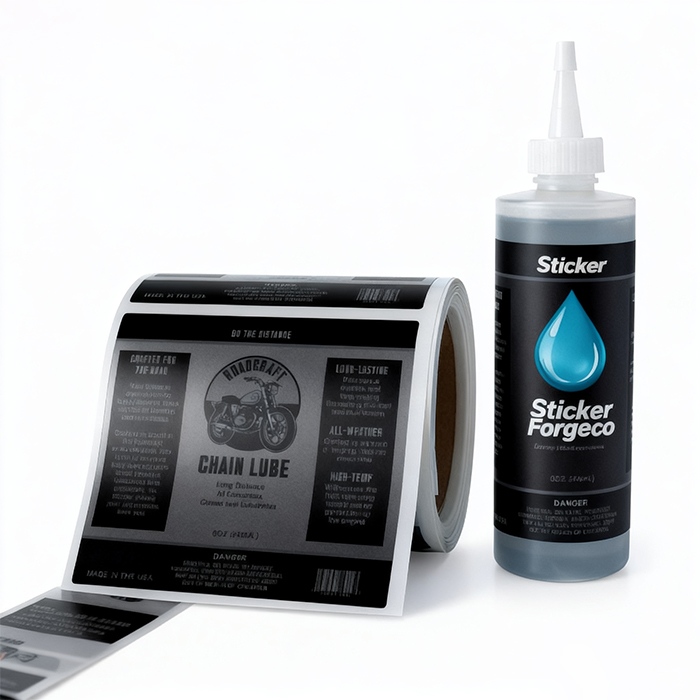
For B2B procurement teams, the best outcome is not simply the lowest initial quote. It is a quote that can be repeated without a change in dispensing behavior, packing count, or material construction. Our ISO 9001:2015 certified facility uses photo or digital sample confirmation before production, which gives buyers a practical point to verify the approved construction before a larger run proceeds.
Set Release Liner Specifications Before Comparing Prices
The release liner is the backing material that carries the label until application. It is removed during manual placement or label dispensing. A liner may look secondary on a quote, but it affects how labels are supplied, how rolls are handled, and whether a dispenser or application team can use them efficiently.
Recommendation: specify the liner requirement as a functional need, not only as a material name. State whether labels will be hand applied, applied through equipment, packed as short production batches, or stored for later use. This approach fits recurring programs because it lets suppliers quote the same operating requirement. It does not apply when a buyer is intentionally testing several constructions and wants the supplier to recommend alternatives first.
| Specification point | What to define in the RFQ | Why it affects buying decisions | Limit to confirm |
|---|---|---|---|
| Liner material | Requested liner type or approval for supplier recommendation | Different liner material options may change the supplied roll construction and quoted material cost. | Do not assume two suppliers are quoting the same liner when their quote wording differs. |
| Release performance | Manual removal, machine dispensing, or both | The required release behavior should suit the application method. | Confirm through a sample when the label will run through existing equipment. |
| Roll diameter | Maximum outer diameter and core requirement, if applicable | This determines how many labels may fit on each roll and whether the roll can fit the customer’s equipment or storage process. | A larger roll is not suitable if the dispenser or packaging station has limited space. |
| Label repeat length | Distance between repeated labels and feed orientation | Repeat length affects how many labels fit on a roll and how the roll is used during dispensing. | Check orientation with the operator rather than relying only on artwork direction. |
| Roll count | Labels per roll and rolls per carton | These details make it possible to compare packing, receiving, and production handling across quotes. | Do not compare a per roll figure unless every roll contains the same number of labels. |
For a simple hand applied promotion, a buyer may prioritize easy removal from the liner and manageable roll sizes for staff. For a label dispenser, the buyer should first confirm the machine limits, required feed direction, and preferred core before approving artwork. In the second case, selecting a low unit price without roll compatibility can create a much larger operating problem after delivery.
When the final application needs a label that can be repositioned, ask the supplier to distinguish between the adhesive requirement and the liner requirement. The removable adhesive controls the label’s interaction with the application surface, while the liner supports presentation and dispensing before application. Buyers can review repositionable adhesive labels when the product needs adjustment during placement, but the final quote should still state the selected liner and roll format.
Use a Total Order Cost Model for Roll Diameter and Liner Choices
A lower print price is not automatically a lower total order cost. The procurement comparison should account for all known charges and identify fields that remain estimates or unknowns. Roll diameter, label repeat, liner choice, and order volume can change the number of rolls, packing arrangement, production setup, and price per usable label.
Conclusion: compare landed cost per accepted label, not only a supplier’s per thousand figure. This fits any recurring removable label program with planned replenishment. It is less useful for a one off digital item with no established packing or consumption pattern, although the same quote fields are still useful.
| Cost element | Cost status | How it is calculated or checked | Effect of roll format |
|---|---|---|---|
| Printed label production | Confirmed only after supplier quotation | Request price for the exact artwork, size, face material, adhesive, liner material, and finishing. | Liner choice and label repeat may change the material and production construction quoted. |
| Labels per roll | Estimated until roll construction is approved | Confirm labels per roll from the approved label size, repeat length, liner, and maximum roll diameter. | A larger permitted roll diameter may hold more labels per roll. It is unsuitable where equipment cannot accept it. |
| Roll handling and packing | Estimated or supplier quoted | Compare roll count, carton quantity, packing method, and warehouse receiving effort. | More labels per roll may reduce the number of rolls to receive and change during application. |
| Order volume | Confirmed commercial input | Quote the same specification at each planned quantity level. | At Custom Panda, standard bulk and offset items have a 1,000 unit minimum and offer better pricing at bulk quantities. Digital printing and selected custom items have no MOQ. |
| Freight and destination charges | Unknown until destination and shipping method are quoted | Request a separate freight line and clarify whether any destination charges remain outside the quote. | Carton count and roll size can affect the shipment configuration. |
| Taxes and duties | Unknown unless stated in writing | Confirm the responsible party and the delivery terms before issuing a purchase order. | These costs should not be hidden inside a label unit price comparison. |
Use this internal calculation:
Total order cost = quoted label production + quoted finishing changes + quoted packing + quoted freight + confirmed destination charges.
Landed unit cost = total order cost ÷ accepted label quantity.
For a repeat program, calculate a second measure: operational cost per applied label. This is the landed unit cost plus any internal handling created by roll changes, manual sorting, or unusable roll sizes. The internal labor amount is buyer specific, so it must be treated as an estimate rather than presented as a supplier fact.
Worked Comparison for a Recurring Program
Consider two supplier quotes for the same removable label artwork and total quantity. Supplier A offers a lower production figure but does not state labels per roll, liner material, or maximum roll diameter. Supplier B has a higher stated production figure but lists the liner, label repeat length, roll count, carton packing, and shipping separately.
Do not select Supplier A until the missing details are provided. Without them, the buyer cannot establish whether the rolls will fit the dispensing process or whether the apparent price difference will remain after packing and freight are known. Supplier B is not automatically the lower cost option either; its transparency simply makes a valid comparison possible. Ask both suppliers to re quote against one shared specification sheet.
For buyers using custom printed roll labels, the most useful RFQ format is usually a quantity matrix. Request the same construction at the planned replenishment quantities, then compare landed unit cost and labels per roll at every level. This avoids selecting a low initial price that cannot support the later production schedule.
Match the Material Construction to the Actual Removal Environment
A removable label should be chosen around the application surface and exposure conditions. The correct construction for a temporary retail promotion may not suit a refrigerated container, oily surface, outdoor item, or packaging that will encounter repeated moisture.
Recommendation: list the surface and exposure conditions in the RFQ before asking for a removable adhesive recommendation. Include whether the label will be applied to glass, plastic, paperboard, metal, or another substrate; whether the surface may be cold, wet, textured, or dusty; and whether the label must be removed after a defined campaign or retained for product identification. This fits projects where removal quality matters. It does not replace a physical application test on the final product surface.
- Temporary shelf or event information: prioritize clean removal and clear application instructions. Confirm whether staff will apply labels manually and whether the surface varies between locations.
- Product packaging with moisture exposure: ask whether the face material and print finish suit the exposure condition. A removable adhesive alone does not make the entire label water resistant.
- Cold storage use: disclose condensation risk before quoting. Labels can peel in cold storage when condensation is present, so testing on the real container is necessary.
- Premium retail promotions: consider BOPP lamination, UV resistant inks, or foil stamping only when the campaign appearance and exposure justify the additional quoted cost.
For labels expected to encounter water or product splashes, compare waterproof custom synthetic labels with the proposed removable construction. The conclusion should come from the final surface and exposure requirement, not from the word “waterproof” alone. A material option may solve one exposure issue while still requiring separate confirmation for removal behavior.

Prevent Quote Gaps With an RFQ Checklist
The following checklist gives purchasing teams a usable basis for supplier comparison. It also reduces the risk that a replacement order is produced with a different roll construction from the approved first run.
- Provide final artwork and label dimensions. State whether the artwork includes variable information, handwritten fields, white ink on clear stock, foil stamping, or lamination. These details can affect quoted materials and production steps.
- Describe the application surface. Name the packaging material and disclose cold, heat, moisture, oil, dust, or repeated handling. Do not write only “general use.”
- State the removal requirement. Explain whether the label must be repositioned during placement, removed after an event, or remain on the product for a defined sales period.
- Specify roll diameter and roll direction. If equipment is involved, send the machine requirement or a photo of the current label roll. If no requirement exists, ask the supplier to propose a practical format and list it in the quote.
- Request labels per roll and rolls per carton. This makes supplier unit prices comparable and helps warehouse teams plan receiving and storage.
- Request a separate liner line. The quote should identify the liner material or approved liner option rather than grouping it into an undefined “label stock” description.
- Quote multiple order volumes. Use the expected trial, replenishment, and annual quantities. At our facility, label capacity exceeds 1,000,000 pieces daily, supporting larger recurring label requirements when the specification is approved.
- Approve a sample before bulk production. Custom Panda provides label samples in 3 days, while standard bulk production is listed at 8 to 9 days. Test the label on the actual product, then approve the digital or photo sample record.
A sample should test the whole system: print appearance, adhesive placement, liner release, removal from the target surface, and roll presentation. Testing only a flat label sheet may miss a problem that appears once labels are supplied as removable label rolls.
Recognize Common Cost Mistakes Before a Purchase Order
- Comparing different roll builds as if they were identical: a quote with a stated unit price but no roll diameter or label repeat length is incomplete. Request the missing data before selection.
- Assuming a large roll always saves money: it may reduce roll changes, but it does not fit every dispenser, storage area, or manual application station. Confirm operational limits first.
- Choosing liner material by name alone: the proper choice depends on manual removal, dispensing, and the proposed label construction. Ask for a sample when the use case is sensitive.
- Using the same adhesive on every surface: a label that works on one container may not behave the same on another surface. Test actual production packaging.
- Ignoring the cost of rework: a cheaper label that fails during application can require relabeling, delayed packing, or disposal. Keep approved samples and specifications with the purchasing record.
- Leaving defect terms unreviewed: Custom Panda offers color mismatch free reprints, proportional replacement for defects, five day fast restocking or repair, and 100 bonus pieces with every bulk order. Buyers should still document the approved color standard and production sample for each order.
For repeat buying, maintain one controlled specification document containing the approved artwork version, adhesive requirement, release liner specifications, roll diameter, label repeat, roll direction, labels per roll, packing method, and destination terms. That document should accompany every RFQ. It gives suppliers a clear basis for pricing and helps procurement teams identify when a lower quote is based on a different construction.
Request a quote with your artwork, planned order volumes, roll limits, and liner requirements to compare the true total cost before production.
===