

Custom Security Label Pins for Uniform ID
A sourcing mistake on a security uniform pin is rarely obvious in an artwork file. It appears later: an officer loses a loose pin during a patrol, a finish looks inconsistent across replacement batches, or an event team cannot quickly distinguish supervisors from contracted staff. Before issuing an RFQ, buyers should define the pin’s identification function, attachment method, visible details, and approval process.
Custom Security Label Pins should be specified as working uniform identifiers, not treated as generic promotional items. A good specification lets a security company, uniform distributor, or event contractor place repeat orders with consistent visual standards. It also reduces disputes over plating, enamel colors, back attachments, and role information.
For buyers who also need matching insignia systems, uniform lapel pins can support a coordinated uniform program across guards, supervisors, reception personnel, and event staff.
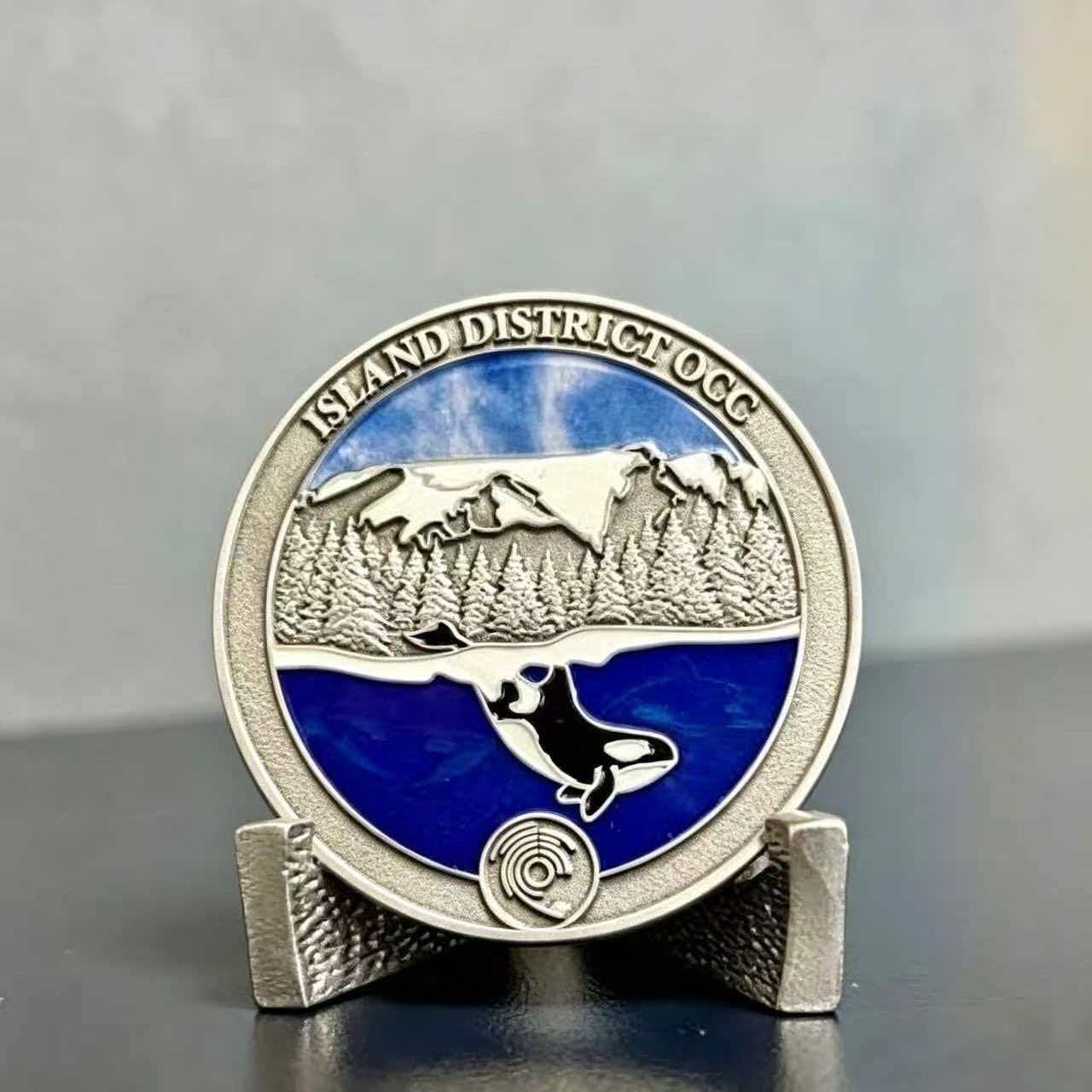
Define the identification purpose before selecting materials
Conclusion: Start the specification with the wearer’s role and operating environment, then choose the pin construction. This matters because an indoor concierge badge, a patrol identifier, and an event access pin do not carry the same risk if they detach, become hard to read, or are confused with one another.
Security buyers commonly need a pin to do one or more of the following: identify the employer, show a job title, distinguish rank, confirm an approved event team, or provide a recognizable uniform marker. Write the primary purpose into the RFQ. Do not ask a supplier to “make a security pin” without explaining which of these functions matters most.
| Identification purpose | Recommended specification focus | Why it matters | When this is not enough |
|---|---|---|---|
| Company recognition | Company logo, consistent metal finish, approved brand colors | Guards remain visually identifiable across client sites and shifts. | Use additional role text when the uniform must separate officers from supervisors. |
| Role identification | Clear title such as officer, supervisor, or event staff | A visible role supports faster recognition by venue personnel and clients. | Do not rely on small text if the wearer needs to be identified from a distance. |
| Rank distinction | Rank wording, selected plating, or controlled color differences | Creates an understandable hierarchy within the same uniform program. | Do not use finish alone if staff members may work in low light or crowded conditions. |
| Temporary event control | Event name, year, contractor logo, defined attachment | Helps organizers identify approved personnel during short assignments. | Use separate access credentials where formal entry authorization is required. |
A practical brief states what the pin must communicate in the first few seconds. For example, a private security firm supplying guards to office buildings may prioritize a restrained company emblem and officer title. A stadium contractor may instead need an event designation that separates security personnel from other uniformed workers. The limit is clear: a lapel pin is a visible identifier, not a substitute for credentials required by a client, venue, or local authority.
Comparison of attachment types, metal finishes, and identification details
Conclusion: Match attachment security, finish visibility, and ID detail to the duty setting. The wrong combination can create avoidable loss, weak recognition, or an overly decorative result that does not suit a professional uniform.
The comparison below maps attachment types, metal finishes, and identification details to indoor, patrol, and event security uniform requirements. Buyers should use it as a starting point for the purchase order rather than assuming one pin build fits every assignment.
| Uniform requirement | Attachment type | Metal finish direction | Identification details | Why this combination fits | Limit or caution |
|---|---|---|---|---|---|
| Indoor security uniforms | Standard pin back selected for the garment | Polished or dual plated finish where the brand requires a formal appearance | Company logo, officer title, restrained color fills | Indoor teams often need a clean, client facing identifier for offices, hotels, or reception areas. | Do not choose highly decorative treatments if the client requires understated uniforms. |
| Patrol security uniforms | More secure back arrangement confirmed for active wear | Antique or less reflective finish where a muted appearance is preferred | Company name, role title, simple rank marker | Patrol assignments involve movement, gear, and repeated handling, so attachment retention should lead the decision. | A pin should not interfere with protective clothing, equipment, or a site specific uniform policy. |
| Event security uniforms | Attachment selected for rapid issue and orderly recovery | Visible finish that supports quick team recognition | Event name, staff role, supervisor distinction, contractor logo | Event teams may need fast visual sorting among security, guest services, vendors, and organizers. | Do not treat the pin as an admission or access control device without separate event approval. |
For patrol work, the best choice is usually the attachment method that is least likely to become loose during movement. The reason is operational, not cosmetic: a missing identifier creates replacement work and can weaken a uniform standard. This guidance does not apply if a client’s uniform policy prohibits lapel hardware on a particular garment. In that case, consider custom hook and loop patches for a removable identification position.
For indoor service contracts, polished finishes and controlled enamel colors can present a formal appearance. Zinc alloy, brass, and iron are available pin materials, while hard enamel, soft enamel, offset printed, 3D die cast, and laser engraved approaches provide different visual outcomes. The limit is artwork complexity. A design with many tiny role labels or fine color divisions should be reviewed in a proof before production rather than approved from a screen alone.
Select a construction that supports the artwork and duty cycle
Conclusion: Choose the pin process after reviewing the actual logo, text, and uniform use. The process should preserve legibility and brand intent without adding features that do not serve the identification task.
Hard enamel for formal uniform presentation
Hard enamel pins are a sound option when a company wants a smooth, refined face with controlled color areas and a professional presentation. This suits corporate security providers, hotel security teams, and executive protection uniform programs where the emblem is part of a polished dress standard. It is less suitable when the primary artwork depends on photo style imagery or many small visual transitions that cannot be simplified effectively.
Soft enamel for visible raised metal lines
Soft enamel pins suit logos that benefit from defined metal borders between color areas. The raised lines help organize simpler artwork and can make a shield, lettering, or rank symbol easier to distinguish at close range. Do not select this route only because a logo contains multiple colors; if the artwork has small text or detailed gradients, an offset printed option may need review instead.
Offset printed pins for detailed graphics
Offset printed pins can be considered when a security contractor has a detailed emblem, tonal artwork, or artwork that does not translate cleanly into separated enamel color fields. The reason is that a printed face can retain artwork elements that would otherwise need major simplification. Its limit is purpose: for a classic metal insignia appearance with pronounced relief, die cast or enamel construction may be the better fit.
Laser engraved identification details
Laser engraved details are useful when the specification calls for text based identification, such as a role title, a controlled designation, or a company reference. This can suit a distributor managing several related uniform programs. Do not assume engraving makes every small line readable. Submit the final text and artwork for proof review, especially where the client has strict readability requirements.
Buyers seeking an understated all metal appearance may also review premium die struck lapel pins. A die struck approach fits logo marks that depend more on metal relief than colored enamel. It does not fit every brand, particularly where color is needed to distinguish different operational groups.
Build the RFQ around preventable failure points
Conclusion: An RFQ should state the failure risks the supplier must control. This is more useful than requesting a “premium” pin because the term does not tell production teams which outcome must be protected.
- Loose or unstable backs: State the garment type, intended attachment location, and whether staff will perform active patrol duties. The risk is loss during wear. This does not replace testing against the actual uniform garment.
- Enamel color bleeding: Provide approved logo artwork and identify brand colors that must remain separate. The risk is a blurred emblem or a result that does not match approved branding. Very fine artwork may still require simplification or a different process.
- Low detail resolution: Identify all text that must remain readable and ask for a photo or digital sample confirmation before bulk production. The risk is unreadable titles or an unclear company name. No proof can correct an unclear source logo, so provide the cleanest available artwork.
- Inconsistent replacement orders: Record the approved plating, pin construction, attachment choice, and final proof with the purchase record. The risk is a later reorder that looks different from the original issue. A new logo version should be approved as a new artwork reference.
- Unnecessary design complexity: Separate required information from decorative elements. The risk is a crowded pin that does not perform its ID role. A commemorative event design may allow more decoration than a daily uniform marker.
At Custom Panda, the production brief can be supported by photo or digital sample confirmation before production. This is a meaningful control point for security procurement because it lets the buyer review color placement, title spelling, finish direction, and the overall hierarchy of the design before approving the bulk run.
Our facility is ISO 9001:2015 Quality Management System Certified and Disney FAMA Certified. For buyers planning a scheduled issue, sample lead time for pins is 3 days, while bulk production is listed at 8 to 9 days. U.S. shipping is listed at 5 to 6 business days. These timings should be planned against the deployment date and proof approval date; they are not a reason to postpone final artwork approval.
Use a controlled proof and approval procedure
Conclusion: Make proof approval a documented purchasing gate. The reasoning is simple: a security pin often includes names, job titles, ranks, or company marks that should not be corrected after the full quantity has been made.
- Assign one approval owner. The buyer should nominate one person or team to consolidate feedback. This prevents conflicting instructions from operations, branding, and the uniform distributor. It may not suit a client that requires formal approval from several departments, in which case identify every approver at the outset.
- Submit final artwork and text. Include logo files, required wording, finish preference, and role variations. This gives the supplier a clear basis for the proof. Do not use an old uniform image as the only reference if the logo or title has changed.
- Confirm the wear scenario. State whether the pin is for indoor staff, patrol officers, or event crews, and identify the garment location. This supports a sensible attachment recommendation. It does not override a site owner’s uniform rules.
- Review the proof against an approval checklist. Verify spelling, color areas, metal finish, attachment, text priority, and different role versions. This matters because visual approval alone can miss a title error or incorrect rank wording.
- Approve one production reference. Retain the approved proof with the purchase order. The reference supports later reorders and proportional replacement discussions if defects occur.
Custom Panda provides a color mismatch free reprint, proportional replacement for defects, 5 day fast restocking or repair, and 100 bonus pieces with every bulk order. These terms can help a procurement team plan contingency stock, but buyers should still confirm the final quantity, artwork variants, and delivery destination in the quote.
Plan quantities, repeat orders, and related uniform identifiers
Conclusion: Order by role allocation and replacement need, not only by current headcount. Security operations change through new contracts, seasonal events, turnover, and supervisor assignments. A small uncontrolled reorder can create inconsistent insignia if the original specification is not preserved.
| Buying situation | Recommended order approach | Reasoning | Limit |
|---|---|---|---|
| New security company issue | Group pins by officer, supervisor, and management variants in one approved artwork set | Creates a clear visual system before uniforms reach staff. | Only include role versions that are already approved by operations. |
| Uniform distributor program | Keep an approved proof library linked to each client account | Reduces confusion when several security customers use related designs. | Do not reuse one client’s protected logo or title for another client. |
| Single event contract | Specify the event designation and recovery process before ordering | Supports temporary staff recognition and organized closeout. | Do not rely on the pin alone for secure access management. |
| Replacement supply | Reference the original proof, finish, attachment, and role version | Helps retain a consistent appearance across earlier and later issues. | Review the artwork again if uniforms or branding have changed. |
Standard bulk items have a 1,000 piece minimum, while select custom digital items have no MOQ. Buyers should discuss their actual role mix rather than assuming every variant must be ordered in the same quantity. A distributor with a large officer requirement but a small supervisor requirement may need a quote that treats those artwork versions and production methods appropriately.
For uniforms that need an accompanying textile identifier, custom embroidery patches can provide a separate position for company names, departments, or role markers. Pins and patches should not duplicate every detail. Use the pin for concise recognition and the patch where the uniform needs larger, more durable visible information.
Buyer checklist for production ready specifications
- State the wearer group: indoor security, patrol security, event security, supervisor, or another approved role.
- Provide the final company logo and all required wording.
- Identify which details are mandatory for instant recognition.
- Select the preferred material direction: zinc alloy, brass, or iron.
- Choose the visual process: hard enamel, soft enamel, offset printed, 3D die cast, or laser engraved.
- Specify the metal finish and any dual plated requirement.
- Describe the uniform garment and attachment location.
- Request photo or digital sample confirmation before bulk production.
- Record the approved proof for future replacement orders.
- Confirm quantity by role version, production schedule, and shipping destination.
Send your artwork, uniform use case, and required role versions to request a proof and production quote.