

Custom Security Label Pins Need Proof Checks Before Purchase Orders
A buyer can approve a pin proof in minutes and still create weeks of avoidable rework. A misspelled rank, an unclear logo, the wrong plating, an unsuitable clutch, or cartons packed without separation can leave a security team with unusable uniform items. Before issuing an overseas purchase order, require a proof that records every production instruction in one place.
Custom Security Label Pins should be treated as identification items, not general promotional giveaways. The design must remain readable at uniform viewing distance, the attachment must suit the garment, and the finished product must match the approved artwork rather than an assumed interpretation. This guide explains what purchasing teams should approve, what to put in writing, and where a proof has limits.
Decide the pin construction before reviewing the visual proof
Do not begin by approving color alone. First decide which construction serves the role of the pin. The right option depends on whether the design relies on flat color fields, very small lettering, photographic detail, raised metal features, or a formal polished surface.
| Pin option | Best fit | What to approve in the proof | When it does not fit |
|---|---|---|---|
| Hard enamel pins | Formal uniform insignia with smooth color areas and a polished finish | Metal borders, enamel color areas, plating, text spacing, and back attachment | Do not select it when the artwork depends on photographic shading or very detailed tonal images. |
| Soft enamel pins | Designs where recessed color fields and raised metal lines help separate a shield, lettering, or emblem | Raised outlines, enamel boundaries, color fill locations, and whether texture is acceptable | Do not use it if the buyer expects an entirely flat, polished face. |
| Offset printed pins | Badges with fine illustrations, small multicolor details, or tonal graphics | Print image, edge treatment, color reference, and whether the artwork remains readable at the intended pin size | Do not rely on printed detail when the final design is too small for staff to read rank or name information. |
| 3D cast pins | Emblems that need dimensional relief rather than colored artwork | Raised and recessed areas, plating, cutout positions, and the orientation of the attachment | Do not choose it when color coded departmental identification is the main purpose. |
Recommendation: use hard enamel pins for a formal, clean uniform appearance when the emblem has distinct color sections and legible lettering. Use soft enamel pins when raised metal borders improve recognition. Choose offset printing only when the artwork needs detail that enamel divisions cannot reproduce clearly. These are manufacturing choices, not interchangeable finishes.
Material should be listed in the purchase order as well. Custom Panda offers zinc alloy, brass, and iron pin materials, alongside hard enamel, soft enamel, offset printed, 3D die cast, and laser engraved production methods. A proof that shows only the front artwork is incomplete if it does not identify the agreed production method.
For a security team using pins alongside embroidered insignia, compare the pin proof with the garment identification system. A uniform program may need custom security guard lapel pins for jackets while removable identifiers are better handled through patches. The proof should state which product the team is ordering so that a pin is not produced with a patch-style backing instruction.
Checklist: identifies artwork, spelling, color, attachment, packaging, and delivery details to approve before issuing a purchase order
Use the following checklist as a PO release gate. The conclusion is simple: do not approve a proof that leaves any row unanswered. Each item affects a production instruction, inspection point, or receiving process. If an item is not applicable, mark it “not applicable” instead of leaving it blank.
| Approval item | What the buyer must verify | Why it matters | Limit of the check |
|---|---|---|---|
| Artwork file | Confirm the approved logo version, shield shape, border lines, symbol placement, and front or back artwork. | Factories manufacture from the approved proof, not from verbal descriptions in email threads. | A screen proof confirms layout but cannot show the physical feel of metal or enamel. |
| Spelling and titles | Read every name, department title, rank, location, number, and date character by character. | A single letter error can make a batch unsuitable for a uniform issue. | The factory can reproduce supplied wording but cannot verify your internal naming policy. |
| Color approval | State the required color reference or approve the displayed digital color with documented acknowledgment. | Color names alone can be interpreted differently across screens and production steps. | A digital proof is not a physical color standard; request a sample where color matching is sensitive. |
| Metal and finish | Confirm material, plating color, whether the surface is polished or antique, and any dual plated areas. | Finish changes the perceived formality and contrast of the emblem. | Artwork alone cannot communicate every surface expectation unless it is written into the order details. |
| Attachment | Approve pin post location, quantity of posts, clutch type, and the direction the pin will sit on the garment. | An unstable or badly balanced attachment can rotate, sag, or be difficult to wear. | Attachment suitability must be considered against the actual uniform fabric and use conditions. |
| Packaging | Specify individual bags, carding, bulk bags, carton marking, quantity per inner pack, and separation by rank or department. | Receiving teams need to issue the correct pins without sorting mixed items manually. | Packaging does not replace a receiving count or incoming quality inspection. |
| Delivery details | Approve ship-to address, contact, postal code, requested arrival date, freight method, and any split shipment instruction. | Correct production cannot solve an incomplete delivery instruction. | Transit timing should not be assumed until the shipping method and destination are confirmed. |
For a buyer ordering several versions, assign each item a unique internal code, such as rank, department, or site code. Put that code on the proof, purchase order, carton label instruction, and receiving list. This prevents a similar gold plated supervisor pin from being confused with a silver plated visitor pin.
Include the number of attachment posts in the proof. A longer or asymmetrical badge may need a different attachment layout from a small round emblem. Do not approve “standard backing” as a vague instruction. Ask for the exact selected attachment and its placement on the back view.
How to run a proof approval process that controls production risk
A proof review is most reliable when it follows a fixed sequence. The conclusion is to separate design approval from order release approval. A marketing approver may confirm the logo, while a uniform manager confirms title accuracy and a procurement contact confirms quantities, packaging, and delivery. One person can perform all roles only when they have authority over each decision.
- Freeze the artwork source. Submit one final file and identify its revision date or internal version. Remove older attachments from the approval chain to avoid production from a superseded emblem.
- List every variable item. Create a table showing each rank, department, colorway, quantity, and attachment requirement. Do not use one generic proof for several designs unless every variable is visibly identified.
- Review the front view. Check symbols, border spacing, text, color areas, plating, and any serial or organizational wording. Read small text at the display size expected on the actual pin.
- Review the back view. Confirm posts, clutches, backing orientation, manufacturer marking if requested, and whether the badge remains upright when worn.
- Confirm packaging logic. State how many pieces go into each bag or carton and whether ranks must be separately packed. Include carton labels if the receiving department needs them.
- Approve a digital or photo sample. Record the approver name, date, and the exact proof version. Do not treat an informal “looks good” message as an approval record.
- Issue the purchase order. Attach the final proof and specify that the approved version governs production. Include quantities, commercial terms, shipping address, and required delivery date.
At Custom Panda, photo or digital sample confirmation is available before production. That is useful because it creates a documented point for checking enamel placement, plating selection, and attachment instructions before the main batch begins. It does not remove the buyer’s responsibility to review spelling and organizational details carefully.
Our sample lead time for pins, patches, and labels is 3 days, while bulk production is listed at 8–9 days. For buyers working backward from a uniform issue date, allow time for proof correction, confirmation, production, and shipping rather than treating the production period as the entire schedule. U.S. shipping is listed at 5–6 business days, but destination and shipment requirements still need confirmation for each order.
Prevent the common proof errors that create unusable uniform pins
The errors below are preventable because they result from missing instructions, not complex manufacturing problems. The practical response is to identify the risk during proof review and write the correction into the approved production record.
- Approving a logo but not the wording: A correct emblem does not compensate for an incorrect rank title. Read all text aloud against the approved employee or department list. This matters most for multi version orders; it does not apply only when the design has no text at all.
- Using color names without a reference: “Blue” or “gold” does not establish a controlled color expectation. Supply the applicable brand reference or request confirmation against the approved visual. This has less impact on uncolored die struck pieces, but plating still requires approval.
- Ignoring pin orientation: A badge can look correct face up in artwork and still hang incorrectly if the attachment is not positioned for the intended garment. Review the back drawing. This is especially relevant for shields, flags, and long horizontal designs.
- Approving only one version: A supervisor, guard, contractor, and visitor design may share a base shape but require separate wording or colors. Mark every proof with a clear item code. A single proof can work only when all versions are truly identical.
- Leaving packaging as an afterthought: Mixed bags create avoidable receiving work and increase the chance of issuing the wrong designation. Request separated packs by approved item code. Bulk mixed packing may be acceptable for a single design order, not for several rank levels.
- Confusing a digital proof with a physical sample: Digital approval checks composition and wording. A physical or photo sample helps review finish, enamel fill, and construction appearance. Use a sample when a uniform program has strict appearance expectations or when a new supplier is being qualified.
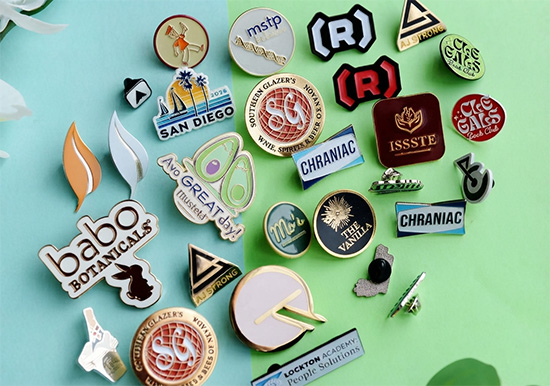
Pin quality failures often involve enamel color bleeding, loose pin backs, or low detail resolution. Those are exactly the problems a complete proof and sample review are meant to reduce. If a proof shows tiny text that cannot be read at the planned pin size, revise the layout before production instead of expecting the factory to infer a larger type treatment.
Set commercial terms and delivery instructions that match the proof
The purchase order should restate the proof in commercial language. The conclusion is that artwork approval alone is not an order specification. A PO must connect the approved item to quantity, schedule, packaging, delivery, and remedy terms.
| PO field | Recommended instruction | Why procurement needs it |
|---|---|---|
| Item description | State the pin type, material, plating, attachment, and approved proof version. | It links the commercial line item to the exact manufactured product. |
| Quantity | List quantity by each design or rank rather than one combined total. | It supports production planning and receiving checks. |
| Proof reference | Attach the dated final proof and identify it as the production reference. | It reduces disputes caused by competing artwork files. |
| Packaging | State individual or grouped packing and separation requirements by item code. | It helps prevent mixed issue stock at delivery. |
| Delivery | Provide the full address, contact, required arrival date, and approved shipping method. | It gives the supplier information needed to plan dispatch. |
| Quality remedy | Record agreed inspection and defect handling terms. | It gives both parties a reference if delivered items do not match the approved standard. |
Custom Panda is ISO 9001:2015 Quality Management System Certified and Disney FAMA Certified. The facility was established in 2012 and operates from an 8,000 m² site with 6 production lines, including metal die casting and embroidery facilities. For bulk orders, we also provide 100 bonus pieces with every order, color mismatch free reprint, proportional replacement for defects, and 5-day fast restocking or repair under the stated terms. These measures support a documented approval process, but they do not justify skipping proof review.
For security programs that also need equipment identification or carton control, pair the pin order with suitable printed items. weatherproof custom pvc labels manufacturer may suit equipment or durable identification needs, while warning compliance labels can support marked cartons and controlled inventory workflows. A pin is a wearable identifier; it should not be expected to replace labeling needs on assets or packaging.
Frequently asked questions before pin proof approval
Can we approve production from a digital proof only?
Yes, when the design is simple, the buyer accepts the stated construction, and the proof includes all front and back instructions. However, a digital proof cannot fully show metal feel, enamel surface, or the practical stability of an attachment. For a new design, strict brand color, or formal uniform issue, request photo or digital sample confirmation before bulk release.
What should we do if the pin has several rank versions?
Create a separate line item and proof identifier for every rank version. Confirm spelling, colors, quantity, and packaging for each one. Do not rely on a note such as “same as above except text” unless the altered text is clearly shown in its own approved artwork.
Can one attachment work for every security uniform?
No. The selected attachment should be reviewed against garment thickness, expected movement, and pin shape. A small round pin and a wide shield can behave differently when worn. Provide the intended garment use and approve the back view before placing the order.
When should we request a physical sample?
Request one when the order uses a new finish, a high visibility uniform program, a detailed emblem, or a design where color and surface appearance affect acceptance. A sample adds an approval stage, so it is less suitable when the deadline cannot accommodate it. Digital or photo confirmation remains useful for every order.
What delivery information belongs in the purchase order?
Include the complete ship-to address, named receiver, phone or email contact, postal code, required arrival date, shipping method, and any packing or split shipment instructions. Provide these details before production completes, not when goods are ready to dispatch.
Send your artwork, required quantities, and uniform use details for a proof review before issuing your purchase order.