

Custom Soap Labels Pricing by Format and Run Size
A soap label quote can look inexpensive until the order reaches production and the buyer discovers that the chosen format does not fit the packing process, soap wrapper, moisture exposure, or planned order volume. Before sending an RFQ, compare the cost structure behind custom soap labels, not just the quoted total.
For a soap business, the lowest unit price is not always the lowest launch cost. Roll labels can reduce manual application time for a repeat production run. Sheet labels can make more sense for short seasonal releases. Wraparound bar labels can carry more copy without requiring a separate box label. Each format uses materials, finishing, press setup, converting, and packing differently.
Custom Panda supplies custom labels for product packaging, including kraft, waterproof, BOPP, PP, PET, PVC, matte, glossy, adhesive, and roll-label options. Our ISO 9001:2015-certified facility operates from an 8,000 m² production site with six production lines and six HP digital label presses. That scale matters when a buyer needs consistent packaging across a growing soap range, but the correct format still depends on the specific bar, wrapper, application method, and volume.
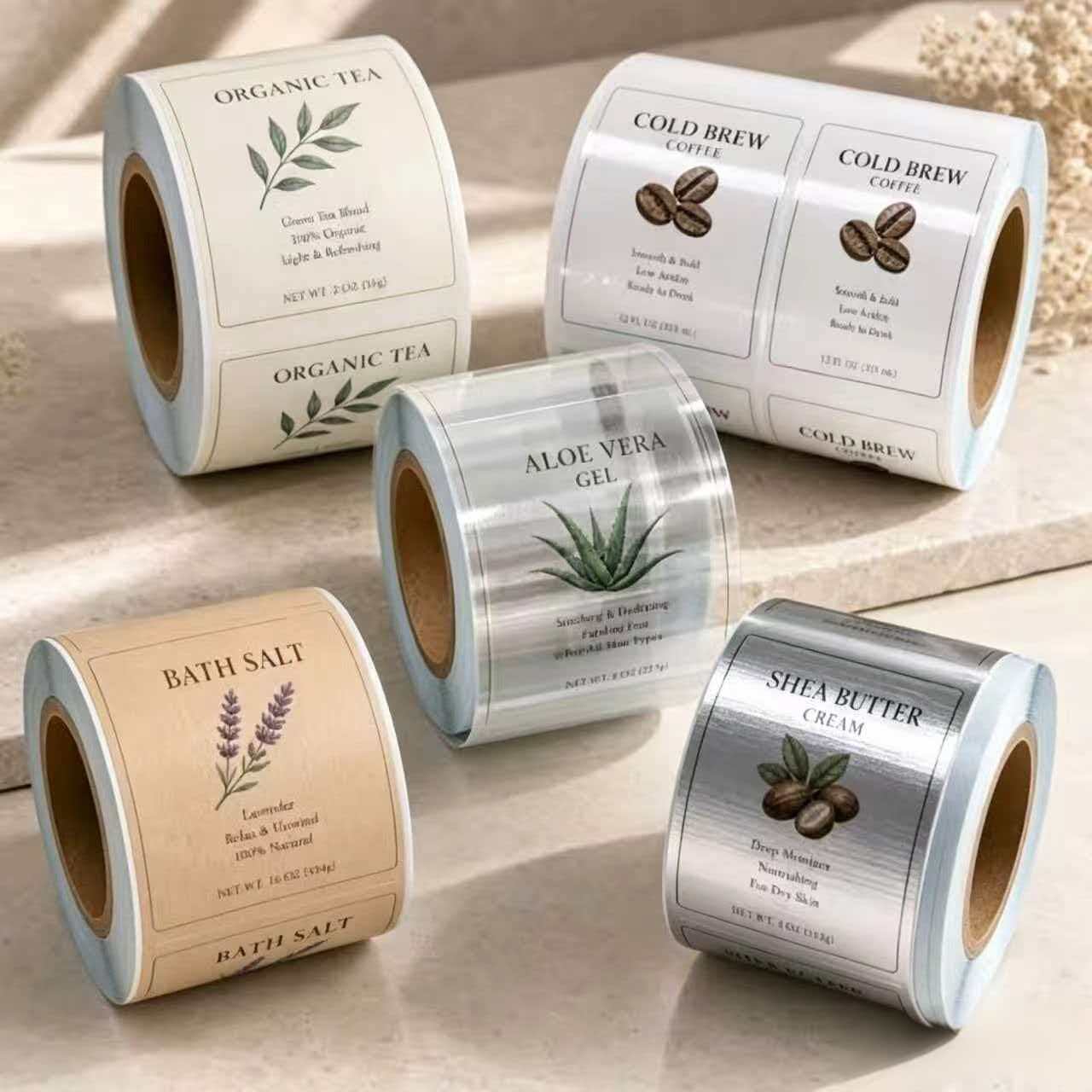
Choose the format around your packing method before comparing price
Conclusion: Choose roll labels for repeated, consistent application; sheets for smaller launches or hand-packed variation; and wraparound labels when the soap bar itself needs broad branding and product information coverage. The reason is operational fit. A label that is cheap to print but slow to apply can add avoidable labor at packing time.
| Format | Best-fit use case | Main cost drivers | When it may not fit |
|---|---|---|---|
| Roll labels | Regular production runs, repeat SKUs, bottle-style soap products, boxed soaps, and labels applied in a consistent sequence | Material, label dimensions, shape, print coverage, finishing, roll configuration, order quantity, and freight | May not be the best option for a very small test launch with many changing designs or variable information. |
| Sheet labels | Short runs, market testing, hand-applied labels, gift sets, and multiple small SKU variations | Material, sheet layout, label count per sheet, die-cutting or kiss-cutting, print coverage, finish, and packing | May create slower application work when the business is packing a high volume of identical bars. |
| Wraparound bar labels | Unboxed soap bars where the band is the main brand presentation and information panel | Paper or film choice, label length, overlap area, print coverage, finishing, cutting, folding requirements, and quantity | Not suitable when the bar shape varies substantially or when the packaging needs a moisture-resistant adhesive label rather than a paper wrap. |
For example, a maker selling one core bar soap line through retail stores may benefit from custom printed roll labels for carton seals, ingredient panels, or outer packaging labels because repeat handling can be more efficient. A maker preparing a limited holiday assortment with several scent names may prefer sheets if each design has a small demand forecast. The limitation is that the final answer changes if the label is applied directly to a moisture-prone wrapper, glass jar, paper box, or shrink-wrapped bar.
Cost quote model for roll labels sheet labels and wraparound bar labels
Conclusion: Ask suppliers to separate one-time and recurring cost drivers by format and volume. This makes it easier to identify whether a high quote comes from material, finishing, press setup, conversion, or shipping rather than assuming that the unit price alone explains the difference.
Custom Panda can support digital printing for select custom items with no MOQ. Standard bulk and offset printing items have a 1,000-unit minimum, with better pricing at bulk quantities. This does not mean every order should be moved to offset printing. A short seasonal run can be more suitable for digital production, while an established soap SKU may warrant a bulk quote comparison.
| Quote element | Roll labels | Sheet labels | Wraparound bar labels | Effect at lower and higher volumes |
|---|---|---|---|---|
| Artwork and SKU count | Each artwork version can affect press preparation and order handling. | Multiple designs can be arranged on sheets, subject to the agreed layout. | Each scent, ingredient list, or barcode version requires separate artwork control. | At lower volumes, many versions can raise the share of setup and handling per label. At higher volumes, repeat designs generally spread those costs across more pieces. |
| Substrate selection | BOPP, PP, PET, PVC, paper, and other suitable options can change the quote. | Paper and synthetic choices should be matched to handling and storage conditions. | Kraft or other paper stocks can support a handmade presentation; film options may be relevant where moisture exposure is expected. | Material cost applies throughout the run. Large quantities may improve purchasing efficiency, but the material still needs to fit the application. |
| Label size and shape | Dimensions and custom contours affect material usage and converting. | Size affects labels per sheet and waste between shapes. | Length must cover the bar presentation and planned overlap; width must suit the bar face. | At all volumes, larger labels use more material. At small runs, unusual shapes can have a stronger effect on the per-piece quote. |
| Print design | Full coverage, clear areas, white ink on transparent stock, and color-critical branding affect production planning. | Large color blocks and fine details should be checked in the approved proof. | Front branding, back information, and all-over artwork increase printed area and proofing attention. | Higher volume does not remove color-control requirements. It can, however, make an approved repeat design more economical than frequent redesigns. |
| Finish and decoration | Matte or gloss lamination, BOPP lamination, UV-resistant inks, and foil stamping colors can affect price. | Finish choice affects the handling and appearance of each sheeted label. | Foil or lamination may support a premium shelf look but adds production steps. | Finishing adds a recurring per-label cost. It should be reserved for a visible brand or durability need rather than added by default. |
| Converting and packing | Roll direction, core requirements, roll count, and dispensing method need agreement. | Sheet size, label arrangement, and pack count matter. | Individual cutting, band stacking, and whether wraps must arrive flat require clarification. | Lower-volume orders can carry more packing cost per label. Higher-volume orders need practical carton and freight planning. |
| Freight | Roll count and carton dimensions affect shipment planning. | Sheets should be protected from bending and corner damage. | Wraps require protection against creasing during transit. | Freight should be shown separately when comparing suppliers. Custom Panda offers free shipping, but buyers should still confirm the shipping destination and quote scope. |
A useful RFQ asks for three comparisons using the same artwork: a digital short-run quote, a bulk quote at the applicable 1,000-unit minimum, and a higher-volume repeat-run estimate. This shows where the cost curve changes. It does not guarantee that the highest quantity is the best decision, because excess labels can become unusable when a formula, barcode, fragrance name, or legal copy changes.
Match material and finish to soap handling conditions
Conclusion: Select material after reviewing where the label sits and what it will contact. Paper labels can suit dry carton packaging and artisan wraps. Synthetic films and protective finishing are the safer direction when labels face moisture, oil transfer, condensation, or frequent handling. The limit is that no material choice should be approved without knowing the actual package surface and storage environment.
Soap packaging creates several practical risks. Bar soaps can transfer oils. Bathrooms create humidity. Gift sets may be handled repeatedly. Clear packaging can require opaque white ink beneath colored artwork. The company brief identifies common failure points such as weak adhesion, tearing, color mismatch, insufficient white-ink opacity on transparent materials, and labels peeling in cold storage due to condensation. Those are quote questions, not details to leave until after production.
- Choose kraft or uncoated paper for a dry handmade look. This fits wrapped bars, soap boxes, and low-moisture retail displays. It does not fit a direct-application need where the label may get wet or oily. For this presentation, review custom kraft labels as a starting point.
- Choose BOPP or PP when moisture resistance is part of the requirement. These are practical candidates for labels on sealed packaging, jars, or products exposed to damp storage. They are not automatically necessary for a dry paper band around a boxed bar, where their added cost may not have a clear return.
- Specify lamination when the product will face abrasion or high handling. BOPP lamination can help protect printed surfaces. It is less appropriate when the desired result is a natural uncoated paper feel or when the finished look depends on a writable surface.
- Request a clear-substrate proof where white artwork matters. Clear stock can change the visual result of pale colors and white type. Do not assume the white layer will look opaque enough without approved artwork confirmation.
- Use foil only where it supports a visible positioning goal. Custom foil stamping colors can create a premium appearance for retail gift bars or higher-priced collections. It may not be the right expense for warehouse-facing inventory labels or low-cost promotional packs.
A relevant reference is Custom Panda’s Australia project for a natural health supplement brand. The job used metallic foil-stamped roll labels with matte BOPP film and scratch-proof lamination for retail presentation. That example supports the use of foil and protective finishing when shelf appearance and surface protection are required. It should not be treated as proof that every soap product needs the same build.
Prevent quote errors that create avoidable relabeling costs
Conclusion: The lowest-risk quote includes the actual application details, final artwork versions, expected order split by SKU, and acceptance expectations. The reason is simple: labels can be printed accurately yet still be wrong for the substrate, wrapper, or packing method. This is especially relevant for new product launches with changing copy.
Common buyer mistakes and the better instruction
- Mistake: requesting a price without stating the application surface. Better instruction: identify whether the label will go on a soap box, paper wrap, shrink film, jar, bottle, or the bar’s outer packaging. Material and adhesive suitability cannot be properly assessed without this information.
- Mistake: combining all label versions into one quantity. Better instruction: list the quantity required for each fragrance, size, language version, and barcode. A total order of 5,000 labels is different from five designs of 1,000 labels each.
- Mistake: choosing a finish only from a product photo. Better instruction: state whether the goal is moisture resistance, scratch protection, a matte shelf appearance, foil decoration, or writable space. One finish rarely satisfies every purpose.
- Mistake: ignoring roll direction. Better instruction: if labels will be applied with a dispenser or application equipment, provide the required unwind direction and core details. This does not apply in the same way to hand-applied sheets or flat wrap bands.
- Mistake: approving colors from an unverified screen view. Better instruction: provide brand color references where available and confirm the digital or photo sample before production. Custom Panda provides photo or digital sample confirmation before production and offers a color mismatch free reprint under its stated terms.
- Mistake: ordering the whole annual forecast before validating packaging. Better instruction: use a short digital run for a new label design when appropriate, then compare a standard bulk run after the copy, wrapper, and sales forecast are stable. This is not needed for an established specification with unchanged artwork and a confirmed bulk requirement.
Use supplier evidence and cooperation terms to assess fit
Conclusion: A supplier is a better fit when it can show relevant production scope, documented quality terms, and a clear route for proof approval before the buyer commits to a large run. These factors matter more than an isolated unit-price comparison when the brand depends on consistent color and dependable packaging presentation.
Custom Panda has operated since 2012 and provides label production alongside custom pins and patches. Its daily label capacity exceeds 1,000,000 pieces, and it offers a wide substrate selection, UV-resistant inks, BOPP lamination, and custom foil stamping colors. The company is also Disney FAMA Certified and operates under an ISO 9001:2015 Quality Management System. These are meaningful qualification points for buyers seeking a supplier with established production capacity and documented quality management. They do not replace a buyer’s responsibility to confirm label copy, package compatibility, destination requirements, and final artwork approval.
For lead-time planning, label samples are listed at 3 days, while bulk production is listed at 8-9 days. U.S. shipping is listed at 5-6 business days. Same-day dispatch is available for select ready-stock or digital items. These timeframes should be used for scheduling discussions rather than assumed as a blanket promise for every format, finish, or destination.
The stated quality support includes proportional replacement for defects, a 5-day fast restocking or repair option, and 100 bonus pieces with every bulk order. These terms are useful when building a launch contingency plan. Buyers should still clarify how defects will be documented, whether a specific finish or material has special acceptance criteria, and how urgent delivery requirements are handled before placing an order.
Send an RFQ that produces comparable soap label quotes
Conclusion: A quote request should give suppliers enough detail to price the same product specification. This prevents a low initial quote based on basic paper labels from being compared against a moisture-resistant film label with lamination and special finishing.
- Identify the label format. State roll, sheet, or wraparound band. If the label is for more than one package component, separate each item.
- Provide package details. Include the package type, surface material, bar shape, wrapper type, and whether the product will encounter moisture, oil, condensation, refrigeration, or rough handling.
- List finished label dimensions. For a wraparound band, provide the intended width, total length, and whether overlap is planned.
- Break down quantities by SKU. Separate fragrance names, bar sizes, language versions, and barcode variations.
- Specify artwork and color needs. Send print-ready files where available, brand references, transparent areas, white ink requirements, and any required foil color.
- State finish and material preferences. Ask for alternatives if unsure, such as kraft paper for dry packaging versus waterproof film for moisture exposure.
- Request the correct volume comparison. Ask for the no-MOQ digital option where suitable and the applicable 1,000-unit standard bulk option when the design is stable.
- Confirm proof and delivery expectations. Request digital or photo sample confirmation, required delivery date, destination, and whether freight is included.
For soap businesses preparing a stable retail line, the practical choice is often a repeatable roll-label specification with a material matched to the package environment. For a new artisan assortment, sheets or wrap bands can control launch risk and preserve flexibility. The right answer is not universal; it follows the product handling conditions, SKU count, and realistic reorder plan.
Send your format, artwork, SKU quantities, packaging surface, and target delivery date to request a quote comparison for your next soap label run.