Custom Souvenir Label Pins Cost by Finish and MOQ
The quote that looks cheapest is often the one missing three lines: tooling, packaging and freight. Buyers discover that after the purchase order is signed, when the landed cost per pin is 30% above the budget they approved. If you are sourcing Custom Souvenir Label Pins for a museum shop, festival, tourism board or retail program, you need a cost model before you send an RFQ, not after.
This guide gives you that model. It separates the cost drivers, shows how finish choice and order quantity move the unit price, and lists what to agree with a supplier in writing. I am Alin, and I have spent 12 years in custom merchandising and manufacturing. The mistakes below are the ones I see most often.
Where Custom Panda Fits in a Souvenir Pin Program
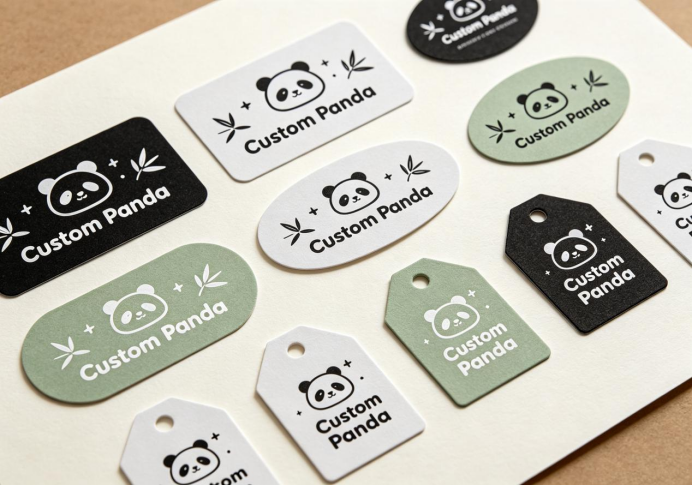
Custom Panda supplies custom lapel pins, soft and hard enamel pins, custom coins, patches and labels. The company was established in 2012 and runs an 8,000 m² facility with 6 production lines and complete metal die-casting facilities. The quality management system is ISO 9001:2015 certified, and the company holds Disney FAMA certification.
Pins can be made in zinc alloy, brass or iron. Available finishes include hard enamel, soft enamel, offset printed, 3D die-cast, laser engraved and dual-plated.
That scope fits wholesale buyers and event organizers who need a defined souvenir design reproduced consistently. It is not the right fit if you need a catalog item with no artwork stage. It is also a poor fit if you need a regulated product with documentation beyond what is listed here. Ask for anything extra in writing.
The Landed-Cost Formula for Souvenir Pins
Quotes become comparable only when every supplier prices the same five blocks. Use this formula:
Landed cost per pin = (Tooling + Finish upgrades + Packaging + Freight) ÷ Quantity, plus the base unit price at that quantity break.
| Cost block | What it covers | How it scales | What to ask |
|---|---|---|---|
| Tooling | Mold or die made from your artwork | One-time per design; spread over the order | Is it charged once? Is it reused on a reorder? |
| Base unit price | Metal, size, number of colors, attachment | Falls as quantity rises | What are the price steps between quantity tiers? |
| Finish upgrades | Plating (gold, antique, dual-plated), epoxy dome, engraving, 3D relief, cut-outs | Per piece | Which upgrade changes price, and by how much? |
| Packaging | Backing cards, poly bags, gift boxes | Per piece | Is packaging in the unit price or a separate line? |
| Freight | Shipping and delivery to your door or warehouse | By weight and destination | Is shipping free for this order? Who pays duties and taxes? |
Custom Panda lists free shipping among its service points, but whether it applies to your destination and order size should be confirmed on the quote itself. Duties and import taxes sit outside the factory price. Budget for them separately.
A worked example on tooling
Say a one-time tooling charge is spread across the order. At 500 pins, each piece carries one-third more of that charge than at 1,500 pins. Cutting the quantity by two-thirds raises the tooling share per pin threefold. This is why a small order of a complex shape looks expensive on a per-unit basis even when the base price is low. If you plan a reorder next season with the same design, ask whether the tooling is retained for you. That one answer changes the real cost of a repeat program.
How Finish Choice Changes the Quote
Finish drives both the base price and the number of upgrade lines. The table compares the main options by what they cost you in practical terms, not by invented price points.
| Finish | Look and feel | Typical souvenir use | Cost pressure | Limit |
|---|---|---|---|---|
| Order soft enamel pins | Raised metal lines, recessed color | High-volume event giveaways, retail shop items | Lower; plating and color count are the main variables | Surface is textured; fine gradients are hard |
| Premium hard enamel pins for brands | Polished, flat, smooth surface | Premium collectibles, commemorative sets | Higher; extra polishing step | Costs more per piece at small volumes |
| 3D cast lapel pins | Sculpted relief, antique plating | Landmarks, architecture, mascots | Highest tooling effort; depth and cut-outs add cost | Not suited to flat color-heavy artwork |
| Offset printed | Printed image under protective layer | Photographic or gradient artwork | Standard bulk process; see the MOQ section | Less metallic texture |
Our rule of thumb: match the finish to the artwork, not to the price. A landmark with fine architectural detail will look flat in soft enamel. A simple two-color logo does not justify 3D casting. Paying for relief the design does not need is the most common avoidable cost increase I see.
For travel-themed programs, the pages for custom city landmark pins and travel destination pins show how these finishes are typically applied.
MOQ and Quantity Breaks: What Is Actually Supplied
Custom Panda’s stated terms work this way: digital printing and select custom items carry no MOQ. Offset printing and standard bulk items start at 1,000 units, with better pricing at bulk quantities. The company also lists no minimum order requirements as part of its pricing approach.
Those statements apply to different processes and items, so do not read them as one universal rule. For your design, confirm in the quote which MOQ applies to your chosen finish and metal. The table below shows how to read the two buying modes.
| Buying mode | Best for | Budget effect | Risk |
|---|---|---|---|
| Small run, no MOQ where available | Pilot souvenir, limited edition, first test of a design | Higher cost per pin; tooling is a larger share | Unit price can erase retail margin |
| Bulk at 1,000+ units | Gift shop restocks, multi-venue events, wholesale resale | Better unit pricing at higher quantities | Cash tied up in stock; design must be final |
Every bulk order also includes 100 bonus pieces. Treat those as a buffer for damaged-in-transit units or giveaways. Do not count them as a discount when comparing suppliers.
Evidence From Souvenir and Related Pin Projects
Capacity claims mean little without matching work. Three supplied cases are relevant to a souvenir pin program:
- Japan: 3D cast metal souvenir lapel pins for a Tokyo museum exhibition, with deep antique bronze relief and cut-out details that reflect traditional architecture. This is the closest match for landmark and heritage souvenirs.
- Canada: hard enamel pins for an esports tournament championship with polished gold plating and dual-tone colors, worn on jackets and lanyards. It is a reference for event pins that must survive daily wear.
- Germany: interactive spinning enamel pins for a coffee brand’s anniversary, with die-casting and a 360-degree rotating element. It is a reference for pins with moving parts.
Each case reflects one project. It shows the process was used for that customer, not that every order will have the same result or timeline.
On timing, the brief lists a sample lead time of 3 days, bulk production of 8 to 9 days, and U.S. shipping of 5 to 6 business days. Plan your event date backward from those figures. Add buffer for artwork revisions, since those fall outside production time.
Cooperation Terms to Confirm Before You Pay
These supplied terms reduce risk, but each needs to appear in your order documents:
- Pre-production confirmation: photo or digital sample confirmation before production starts.
- Color mismatch: a free reprint is offered. Agree on the color reference (Pantone code or approved sample) first, or the term is hard to apply.
- Defects: proportional replacement for defective pieces. Define the acceptable defect threshold and how it is measured.
- Re-stocking or repair: a 5-day fast re-stocking or repair service is listed. Ask when the 5 days begin and whether return freight is covered.
- Design help and support: free design assistance and live human support are listed. Confirm who handles your artwork changes.
Common quoting mistakes
- Comparing a unit price that includes tooling with one that does not.
- Choosing 3D casting for artwork that is mostly flat color.
- Ignoring the packaging line, then paying for individual bags or backing cards later.
- Assuming free shipping covers duties and import taxes.
- Locking quantity before the design is approved on the digital proof.
- Reading “no MOQ” as meaning the same price at 50 pieces as at 5,000.
RFQ Checklist for Accurate Pin Quotes
- Send vector artwork or a clear sketch, plus the intended size in millimeters or inches.
- State the finish: soft enamel, hard enamel, 3D cast, offset printed or engraved. If unsure, ask for two options to compare.
- Choose the metal (zinc alloy, brass or iron) and the plating color.
- List the attachment type and any special feature such as a spinner or cut-out.
- Give two or three quantity tiers, for example 500, 1,000 and 3,000, so you see the breaks.
- Name the packaging you want per pin and per carton.
- Give the delivery address and the date the pins must be in hand.
- Ask for line items: tooling, unit price, upgrades, packaging, freight.
If your souvenir program also needs matching merchandise, such as patches or kraft labels for the packaging, custom kraft labels can be quoted in the same inquiry. That avoids a separate quote round.
Send your artwork, target finish and three quantity tiers to Custom Panda, and ask for a line-item quote and a digital proof. You will see exactly where each part of the landed cost comes from before you commit.