

Custom Souvenir Label Pins for Event Retail
Choose a supplier that can support the retail brief, not just make a pin
Event retail buyers can regret an RFQ that omits a small detail. A pin may look right in a digital mockup but arrive with the wrong attachment, an unsuitable retail card, unclear packaging, or too little time before the event opening. For Custom Souvenir Label Pins, the order should be treated as a retail merchandise program rather than a standalone metal item.
Custom Panda supplies custom lapel pins, labels, patches, coins, and related branded merchandise for buyers that need event souvenirs, retail-ready collectibles, museum items, festival merchandise, promotional giveaways, or commemorative products. The practical fit is strongest when your procurement team needs one supplier to discuss pin construction and associated label or card requirements before production begins.
Our facility has operated since 2012 and includes an 8,000 m² production site, six production lines, metal die-casting equipment, embroidery facilities, and six HP digital label presses. This matters when an event buyer needs both metal souvenir pins and printed retail components coordinated within the same project discussion. We are also ISO 9001:2015 certified and Disney FAMA certified.
However, a supplier’s equipment list should not replace a detailed brief. Certification does not determine whether a butterfly clutch, magnet, custom backing card, or individual bag is appropriate for your store. Those choices remain buyer-specific and must be agreed during quotation and sample confirmation.
Select the pin construction based on how shoppers will buy and keep it
The correct construction depends on the artwork, expected display condition, perceived value, and intended retail price point. Start with the visual result you need rather than selecting a process by name. A simple badge-style design with separated color areas calls for a different method than a museum building with relief, tiny windows, and architectural depth.
| Pin option | Best fit for event retail | Why buyers choose it | When it does not fit |
|---|---|---|---|
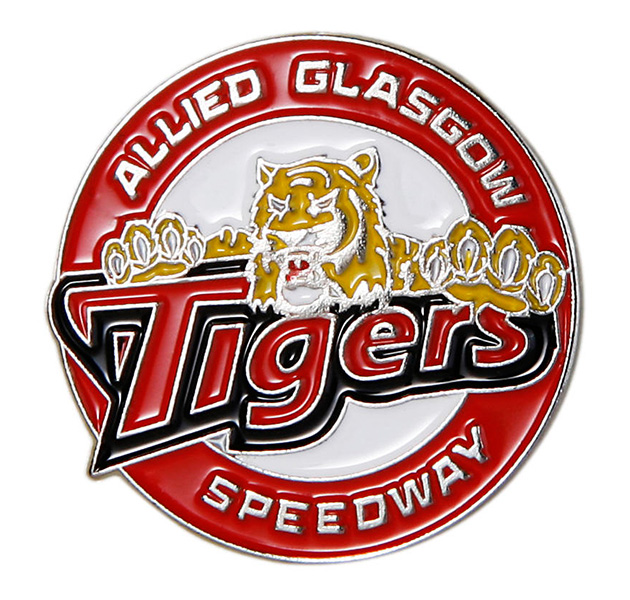
| Soft enamel | Bold logos, mascots, team merchandise, festival graphics | Raised metal outlines separate the enamel color areas and create a textured appearance. | It is not the first choice when the buyer wants a smooth, level enamel face. |
| Hard enamel | Premium souvenir collections, member gifts, championship merchandise | The filled surface is polished smooth, giving a refined result for clean color-block designs. | It may not suit artwork that relies on fine photographic detail or gradients. |
| Offset printed | Artwork with small text, gradients, portraits, or detailed illustrations | Printing is more suitable where metal lines and enamel areas would simplify the original art too heavily. | It does not create the same raised-metal and recessed-color effect as enamel. |
| 3D die-cast | Landmarks, heritage souvenirs, sculptural logos, architectural subjects | Relief can add depth that flat artwork cannot communicate. | It is not the best match for designs where multiple flat graphic colors are the main feature. |
| Laser engraved | Text-focused commemoratives, numbered items, restrained corporate designs | Engraving supports a metal-led appearance with readable details. | It is less suitable for a colorful illustration-led souvenir range. |
Recommendation: choose hard enamel when a durable-looking smooth finish and clean color separation are central to the retail concept. This suits commemorative and collector-oriented programs. Choose soft enamel when visible metal lines support the design and you want a tactile result. Select offset printing when the artwork contains gradients or fine imagery that cannot be simplified without losing recognition. Do not approve any method solely because it is familiar to your team; use the final artwork as the deciding factor.
A relevant example is an esports tournament championship project in Canada. Custom Panda created custom hard enamel pins with polished gold plating and dual-tone colors for fans and players to wear on jackets and lanyards. That case demonstrates a suitable route for event merchandise where the design has defined color areas and the pin must work both as a retail souvenir and a wearable keepsake. It does not mean hard enamel is automatically appropriate for every event artwork.
For heritage-led collections, 3D relief may be the stronger choice. We produced 3D cast metal souvenir lapel pins for a Tokyo museum exhibition, using antique bronze relief and cut-out details to reflect traditional architectural aesthetics. A buyer sourcing landmark merchandise can use that direction as a reference point, but should still provide the actual building imagery and identify which architectural features must remain visible.
Buyers comparing flat and sculptural concepts can also review 3d cast lapel pins when relief is part of the souvenir story.
Set attachment, plating, and retail presentation as one specification
A retail pin is not complete when the front design is approved. The attachment determines how customers wear it, while the card or label determines how it is seen on the shelf. Treat these as connected decisions.
Attachment choice should match the end use
- Standard pin back: a practical choice for pins worn on jackets, lanyards, bags, or event apparel. Confirm the attachment type and placement in the artwork approval. It may not be suitable if the retail concept requires frequent attachment and removal from different materials.
- Magnet backing: relevant where buyers prefer an attachment that avoids piercing a garment. It should not be assumed for every uniform or collectible program; the intended item and use conditions need confirmation first.
- Multiple attachment points: consider this where the design is wide, heavy-looking, or likely to rotate when worn. The final quantity and position must be established in the approved production artwork rather than left as a general note.
Recommendation: specify the attachment before you request pricing. The reason is simple: it affects the manufactured configuration and can affect how the pin sits on a retail card. This is especially relevant for long landmark silhouettes, event logos with uneven shapes, and pins intended for apparel. Do not specify a backing from a previous project without checking whether the new pin shape and use case are comparable.
Retail card and label choices need separate approval
“Label pin” can mean different things across procurement teams. It may refer to a pin mounted on a printed backing card, a pin packed with a product label, or a retail item requiring barcode and pricing information. State exactly what you mean in the RFQ.
For a carded retail item, provide the card artwork, orientation, pin placement, hanging-hole requirement if applicable, and whether the card must include event dates, SKU, barcode, safety wording, price, or a limited-edition message. If the event shop needs separate product labels for cartons, stock bins, or display packaging, explain those as a second component. Buyers needing high-volume label supply can consider custom labels printed in bulk alongside the pin request.
We offer wide label substrate selection, BOPP lamination, UV-resistant inks, and custom foil stamping colors. These options may suit retail labels where finish and handling conditions matter. They do not remove the need to identify the surface receiving the label, whether labels need to be waterproof, and whether information must be handwritten after delivery.
Use this pre-quote checklist before asking suppliers to price
A complete RFQ reduces revisions and makes supplier quotes easier to compare. Send the same information to each shortlisted supplier. Otherwise, a lower quote may exclude packaging, backing cards, a special attachment, or a deadline that another supplier has included.
| RFQ item | What to provide | Why it affects the quote | What not to leave open |
|---|---|---|---|
| Artwork | Final logo or illustration, required text, color references, front and back design, and any details that cannot be simplified. | Artwork determines whether enamel, printing, engraving, or die-casting is the appropriate route. | Do not send only a low-resolution image if precise text, gradients, or fine lines matter. |
| Attachment | Requested backing type, placement, number of attachment points, and intended use such as jacket, bag, uniform, or display card. | Attachment affects the finished configuration and display position. | Do not write “standard backing” without confirming what that means to the supplier. |
| Packaging | Individual bag requirement, backing card artwork, label content, carton marking needs, and retail display expectations. | Packaging can be a separate manufactured component with its own materials and artwork. | Do not assume the quoted pin includes a card, label, barcode, or retail-ready pack. |
| MOQ | Target order quantity, possible reorder quantity, and whether the item is a short-run test or a bulk retail program. | Digital printing and select custom items have no MOQ, while offset printing and standard bulk items have a 1,000-unit minimum for better bulk pricing. | Do not compare prices without confirming that the quantities and production methods are equivalent. |
| Delivery date | Event opening date, receiving location, required arrival date, and whether that date is fixed or preferred. | Production and shipping need to be planned backward from the delivery requirement. | Do not state only the event date; suppliers need the date goods must arrive at your warehouse or venue. |
Recommendation: include the required arrival date, not simply the event date. Custom Panda states a three-day sample lead time for pins, patches, and labels; bulk production is stated as 8–9 days, while U.S. shipping is stated as 5–6 business days. These are planning facts, not a substitute for a confirmed schedule on your order. A deadline may not fit if artwork, packaging, approval timing, destination, or other requirements change.
For large recurring programs, our daily label capacity exceeds 1,000,000 pieces. That is useful where event retail involves pins plus a high quantity of labels, cards, or supporting packaging components. It does not mean every pin order receives the same production sequence or delivery date.
Compare supplier quotes by included scope and correction terms
The lowest unit price is only meaningful when each quote covers the same product. Ask suppliers to separate the following items so your team can compare like for like.
- Pin construction: material option, finish, color treatment, front and back artwork, and requested attachment.
- Retail components: backing card, printed label, protective bag, and any individual packing requirement.
- Quantity basis: quoted quantity, MOQ, planned reorder quantity, and whether pricing changes at a higher volume.
- Proof approval: whether a photo or digital sample is supplied before production and who has authority to approve it.
- Quality correction: what happens if colors differ from the confirmed result or defective pieces are found.
- Shipping scope: destination, delivery method, whether shipping is included, and the requested delivery date.
Custom Panda provides photo or digital sample confirmation before production. We also state color mismatch free reprint, proportional replacement for defects, five-day fast restocking or repair, and 100 bonus pieces with every bulk order. These are concrete cooperation terms worth comparing against alternative supplier offers. They do not remove the buyer’s responsibility to inspect and approve the digital or photo confirmation carefully before production proceeds.
Recommendation: appoint one person to provide final written approval for artwork, pin construction, packaging, and delivery details. This fits procurement teams with marketing, event, and retail stakeholders who may otherwise give conflicting feedback. It may not be enough for a licensed property, museum collection, or sports organization where legal or brand-rights approval is also required; those approval responsibilities should be established internally before manufacturing begins.
A practical sourcing sequence for an event merchandise order
- Define the retail role of the pin. Decide whether it is a low-cost giveaway, a premium collectible, a staff item, a commemorative purchase, or part of a numbered collection. This decision guides the construction and packaging conversation.
- Prepare artwork and non-negotiable details. Identify the event name, date, edition, brand colors, back-side text, and visual features that cannot be simplified.
- Select a preferred production route. Use hard enamel for a polished smooth face, soft enamel for visible metal lines, offset printing for detailed graphics, or 3D die-casting for dimensional landmarks. Ask the supplier to flag artwork limits before quote approval.
- Specify the complete retail unit. Confirm attachment, backing card or label, individual protection, and any outer-pack identification. If you are using a carded format, send both pin and card artwork together.
- Request a quote against a stated delivery date. Include quantity, destination, arrival date, and whether a sample is required. Compare quoted scope rather than unit price alone.
- Review the proof before authorizing production. Check spelling, dates, color intent, plating, attachment placement, and packaging copy. This is the point to correct omissions.
- Plan the receiving check. On arrival, compare the goods with the approved proof and confirm the count, packing condition, and retail components before distributing stock to event locations.
A specialty coffee brand in Germany used an interactive spinning enamel pin for an anniversary project, combining custom die-casting with a 360-degree rotating element to support an engaging unboxing experience. The procurement lesson is not that every event needs a moving component. It is that the retail experience should be specified early. If motion, a special card, foil detail, or collectible series packaging is important, it must appear in the RFQ rather than being introduced after the pin face is approved.
For buyers whose design is primarily an event icon, destination mark, or commemorative logo, custom commemorative event pins provide a relevant product direction. Where the project includes retail cards, labels, or packaging identifiers, describe each printed component separately so the quote reflects the full unit.
Submit your artwork, target quantity, attachment preference, packaging brief, and required arrival date for a quote that matches your event retail plan.