

Custom Souvenir Label Pins Require Clear Proofs MOQ Planning and Lead Times
A procurement team can regret two omissions before issuing a pin purchase order: approving artwork without checking every small detail, and assuming the production quantity fits the manufacturing method. Custom Souvenir Label Pins need a defined proof process, a realistic quantity plan, and a delivery schedule that separates sampling, production, and shipping.
For retail museums, destination stores, festivals, and branded merchandise programs, the pin must work as both a keepsake and a product identifier. That may mean a landmark illustration, a collection name, a date, a backing card reference, or a label style graphic that must remain readable at pin scale. Do not treat the digital artwork file as the final manufacturing instruction. Treat the approved proof as the release document.
Custom Panda operates an ISO 9001:2015 certified and Disney FAMA certified facility established in 2012. Our 8,000 m² production site has six production lines and complete metal die casting facilities. For pins, a sample lead time of 3 days is available, while bulk production is typically 8 to 9 days after approval. U.S. shipping is typically 5 to 6 business days. These stages should be included separately in your launch plan.
Choose the Pin Construction Before Requesting a Quote
Choose the construction that supports the artwork, expected retail position, and order quantity. The best option depends on what the customer must see and feel. A souvenir design with flat color blocks needs a different process from a museum facade with relief, cut outs, and small architectural detail. Sending a generic request for “metal pins” forces the supplier to make decisions that the buyer should control.
| Pin option | Best fit | Why buyers select it | Limit or caution |
|---|---|---|---|
| Hard enamel pins | Retail souvenirs with clean color areas and a polished face | Hard enamel creates a smooth finished surface suited to logos, icons, and bold destination graphics. | Fine lines, tiny lettering, and highly detailed artwork still require proof review before production. |
| Soft enamel pins | Artwork where raised metal borders are part of the design | The metal outlines remain visually distinct from the filled color areas. | Do not use a complex illustration merely because soft enamel is selected; small details can still lose clarity. |
| Offset printed pins | Artwork with detailed images, gradients, or photographic elements | Offset printing is the sensible route when color transitions or detailed artwork cannot be simplified into enamel sections. | It is not a substitute for checking tiny type, edge quality, or the final shape in the proof. |
| 3D die cast pins | Architecture, sculpture, heritage motifs, and relief based souvenirs | Die casting can show raised and recessed form rather than relying only on printed or enamel color. | It suits relief artwork, not every flat logo or text heavy design. |
| Laser engraved pins | Text focused designs or controlled marking areas | Laser engraving can add a defined text or graphic treatment to a metal item. | Confirm the text content and placement carefully because spelling corrections after approval can stop production. |
Materials available include zinc alloy, brass, and iron, with hard enamel, soft enamel, offset printed, 3D die cast, and laser engraved options. Available metal pin finishes include dual plated finishes. The correct choice is not automatically the most elaborate one. A simple town emblem may be stronger as hard enamel, while a historic building with deep relief may benefit from die casting.
A documented example shows why construction matters. For a Tokyo museum exhibition, we produced 3D cast metal souvenir lapel pins with deep antique bronze relief and cut out architectural details. That approach fit the traditional architectural aesthetic of that specific project. It should not be read as a default recommendation for all souvenir artwork.
For standard retail logo designs, review our premium hard enamel pins for brands and offset printed pins according to the artwork rather than choosing based on a product name alone.
Match MOQ and Production Method to Your Order Plan
Confirm whether your order is a digital or standard bulk project before comparing quotations. Digital printing and select custom items can be ordered with no MOQ. Offset printing and standard bulk items have a 1,000 piece minimum, with better pricing at bulk quantities. A buyer requesting 150 pieces and a buyer planning 10,000 pieces should not expect the same production route, unit economics, or release process.
This is especially relevant for a retail souvenir program. A first launch may require a lower quantity for design validation, while a chain rollout often calls for standard bulk production. State your required quantity, the number of designs, and whether quantities are split across variants in the RFQ. A total order quantity does not automatically confirm that each design reaches the relevant minimum.
| Order situation | Recommended procurement action | Cost planning focus | When this approach does not fit |
|---|---|---|---|
| Small launch or digital item | Ask whether the selected custom item is eligible for no MOQ production. | Confirm the unit cost and approval route before assuming bulk pricing. | It may not suit a standard bulk method requiring 1,000 units. |
| Standard bulk order | Plan for a 1,000 piece minimum for offset printing and standard bulk items. | Compare pricing at the actual volume needed, since bulk quantities receive better pricing. | Do not use this route if the program only needs a small test quantity. |
| Several souvenir designs | List quantity by design, finish, backing, and packaging requirement. | Separate shared artwork work from design specific manufacturing requirements. | Do not combine variants into one total without confirming how the minimum applies. |
| Repeat retail replenishment | Keep the approved proof, finish notes, and purchase order specifications on file. | Reduce avoidable rechecking of colors, text, and design version. | Recheck the proof if the artwork, finish, or product specification changes. |
Price should be reviewed as a specification, not only a total. Your quotation request should identify the pin method, material, finish, number of colors, shape, backing, quantity per design, packaging, and destination. If these details are unresolved, compare supplier responses only as provisional estimates. A low initial figure may reflect an unconfirmed construction choice.
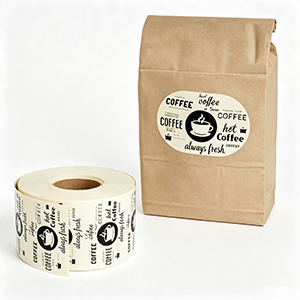
For a destination collection, also decide whether a pin is the main retail item or part of a coordinated package. A card insert, box seal, or stock label may call for custom labels printed in bulk, but printed labels and metal pins should be specified as separate items with their own material and production requirements.
Build a Lead Time Plan That Includes Approval
Count from final approval, not from the first email. A three day sample lead time is useful only when the artwork, product choice, and proof comments are ready to release. Bulk production is typically 8 to 9 days after approval. For U.S. deliveries, add the stated 5 to 6 business days for shipping. If the project includes review cycles, buyer signoff, or retail packaging coordination, add those internal stages to the calendar before promising a store date.
- Prepare the request. Submit artwork, required quantity, intended pin type, finish preference, backing need, destination, and required arrival date.
- Confirm the manufacturing route. Verify whether the item is a select digital project with no MOQ or a standard bulk order subject to the 1,000 piece minimum.
- Review the proof. Check text, color references, shape, metal areas, backing location, and visible details. Return one consolidated response where possible.
- Approve the production version. Do not release production while there are unresolved comments, alternate logo versions, or missing buyer approval.
- Schedule sample and bulk stages. Allow the stated 3 day sample lead time where a sample is requested, then allow 8 to 9 days for bulk production after approval.
- Plan dispatch and receipt. For U.S. orders, allow 5 to 6 business days for shipping after the production stage. For other destinations, request a shipping estimate rather than applying the U.S. figure.
- Inspect upon receipt. Compare products against the approved proof and purchase order, then report any concern with supporting photos.
The boundary is simple: no supplier can responsibly promise an exact completion date when proof approval is still open. Same day dispatch is available only for select ready stock or digital items; it should not be treated as the normal dispatch standard for a custom metal souvenir pin.
Custom Panda provides photo or digital sample confirmation before production, plus 100 bonus pieces with every bulk order. We also provide a color mismatch free reprint, proportional replacement for defects, and 5 day fast restocking or repair. These terms help manage production risk, but they do not remove the buyer’s obligation to approve the correct artwork and specification before the run begins.
Proofing FAQs That Prevent Production Delays
The shortest route to production is a proof with one accountable approval. Artwork revisions, Pantone references, small text, and sample signoff must be addressed before manufacturing starts. The table below answers the questions procurement teams should settle before a purchase order is released.
| Proofing question | Direct answer | Action that prevents delay | Limit to understand |
|---|---|---|---|
| How should artwork revisions be managed? | Consolidate revisions into one marked file or one clear feedback list, then confirm which version is final. | Name the final artwork file, identify every requested change, and assign one buyer to approve the return proof. | New comments after approval can require a new proof review and can move the schedule. |
| Can Pantone references be included? | Yes, provide Pantone references where brand color control is required and review them on the proof. | List the reference beside each relevant color area and flag colors that must not be substituted without approval. | A Pantone reference does not replace visual confirmation of the production proof or sample. |
| What about small text? | Small text must be checked for legibility at the actual pin size, not only when enlarged on screen. | Provide the exact wording, check spelling character by character, and ask whether any detail should be simplified. | If text is too small for the selected process, the practical fix may be larger artwork, less copy, or another pin method. |
| When should a sample be approved? | Approve a photo or digital sample only after checking it against the final artwork and purchase order. | Verify colors, metal finish, outline placement, text, shape, backing, and requested special features before release. | Approval confirms the reviewed version; it cannot cover changes that were not shown or requested. |
| Who should approve the proof? | Use one named approver with authority to confirm artwork and commercial requirements. | Give internal brand, merchandising, and procurement stakeholders a fixed review deadline before supplier release. | Multiple uncoordinated approval paths commonly create conflicting revisions. |
A pin artwork proof should be treated like a controlled purchasing document. It must match the item description on the order: design name, revision, quantity, material route, finish, colors, backing, and any packaging instruction. This matters most when a souvenir collection uses similar artwork across several sites or seasons. One incorrect date, location name, or logo version can make otherwise acceptable stock unsuitable for sale.
Free design assistance and live human support are available for buyers who need quick clarification before release. Use that support early, especially where a design combines a detailed illustration, small copy, or multiple finishes. It is more efficient to simplify an unclear element at proof stage than to find a legibility issue after bulk production begins.
Use a Retail Ready Specification Checklist
Send a complete specification package with the RFQ. This gives the supplier enough information to recommend a workable process and helps procurement compare quotations on like for like terms. It fits retail brands, museum stores, event organizers, and distributors purchasing bulk pin orders. It does not replace a formal purchase order or approved proof.
- Artwork source: Provide the current logo or illustration file and identify the approved version.
- Retail use: State whether the item is for a museum store, visitor attraction, event, tourism campaign, or collector release.
- Pin construction: Request hard enamel, soft enamel, offset printing, 3D die casting, or laser engraving based on the artwork.
- Material and finish: State the preferred material where known and identify the metal pin finishes required.
- Color control: Include color references and identify any Pantone controlled areas.
- Text review: Supply final copy, dates, city names, edition wording, and trademarks in editable text where possible.
- Quantity detail: Show units per design rather than only the total order quantity.
- Backing requirement: Specify the requested pin backing and note whether the item will be worn on apparel, attached to a card, or packed in a gift set.
- Sample decision: State whether you require photo or digital sample confirmation before production.
- Delivery plan: Give the destination country and required arrival date, then allow for approval, production, and shipping stages.
For a coordinated retail set, pair the pin specification with packaging requirements. A souvenir card or carton may need custom printed packaging labels, while the pin itself follows a metal manufacturing route. Keeping the specifications separate avoids mistakes such as approving a label color reference but leaving the pin finish unresolved.
The practical outcome is a cleaner order release: the buyer knows the applicable MOQ, the supplier has a final production proof, and the launch team has a schedule based on actual production stages rather than assumptions.
Send your artwork, quantity by design, finish preference, and required delivery date to request a production review and quote.