

Custom Tea Labels Cost Less When You Plan Rolls Before You Order
The most expensive mistake in a first label order is not the unit price on the quote. It is discovering, after production, that the roll size does not fit your applicator, that one SKU used up its labels in three weeks, or that a small design change left 2,000 labels as dead stock. Custom Tea Labels look simple on a spec sheet, yet the cost per label moves a lot depending on how the rolls are planned. This guide shows the levers that matter, which numbers are confirmed, which are estimates, and which you must ask your supplier to quote.
How Roll Diameter, Label Count, and Reorder Frequency Change Per Label Cost
Per label cost is not one number. It is the sum of setup, material and printing, finishing, freight, and the cost of holding stock you have not yet used. Three planning choices decide how that sum is divided across your labels.
| Planning lever | How it moves per label cost | Fits when | Limit |
|---|---|---|---|
| Roll diameter | A larger roll holds more labels, so fewer roll changes and fewer cores and packs per order. A smaller roll is easier to handle and wastes less if a design is retired. | Larger: machine applicator and steady volume. Smaller: hand application at a packing bench. | The outer diameter and core must match your applicator's limits. Check these before approving a roll size. |
| Label count per run | Setup is spread across the run. More labels per run means a lower setup share per label. | Stable designs with predictable demand. | Big runs raise dead stock risk if net weight, claims, or certification marks may change. |
| Reorder frequency | Frequent small orders repeat setup and freight each time. Rare large orders cut that repetition but tie up cash and storage. | Frequent reorders suit fast sellers with a fixed design. Rare orders suit seasonal or limited lines. | Adhesive and label stock should not sit unused indefinitely. Ask your supplier about recommended storage time. |
Confirmed, estimated, and unknown costs
Keep these three categories apart when you compare quotes. Mixing them is how budgets drift.
| Category | Items | Status |
|---|---|---|
| Confirmed (from our production terms) | Digital printing and select custom items have no MOQ. Offset printing and standard bulk items start at 1,000 units, with better pricing at higher quantities. Every bulk order includes 100 bonus pieces. Photo or digital sample confirmation comes before production. Free shipping and free design assistance are offered. | Fixed. Plan around them. |
| Estimated (you calculate) | Setup share per label, labels needed per SKU per quarter, wastage on startup, and a safety buffer. Use the formula below and treat the result as a planning figure only. | Your estimate. Verify against the quote. |
| Unknown until quoted | Exact unit price for your size, material, and finish. Price breaks between quantity tiers. The cost of foil or special lamination on your artwork. Any tooling charge for custom die shapes. | Request in writing. Do not assume. |
A simple planning formula: per label cost = (setup + printing and material + finishing + freight) ÷ labels delivered. As a purely hypothetical illustration, a $60 setup charge spread over 500 labels adds 12 cents to each label. Spread over 5,000 labels, it adds 1.2 cents. The $60 is an assumption for the arithmetic, not a quoted figure. The pattern is real, though: setup matters most on small runs.
Step by Step: Build a Roll Plan Before Requesting a Quote
- List every SKU that needs its own label. A green tea, a black tea, and a herbal blend in the same tin size each need a separate design, even if the layout is identical.
- Estimate 90 days of demand per SKU. Use sales records or pre-orders. Do not average across SKUs, because a bestseller and a slow flavor should not receive equal quantities.
- Decide how labels will be applied. Hand application and machine application call for different roll sizes and core dimensions. Note the maximum roll diameter your equipment accepts.
- Choose print method by quantity. Under 1,000 labels per SKU, digital printing with no MOQ is usually the practical route. At 1,000 or more, offset becomes an option with better pricing at volume.
- Set a reorder trigger. Order when one roll remains, not when you run out. Production for bulk orders takes 8 to 9 days and U.S. shipping takes 5 to 6 business days, so build in at least three weeks.
- Request a digital or photo proof. Approving the proof before production protects you from color or text errors that would waste the entire run.
This procedure fits a new tea brand or one adding new blends. It does not fit a brand with an unsettled label design. In that case, order a small digital run first and commit to larger quantities only after the design is final.
Material and Finish Choices That Add or Save Cost
Material is the second largest driver after quantity. Choose by how the tea is packaged and sold, not by what looks premium on a screen.
| Option | Best for | Cost direction | When not to use |
|---|---|---|---|
| Kraft paper stock | Artisan, organic, or rustic positioning on tins and pouches | Generally the lower cost tier. Confirm in your quote. | Humid storage or condensation from iced tea products |
| Matte BOPP film | Tins and bottled tea exposed to moisture or handling | Mid range. Quote needed. | Brands that want an uncoated, tactile paper feel |
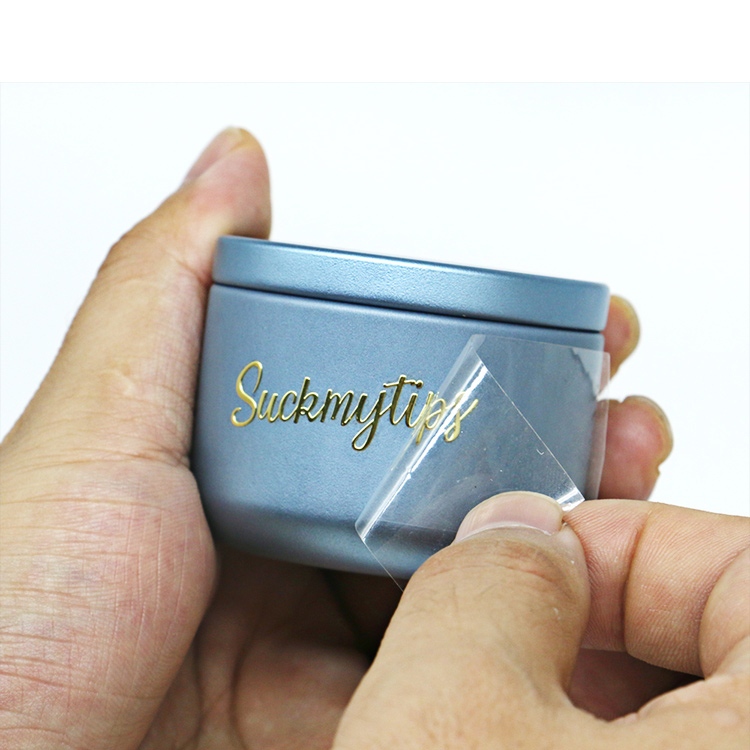
| Foil stamping on film or paper | Premium gift tins and retail shelf impact | Adds cost. Amount depends on artwork coverage. | Tight budgets or very small label sizes where fine foil detail may be lost |
For a real example of the film and foil route, we produced metallic foil-stamped roll labels for a natural health supplement brand in Australia, using matte BOPP film with scratch-proof lamination for a premium shelf look. That combination suits a tea brand selling gift tins at a higher price point. Brands with a natural, earthy identity can look at custom kraft labels, while moisture-prone packs may be better served by clear custom bopp labels.
Worked Example: Three Blends, One Tin Size
Consider a hypothetical brand launching three loose leaf blends in identical tins. Demand is uncertain. Two plans are possible:
- Plan A, one big run: Order a large quantity of each design to chase a lower unit price. Risk: if one blend underperforms, its rolls sit unused, and a claim or net weight change makes them obsolete.
- Plan B, staged runs: Order a small digital run per blend for the launch, with no MOQ, then use real sales to size the first larger reorder. Cost: a higher per label price at first, with setup repeated on the next order.
For an unproven product line, Plan B usually wins, because the extra cost per label is small compared with the cost of scrapping a full roll. For a proven bestseller with a final design, Plan A is more efficient. We will not claim a specific saving here, because it depends on the quote you receive for your own size and finish.
Common Planning Mistakes That Inflate Label Costs
- Ordering the same quantity for every SKU. Bestsellers run out early and slow blends leave surplus stock.
- Ignoring applicator limits. A roll that is too large or has the wrong core cannot be used, however good the price was.
- Skipping the proof. A wrong net weight or a spelling error discovered after delivery means reprinting the whole run. Our proof step exists to catch this.
- Printing certification marks too early. If an organic or origin claim is not yet approved, print that element separately. Look at organic tea certification labels as a separate piece.
- Comparing only unit prices. Freight, setup, and wastage belong in the comparison. Free shipping on our orders removes one variable, but check what other suppliers charge for it.
- Letting stock reach zero. With 8 to 9 days for bulk production plus transit, a stockout delays your own shipments.
Buyer Checklist Before You Submit an RFQ
- Label size, shape, and whether a custom die is needed
- Quantity per SKU, and the next likely quantity if the first run sells through
- Roll direction, core size, and maximum outer diameter for your applicator
- Material and finish: kraft, BOPP, matte, gloss, or foil
- Print method and its minimum: digital with no MOQ, or offset from 1,000 units
- Delivery location and required arrival date
- Whether you need packaging-specific labels, such as tea gift box labels or tea bag hang tags, in the same order
Our production runs under an ISO 9001:2015 certified quality system, with 6 HP digital label presses supporting short runs. If a color does not match the approved proof, we offer a free reprint, and defects are replaced proportionally. These terms reduce the cost risk on a first order, though they do not replace careful planning on your side. For tin formats, see our loose leaf tea tin labels, and for roll format details, our custom printed roll labels.
If you are sizing a first run or reviewing a repeat order, send us your label dimensions, quantities per SKU, and applicator details. We will propose a roll plan and quote it, with a digital sample for your approval before production begins.