

How Roll Specifications Impact Your Custom Essential Oil Labels Budget
Ordering the wrong labels for your essential oil products leads to two costly outcomes: wasted inventory when you change a formula, or brand damage when oil smudges and adhesive failures make your packaging look unprofessional. The difference between a profitable product line and a problematic one often comes down to the technical specifications on your label order. Making the right choices on material, quantity, and roll configuration before you place an order is the single best way to protect your budget and your brand's reputation.
As a manufacturer, we see brands make easily avoidable errors that force expensive reprints or, worse, lead to customer complaints. This guide breaks down the key decisions for sourcing Custom Essential Oil Labels, focusing on the specifications that directly influence your unit cost, application efficiency, and product performance on the shelf.
Choosing the Right Label Material for Oil Resistance
The primary challenge for any essential oil label is its ability to withstand drips and smudges from the product itself. An oil-based product will quickly degrade standard paper labels, causing ink to bleed and the label to peel. Selecting a substrate designed for this environment is not a premium upgrade; it's a baseline requirement.
Our ISO 9001:2015 certified facility specializes in producing labels that solve these exact problems. Here is a comparison of common materials to help you decide.
| Material Substrate | Oil & Water Resistance | Durability | Relative Cost | Best Use Case |
|---|---|---|---|---|
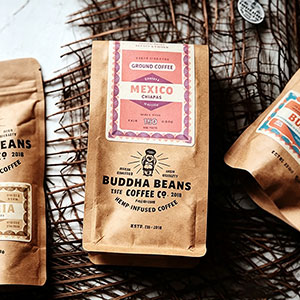
| Paper (Uncoated/Kraft) | Low | Low | $ | Best for outer packaging like boxes and bags that won't have direct oil contact. Provides a rustic, earthy aesthetic for brands using custom kraft labels. |
| BOPP (Polypropylene) | High | High | $$ | The industry standard for essential oils. BOPP is a synthetic film that is inherently waterproof and oil-resistant. With a protective laminate, it provides excellent print quality and durability for dropper bottles. Options include white, metallic, and clear custom bopp labels for a "no-label" look. |
| Vinyl (PVC) | Very High | Very High | $$$ | Offers maximum durability against oils, chemicals, and abrasion. Ideal for large-format containers or products that face heavy handling, extreme temperatures, or outdoor exposure. |
| Polyester (PET) | Very High | Very High | $$$ | A premium film known for exceptional tear resistance and stability in high-heat environments. A good choice for products that may be left in hot cars or used with diffusers. |
For most brands, BOPP with a protective lamination offers the best balance of performance and cost. As an example, we worked with a natural health supplement brand in Australia that required metallic foil-stamped roll labels. They chose a matte BOPP film with a scratch-proof laminate to ensure their high-end branding remained perfect from the production line to the retail shelf, even with frequent handling.

A Five-Year Total Cost Model for Essential Oil Labels
Your order quantity strategy has a greater impact on your total cost than the per-label price alone. Small, frequent orders offer flexibility but come at a higher unit cost. Large bulk orders reduce the unit price but increase inventory risk and cash outlay. Here’s a five-year cost analysis for a brand selling 5,000 units of a single SKU per year to illustrate the trade-offs.
This model compares three common sourcing strategies, factoring in both direct and indirect costs.
Cost Comparison: Short Digital vs. Bulk Offset Runs
This analysis demonstrates how different purchasing approaches affect long-term expenses.
- Scenario 1: Short Digital Runs. Ordering 500 labels 10 times per year. This is possible with our no-MOQ digital printing services.
- Scenario 2: Annual Bulk Run. Ordering all 5,000 labels once per year via offset printing (our MOQ is 1,000 units).
- Scenario 3: Bulk Run with Premium Material. Same as Scenario 2 but upgrading from standard BOPP to a textured or metallic-finish BOPP.
| Cost Factor | Scenario 1: Short Digital Runs (500 x 10) | Scenario 2: Annual Bulk Run (5,000 x 1) | Scenario 3: Premium Bulk Run (5,000 x 1) |
|---|---|---|---|
| Per-Label Unit Price (Confirmed) | $0.25 (Est.) | $0.08 (Est.) | $0.12 (Est.) |
| Annual Label Cost (Calculated) | $1,250 | $400 | $600 |
| Five-Year Label Cost (Calculated) | $6,250 | $2,000 | $3,000 |
| Setup & Reorder Fees (Estimated) | $0 (Included in digital price) | $0 (One-time setup) | $0 (One-time setup) |
| Shipping Fees (Confirmed) | $0 (Free Shipping Included) | $0 (Free Shipping Included) | $0 (Free Shipping Included) |
| Wasted Inventory Risk (Unknown Cost) | Very Low. If you reformulate or rebrand, you only lose a maximum of 500 labels. | High. A rebrand mid-year means thousands of obsolete labels must be discarded. | High. The financial loss from obsolete premium labels is even greater. |
| Best For... | New product launches, seasonal blends, or brands testing market fit. | Established, high-volume SKUs with stable branding and formulation. | Luxury or flagship products where brand presentation justifies the higher material cost. |
While the bulk run offers a 68% savings on direct label costs over five years, the risk of wasted inventory is a significant, unquantifiable cost. New brands should start with short digital runs and transition to bulk ordering only when an SKU has proven stable for at least 12-18 months.
Common Sourcing Mistakes That Inflate Label Costs
Beyond material and quantity, small technical mistakes during the quoting process can cause major problems later. These issues often stem from a lack of communication between the brand and the manufacturer. Addressing them upfront prevents reprints and production delays.
Here are the most frequent—and costly—errors we help our clients avoid:
- Ignoring Adhesive Performance: Not all adhesives are created equal. A standard permanent adhesive may fail when exposed to the essential oils themselves (adhesive bleeding) or to condensation if products are stored in a cool environment. Specify your product's chemical composition and storage conditions so your supplier can recommend an appropriate oil-resistant or freezer-grade adhesive.
- Mismatching Roll Unwind Direction: If you use an automatic label applicator, the unwind direction is critical. It dictates how the label comes off the roll (e.g., top-first, bottom-first, left-first, or right-first). Ordering the wrong direction will make your rolls incompatible with your machinery, halting your entire packaging line. Always confirm the required unwind direction number (1 through 8) from your equipment manual.
- Poor White Ink Opacity on Clear Labels: When printing on oil & waterproof labels that are clear (a popular choice for amber or blue glass bottles), the opacity of the white ink base is everything. If the white layer isn't thick enough, your colors will look translucent and your text will be difficult to read against the dark liquid. We solve this by applying a highly opaque white ink layer before printing CMYK colors.
- Forgetting a Protective Lamination: Lamination is a thin, clear film applied over the printed label. It acts as a shield, protecting the ink from scratches, chemicals, and oil. A BOPP label is oil-resistant, but a laminated BOPP label is virtually oil-proof. It is an inexpensive feature that dramatically extends the life of your label. It's available in glossy for a vibrant look or matte for a premium, low-glare finish.
Optimizing Your Roll Label Specifications for Application
For brands that are scaling up and using automated or semi-automated labeling equipment, the physical specifications of the label roll are just as important as the label itself. Providing incorrect specs can lead to rolls that don't fit on your machine, causing downtime. When you request a quote for custom printed roll labels, be prepared to provide the following details.
A Buyer's Checklist for Roll Specs
Use this checklist to ensure you get a quote for rolls that are ready for your production line.
- Core Diameter: This is the diameter of the cardboard tube at the center of the roll. The industry standard is 3 inches (76mm), but 1.5-inch (40mm) cores are also used. Your applicator's spindle size determines the required core diameter.
- Maximum Outer Diameter (OD): This is the diameter of the full roll of labels. Your labeling machine has a maximum size it can hold. A larger OD means more labels per roll and fewer changeovers, which improves efficiency. Check your machine's technical sheet for its maximum OD.
- Label Gap: Automated applicators use a sensor to detect the space between labels on the liner to know when to dispense the next one. The standard gap is typically 1/8 inch (3.175mm), but this must be consistent. An inconsistent gap will cause feeding errors.
- Unwind Direction: As mentioned previously, this is the orientation of the label as it comes off the roll. It is the most common specification error. Always double-check your machine's requirement.
Getting these details right ensures a smooth transition from receiving your labels to applying them. With a daily capacity of over 1,000,000 labels, our production lines are calibrated to meet these precise B2B requirements, ensuring every roll you receive is ready for immediate use.
Planning your essential oil label order requires balancing material science, budget strategy, and mechanical specifications. By addressing these factors before production, you can source labels that perform flawlessly and support a healthy profit margin.
If you're ready to spec out your next label run, send our team your artwork and requirements. We offer free design assistance to ensure your final product is perfect.