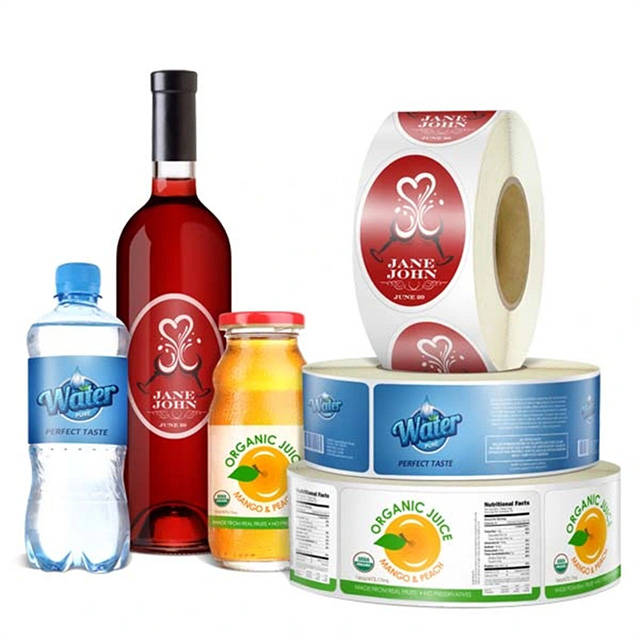

Roll Planning Is the Fastest Way to Cut Custom Jewelry Labels Costs
Most jewelry sellers find out the hard way that a "good price per thousand" doesn't mean much once storage, waste, and reorder shipping get added up. You order 5,000 Custom Jewelry Labels because the unit price looks better, then discover six months later that half the roll sat in a drawer collecting dust while your packaging design changed. That mismatch between roll length and real usage is the single biggest cost leak we see among growing jewelry brands before they lock in a bulk quote.
This isn't a design problem. It's a planning problem, and it's fixable before you ever submit an RFQ.
Why Roll Length Quietly Wrecks Your Label Budget
Roll length determines three things buyers rarely calculate up front: how much product you waste at the end of each roll, how often your team stops to reload the applicator, and how frequently you need to reorder. A short roll costs more per unit but reduces dead stock risk. A long roll drops the per-unit price but locks you into a design for longer than most small jewelry brands actually want.
Here's the practical rule: if your jewelry line changes seasonal packaging, adds new SKUs, or tests different taglines more than twice a year, a long roll is a liability, not a savings. If your branding is stable and volume is predictable, longer rolls make sense. This is exactly the kind of decision that custom printed roll labels pricing tiers are built around, and it's worth mapping your own reorder pattern before you commit to a length.
A Five-Year Cost Model: Roll Length, Waste, Labor, and Reorders
Below is a worked comparison for a jewelry brand using roughly 20,000 labels per year, split across three common roll length choices. Some figures are confirmed by production terms; others are industry-standard estimates you should verify against your own applicator speed and labor rates before treating them as final.
| Cost Driver | Short Roll (500/roll) | Mid Roll (1,000/roll) | Bulk Roll (5,000/roll) |
|---|---|---|---|
| Reorders needed per year | ~40 | ~20 | ~4 |
| Estimated end-of-roll waste | 2–3% (estimated) | 1–2% (estimated) | Under 1% (estimated) |
| Applicator reload labor | High — frequent stops (estimated) | Moderate (estimated) | Low (estimated) |
| Minimum order quantity | No MOQ on digital printing (confirmed) | No MOQ on digital printing (confirmed) | 1,000-unit minimum for offset printing (confirmed) |
| Storage risk over 5 years | Low | Moderate | High if design changes |
| Unit price trend | Highest per piece | Mid-range | Lowest per piece |
The confirmed numbers here are the ones tied directly to production terms: digital printing carries no minimum, while offset printing requires 1,000 units for better bulk pricing. Waste percentage and labor hours are estimates because they depend on your applicator equipment, staff speed, and how often your design changes — figures we can't quote as fact without seeing your workflow. If you're unsure where your business lands, request a sample run first; sample lead time typically runs around 3 days, so testing a format costs you almost nothing in time.
Over five years, a brand reordering 40 times a year on short rolls will spend noticeably more in shipping and handling than one reordering 4 times a year on bulk rolls — but only if the design stays fixed that long. Treat the bulk roll savings as conditional, not guaranteed.
Comparing Label Materials for Jewelry Packaging
Material choice interacts with roll planning because some substrates handle long-term storage better than others. A roll sitting in a humid warehouse for a year behaves very differently depending on lamination and adhesive type.
| Format | Best For | Watch Out For |
|---|---|---|
| Kraft paper labels | Eco-positioned jewelry brands, boutique packaging | Less moisture resistance; not ideal for humid storage |
| Foil-stamped labels | Premium jewelry lines wanting shelf presence | Higher cost per unit; needs precise die alignment |
| Waterproof synthetic labels | Jewelry shipped internationally or stored long-term | Slightly higher unit cost than paper |
| Matte BOPP labels | Clean, minimal branding on small tags | Can show fingerprints on dark colors |
Our own foil-stamped roll label work for an Australian supplement brand paired matte BOPP film with scratch-proof lamination for retail shelf durability — the same lamination logic applies directly to jewelry packaging that sits under store lighting for months. If your jewelry line ships to humid climates or coastal retailers, oil & waterproof labels for bottles & cosmetics substrates are worth testing even outside their usual category, since the film resists the same condensation issues that cause paper labels to peel.
Common Mistakes Jewelry Sellers Make When Ordering Labels in Bulk
- Ordering roll length based on price alone. A lower per-unit cost on a 5,000-roll means nothing if your packaging redesign happens in eight months.
- Skipping the physical sample. Screen colors and printed foil colors rarely match exactly; a photo or digital proof confirmation before production avoids a full reprint.
- Ignoring adhesive type for jewelry boxes vs. pouches. A label that holds fine on cardboard can lift off velvet or satin pouch material.
- Underestimating white ink opacity needs. On clear or dark jewelry packaging, weak white underprint makes logos look washed out or gray.
- Not accounting for reorder lead time in growth planning. Bulk production generally runs 8–9 days once art is approved — plan your reorder trigger point around that window, not around when you run out.
Many of these mistakes surface after the first bulk run, when a brand realizes the label size didn't fit its custom jewelry hang tags or box format at all. Confirming die-line dimensions against your actual packaging stock before printing saves a full reprint cycle.
A Buyer's Checklist Before You Request a Bulk Quote
- Calculate your actual annual label usage — not your hoped-for growth number.
- Decide how often your packaging design realistically changes per year.
- Match roll length to that reorder cycle, not to the lowest listed unit price.
- Pick a substrate based on storage conditions (humidity, sunlight, handling).
- Request a physical or digital sample before committing to the full run — sample turnaround is typically 3 days for labels.
- Confirm adhesive compatibility with your box, pouch, or bag material.
- Ask about reprint terms in case of color mismatch, since a proportional replacement policy protects you from full-batch losses.
Buyers working with an ISO 9001:2015-certified production process should also ask what quality checks happen before a bulk run ships, not just after a complaint. Some suppliers include a small buffer — for example, 100 bonus pieces on bulk orders — which covers minor handling loss during application, something worth factoring into your reorder math instead of ordering an extra full roll "just in case."
If your jewelry line also uses foil accents on packaging, it's worth reviewing custom foil jewelry labels options alongside your standard roll labels, since foil stamping changes both cost per unit and minimum order thresholds compared to flat digital printing.
Putting the Numbers to Work
None of this replaces an actual quote. But walking into that conversation with your annual usage, reorder tolerance, and storage conditions already mapped out means the quote you get back will actually fit your business — not just your current mood about unit price. A supplier quoting Custom Jewelry Labels without asking about your reorder cycle is quoting blind, and so are you.
Ready to compare roll options against your real usage numbers? Send us your packaging dimensions and annual volume estimate, and we'll help you work out which roll length and substrate actually pencils out over time — starting with a sample before any bulk commitment.