

Cut Custom Label Costs With Roll-Format Ordering
Most buyers only compare per-unit label pricing before they sign a purchase order. That's the mistake that costs money for years afterward. A cheaper per-thousand rate on sheet-fed labels can quietly lose to roll-format Custom Labels once you factor in application labor, liner waste, and reorder frequency across a real product cycle. If you're sourcing labels for a growing SKU line, the format you pick now locks in a cost pattern that's hard to unwind later — especially once packaging lines are set up around one dispensing method.
This article breaks down what actually changes between sheet, roll, and cut-to-size label formats, with a five-year cost view built from confirmed production facts and clearly-labeled estimates — not guesswork dressed up as data.
What Roll Format Actually Changes in Your Cost Structure
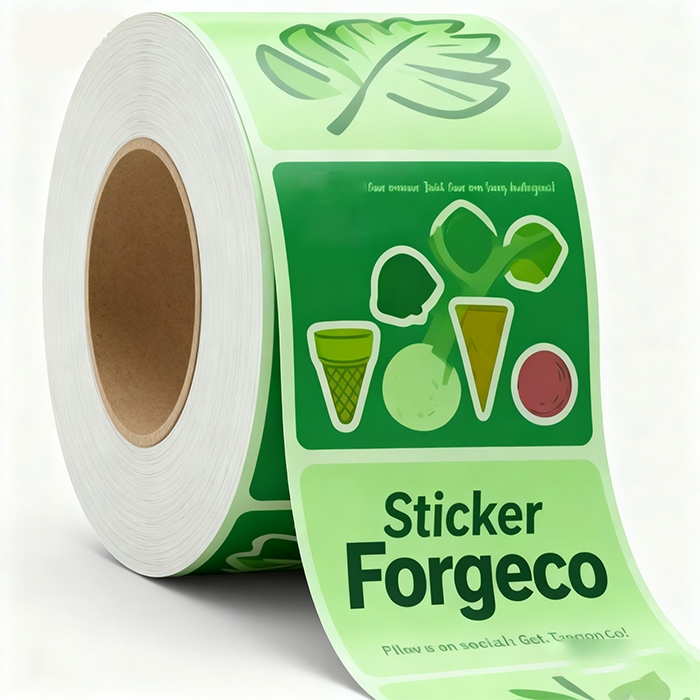
Roll-format labels are wound on a core and dispensed one at a time, usually through a semi-automatic or automatic applicator. Sheet labels sit flat on a carrier sheet and get peeled by hand. Cut-to-size labels are pre-cut individual pieces, often used for short runs or irregular shapes.
The cost difference isn't really in the label material — it's in what happens after the labels arrive at your facility:
Labor per application: Roll labels feed through applicators at speed; sheet labels require manual peel-and-place, which adds seconds per unit that multiply across thousands of units.
Waste rate: Sheet carriers generate more scrap when operators misalign labels or discard partial sheets. Roll liners waste less because the dispensing motion is continuous.
Storage and reorder cycles: Rolls store compactly and last longer per case, reducing how often you place a reorder and pay setup fees again.
None of this shows up on a quote line item. It shows up in your labor hours three months into production.
A Five-Year Total Cost Comparison of Sheet, Roll, and Cut-to-Size Labels
The table below separates what we can confirm from company production data, what is a reasonable industry-pattern estimate, and what remains unknown until you run your own numbers. Treat the estimated column as a planning range, not a quote.
| Cost Factor | Sheet Labels | Roll Labels | Cut-to-Size Labels | Cost Status |
|---|---|---|---|---|
| Minimum order (offset/bulk) | 1,000 units | 1,000 units | 1,000 units | Confirmed |
| Digital printing option | Available, no MOQ | Available, no MOQ | Available, no MOQ | Confirmed |
| Bulk production time | 8-9 days | 8-9 days | 8-9 days | Confirmed |
| Application labor (per 10,000 units) | Higher — manual peel typical | Lower — applicator-fed | Highest — individual placement | Estimated, industry pattern |
| Material waste rate | Moderate to high | Low | Variable by shape complexity | Estimated |
| Reorder frequency over 5 years | Higher (shorter shelf storage life per case) | Lower (compact roll storage) | Depends on run size | Estimated |
| Your actual labor cost per hour, line speed, SKU count | Varies by facility | Unknown — buyer-specific | ||
Here's how to read this practically: if you're running 50,000+ units per year through an automatic or semi-automatic line, roll format almost always wins on total cost within 18-24 months, purely from labor savings. If you're hand-applying under 5,000 units a year — say, for a boutique product line — sheet or cut-to-size labels may never accumulate enough labor difference to matter, and their lower tooling complexity keeps early costs down.
The unknown variable that changes everything is your own line speed and wage rate. A facility paying $18/hour with a slow manual line will see roll format pay back faster than one already running high-speed automated dispensing on sheets.
Common Mistakes Buyers Make When Choosing Label Format
Comparing only unit price, not application cost. A $0.02 cheaper sheet label can cost more once you add three seconds of manual labor per unit.
Ordering roll format without checking applicator compatibility. Core size and liner width must match your dispenser — confirm this before bulk production, not after.
Ignoring cold-chain or moisture exposure. Labels peeling off in cold storage due to condensation is a common failure point; if your product ships refrigerated, ask about BOPP lamination and UV-resistant inks before locking in a format.
Underestimating white ink opacity needs on clear substrates. This is a format-independent issue but often surfaces only after roll-format bulk runs are already printed.
Skipping a physical sample before bulk commitment. A 3-day sample lead time is available specifically to catch adhesion or color issues before an 8-9 day bulk run locks them in.
Step-by-Step Procedure to Switch to Roll-Format Ordering
Audit your current application method. Count units applied per shift and note labor hours spent on peel-and-place.
Confirm your applicator specs. Core diameter, liner width, and unwind direction must be specified in your RFQ.
Request a digital or photo sample. Confirm color match and adhesive type before bulk approval — this step exists precisely to prevent brand color mismatches.
Place a bulk order at or above the 1,000-unit threshold for offset printing, or use digital printing if your volume is lower and design changes frequently.
Track your first reorder cycle. Compare actual labor hours against your sheet-format baseline to validate the savings.
Buyer's Decision Checklist
Do you apply more than 10,000 labels per year? If yes, roll format is worth testing.
Does your line have — or can it add — an applicator? If no, sheet or cut-to-size stays practical short-term.
Is your product exposed to cold storage, moisture, or high heat? Confirm waterproof or heat-resistant options before format selection.
Do you need brand-exact color matching? Request the color-mismatch-free reprint policy in writing before bulk production.
Is your run under 1,000 units? Consider digital printing with no MOQ rather than committing to offset roll tooling.
When Roll Format Does Not Make Sense
Roll-format ordering isn't a universal upgrade. It adds no value if you're hand-labeling under a few thousand units annually — the roll's labor savings simply never accumulate enough to offset the format's tooling setup. It also doesn't help if your product has irregular shapes that resist continuous dispensing; cut-to-size or die-cut sheet formats handle odd geometries better. And if you're still finalizing artwork or expect frequent SKU changes, digital printing with no minimum order keeps you flexible in ways that large roll runs don't.
For eco-conscious apparel lines needing wash-care instructions, for example, printed cotton labels with fade-resistant inks matter more than dispensing format — a case we've supplied for an eco-friendly children's clothing line in Spain, where the priority was surviving repeated industrial washing, not application speed.
Format Selection by Product Type
Different product categories tend to favor different formats. Custom Kraft Labels for food and beverage packaging often run on roll format because they pair well with high-speed bottling lines. Custom Waterproof Labels for outdoor or cold-storage goods also benefit from roll dispensing, since automated application reduces the handling time that can introduce moisture before adhesive cures. Meanwhile, short-run promotional labels or one-off event packaging frequently do better as cut-to-size or digital sheet prints, where the no-MOQ option keeps costs proportional to smaller quantities.
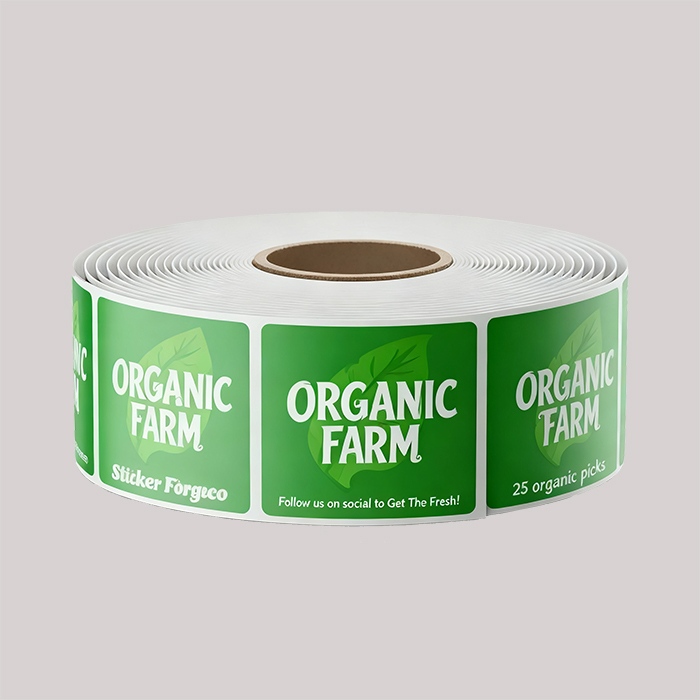
One practical example: an Australian supplement brand needed metallic foil-stamped roll labels with scratch-proof lamination for retail shelf presence. Roll format was the right call there — high SKU turnover, automated application, and a need for consistent stamping across thousands of bottles. That same foil-stamp finish on a hand-applied sheet format would have introduced more labor variance and higher scrap from misaligned stamping.
Getting the Numbers Right Before You Order
The five-year comparison above only becomes accurate once you plug in your facility's real labor rate, line speed, and reorder cadence. Everything else — minimum order thresholds, production timelines, sample lead time — is confirmed and won't shift based on your operation. Before committing to bulk production, run your own units-per-hour math against both formats using the checklist in this article. It takes less than an hour and prevents a costly five-year commitment to the wrong dispensing method.
If you're weighing roll versus sheet versus cut-to-size for an upcoming order, send us your applicator specs and annual volume — our technical team can confirm which format fits your production line before you commit to a bulk run.