

How Die Struck Pins Support Secure Uniform Wear
Before approving a uniform pin order, buyers often focus on plating, logo artwork, and finish, then treat the backing as a minor detail. That is a costly oversight. A pin that looks correct but loosens during a shift, damages a uniform shirt, or cannot be removed quickly will create avoidable complaints from staff.
Die Struck Pins are often selected for corporate identity, years of service, membership, hospitality, security, and recognition programs because their metal relief creates a formal appearance without relying on printed artwork. However, the best front design still needs the right attachment method. The backing determines how the pin performs on a blazer, polo, vest, shirt, lanyard, or outerwear layer.
For buyers finalizing specifications, the practical choice comes down to four questions: What fabric will staff wear? Will the pin be removed regularly? Does the garment have pockets or sensitive fabric? How much loss risk can the organization accept? This guide answers those questions directly and identifies where each backing option does not fit.
Choose the pin construction before selecting hardware
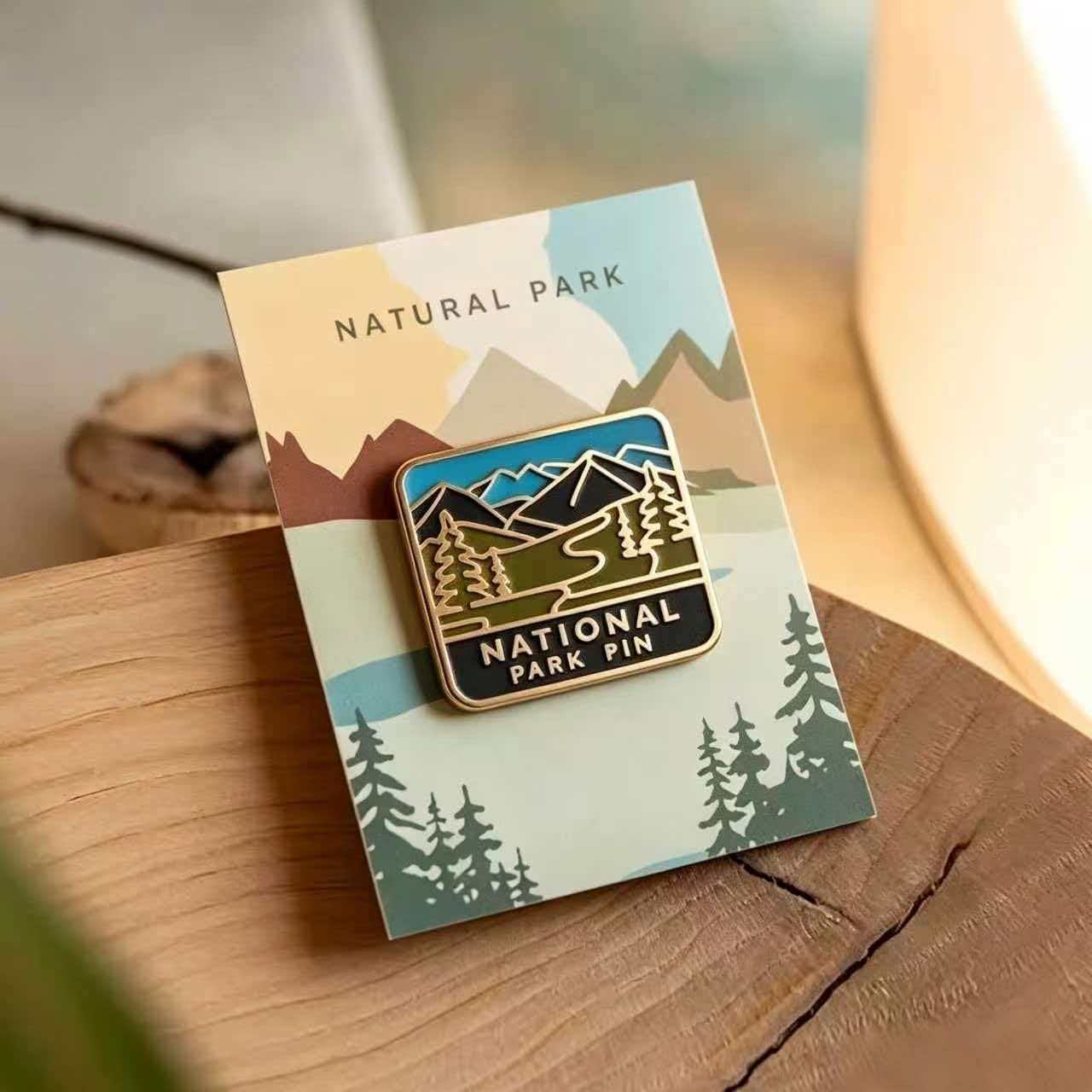
The backing should be selected after the wearer, garment, and usage pattern are known. Start with the front construction because weight, shape, and intended presentation affect which attachment will feel stable. Custom Panda can manufacture pins in zinc alloy, brass, and iron, with options including hard enamel, soft enamel, offset printing, 3D die casting, laser engraving, and dual plated finishes.
For a formal employee recognition pin, a metal relief design with an antique or polished finish can suit a clean uniform program. For a logo that depends on several color fields, hard enamel or soft enamel may be more suitable. If the artwork contains fine photographic detail or gradients, a printed option should be reviewed instead of forcing that artwork into raised metal areas.
The decision is not just visual. A light, compact emblem on a staff polo has different attachment needs from a larger piece worn on a structured blazer. When submitting artwork, tell the supplier the intended garment type and whether employees will wear the pin every day, only for events, or for short campaign periods.
- Choose a relief metal finish for heritage programs, service recognition, executive gifts, and simple logo marks. It suits designs that remain clear without many small color areas. It does not suit artwork dependent on very fine printed detail.
- Choose enamel color fills when staff must identify a brand color or department at a glance. This fits customer-facing teams and promotional uniforms. It is less appropriate if the primary requirement is an all-metal commemorative look.
- Choose printed artwork when artwork includes gradients, small portraits, or complex illustration. This fits campaign merchandise and event designs. It should not be assumed to deliver the same raised metal character as a struck relief design.
For related sourcing options, buyers comparing styles can review bulk custom lapel pins before finalizing a uniform specification.
Compare butterfly clutches rubber clutches safety pins and magnetic backings for uniform wear and repeat use
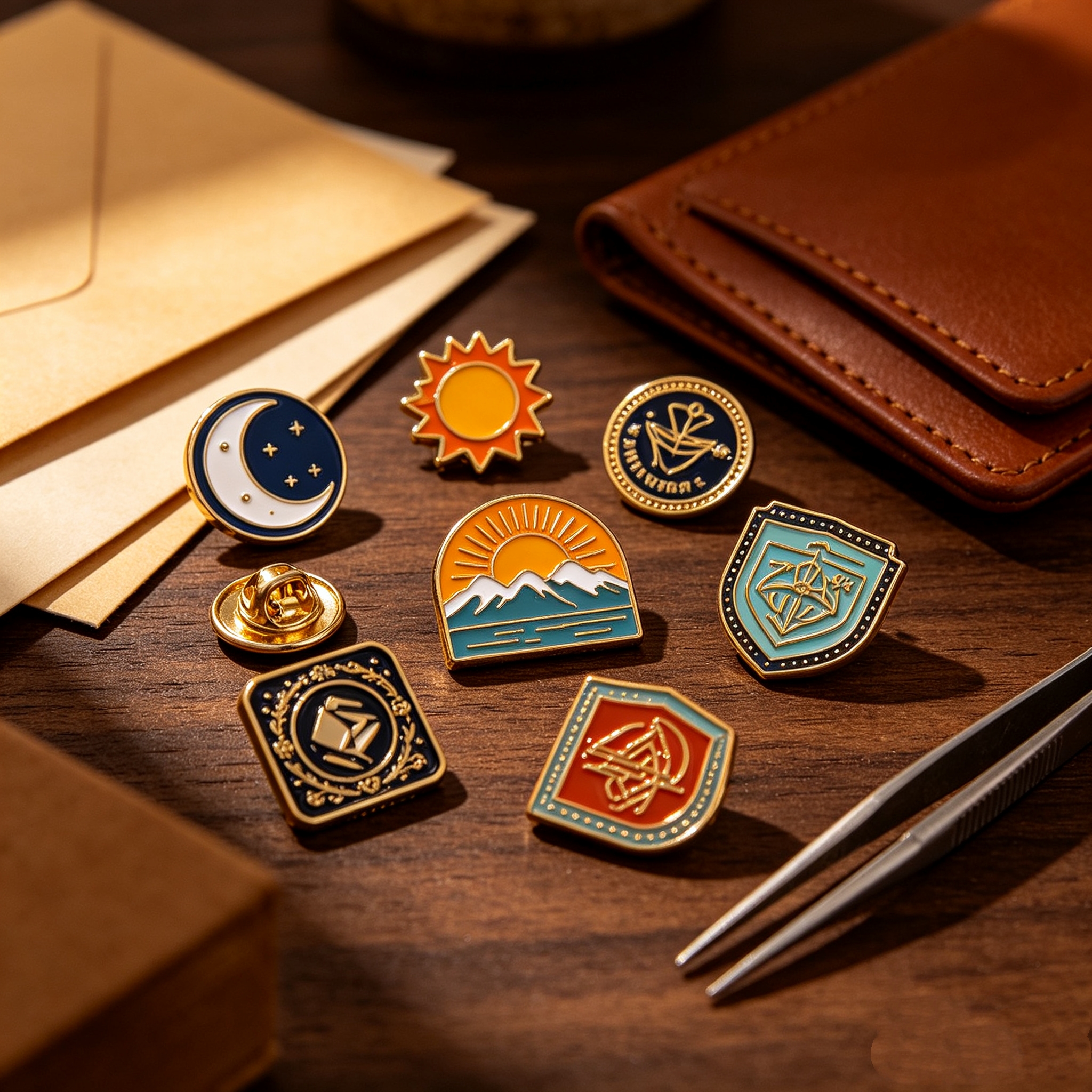
There is no universal “best” backing. The correct answer depends on the balance between retention, garment protection, comfort, and frequency of removal. For standard staff uniforms, the main tradeoff is simple: mechanical fasteners create a puncture point but generally offer more retention, while magnets avoid punctures but have limits with garment thickness and movement.
| Backing option | Best use case | Why it fits | Repeat wear suitability | Limit or when not to use |
|---|---|---|---|---|
| Butterfly clutch | Standard office uniforms, events, corporate apparel, and recognition programs | It is a familiar metal fastener that attaches to a post through the garment and is easy for staff to understand. | Good for repeat wear when users check that the clutch is fully pressed into place. | It pierces fabric and may not be the first choice for garments where avoiding holes is required. It can also be less secure if staff catch pins on bags or outerwear. |
| Rubber clutch | Casual uniforms, lanyards, lightweight apparel, and staff who prioritize comfort | The softer material can feel more comfortable against the body and avoids the hard metal edges of a standard clutch. | Good for repeat wear on lighter items when the pin is not exposed to repeated snagging. | It is not the preferred choice where the program needs the most formal appearance or where loss prevention is the primary concern. |
| Safety pin backing | Temporary issue uniforms, thick outerwear, fabric where a single post is impractical, and event distribution | The longer fastening mechanism can spread support across the garment and is practical for items that need a broad attachment point. | Suitable for repeated use when staff need to move the pin between garments. | It is more visible on the back, slower to attach, and can be uncomfortable if placed where the mechanism presses against the wearer. |
| Magnetic backing | Blazers, dress shirts, premium hospitality uniforms, and garments where puncture marks are unacceptable | It holds the pin without piercing the fabric, helping preserve the appearance of the garment. | Suitable for repeat use on compatible garments and controlled wear conditions. | It may not hold as reliably through thick, heavily textured, or layered clothing. It should not be chosen where impact, pulling, or frequent snagging is expected. |
Direct recommendation: choose butterfly clutches for most standard staff programs where cost control and familiar use matter. Choose rubber pin clutches when wearer comfort is more important than a formal metal backing. Choose safety pin backings for temporary or heavier garment applications. Choose magnetic pin backings for premium uniforms that cannot be punctured, but only after checking the actual fabric layers.
Do not approve magnetic hardware from a flat artwork proof alone. Ask the uniform manager to test the planned garment, including any undershirt, vest, pocket flap, or lining that sits behind the attachment location. A magnetic system can work well on a dress shirt and perform differently on a thick jacket.
Match the backing to the staff role and garment
A uniform program is easier to manage when every role has a written wear condition. “Staff pin” is not enough direction for production or distribution. Define where the pin will sit, what layer it attaches to, and whether the wearer changes uniforms during the workweek.
Office, hotel, and front desk teams
For dress shirts, blazers, and fitted uniforms, magnetic backing is worth considering when garment presentation is the priority. The clear conclusion is that magnets protect fabric from post holes. This is especially useful for hospitality or executive teams that wear polished uniforms for long periods. The limit is retention: thick jackets, movement-heavy roles, or layered fabrics may call for a mechanical backing instead.
Butterfly clutch pins are a practical alternative where employees receive standard uniform shirts and the organization accepts a small puncture point. They work best for a fixed placement on the lapel or chest area. They are not ideal if employees must swap the pin repeatedly between delicate garments.
Retail, event, and promotional staff
For event teams wearing polos, lightweight jackets, or lanyards, butterfly clutches provide a simple, familiar option. They fit roles where employees receive the pin once and use it through a campaign. If the pin is removed and reattached several times during the day, a safety pin backing can be easier to reposition, although it is less discreet.
For a product launch that also needs packaging identification, consider pairing the metal item with die cut custom stickers for giveaway packs, boxes, or staff kits. The sticker and pin serve different jobs: the pin identifies the wearer, while the sticker can support distribution and campaign branding.
Security, operations, and outdoor teams
For work that involves movement, bags, tactical vests, or outerwear, prioritize retention over a no-hole garment finish. A butterfly clutch or safety pin backing is normally more suitable than magnet hardware in these conditions. The reason is that the pin may be tugged, bumped, or placed through thicker materials. Magnetic attachment should not be selected merely because it is convenient.
A related Custom Panda case involved heavy-duty embroidered Velcro patches for a United States outdoor gear brand, made with weather-resistant threads and hook-and-loop backings for hiking backpacks and tactical vests. That example supports a practical boundary: when identification must move across gear rather than remain fixed on a lapel, custom hook and loop patches may be a better operational choice than a metal pin.
Prevent common uniform pin failures before production
The most common problems are preventable at the specification stage. Buyers should not assume one backing serves every garment, nor should they treat a digital proof as confirmation of wear performance. Use a physical sample when the pin will be issued to a large team or used on expensive uniforms.
- Specifying the backing without naming the garment: “Standard backing” gives the supplier no useful wear context. State whether the pin will attach to a polo, blazer, shirt, vest, lanyard, or jacket. The limit is that even a garment category can be too broad, so provide a fabric sample or photographs where possible.
- Using magnets on heavy layered garments: Magnetic backing avoids holes, but it can be less dependable through thick material. Reserve it for compatible fabric thickness and low snag exposure. Do not use it as the default for outdoor workwear.
- Using one post for a shape that turns: A broad or uneven shape may rotate during wear. Ask the supplier to review the final silhouette and intended placement. This does not mean every pin needs multiple posts; compact shapes may remain suitable with one attachment point.
- Ignoring wearer comfort: A hard clutch or exposed safety mechanism may bother employees when placed close to the body. Consider rubber clutches or a different placement for lightweight shirts. Comfort must still be balanced against security.
- Ordering before sample confirmation: Artwork approval alone does not verify color, plating, clutch fit, or perceived weight. Review a sample before bulk production when the program has strict branding or uniform requirements.
- Mixing pin functions: A commemorative keepsake and a daily staff identifier do not always need the same hardware. Keep the requirements separate if one item is for occasional presentation and the other is for daily operational wear.
Custom Panda offers photo or digital sample confirmation before production, color mismatch free reprints, proportional replacement for defects, and a 5-day fast restocking or repair option. Those safeguards are useful for repeat uniform programs, but the buyer should still define the backing choice and garment application before confirmation.
Build a purchase specification that the factory can act on
A workable request for quotation should let the manufacturer assess both appearance and function. It does not need to be long, but it needs more than a logo file. The following process reduces revision loops and makes quotes easier to compare.
- State the use case. Identify the staff role, garment type, wear frequency, and whether the pin is worn indoors, outdoors, or across different uniform layers.
- Submit clean artwork. Provide the logo, emblem, text, and preferred finish. If the design has fine lines or very small lettering, request production feedback before approving a style.
- Select the visual construction. Specify whether the project needs a raised metal appearance, enamel colors, printing, engraving, or a 3D form. Select the method based on the artwork, not only on the unit cost.
- Name the backing and placement. Specify butterfly clutch, rubber clutch, safety pin, or magnetic backing. Add whether it will sit on a lapel, chest, pocket area, lanyard, or jacket.
- Request sample confirmation. Check the front appearance and the back hardware. Where uniform fabric is sensitive or thick, test the sample on the actual garment.
- Confirm quantities and timing. Custom Panda lists a 3-day sample lead time for pins, patches, and labels, with bulk production in 8–9 days. U.S. shipping is listed at 5–6 business days. Build approval time into the purchase schedule rather than counting only production days.
- Plan spares. Custom Panda includes 100 bonus pieces with every bulk order. Allocate these units for replacements, new hires, or loss rather than treating them as an unplanned excess.
For standard bulk items, the stated minimum is 1,000 units, while select digital printing and custom items have no MOQ. This distinction matters for a pilot program: confirm the manufacturing method before expecting a low-quantity order to follow the same pricing or production structure as a large uniform rollout.
Frequently asked questions about uniform pin backings
Which backing is best for daily uniform wear?
Butterfly clutches are generally the best starting point for daily uniform wear because they are familiar, compact, and practical for standard shirts, polos, and jackets. Choose them when a small fabric puncture is acceptable. Do not choose them without reviewing the pin shape if the design is wide or likely to rotate.
Are magnetic backings secure enough for staff uniforms?
They can be suitable for dress shirts and blazers where preserving the fabric matters more than maximum retention. They are not the best choice for thick outerwear, active roles, or situations with regular snagging. Test the actual uniform before committing to a large order.
Should we use rubber or butterfly clutches?
Choose rubber clutches when comfort and softer contact against the body are priorities, especially on lightweight apparel or lanyards. Choose butterfly clutch pins when a traditional metal fastening and formal presentation are preferred. Neither is automatically better; the garment and activity level decide the fit.
Can a pin replace a uniform patch?
Yes, for a small, formal logo or recognition emblem on a lapel or chest. No, when identification must attach to backpacks, tactical vests, or gear and be swapped between items. In those situations, patches with suitable backing are often more practical than custom metal pins.
What should we verify before approving production?
Verify artwork, finish, backing type, placement, quantity, sample approval method, and shipping schedule. Also confirm whether employees will wear the item on a single garment type or several fabric weights. That final point often changes the backing recommendation.
Our ISO 9001:2015 certified facility and Disney FAMA certification provide added sourcing assurance for organizations ordering branded merchandise. With an 8,000 m² facility, six production lines, and complete metal die-casting and embroidery facilities, we can support coordinated pin and uniform accessory programs while keeping the specification focused on actual wear needs.
Submit your artwork and uniform details for practical backing selection advice and a quote.
===