

How Die Struck Pins Reduce Ordering Risk Before Production
Buying custom metal pins can go wrong long before manufacturing starts. A vague proof, an unconfirmed color area, an assumed minimum quantity, or a late logo update can create delays and avoidable cost. For first-time buyers, the best RFQ is not simply a logo file and a quantity. It is a confirmed production brief.
Die Struck Pins are a strong option when your design depends on stamped metal relief, raised lettering, recessed areas, clean outlines, or a formal recognition look. They suit corporate service awards, membership programs, heritage merchandise, uniforms, associations, and commemorative events. They are not always the right choice, however. A design with photographic detail, color gradients, or many very small color zones may be better suited to offset printing or enamel production.
This FAQ guide explains what to confirm before a supplier starts tooling, what a proof should show, how to plan quantity and timing, and which changes should be settled before approval.
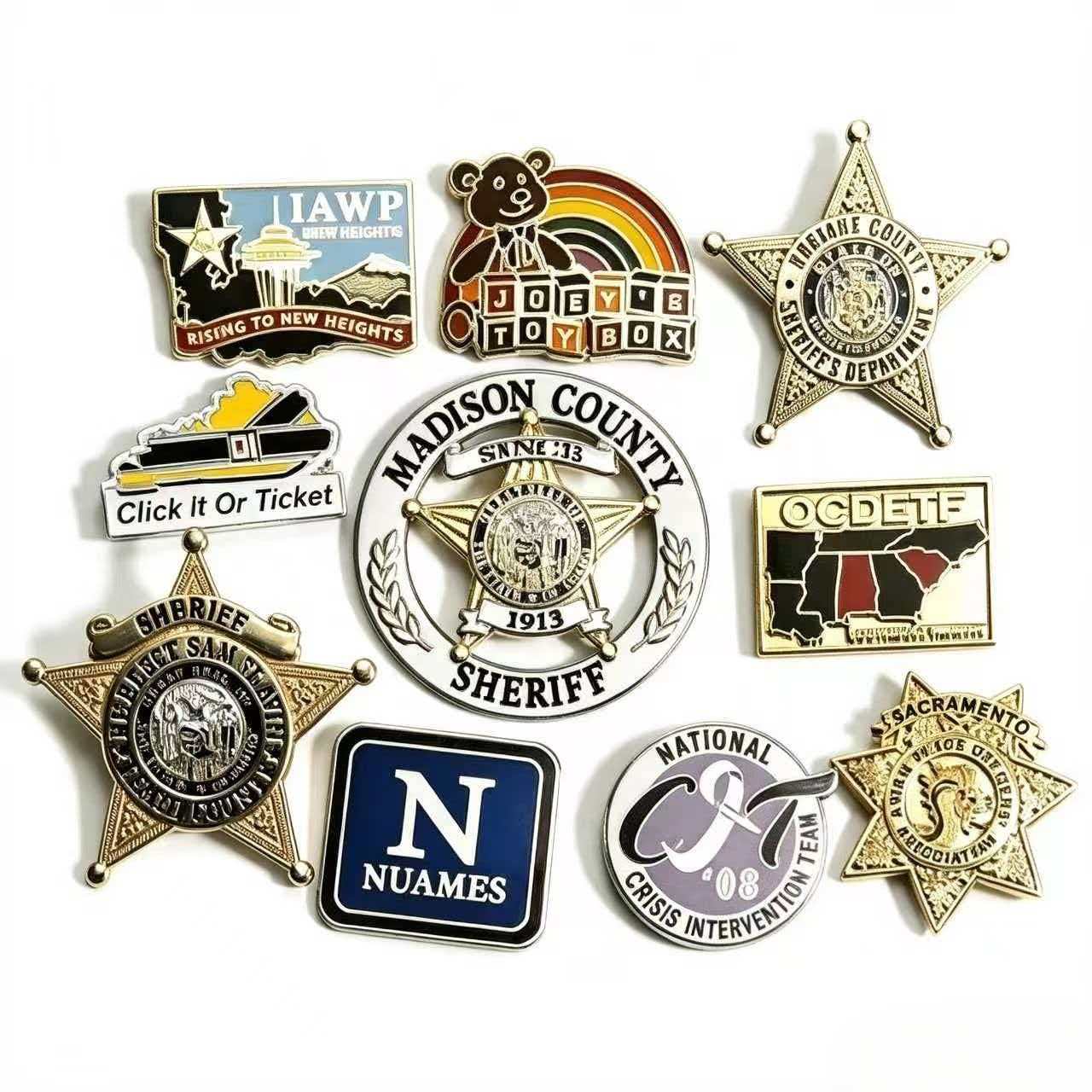
Choose the pin method based on the artwork result you need
The first decision is visual, not administrative. Choose a stamped metal style when raised and recessed metal is part of the message. Choose enamel when color is a major part of the design. Choose printed production when the artwork requires fine tonal detail that a stamped metal surface cannot reproduce clearly.
| Production option | Best fit | Why buyers choose it | When it does not fit |
|---|---|---|---|
| Die struck metal | Logos, seals, rank insignia, lettering, anniversary marks | Stamped relief creates a tactile metal finish with visible raised and recessed areas. | Not the preferred option for photographs, gradients, or designs that rely on many tiny printed details. |
| Soft enamel | Bold logos, event giveaways, club merchandise | Color sits below raised metal lines, making outlines easy to read. | Not ideal when a smooth flush surface is the main visual requirement. |
| Hard enamel | Premium branded gifts, collector items, formal recognition | Provides a smooth enamel surface with defined metal separations. | May be unnecessary when the brief calls for an all-metal heritage appearance. |
| Offset printed pins | Fine artwork, gradients, portraits, detailed illustrations | Printed artwork can carry visual information that stamped relief cannot express. | Does not provide the same stamped depth as metal lapel pins. |
| Three dimensional casting | Mascots, sculpture-like forms, museum souvenirs | Suitable when the design needs shaped depth rather than flat relief. | Not needed for a simple badge, seal, or text-led design. |
For example, a membership organization with a shield logo, raised initials, and a single plated finish should usually start with a die struck option. A youth tournament logo with several filled color areas may be better reviewed as soft or hard enamel. For a detailed portrait or illustrated product launch artwork, ask to compare offset printed pins before approving a metal-only concept.
Custom Panda can manufacture zinc alloy, brass, and iron pin styles, including hard enamel, soft enamel, offset printed, three dimensional die-cast, laser engraved, and dual-plated finishes. This range matters because it allows the production method to follow the artwork rather than forcing every project into one format.
Order-critical answers before tooling begins
Before tooling begins, buyers need direct answers about colored details, artwork proofs, minimum quantities, production timing, and approval changes. These points determine whether the order can proceed as quoted or must be revised. The table below sets practical boundaries for each question.
| Order question | Direct answer | What to provide | Boundary to understand |
|---|---|---|---|
| Can the design include color? | Yes, where the selected process supports enamel or printed color areas. | Provide brand color references and identify which details must remain metal. | Colored areas must be reviewed in the proof. A metal-only design and an enamel design do not produce the same appearance. |
| Will I receive artwork approval? | Yes. A photo or digital sample confirmation is provided before production. | Send the logo, text, desired finish, quantity, and intended use. | Approval should include wording, shape, finish, color placement, and back attachment. Do not approve only the front artwork. |
| Is there a minimum order? | Select digital printing and certain custom items have no MOQ. Standard bulk and offset printing items have a minimum quantity of 1,000 units. | State your required quantity at the RFQ stage. | Your preferred production method can affect the applicable minimum quantities. Ask for confirmation rather than assuming all pin types follow one rule. |
| How long will production take? | Pin, patch, and label samples have a stated lead time of 3 days. Bulk production is stated at 8 to 9 days. | Provide your delivery deadline and destination before quotation. | Production time is separate from shipping time. U.S. shipping is stated at 5 to 6 business days. |
| Can artwork change after approval? | Changes should be requested before final approval and tooling release. | Send a marked revision or replacement file and list every modification. | A change to shape, text, plating, colors, or back hardware after tooling begins may require the quotation and schedule to be reviewed again. |
The clear conclusion is simple: do not treat a digital proof as a decorative preview. Treat it as the order-control document. It should be checked by the person responsible for brand accuracy and by the person responsible for purchasing approval. This is especially relevant when the pin carries a title, date, award tier, legal name, event name, or member designation.
Our facility is ISO 9001:2015 certified and Disney FAMA certified. We also provide photo or digital sample confirmation before production, which gives procurement teams a defined review point before bulk work proceeds.
Review colored details and metal relief together
Colored details need more than a list of brand colors. The proof must show where each color sits in relation to the raised metal borders. On enamel styles, metal lines separate color areas. On a stamped metal design, selective color should be treated as a deliberate feature, not an afterthought.
What to check in the artwork proof
- Logo shape: Confirm the outer silhouette, especially if it departs from a circle, shield, rectangle, or standard badge shape.
- Text spelling: Check every letter, date, accent mark, trademark symbol, and line break. Text errors are expensive when discovered after approval.
- Metal finish: Identify the intended plating appearance in writing. Do not rely on a verbal description such as “gold” without proof confirmation.
- Raised and recessed areas: Ask the supplier to show which zones will stand proud and which zones will sit lower.
- Color placement: Confirm each filled area against the approved visual reference. Brand colors may look different when placed beside a particular plating finish.
- Back attachment: Verify the selected pin backing options and their location. A back attachment should not interfere with important front detail or balance.
- Edge treatment: Confirm whether cut-out openings, interior spaces, or shaped edges are intentional and practical for the final item.
Do not approve a proof if any colored details are described only by general terms such as “blue area” or “dark metal.” Provide the relevant brand reference and ask for the proof to label the areas clearly. This approach fits organizations with brand governance, licensed merchandise, or event sponsors. It may be less necessary for a simple uncolored recognition pin with no logo color requirements.
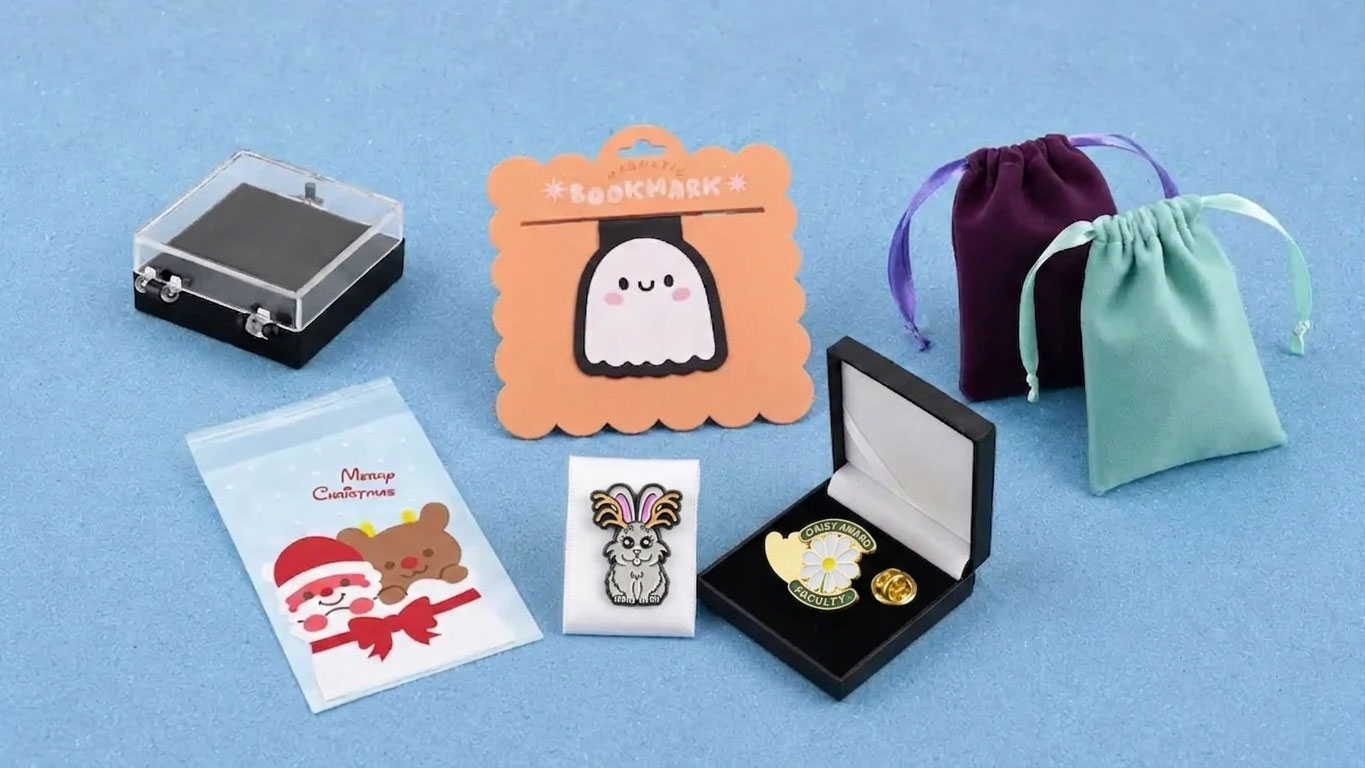
Custom Panda’s production capabilities include dual-plated finishes, laser engraving, enamel filling, and offset printing. If the proof shows a combination of stamped relief and color, request that the supplier state which effect is used in each zone. That avoids approving an image that looks possible on screen but is unclear as a manufacturing instruction.
Plan quantity, samples, and production timing without assumptions
Quantity affects more than unit pricing. It can affect the production route, the minimum order requirement, how samples are handled, and the time available for approvals. Buyers should state the exact quantity they need now, the likely reorder volume, and whether the order is for a single event or an ongoing program.
For Custom Panda pin, patch, and label projects, the stated sample lead time is 3 days and bulk production is 8 to 9 days. U.S. shipping is stated at 5 to 6 business days. These figures should be used as planning inputs, not as a reason to delay artwork approval. A late approval can move the production start date.
A practical order planning procedure
- Define the use case: staff recognition, retail merchandise, fundraising, anniversary, uniform identification, or event distribution.
- Send the editable artwork where available, plus any approved logo usage rules and color references.
- Specify the metal finish, colored details, pin backing options, and desired quantity.
- State whether your requested quantity is below or above 1,000 units so the supplier can confirm the correct production path.
- Request the digital proof and review front design, back attachment, wording, colors, and shape together.
- Consolidate feedback into one marked file. Conflicting comments from multiple stakeholders can delay release.
- Approve only when all decision makers have signed off. Then retain the approved file with the purchase order.
- Provide the ship-to destination and required arrival date so production and shipping can be reviewed as separate stages.
This procedure fits first-time procurement teams because it turns a creative request into an auditable manufacturing brief. It is less demanding for a reorder using an already approved design, but the buyer should still reconfirm quantity, finish, attachment, and delivery destination.
For related corporate recognition projects, compare custom company lapel pins with die struck custom challenge coins. Pins are generally better for wearable identity and event distribution, while coins may suit award programs or commemorative presentations where a pin post is not needed.
Know which changes can affect price and schedule
The safest rule is to settle visual and functional choices before tooling. A request to revise the quantity may be straightforward to review, but changes to artwork, plating, shape, colored details, or back hardware can affect the approved production instruction.
| Requested change | Likely order impact | Buyer action |
|---|---|---|
| Correcting spelling or dates | Requires a revised proof before release. | Send corrected copy in writing and recheck all text after revision. |
| Changing metal finish | May change the visual contrast and quotation review. | Ask for the revised finish to appear clearly on the proof. |
| Adding enamel colors | Changes the production specification from an all-metal appearance. | Identify every color location and approve the revised artwork. |
| Changing outer shape | Can affect tooling and schedule review. | Submit revised vector artwork before tooling begins. |
| Changing pin backs | Can affect stability, placement, and intended use. | State whether the item will be worn on a jacket, lanyard, uniform, or display card. |
| Increasing quantity | May require an updated production and shipping review. | Confirm the change as soon as possible rather than waiting for final dispatch. |
A useful scenario is an association ordering 1,000 recognition pieces for an annual conference. The design includes a raised crest, a plated border, and two color areas. Before approval, the buyer should confirm the conference year, participant title, crest version, finish, color placement, attachment, quantity, and arrival date. If the event committee later requests a new year or revised title, the correct response is to issue a new proof request before tooling is released.
When the order is approved for bulk production, Custom Panda includes 100 bonus pieces with every bulk order. The stated quality support also includes a color mismatch free reprint, proportional replacement for defects, and 5-day fast re-stocking or repair. These terms do not replace proof review; they support a defined response if a confirmed production issue occurs.
Use real project references to set the right expectation
A good sourcing decision should be grounded in a relevant use case. For a Japan museum exhibition, Custom Panda produced three dimensional cast metal souvenir lapel pins with antique bronze relief and cut-out details to reflect traditional architectural aesthetics. That example fits a design where depth and sculpted metal character matter more than filled color.
For a Canada esports tournament championship, Custom Panda created hard enamel pins with polished gold plating and dual-tone colors for fans and players to wear on jackets and lanyards. That case shows why hard enamel should be considered when the requirement centers on visible colored details rather than stamped relief alone.
For buyers seeking a formal all-metal direction, review premium die struck lapel pins alongside the approved artwork requirements. The right method depends on the design, intended use, quantity, approval path, and deadline—not on a product name alone.
Submit your artwork, quantity, finish preference, and required delivery date for a quote and proof review.