

Get High Quality Iron On Patches Custom Made for Any Budget
Placing a bulk order for iron on patches custom made for your brand, only to have them peel off after the first wash, is a costly mistake. It ruins expensive apparel, undermines your brand's quality, and leads to customer complaints. This failure isn't usually due to the patch itself but to a mismatch between the heat-seal backing, the garment's fabric, and the application process. As a manufacturer, we've seen this issue derail countless projects for unprepared buyers.
The key to sourcing durable, professional-grade patches lies in understanding the technical specifications before you request a quote. Choosing the correct adhesive, optimizing your design for cost-efficiency, and partnering with a reliable supplier are critical steps. This guide provides a factory-floor perspective on how to get it right, ensuring your patches stay put and represent your brand for years to come.
Choosing the Right Heat-Seal Backing for Your Fabric
The term "iron-on" refers to a heat-activated adhesive backing. However, not all adhesives are created equal. Applying a standard backing to heavy-duty workwear or a high-heat adhesive to delicate synthetics will lead to application failure. Selecting the correct backing is the first step toward a successful production run.
Here’s a breakdown of common heat-seal backings and their ideal applications:
| Backing Type | Recommended Fabrics | Best For | Avoid Using On |
|---|---|---|---|
| Standard Heat Seal | Cotton, Polyester, Cotton/Poly Blends | T-shirts, hoodies, tote bags, and general promotional apparel. | Nylon, rayon, leather, waterproofed materials. |
| Industrial Strength Adhesive | Heavy Canvas, Denim, Twill | Workwear, heavy-duty jackets, backpacks, and gear that requires maximum durability. | Heat-sensitive fabrics, lightweight garments. |
| Low-Melt Adhesive | Nylon, some synthetic materials | Windbreakers, athletic apparel, and other items that could be damaged by high heat. | Thick, heavy fabrics like denim or canvas. |
For example, when we produced heavy-duty embroidered custom hook & loop patches for a U.S. outdoor gear brand, we used materials with weather-resistant threads and a rugged backing designed to adhere to tactical vests and hiking backpacks. While their final choice was Velcro for modularity, the initial discussion about industrial-strength heat-seal was critical to defining their durability requirements. Always confirm your garment's material composition with your supplier. Our team offers free design assistance to help you select the perfect backing for your specific product line.
A B2B Buyer's Cost Breakdown for Custom Patches
The unit price for custom patches is determined by a combination of factors, not just size. Understanding these cost levers allows you to adjust your specifications to meet a target budget without sacrificing quality. When sourcing in bulk, small changes can result in significant savings.
Here are the primary elements that influence your final per-patch cost:
- Order Volume: This is the single biggest factor. As an ISO 9001:2015 certified facility, our process is optimized for efficiency at scale. Our minimum order for bulk production is 1,000 units, which unlocks the most competitive pricing. Smaller runs are possible but will have a higher per-unit cost due to setup time.
- Embroidery Coverage: This refers to the percentage of the patch's surface that is covered in stitches. It directly impacts material usage and machine run time.
- 50% Coverage: The design is stitched onto a colored twill background, which remains visible. This is the most cost-effective option.
- 75% Coverage: More of the twill is covered, but some background is still visible. A good balance between cost and design complexity.
- 100% Coverage: The entire surface of the patch is covered in thread, offering a premium, textured look. This is the most expensive option.
- Border Style: The finish on the edge of the patch affects both its appearance and cost.
- Merrowed Border: A heavy, overlocked stitch that wraps around the edge. It's the industry standard for simple shapes like circles and squares and is highly durable.
- Hot-Cut Border: The patch shape is cut with a hot knife, sealing the edges. This is necessary for complex, custom shapes with sharp angles and is slightly more costly due to the precision required.
- Specialty Materials: Using non-standard threads will increase the price. Options like metallic, neon, or glow-in-the-dark threads add a unique visual effect at a premium cost.
By adjusting these variables, you can effectively manage your budget. For instance, a design with 75% coverage and a standard merrowed border on a 1,000-piece order will be significantly more affordable than a 100% coverage, hot-cut patch on a 250-piece order.
Common Failures with Iron-On Patches and How to Prevent Them
From my 12 years in manufacturing, I’ve seen that most patch failures happen post-production. A high-quality patch can still fail if applied incorrectly. By anticipating these common issues, you can ensure a successful application and long-lasting product.
Mistake 1: Using a Home Iron for Bulk Application
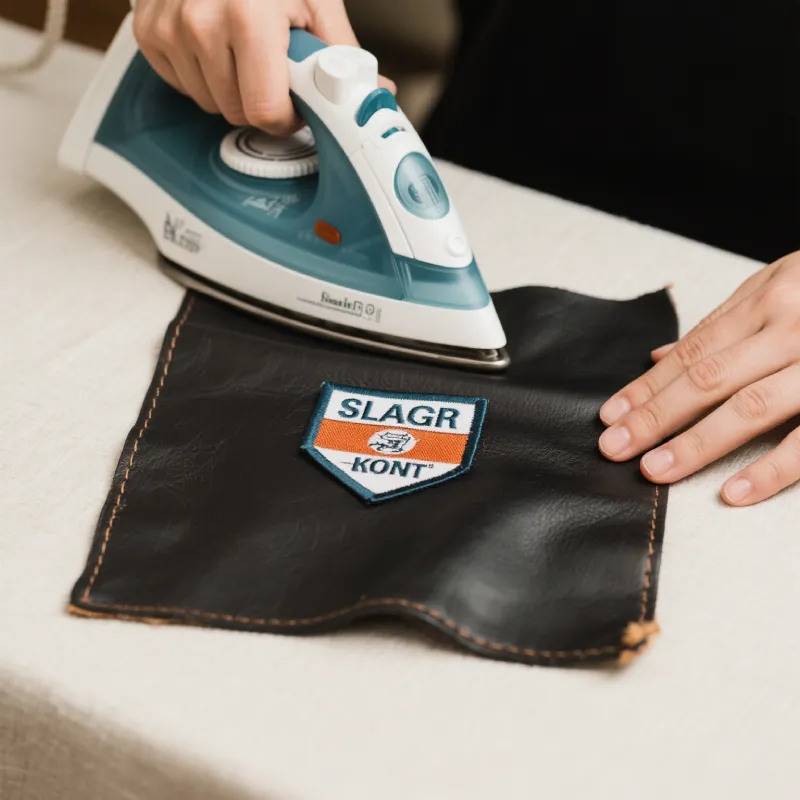
A standard home iron does not provide the consistent temperature and even pressure required for a permanent bond, especially for industrial-strength adhesives. This is the number one cause of peeling.
- Solution: Use a commercial heat press. It guarantees uniform heat and pressure across the entire patch, properly activating the adhesive for a permanent bond. We always provide application guidelines with our bulk orders.
Mistake 2: Applying Patches to Unsuitable Materials
Heat-seal adhesive needs a porous fabric surface to bond with. It will not work on certain materials.
- Solution: Avoid applying iron-on patches to leather, vinyl, nylon, or any fabric with a waterproof coating. For these applications, a sew-on or Velcro backing is the correct choice. We produced embossed faux-leather patches for an Italian denim line that were sewn on, as heat application would have damaged the patch material.
Mistake 3: Sourcing from Suppliers with Poor Adhesive Quality
Low-grade adhesive backing can feel sticky initially but will break down after a few wash cycles. The adhesive may be too thin or lack the chemical composition for strong, long-term adhesion.
- Solution: Vet your supplier. Ask about their quality control processes and what guarantees they offer. At Custom Panda, we offer proportional replacement for any confirmed defects and provide pre-production photo samples for approval, so you can see the quality before your full order of wholesale embroidered patches is run.
Mistake 4: Embroidery Borders Fraying After Washing
If a patch's border is not properly sealed, threads can come loose over time, causing the patch to look worn and eventually fall apart. This is a clear sign of a manufacturing defect.
- Solution: Ensure your manufacturer uses a high-density merrowed border for standard shapes or a properly sealed hot-cut edge for intricate designs. Our six dedicated production lines are equipped to handle both with precision, preventing fraying.
Material and Design Specifications for Professional Results
Beyond the backing, the materials used for the patch itself are essential for achieving a professional look that aligns with your brand. The right choices will ensure your design is clear, crisp, and durable.
Thread Type and Detail Resolution
The two primary thread types for embroidery are Polyester and Rayon. Polyester is known for its strength, durability, and colorfastness, making it ideal for workwear and items that will be washed frequently. Rayon offers a brighter sheen and softer feel but is slightly less durable. For most applications, we recommend polyester.
It's also important to match the patch type to your design's complexity:
- Embroidered Patches: Best for bold logos, text, and designs without tiny details or gradients. The stitched, textured feel is classic and highly durable.
- Woven Patches: Made with thinner threads, woven patches can achieve much higher detail and are suitable for complex logos or small text. They have a flat, smooth surface.
- Printed Patches: Ideal for photorealistic images or designs with color gradients. The design is printed directly onto a twill substrate.
Our free design assistance service helps clients determine the best patch type for their artwork. We can advise if a design needs to be simplified for embroidery or if a woven patch would better capture its detail, like the ultra-soft damask custom woven clothing labels we made for a UK knitwear brand.
Twill Background and Color Matching
For patches with less than 100% embroidery coverage, the twill background becomes a part of the design. We can match this twill to your specific brand colors to ensure consistency. During the digital proofing stage, we confirm all Pantone color codes for both the thread and the twill background. If there is ever a color mismatch in the final product, we offer a free reprint guarantee.
By focusing on these technical details—backing, coverage, border, and materials—you can source iron on patches custom designed to perform correctly and fit your budget. This proactive approach eliminates common production risks and ensures your final product enhances your apparel and brand identity.
Ready to create durable, high-quality patches for your brand? Contact our experts to discuss your design and receive a detailed, no-obligation quote today.