

Hard vs. Soft Enamel Pins: Which Is Right for Your Design?
What Are Hard Enamel Pins?
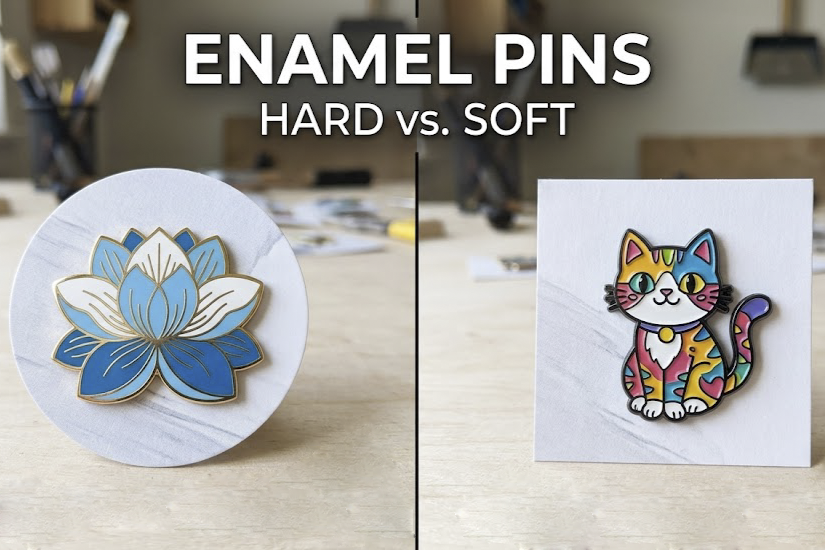
Hard enamel pins are premium, high-quality custom pins known for their smooth, flat surface and durable, jewelry-like finish. They are widely considered the gold standard for retail merchandise, corporate branding, and high-end collectible pins.
How They Are Made
Die-Striking: Your design is stamped into a metal base, creating recessed cavities separated by raised metal borders.
Color Filling: Liquid enamel paint is poured into these cavities. Crucially, the enamel is overfilled, so it sits slightly higher than the metal lines.
Baking: The pin is baked at a high temperature to harden the enamel.
Sanding & Polishing: This is the key step. The surface of the pin is aggressively sanded and polished down until the hardened enamel and the metal borders are perfectly flush and level with each other.
What Are Soft Enamel Pins?
Soft enamel pins are the most popular and traditional type of custom pins. They are highly sought after for their distinct textured feel, vibrant colors, and excellent capability to capture intricate design details.Unlike hard enamel pins, which are polished perfectly flat, soft enamel pins have a signature 3D dimensional look where the metal borders sit higher than the colorful paint inside.
How They Are Made
Die-Striking: Just like hard enamel, your design is stamped into a metal base plate, creating raised metal ridges and recessed cavities.
Electroplating: The raw metal pin is plated into its final finish (such as gold, silver, or black nickel) before any color is added.
Color Filling: Liquid enamel paint is precisely injected into the recessed cavities. However, the enamel is only partially filled, deliberately sitting below the raised metal edges.
Baking: The pins are baked in a low-heat oven to cure and harden the enamel, causing it to cling to the metal walls and form a slight concave dip.
Key Characteristics of Hard & Soft Enamel Pins
Hard Enamel Pins
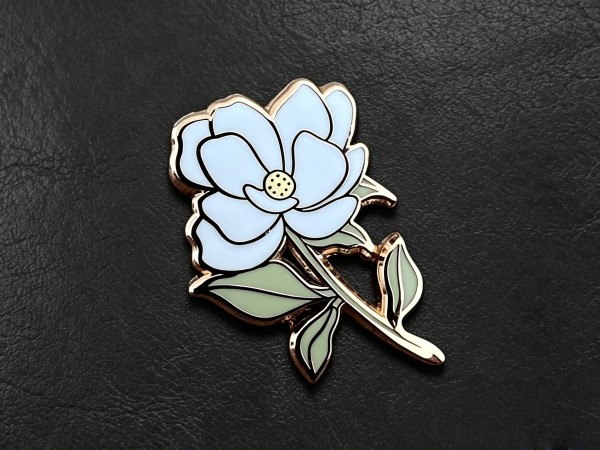
Flat & Glossy Surface: Because they are polished flat, if you run your finger across a hard enamel pin, you won't feel distinct ridges. It feels like a smooth piece of glass or ceramic.
High Durability: The high-heat baking and thick enamel layers make these pins incredibly scratch-resistant. They don't fade easily, making them perfect for everyday wear on backpacks, jackets, or hats.
Premium Look: The clean lines and uniform surface give them a bright, high-end appearance that mimics traditional fine jewelry.
Soft Enamel Pins
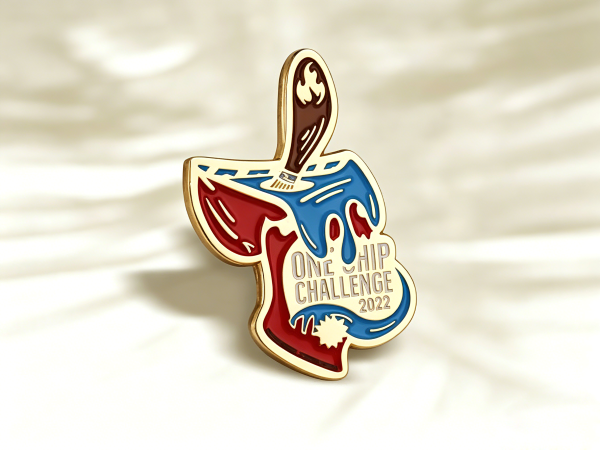
Textured & Dimensional Surface: If you run your thumb across a soft enamel pin, you will instantly feel the physical ridges of the metal borders. It has a tactile, tiered depth that many collectors prefer.
Crisp, Fine Details: Because the pin does not undergo an aggressive mechanical sanding and polishing stage, the original sharp lines of the metal mold are perfectly preserved. This makes it exceptional for intricate line art, small text, and geometric patterns.
Ultimate Finish Flexibility: Since the plating happens first, soft enamel is compatible with a massive variety of modern, trendy finishes that can't survive the hard enamel process. This includes anodized rainbow plating, matte black finishes, and dyed metals.
Soft Enamel vs. Hard Enamel: A Quick Reference Guide
| Feature | Hard Enamel Pins | Soft Enamel Pins |
| Surface Texture | Perfect flat & smooth; enamel is polished flush with the metal lines. | Layered & textured; enamel sits recessed below the raised metal ridges. |
| Visual Appearance | Sleek, uniform, and jewelry-like with a high-gloss finish. | Dimensional, traditional, and crisp with distinct 3D depth. |
| Design Suitability | Best for bold, clean lines and modern illustrations. | Best for highly intricate details, small text, and comic styles. |
| Plating Versatility | Limited mostly to standard metallic finishes. | Unlimited; perfectly supports Rainbow plating, Matte Black, and Dyed Metals. |
| Durability | Extremely high; highly scratch-resistant and fade-proof. | High; metal ridges are exposed but can be protected with an Epoxy Coating. |
| Production Cost | Higher; requires intensive manual baking and polishing stages. | Lower; highly cost-effective for large batches or retail startups. |
Pros & Cons of Hard and Soft Enamel Lapel Pins
Here is a breakdown of the Pros & Cons of Hard Enamel vs. Soft Enamel Lapel Pins:
Hard Enamel Pins
Hard enamel pins are polished down to a flat, smooth surface where the metal lines are flush with the colorful enamel fill.
Pros:
Premium Appearance: Delivers a sleek, high-gloss, jewelry-like finish that instantly communicates luxury and professionalism.
High Durability: Highly scratch-resistant and fade-proof, making them exceptionally long-lasting.
Brand Alignment: Ideal for corporate businesses, premium fashion labels, or high-end gift shops.
Cons:
Higher Cost: Requires an intensive manual baking and polishing process, making production more expensive.
Limited Plating Versatility: Mostly restricted to standard metallic finishes (like gold, silver, or bronze) because modern trendy platings cannot always survive the high-heat hard enamel process.
Soft Enamel Pins
Soft enamel pins are layered so that the enamel sits lower than the raised metal ridges, creating a distinct, tactile 3D texture.
Pros:
Exceptional Plating Versatility: Because metal plating happens before the enamel is filled, it perfectly supports trendy, modern finishes like anodized rainbow plating, matte black, and dyed metals.
Vibrant Artistic Pop: The distinct 3D textures and sharp metal borders make complex graphics, illustrations, and character designs pop.
Cost-Effective: Lower production costs make it highly economical for large batches or retail startups.
Aesthetic Appeal: The go-to choice for indie illustrators, anime merchandise, and trendy lifestyle brands looking for a classic collectible feel.
Cons:
Lower Natural Durability: The raised metal ridges are exposed to wear and tear (though they can be protected by adding an optional Epoxy Coating).
Less Traditional "Luxury" Feel: Lacks the completely flat, flush, high-polished surface characteristic of fine jewelry.
How to Choose the Right Option for Your Brand?
Deciding between hard and soft enamel isn’t just a matter of which style looks cooler—it’s a strategic decision that affects your brand’s perception, your production timeline, and your bottom line. To find the absolute perfect match when designing your Custom Enamel Pins, ask yourself these four essential branding questions before placing your order:
Question 1: What Is Your Brand Identity?
Your pins are an extension of your brand, so their texture and finish should match the message you want to send.
If you are a corporate business, a premium fashion label, or a high-end museum gift shop, Hard Enamel is your best bet. Its sleek, flat surface and high-gloss jewelry-like finish instantly communicate luxury, professionalism, and high quality.
If you are an indie illustrator, a comic book creator, an anime merchandise designer, or a trendy lifestyle brand, Soft Enamel is often the preferred choice. The distinct 3D textures and sharp metal lines make artistic graphics and character designs pop with a classic collectible aesthetic.
Still unsure? Here's a quick scenario lookup to help you zero in on the right fit:
| If your project involves... | Recommended Type |
| Corporate branding, employee recognition awards, or executive gifts | Hard Enamel |
| Luxury retail merchandise, museum souvenirs, or gallery-exclusive collectibles | Hard Enamel |
| Hotel or private membership pins, high-end event badges, or VIP credentials | Hard Enamel |
| Everyday wear on backpacks, jackets, or hats where scratch resistance is key | Hard Enamel |
| Comic conventions, anime merchandise, or fan-driven collectible pins | Soft Enamel |
| Independent artist or illustrator merchandise featuring intricate linework and fine details | Soft Enamel |
| Music festivals, band merchandise, or streetwear brands with an edgy, casual vibe | Soft Enamel |
| Promotional giveaways, large-scale fundraising campaigns, or charity events | Soft Enamel |
| Trendy lifestyle brands looking to experiment with rainbow anodized, matte black, or dyed metal finishes | Soft Enamel |
No matter which path you choose, understanding your brand identity and where your pins will live in the wild is the first step toward a design that truly connects with your audience.
Qusetion 2: How Detailed and Complex Is Your Artwork?
The complexity of your graphic design will physically dictate which manufacturing process works best.
If your artwork relies on bold, clean lines, solid color blocks, and strong minimalist layouts, Hard Enamel is your best bet. Hard enamel excels at translating modern corporate logos, typography, and flat vector art into stunning, premium, smooth-faced products.
If your design features intricate geometric patterns, tiny text, thin intersecting lines, or highly detailed character illustrations, Soft Enamel is the ideal choice. Because soft enamel pins do not undergo an aggressive mechanical sanding process, they perfectly preserve the microscopic precision and sharp line work of the original metal mold.
Question 3: What Is Your Target Budget and Batch Size?
Budget efficiency is key, especially if you are manufacturing large quantities for events or promotional giveaways.
Hard Enamel pins require more manual labor, meticulous baking stages, and intensive polishing, making their production costs slightly higher. However, they allow you to command a premium retail price tag if you are selling them as high-tier collectibles.
Soft Enamel pins are generally more cost-effective to produce. If you are a startup launching your first product line, or an organization ordering thousands of pins for a large-scale promotional campaign or charity drive, soft enamel gives you the highest return on investment.
Question 4: Do You Want to Use Trendy Specialty Finishes?
If your brand loves to stand out with unique materials and experimental visual effects, the choice becomes clear.
Hard Enamel is traditionally limited to classic metal platings like high-polished Gold, Silver, Copper, or Black Nickel, as specialty finishes cannot withstand the intense heat and friction of the final polishing wheel.
Soft Enamel is exceptionally versatile when it comes to specialty platings. Because the metal is plated before the color is added, it is the only method that perfectly accommodates trendy finishes like anodized rainbow metal, matte black metal, or vibrant dyed metal colors.
Custom Panda:Your Trusted Partner for Premium Custom Creations
With 15 years of B2B manufacturing expertise, Custom Panda is a direct factory specializing in premium custom lapel pins, embroidered patches, and woven labels. We are dedicated to providing global brands with high-quality merchandise, competitive factory-direct pricing, and fast worldwide shipping.
Why Choose Us?
Premium Quality Guaranteed: Tailored perfectly to your brand needs and fully backed by our quality promise.
Factory Direct Pricing: Save up to 30% with competitive direct pricing.
No Minimum Order: Complete customization for any scale, from small batches to large bulk.
Free Digital Proof: Zero risk with a free digital design proof provided within 12 hours.
Fast Turnaround & Shipping: 2 to 3 days production with reliable worldwide delivery in just 5 to 7 days.
Ready to elevate your brand?
Get expert answers for your custom patches, badges, and stickers. Start today and claim your free digital proof!