

Understanding the Total Cost of Ownership for Custom Bag Labels
Focusing only on the per-label price is a common mistake that inflates long-term operational costs. When sourcing custom bag labels, the specifications of the roll itself—often overlooked in an RFQ—can lead to significant production inefficiencies, machine downtime, and wasted material. These hidden expenses quickly erode any perceived savings from a low unit price, impacting your total cost of ownership (TCO) for years.
An optimized label roll reduces the frequency of changeovers on your application line, minimizes operator intervention, and ensures consistent performance from the first label to the last. For businesses packaging products like coffee, snacks, or supplements, where production speed is key, these details are not minor. They are fundamental to maintaining profitability. As an ISO 9001:2015 certified manufacturer, we help clients analyze these factors before production begins, preventing costly errors and ensuring the labels integrate perfectly into their workflow.
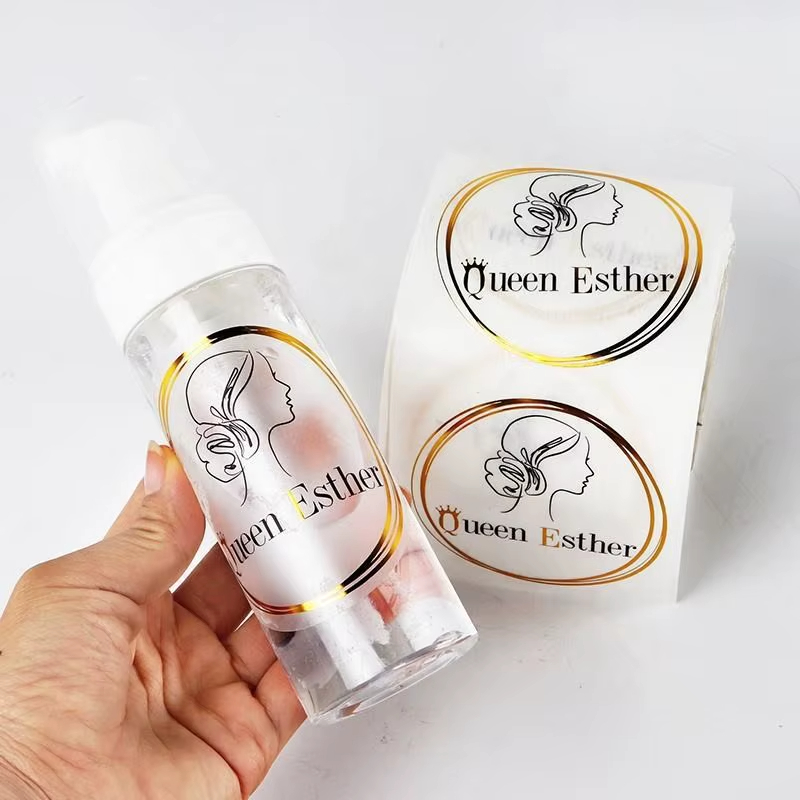
Beyond the Unit Price: Key Roll Specifications That Impact Your Budget
The physical format of your labels determines how efficiently they run on your equipment. While the design and material are important for branding, the roll specifications are critical for production. Before placing a bulk order, your procurement team must define and communicate these four key variables to your supplier. Neglecting them often results in receiving labels that are technically correct but operationally inefficient.
- Maximum Outer Diameter (OD): This is the full diameter of a finished label roll. Your label application machinery has a maximum OD it can accommodate. Requesting the largest possible OD that your equipment can handle means more labels per roll. More labels per roll directly translates to fewer roll changes, reducing costly downtime and operator labor.
- Core Inner Diameter (ID): Label rolls are wound onto a cardboard tube or core. The industry standards are typically 1 inch or 3 inches. Using the wrong core size will make the roll unusable on your equipment without special adapters. Always confirm your machine's core size requirement. A 3-inch core is common for most automatic and semi-automatic applicators.
- Label Repeat (or Pitch): This is the distance from the leading edge of one label to the leading edge of the next. It includes the label itself and the gap between labels. Inconsistent label repeat can cause the applicator's sensor to misfire, leading to skewed labels, missed applications, and product waste. We maintain tight tolerances to ensure flawless application.
- Unwind Direction: This dictates how the labels come off the roll, which is determined by the orientation of the artwork and the direction the roll unwinds. There are eight standard unwind directions. Choosing the wrong one will result in labels being applied upside down or backward by automated equipment. Providing a simple diagram to your supplier is the best way to prevent this error.
Calculating the 5-Year TCO for Your Label Application
A lower price per thousand labels can be deceptive. A supplier offering a slightly lower unit cost on smaller, inefficient rolls may actually cost you more over the life of a project. The true cost includes the labels plus the operational expenses required to apply them. A Total Cost of Ownership calculation reveals these hidden factors.
Let's model a scenario for a snack food company that applies 2,000,000 labels annually and runs a single production shift.
Scenario Assumptions:
- Total Annual Label Volume: 2,000,000
- Operator Labor Cost: $25/hour
- Time per Roll Changeover: 10 minutes (0.167 hours)
- Labels Wasted per Changeover: 15 (due to threading the machine)
Below is a comparative TCO analysis between a standard, non-optimized roll and an optimized roll designed for efficiency. This demonstrates how roll specifications directly influence your bottom line. For more information on configuring your supply, see our guide to custom printed roll labels.
| Cost Component | Supplier A (Standard Roll) | Supplier B (Optimized Roll) | Notes |
|---|---|---|---|
| Roll Specifications | 4,000 Labels/Roll | 8,000 Labels/Roll | Supplier B provides a larger OD roll. |
| Confirmed Cost: Label Purchase | |||
| Price Per 1,000 Labels | $15.00 | $15.50 | Supplier A appears 3.2% cheaper on unit price. |
| Total Annual Label Cost | $30,000 | $31,000 | Based on 2,000,000 labels. |
| Estimated Cost: Operations | |||
| Total Rolls Per Year | 500 | 250 | 2,000,000 / Labels per Roll |
| Annual Changeover Labor Cost | $2,087.50 | $1,043.75 | (Rolls/Year) * 0.167 hrs * $25/hr |
| Annual Wasted Label Cost | $112.50 | $56.25 | (Rolls/Year) * 15 labels * ($15.00 or $15.50 / 1000) |
| Total Annual Estimated Operational Cost | $2,200 | $1,100 | Labor + Waste |
| Total Year 1 Cost | $32,200 | $32,100 | (Label Cost + Operational Cost) |
| Total 5-Year Cost | $161,000 | $160,500 | (Year 1 Cost * 5) |
This analysis shows that despite a higher initial unit price, sourcing the optimized roll from Supplier B saves the company money within the first year. The savings compound over time, driven entirely by reducing operational waste and downtime. This TCO model doesn't even include unknown variables like potential freight savings from shipping fewer rolls or the opportunity cost of having a production line stopped for changeovers.
Matching Substrates and Adhesives to Bag Materials
The performance of your label is heavily dependent on choosing a material and adhesive combination that is compatible with your bag's surface and its end-use environment. A mismatch can lead to labels peeling, wrinkling, or fading, ultimately damaging your brand's reputation. This is a frequent issue we help clients solve, as seen with an Australian health supplement brand that required waterproof custom supplement labels with metallic foil and a scratch-proof lamination to withstand retail handling.
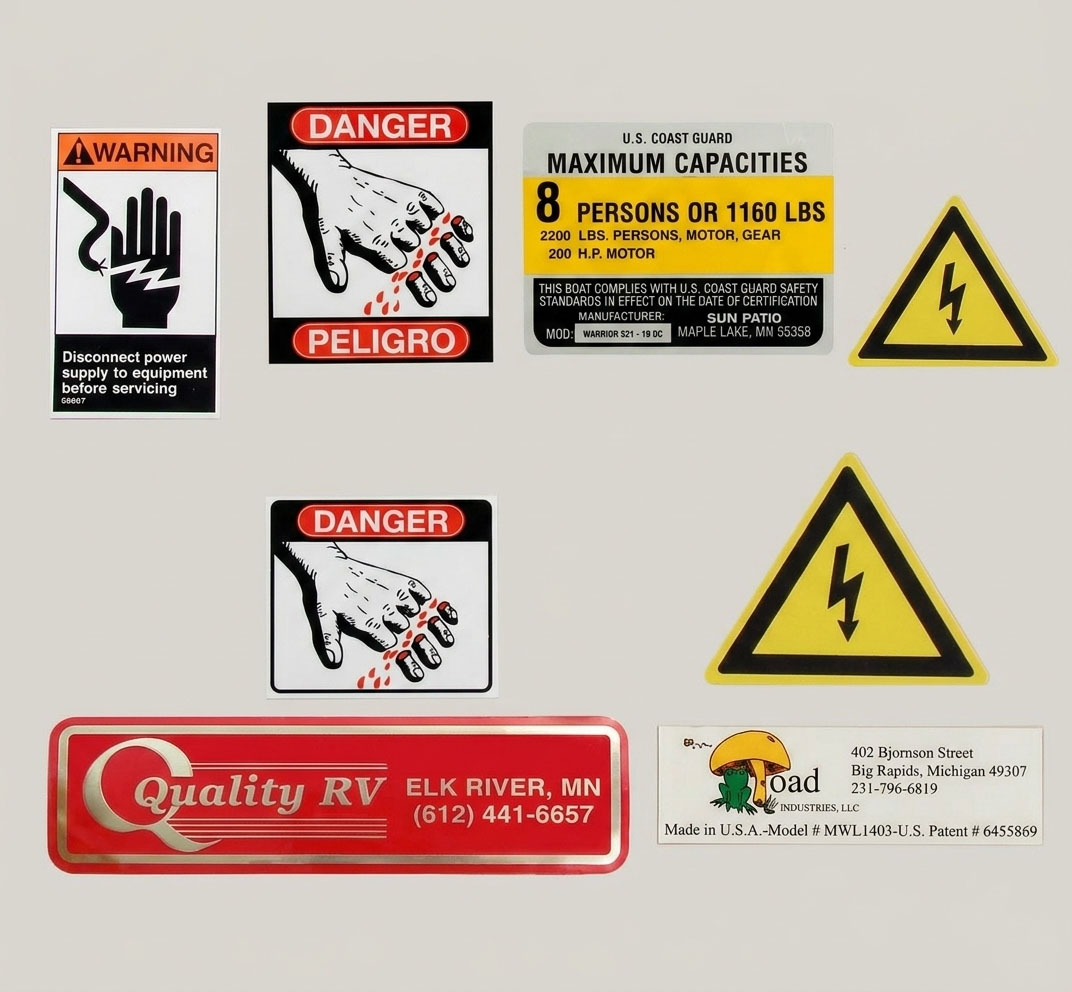
Here is a quick reference guide for selecting the right components for common bag types.
| Bag Material | Recommended Label Substrate | Adhesive Considerations | Common Failure Point to Avoid |
|---|---|---|---|
| Kraft Paper | Uncoated Paper, Kraft Paper | Permanent adhesive with good initial tack. | Adhesive not strong enough to bond with the porous, fibrous surface. |
| Mylar / Foil Pouch | White BOPP, Clear BOPP, Metallic BOPP | Strong permanent adhesive; consider lamination for scuff resistance. | Static charge on the bag surface repelling the label during application. |
| LDPE / Poly Bag | White BOPP, Vinyl (for flexibility) | Aggressive permanent adhesive designed for low-surface-energy plastics. | Label "flagging" or lifting at the edges as the flexible bag is handled. |
| Frozen Food Pouch | Synthetic Paper (e.g., PP), BOPP | All-temp or freezer-grade adhesive that resists condensation. | Standard adhesive failing and labels falling off in cold, moist environments. |
Our team provides free design assistance to help you select the ideal combination. For products with unique shapes, we also produce flexible pouch labels engineered to conform to curved and irregular surfaces without peeling.
Common Sourcing Mistakes That Compromise Bag Label Performance
A successful label project requires clear communication and attention to detail. Overlooking a simple specification can lead to an entire production run being unusable. With our daily capacity exceeding 1,000,000 labels from our 8,000 m² facility, we have systems in place to catch these issues before they become problems.
Here is a checklist of common mistakes to avoid when placing your next order:
-
Mistake 1: Not Verifying Unwind Direction.
Impact: Automated applicators apply labels incorrectly, causing massive product waste and requiring manual relabeling. Solution: Always provide your supplier with an unwind chart or a clear diagram showing the required orientation. We confirm this with a digital sample before bulk production.
-
Mistake 2: Ignoring Environmental Conditions.
Impact: Labels for refrigerated products peel off due to condensation, or labels on products exposed to heat experience adhesive bleed. Solution: Specify the storage and use conditions of your product. This determines if you need a freezer-grade, heat-resistant, or waterproof adhesive and substrate.
-
Mistake 3: Choosing a Finish That Scuffs Easily.
Impact: Your branding gets damaged during shipping and handling, resulting in a poor retail presentation. Solution: For high-contact packaging like snack bags, add a protective BOPP lamination (matte or gloss) over the printed label. This seals the ink and provides excellent resistance to scuffing and moisture.
-
Mistake 4: Using White Ink Without Confirming Opacity.
Impact: When printing on clear BOPP for a "no-label" look, a thin layer of white ink appears translucent and gray instead of a crisp, solid white. Solution: Request a double-hit or multi-layer application of white ink for maximum opacity. We use HP digital label presses that excel at producing bright, opaque whites on clear films.
By addressing these technical details during the quoting process, you can prevent costly production delays and ensure your packaging looks professional on the shelf. Our live human support team is available to walk you through these specifications.
Ready to optimize your label spend beyond the unit price? Submit your project details for a detailed quote and a free design review.