

How to Choose Custom PVC Labels for Outdoor Gear
The mistake most buyers regret is approving artwork before agreeing on thickness, backing and attachment method. A logo that looks sharp on a proof can curl off a jacket cuff, split along a stitch line or peel after the first wash. If you are shortlisting a supplier for custom PVC labels, settle those three variables first, then compare quotes. This guide covers the specification decisions, the failure points, and what we can and cannot confirm at the quoting stage.
I’m Alin, and I’ve spent 12 years on the manufacturing side of custom merchandise. Most outdoor-gear rejections I’ve seen came from a mismatch between label and fabric, not from the logo design.
Where PVC Fits Outdoor Gear and Where It Does Not
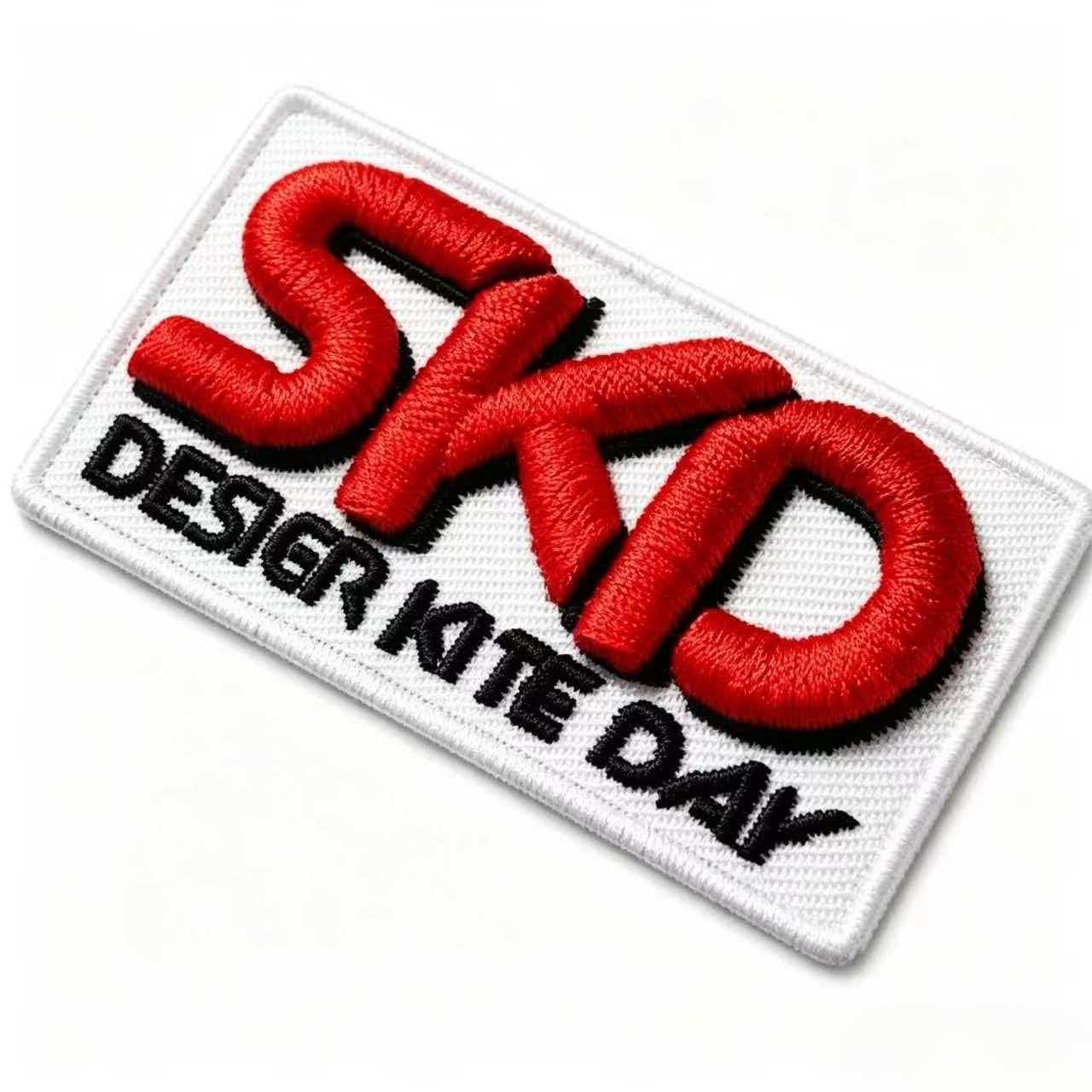
PVC (soft rubber) is a good choice when you need clean edges, solid color fields, raised logos and surfaces that shed water. It is not always the best choice. Fine text, soft hand-feel and breathable garments may point to another construction. Our patch range covers fine embroidery, woven labels, heat transfer, PVC soft rubber, chenille and printed options, so you can compare them honestly.
| Construction | Best for | Limit |
|---|---|---|
| PVC soft rubber | Backpack panels, jacket sleeves, tactical vests, footwear tabs, solid-color logos with relief | Stiffer on thin or stretchy fabric. Very small text can clog. |
| Fine embroidery | Cap fronts, uniform chests, textured gear where a woven look is wanted | Thread borders can fray if the edge finish is wrong for the use. |
| Woven labels | Inside neck tags, sewn seam labels, soft-contact areas | Less raised and less water-shedding than PVC. |
| Heat transfer or printed | Flat graphics, multi-color artwork, light garments | Surface print may wear faster under abrasion. |
If your gear needs a flat, printed identification tag instead of a stitched piece, our custom outdoor equipment PVC labels page shows that application more directly.
Boundary: Match PVC Thickness, Backing and Sewing Channels to Outdoor Gear Fabrics and Wash Exposure
This is the decision most product pages skip. Thickness, backing and sewing channels must be chosen together, and the right answer depends on the fabric the label sits on and how often it is washed or flexed. We do not publish a single fixed thickness for each use, because it depends on shape, relief height and the garment. Instead, agree the following with your supplier in writing and confirm it on a physical sample.
| Gear and fabric | Thickness direction | Backing / attachment | Sewing channel guidance | Where it does not apply |
|---|---|---|---|---|
| Rigid pack panels, heavy nylon or canvas | Thicker and raised relief is usually fine | Velcro (hook-and-loop) for swap-out, or sew-on for permanence | Place the channel or flange where stitching will not cut through detailed relief | Not for thin liners or garments that must drape |
| Jacket sleeves and shell fabrics | Thinner and more flexible, to follow the arm bend | Sew-on is the safer choice. Heat-seal only if the fabric tolerates heat | Keep the stitch line away from the PVC edge so it does not tear | Do not heat-seal on coated or waterproof shells without a fabric test |
| Tactical vests and modular panels | Medium to thick, depending on how raised you want it | Hook-and-loop backing sized to the loop field | Not needed with a full hook backing. Confirm adhesion area | Not for gear that is machine washed often with the hook side exposed |
| Frequently washed apparel | Thin to medium, flexible | Sew-on first. Iron-on only for light wash loads | Reinforce the corners where stitches take the stress | Iron-on alone is a risk where wash exposure is high |
| Caps and soft bags | Thin and flexible | Sew-on or heat-seal, depending on the panel | Allow for curved surfaces so the edge does not lift | Not for stiff, thick designs on curved crowns |
Treat the table as a starting brief, not a guarantee. Our heat-seal iron-on and Velcro backings are listed options, but whether a given backing holds on your exact fabric needs a sample check. Washing is the main variable. A weak adhesive backing that fails after washing is one of the most common complaints for patches and labels, so decide your wash scenario before choosing the backing.
Common Mistakes That Cause Returns on Outdoor PVC Labels
- Choosing by artwork alone. A proof does not show how stiff the piece is on your fabric. Ask for a physical sample on the real material.
- Picking iron-on backing for a high-wash garment. Heat-seal suits light use. For repeated washing, plan on stitching.
- Putting stitches through fine relief. Needles can cut or distort detail. Define where the sewing channel or border sits.
- Specifying thin text. Small lettering can fill in on raised PVC. Simplify or enlarge the lettering.
- Ignoring color references. Give a Pantone code, not a screen color, so brand matching can be checked.
- Skipping the loop-side check. A Velcro backing is only as good as the mating surface on the gear.
Evidence and Qualification: What Our Facts Support
Qualify a supplier on what they can document. Here is what we can state from our own records:
- Quality system: our facility is ISO 9001:2015 certified. We are also Disney FAMA certified.
- Facility: established 2012, an 8,000 m² site with 6 production lines. Daily label capacity exceeds 1,000,000 units, and we run metal die-casting and embroidery production alongside label presses.
- Relevant backings: Velcro and heat-seal iron-on backings are available, along with PVC soft rubber as a patch construction.
We also have outdoor-adjacent work to point to, with an honest note on scope. For a United States outdoor gear brand, we manufactured heavy-duty embroidered Velcro patches with weather-resistant threads and rugged hook-and-loop backings built for hiking backpacks and tactical vests. That was embroidery, not PVC, but it shows how we approach backing choice for packs and vests. If hook-and-loop is your direction, see our custom hook & loop patches.
For wash durability, an Italian denim brand received embossed faux-leather patches with debossed logos and antique edges, designed to withstand industrial stonewashing and heavy daily wear. Again, a different material, so use it as a reference for wear-resistant edges, not as proof of PVC wash performance. If you need a raised, rubber-like patch, our 3D tactical PVC patches page is the closest match to your specification.
Cooperation Terms and What Still Needs Agreement
Here are the terms we can state, followed by items that should be agreed before production.
| Term | What we can state |
|---|---|
| Minimum order | No MOQ on digital printing and select custom items. Offset printing and standard bulk items start at 1,000 units, with better pricing at higher quantities. |
| Sample lead time | 3 days for pins, patches and labels. |
| Bulk production | 8-9 days. |
| U.S. shipping | 5-6 business days. Same-day dispatch is available for select ready-stock or digital items. |
| Pre-production approval | Photo or digital sample confirmation before production. |
| Quality remedies | Free reprint for color mismatch, proportional replacement for defects, and 5-day fast re-stocking or repair. |
| Bulk bonus | 100 extra pieces included with every bulk order. |
| Support | Free design assistance, live human support and free shipping. |
Not every item above applies to every custom PVC job. Whether a 3D, multi-layer piece falls under the “select custom items” no-MOQ category, and whether the standard lead times hold for it, should be confirmed in your quote. The same applies to complex molds and special backings.
Agree these before approval, because they are not covered by a standard term:
- The acceptable color tolerance and which Pantone references govern it.
- The washing or abrasion condition the label must survive, and who decides pass or fail.
- Backing type, the fabric it is applied to, and who tests adhesion on that fabric.
- Whether the sample is approved as a physical piece or by photo only.
Buyer Checklist and the Inquiry Brief to Send
Before you request a quote for your outdoor range, collect the following. It shortens quoting and surfaces risks early.
- Gear and fabric: name the material (for example nylon pack cloth, shell jacket, canvas) and whether it is coated.
- Attachment: sew-on, Velcro or heat-seal, with your reason for each.
- Exposure: rain, UV, abrasion, and the expected number of washes.
- Artwork: vector file, Pantone references, and the smallest line or text size.
- Flatness: flat 2D or raised 3D, with the maximum thickness your gear can accept.
- Quantity and timing: the order size and delivery destination.
- Approval: physical sample, photo confirmation, or both.
If your range mixes patches and labels, our team can compare options across both. Send the fabric details and artwork for your outdoor line and ask for a sample recommendation on thickness and backing. Our design team and live support can respond before you commit to a quantity.