

How to Choose the Best Custom Velcro Patches for Your Team?
The Patch That Moves With Your Team
You have probably seen a Velcro patch before. Maybe on a tactical vest. Maybe on a team jacket. Maybe on a backpack at a tournament. And if you are honest, you probably did not think much about it. Nobody mentions that part when they talk about team branding. But that small patch is doing more work than you realise.
A Velcro patch is not just a piece of fabric with a design. It is a reusable identifier. It signals affiliation, role, and achievement. And unlike a sewn-on patch that is permanent or an iron-on patch that is semi-permanent, a Velcro patch can be moved, swapped, and reused across different uniforms, bags, and gear. That flexibility is what makes it so valuable for teams.
What Are Velcro Patches and How Do They Work?
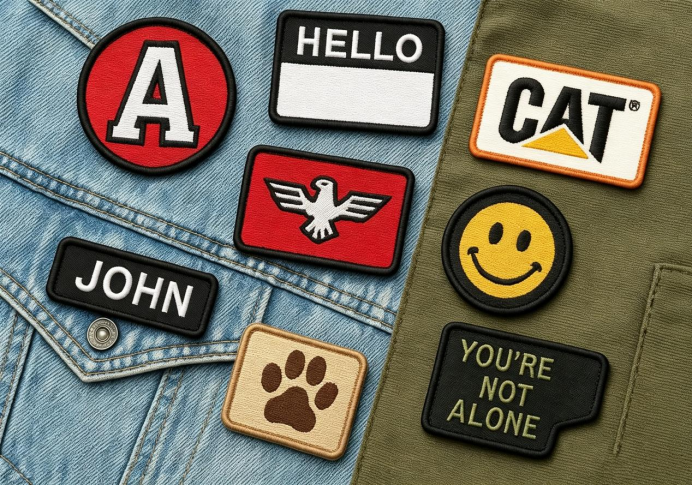
Velcro patches, also called hook-and-loop patches, consist of two parts: the decorative front (your custom design) and a backing with the "hook" side (the rough, grippy side). This hook side attaches to any surface that has the "loop" side (the soft, fuzzy side) sewn or adhered onto it.
The attachment is strong enough to hold through normal activity but can be cleanly removed without damage. This makes Velcro patches uniquely versatile — the same patch can be worn on a jacket on Monday, moved to a bag on Tuesday, and displayed on a hat panel by the weekend. For teams, this means one set of patches can serve multiple purposes across multiple seasons.
How to Choose the Right Attachment Method?
Before you even get to design or material, you need to decide how the patch will be attached to your team's gear. Velcro patches are not a one-size-fits-all solution. They require the loop side to be present on the garment or item.
There are three main ways to create a Velcro-compatible surface:
Pre-installed loop panels:Many tactical vests, MOLLE gear, and backpacks already have loop panels built in. If your team uses this type of gear, you are ready to go.
Iron-on loop patches:You can iron a loop-side patch onto any hat, bag, or jacket to create a Velcro-compatible surface. This is a quick solution for items that do not have built-in loop panels.
Sew-on loop fabric:For permanent mounting, sew a strip of loop fabric wherever you want the patch to go. This is the most secure option for items that will see heavy use.
Once the loop side is in place, the patch itself needs the hook side on its reverse. Most custom patch orders include both hook and loop sides, so you get everything you need in one order.
Choosing the Right Material: Embroidered, PVC, or Woven?
The material you choose for your Velcro patches determines how they look, feel, and perform. Each option has distinct strengths and weaknesses.
Embroidered Patches
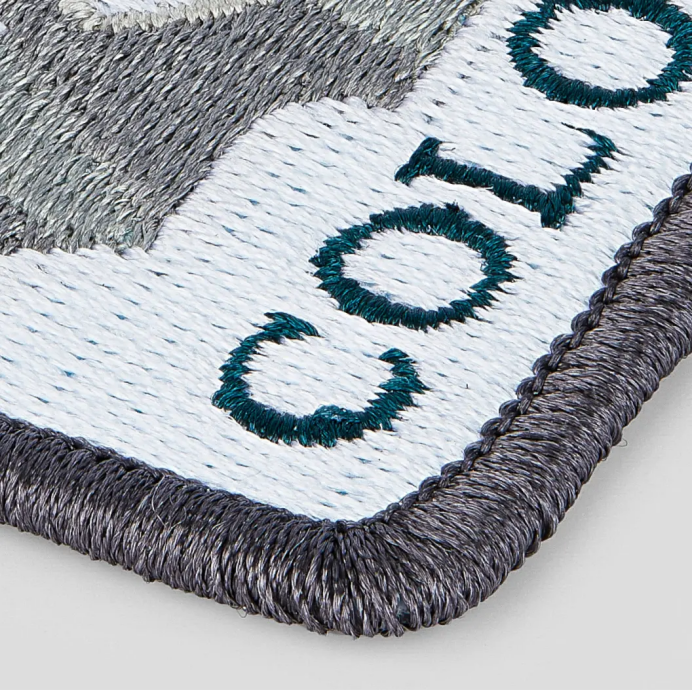
Custom Embroidered patches are the most popular option for team branding. They are made by stitching coloured thread onto a fabric backing, creating a textured, raised surface. Embroidered patches offer a classic, professional look that works well for team logos, crest designs, and text-based patches. They are soft, breathable, and have a traditional uniform-patch appearance.
Best for: Uniforms, team jackets, indoor use, classic branding
PVC Patches
Custom PVC patches are moulded from soft rubber material, creating a 3D raised surface with sharp edges. They are completely waterproof, UV-resistant, and extremely durable. PVC patches do not have fibers to fray, do not fade in UV, and do not absorb water. They survive conditions that would destroy embroidered patches over time.
Best for: Tactical gear, outdoor use, bags, hats, uniforms in wet environments
Woven Patches
Custom Woven patches use much finer thread than embroidery on a tighter weave. This creates a thinner, smoother, flatter surface. Woven patches are ideal when your design includes fine lines, small lettering, or intricate details. They offer the clarity and precision of a printed patch with the durability of a fabric patch.
Best for: Detailed logos, fine text, modern designs with high precision requirements
Matching the Patch to the Use Case
Not every patch is right for every situation. Here is how to match the material to your team's specific needs.
Frequent Swapping and Reconfiguration
If your team needs to change patches regularly, Velcro backing is the clear choice. Velcro allows for quick attachment and removal without damaging the base material. This is especially useful on uniforms, hats, and gear that require frequent customization.
For teams with rotating roles or seasonal changes, Velcro patches are the standard. They allow individuals to alternate between different patches on the same uniform. A player moving from the practice squad to the active roster can change their patch without changing their entire uniform.
Permanent or Semi-Permanent Placement
If the patch will stay on one uniform for its entire service life, sew-on backing is the strongest option. Sew-on patches survive years of washing, hard outdoor use, and physical work without lifting at the corners or losing their grip. For departments or teams that do not need to swap patches, sew-on is the gold standard.
Iron-on backing offers a middle ground. It creates a strong bond with heat and works well on cotton, denim, and polyester blends. However, iron-on patches can peel over time, especially with repeated washing. They are best for casual garments and items that will not see heavy industrial washing.
Design Considerations for Team Velcro Patches
Beyond material and attachment, the design itself needs to work for your team.
Size and Shape
Standard patch sizes range from 1 inch to 12 inches, but custom sizes are available. Small patches (1-2 inches) work for name tags and small logos. Medium patches (2-3 inches) are standard for identification. Large patches (3-4 inches) are ideal for prominent branding.
For shapes, regular options like squares, rounds, and rectangles work for classic, professional looks. Irregular shapes cut to your logo or artwork add uniqueness. If you are unsure, start with a simple regular shape—this combination works for almost any use case.
Edge Finishes
The edge finish affects both durability and appearance. Merrow border (a stitched edge) offers the most durability and is ideal for tactical gear and workwear. Heat cut provides a clean, stitch-free edge for a modern look. Laser cut offers precision for complex shapes.
Colour and Contrast
For tactical or work gear, stick to neutral colours (black, olive, tan) that blend in. For team branding and fashion, use bold contrasts to make the patch stand out. High-contrast thread colours (e.g., white thread on dark patches) improve visibility for logos.
Durability and Care
Quality Velcro patches are built to last. They can withstand extreme temperatures (-40°F to 185°F) and maintain grip through 10,000+ attach/detach cycles. With proper care, they last 3-5 years.
To maximise lifespan: Brush the hook surface regularly to maintain grip. Wash garments inside out in cold water. Remove patches before washing and reattach afterward. Air dry or use low heat only. Replace the patch when hooks show significant wear.
Why Choose Custom Panda for Your Team Velcro Patches?
The right Velcro patch starts with the right partner. Custom Panda is a direct factory with over 15 years of experience in custom manufacturing. We specialize in custom patches,custom lapel pinsand custom labels. One supplier, four product categories. We handle everything in-house—from artwork optimization to final packaging.
No Minimum Order:50 pieces or 50,000. We accept any quantity. Test a small batch before scaling up.
Free Design Proof Within 12 Hours:Send your logo, sketch, or reference image. Our team creates a professional digital proof for your approval. No charge. No obligation.
Factory Direct Pricing:We manufacture in our own facility. No middlemen. No markup. You pay for the product, not for someone else‘s overhead.
Production in 2–3 Days:After proof approval. Samples in 3–5 working days. Bulk orders in 7–15 working days depending on quantity.
Worldwide Shipping in 5–7 Days:Via DHL, FedEx, or UPS. Door-to-door tracking included.
Material Options:Embroidered, PVC, woven, chenille, leather. Our team recommends the best match for your team's usage scenario.
Real People, Not Scripts:Message us. You get a human who understands production and cares about your order. The one who catches artwork issues before they go into production. The one who ships early when you have a deadline.
We are not the biggest supplier. We are the one that delivers quality, speed, and straight answers. Send us your idea. Get a free proof in 12 hours.
FAQs
Q:What is the minimum order quantity for custom Velcro patches?
Custom Panda has no minimum order requirement. We accept orders of any size, from small test batches to large production runs.
Q:What is the difference between embroidered, PVC, and woven Velcro patches?
Embroidered patches offer a classic, textured look ideal for uniforms. PVC patches are waterproof, durable, and best for outdoor/tactical use. Woven patches provide the finest detail for complex logos and small text.
Q:How long do Velcro patches last?
With proper care, quality Velcro patches maintain grip for 3-5 years. They can withstand 10,000+ attach/detach cycles.
Q:Can Velcro patches be washed?
Yes, but remove the patches first. Wash the garment inside out in cold water and air dry or use low heat only.
Q:Do you ship custom Velcro patches internationally?
Yes. We ship worldwide via DHL, FedEx, and UPS with door-to-door tracking and customs assistance.