

How to Choose the Right Custom Patch Supplier?
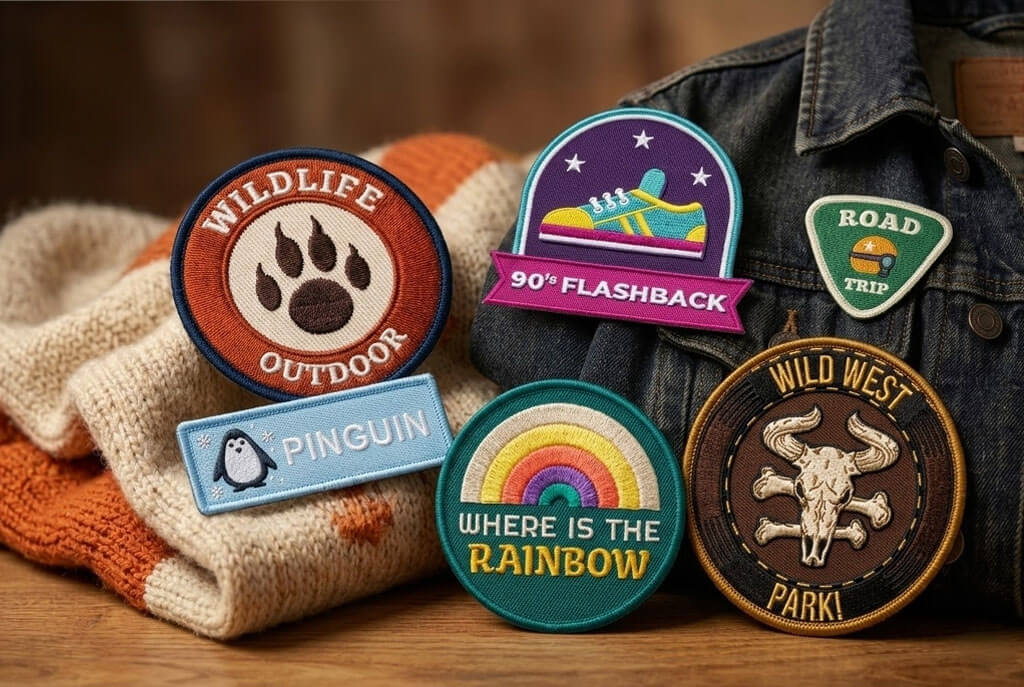
Custom embroidered patches are far more than fabric and thread. They are walking billboards for your brand, symbols of belonging for your team, and enduring keepsakes of meaningful events. Whether you need patches for a corporate uniform, a motorcycle club, a sports team, or a promotional giveaway, the quality of those patches speaks volumes about your organization's standards.
Yet, when it comes to sourcing custom patches, many buyers make a critical mistake: they treat the process as a simple transaction. They compare prices on a spreadsheet, choose the lowest quote, and hope for the best. This approach often leads to disappointing results—crooked stitching, mismatched colors, delayed deliveries, or patches that simply don't match the vision.
The truth is, selecting a patch supplier is not about finding a vendor. It's about finding a partner. A partner who understands your goals, guides you through technical complexities, and consistently delivers quality that makes you proud. Here, Custom Panda will walk you through a strategic, step-by-step framework for identifying and working with that ideal partner—from the first design conversation to a long-term relationship that benefits both sides.
Step 1: Clarify Your Design Brief
The journey to a perfect patch begins long before any machine starts stitching. It begins with a conversation—a clear, detailed brief that translates your idea into a tangible vision. Surprisingly, this is where many projects encounter their first hiccups. Vague instructions like "make it look cool" or "just use our logo" often lead to misaligned expectations.
What to Include in Your Brief
A professional supplier will ask you specific questions to nail down the details. Be prepared to provide:
Purpose and Placement: Where will the patch be used? A patch for a baseball cap has different size and weight requirements than one for a denim jacket or a tactical vest.
Size and Shape: Be as precise as possible. Even a quarter-inch difference can affect the visibility and integrity of fine details.
Color Specifications: Provide Pantone (PMS) codes if possible. If you're working from a digital image, understand that screen colors (RGB) and thread colors are two different universes. A good partner will show you actual thread color charts.
Key Visual Elements: What is absolutely essential? Is it a specific font, a mascot's face, or a complex gradient? Prioritize these elements so the designer knows what cannot be compromised.
The Art of "Translation"
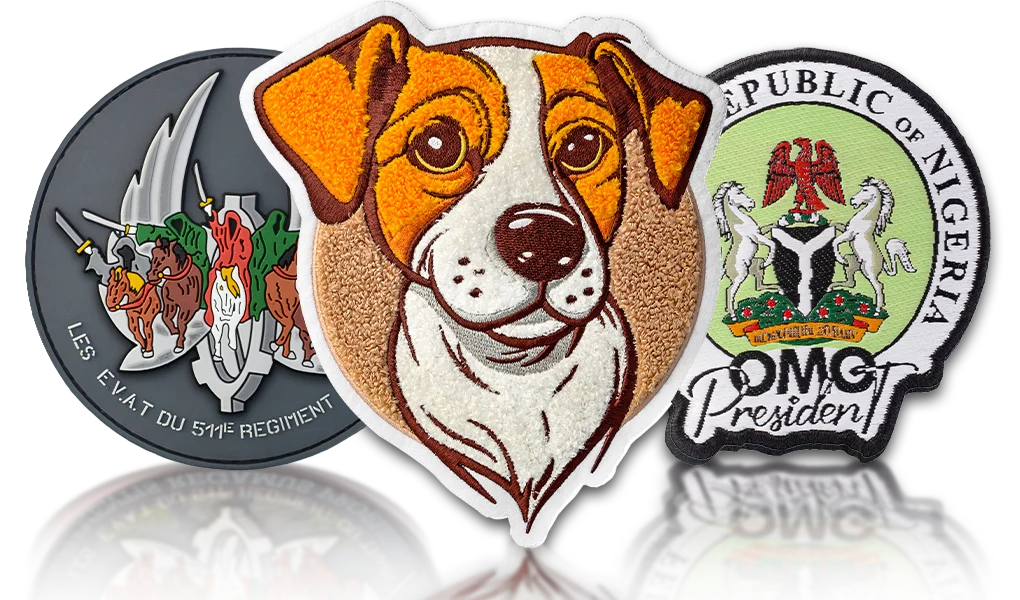
Here is where your partner's expertise becomes invaluable. Embroidery is not printing. It is a sculptural art form where threads are laid down by needles to create texture and depth. A skilled supplier will not simply copy your digital file; they will translate it.
For example, intricate drop shadows or tiny serif fonts that look crisp on a screen may become muddy blobs in thread. An experienced partner will gently suggest alternatives—perhaps bolder fonts, simplified backgrounds, or adjusted color contrasts—that maintain the spirit of your design while ensuring it looks stunning in its final, textile form. This collaborative translation phase is the first sign that you are working with a partner, not just an order-taker.
Free Artwork vs. Quality Artwork
Many companies advertise "free artwork." While this is attractive, probe a little deeper. Does "free" mean a junior designer will spend 15 minutes on your file? Or does it mean a seasoned professional will take the time to optimize every stitch count? True value lies not in the price of the art, but in the skill behind it. Ask your potential partner about their design team's experience and ask to see examples of their work on similar projects.
Step 2: Master the Sampling Process
If there is one golden rule in the custom patch world, it is this: Never skip the sample phase. A digital proof is a promise; a physical sample is the truth. This is your opportunity to see, touch, and feel your design before it goes into mass production.
Requesting a Physical Sample
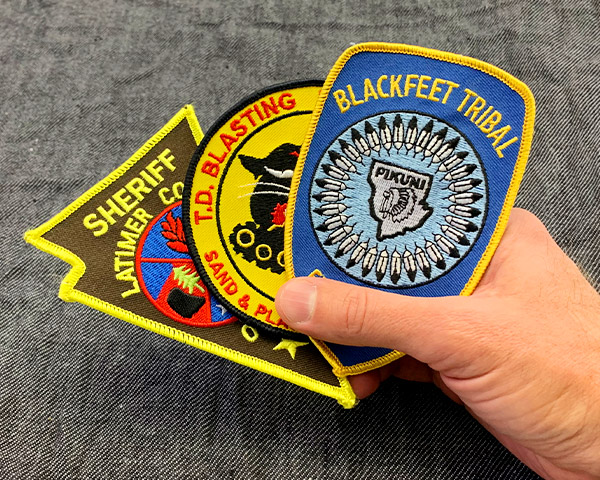
Don't settle for an email mockup alone. Request a stitched sample, also known as a "strike-off." This tangible piece will reveal critical details that a screen image cannot:
The actual texture and sheen of the thread.
The precision of the borders.
The feel and weight of the backing material.
The true color match under natural and artificial light.
When you receive your sample, examine it ruthlessly. Place it next to other patches you admire. Attach it to the garment it's intended for. View it from a distance. A good sample should excite you and meet your expectations at least 95% of the way.
How to Give Effective Feedback
What happens if the sample isn't perfect? This is the true test of your supplier's partnership mindset. When providing feedback, be specific and constructive. Instead of saying "This looks wrong," try:
"The red in the logo is too bright; we need it to match our Pantone 187 C."
"The lettering in the banner is too small and reads as a blob. Can we make it larger or use a bolder font?"
"The satin stitch on the border isn't lying flat. Can we adjust the density?"
Clear, measurable feedback allows the digitizer to make precise adjustments. A supplier who patiently works through 1, 2, or even 3 rounds of revisions to get it perfect is demonstrating a commitment to your satisfaction that far exceeds the minimum requirement. This iterative process is the bedrock of a strong partnership.
Step 3: Ensure Production Consistency
Once the sample is approved, production begins. Now, the challenge shifts from design to consistency. The goal is simple: every patch in your order must look exactly like the approved sample. Achieving this requires robust systems and transparency from your supplier.
Understanding Quality Control (QC)
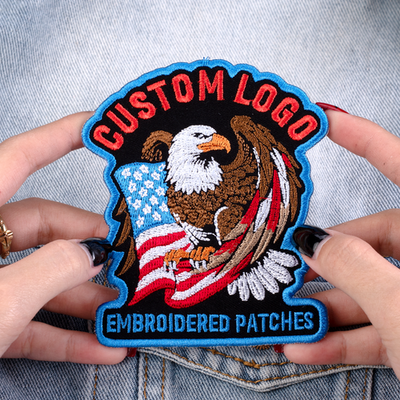
Ask your potential partner about their quality control process. Reputable suppliers have dedicated QC inspectors who check each batch for:
Stitch integrity: Are there any loose threads, skipped stitches, or bird-nesting (tangled thread) on the back?
Border finish: Are wraparound borders fully covered? Are heat-cut borders clean and free of fraying?
Backing adhesion: If using iron-on or adhesive backing, is it applied smoothly without bubbles or unevenness?
Overall appearance: Does the patch match the approved sample in color, density, and shape?
Don't hesitate to ask for a "pre-shipment sample" from the production run, especially for large orders. This final check gives you peace of mind and allows you to catch any issues before thousands of patches are shipped.
The Reality of Tolerances
It's also important to discuss tolerances upfront. In mass production, microscopic variations are normal. Different dye lots of thread can have barely perceptible shade shifts. Needle wear over thousands of stitches can cause a tiny variation in density. A transparent supplier will be upfront about these industry-standard tolerances. If something falls outside those boundaries, they should take ownership and redo the affected pieces. This honesty is far more valuable than a promise of absolute perfection that is impossible to keep.
Step 4: Build a Long-Term Partnership
When you find a supplier who consistently meets your quality standards and provides excellent communication, you have found a gem. It pays to cultivate this relationship beyond a single order.
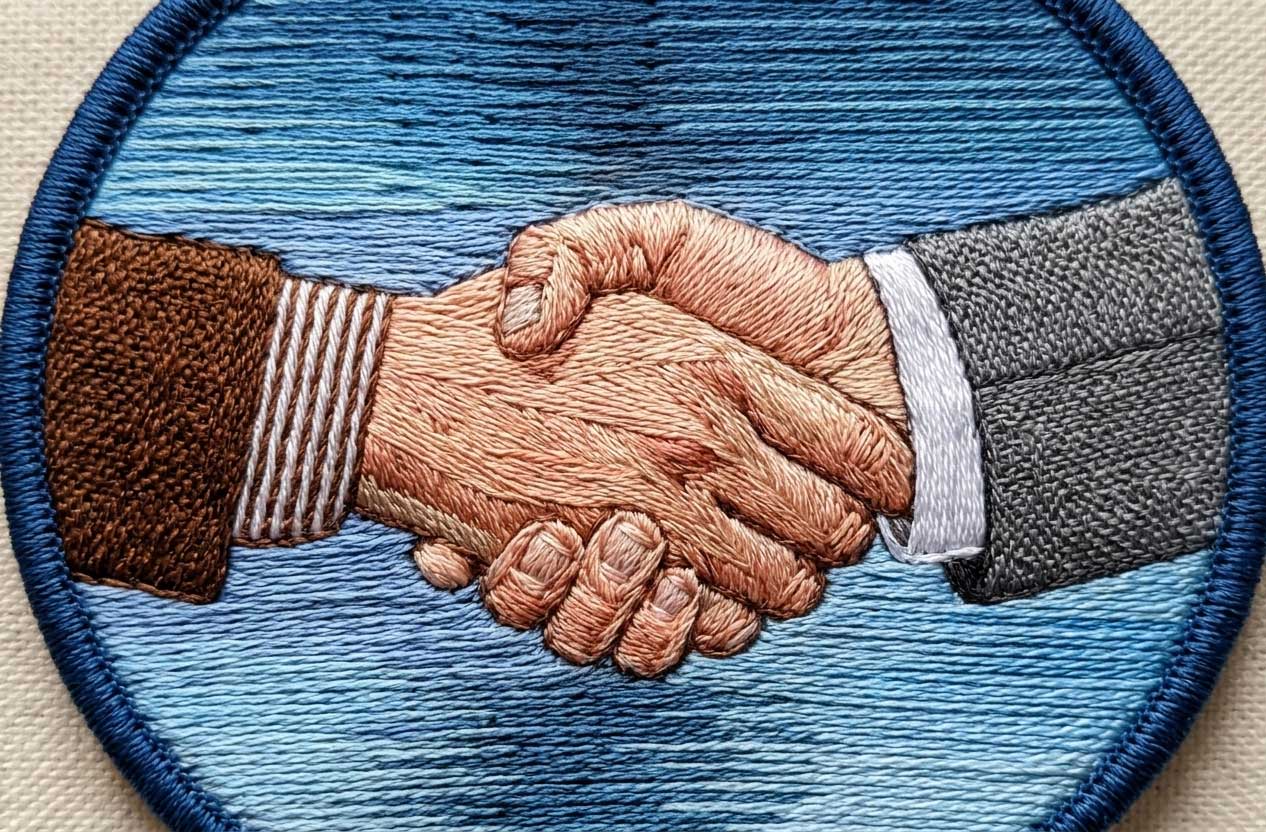
The Benefits of Consistency and Loyalty
A long-term partner will:
Know Your Brand: They will have your logos, approved color palettes, and design preferences on file. This eliminates the need for re-explaining your needs on every order.
Offer Proactive Suggestions: Based on their knowledge of your previous projects, they might suggest a new thread type or a more durable backing that you hadn't considered.
Provide Priority Service: When you have a rush order or a special request, your established relationship means they are more likely to move mountains to help you out. You move from being a "new client" to a "valued partner."
Provide Stability and Peace of Mind: You eliminate the risk of "vendor roulette" — the stressful process of trying a new, unknown supplier with every order.
Transitioning to a partnership model changes the conversation. Instead of haggling over a few cents per patch, you can discuss broader topics: how to improve production timelines, reduce lead times, or develop new, innovative product lines together.
Custom Panda: Your Reliable Partner for Custom Patches
At Custom Panda, we understand that a patch is more than an accessory—it's a reflection of your identity. We build our entire business model around the partnership philosophy outlined above. From the moment you share your idea, our experienced design team works with you to translate it into a vivid, production-ready digital file. We don't just accept your order; we guide you through every decision—from thread colors and backing types to border styles and stitch densities.
With over 15 years of dedicated B2B manufacturing experience, we have grown from a specialized workshop into a trusted global supplier, serving businesses, brands, clubs, and organizations worldwide from our strategic location in Guangzhou, China. We combine rigorous industrial quality standards with responsive, flexible service to deliver flawless results every time. Whether you need embroidered patches or precision-crafted Custom Lapel Pins, our commitment remains the same: treat every order as a partnership, not a transaction, and ensure your vision comes to life with craftsmanship you can trust.
Conclusion
Choosing a provider for custom embroidered patches is a decision that deserves strategic thought. It's about more than comparing price-per-unit. It's about finding a partner who will protect your design integrity, navigate the technical nuances, and consistently deliver a product that enhances your reputation.
By following the steps outlined—clarifying your design, mastering the sample process, ensuring production consistency, and ultimately building a long-term relationship—you can move beyond the anxiety of finding a "good enough" vendor and instead cultivate a partnership that contributes to your long-term success.
The next time you need patches, don't ask "Who is the cheapest?" Instead, ask "Who will be the best partner for my vision?" The answer will lead you to the quality, value, and service you truly deserve.
Are you ready to start your custom patch project? Contact Custom Panda today and experience the difference of a true partnership.